
 Worksheets
Coordination and Control Part 2 - Hormones
Total questions: 76
Worksheet time: 38mins
What is the primary role of hormones in the human body?
To provide energy to cells
To serve as chemical messengers
To protect the body from diseases
To help in digestion
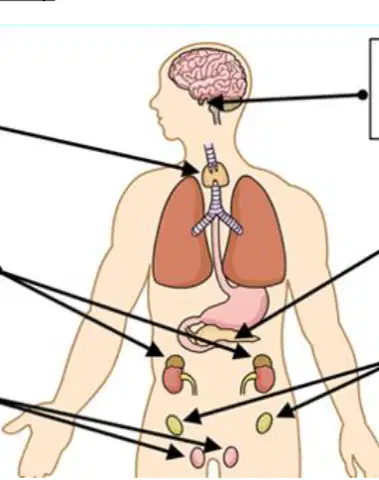
Which gland is not shown in the diagram of the major glands of the body?
Pineal gland
Thyroid gland
Adrenal glands
Pituitary gland
How do hormones differ from the nervous system in their mode of action?
Hormones act faster than the nervous system
Hormones act over a shorter period
Hormones act more slowly and over a longer period
Hormones require physical contact to function
What is the nature of the message transmitted in the nervous system?
A nerve impulse (electrical)
A hormone (chemical substance)
A muscular contraction
A blood flow
How does the message travel in the hormonal system?
Along neurons
Through the bloodstream
Via electrical impulses
Through the air
Which system typically has responses that are usually rapid?
Nervous system
Hormonal system
Digestive system
Respiratory system
What is the duration of response in the hormonal system for processes like growth and puberty?
Short-lived
Long-lasting
Instantaneous
Variable
What is homeostasis?
The ability of the body to maintain a constant internal environment
The process of cell division
The immune system fighting infections
The exchange of gases in the lungs
What is the primary purpose of maintaining a constant internal environment in the human body?
To ensure enzymes and cells function optimally
To increase body temperature variability
To decrease the pH level of the body
To enhance enzyme denaturation
Which system is primarily responsible for maintaining a constant internal environment in the body?
Digestive system
Nervous and hormonal systems
Respiratory system
Circulatory system
What is the role of negative feedback in homeostatic control?
To allow deviations from the set point without correction
To prevent any changes in the internal environment
To return conditions to a set point after a deviation
To permanently alter the set point
How does negative feedback respond when the level of something in the body rises?
It increases the level even more
It does not respond
It reduces the level back to normal
It permanently changes the set point
Why is negative feedback considered crucial in the regulation of blood glucose levels?
It only prevents glucose levels from rising too high
It prevents glucose levels from falling too low and rising too high
It has no significant impact on glucose levels
It increases glucose levels consistently
What is the role of insulin in the human body?
It increases glucose concentration in the blood.
It prevents the concentration of glucose in the blood from becoming too high.
It decreases the oxygen levels in the blood.
It aids in the digestion of proteins.
How is glucose transported to the body's cells for respiration?
Through the skin.
In the blood.
Via nerve cells.
Through the lymphatic system.
What could happen if glucose levels in the blood are too high?
Cells may increase in size.
Glucose levels may stabilize on their own without intervention.
Cells can be damaged due to water loss by osmosis.
Blood pressure will decrease significantly.
What is a potential consequence if glucose levels fall below normal?
Cellular respiration increases.
Energy production in cells could decrease or stop.
Glucose is converted into protein.
Insulin production increases.
Which organ is the main target for insulin?
Pancreas
Stomach
Liver
Spleen
What role does glucagon play in blood glucose regulation according to the image?
Lowers blood glucose by converting glycogen to glucose
Raises blood glucose by converting glycogen to glucose
Lowers blood glucose by promoting insulin release
Raises blood glucose by stimulating glucose uptake
What happens to insulin production as blood sugar levels decrease?
It increases
It remains constant
It decreases or stops
It fluctuates unpredictably
What is the primary function of insulin in the blood glucose regulation process?
To increase blood glucose levels
To decrease blood glucose levels
To maintain the concentration of glucose in the liver
To break down glycogen into glucose
Which organ is primarily responsible for the release of insulin when blood glucose levels are too high?
Liver
Pancreas
Kidney
Stomach
What is the effect of glucagon on the liver?
It causes the liver to store glucose as glycogen
It causes the liver to remove glucose from the blood
It causes the liver to break down stored glycogen and release glucose into the blood
It causes the liver to produce insulin
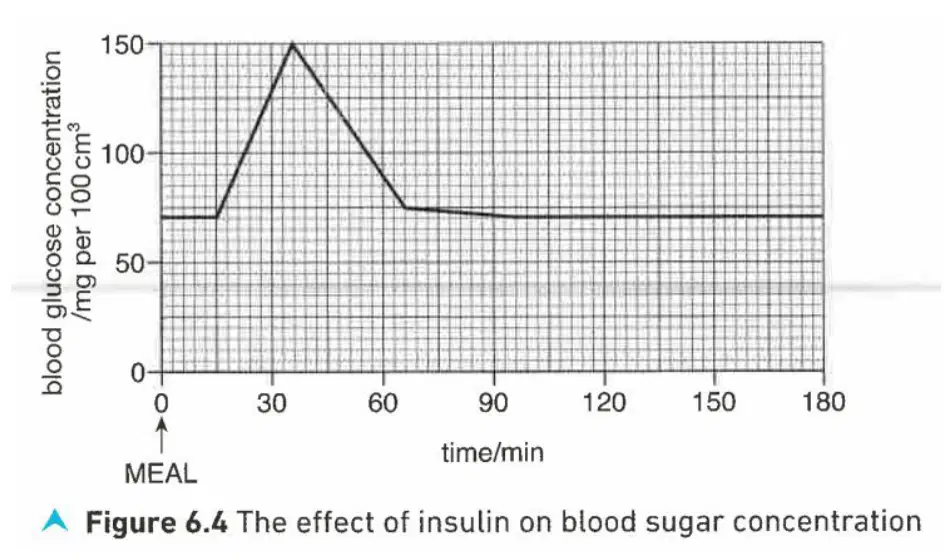
What happens to blood glucose levels immediately after consuming a meal rich in carbohydrates, according to the graph?
Blood glucose levels decrease
Blood glucose levels remain constant
Blood glucose levels increase
Blood glucose levels fluctuate unpredictably
How does insulin lower blood glucose concentration?
Insulin increases glucose uptake by cells
Insulin converts glucose to glycogen for storage
Insulin stops the production of more glucose
Insulin increases respiration
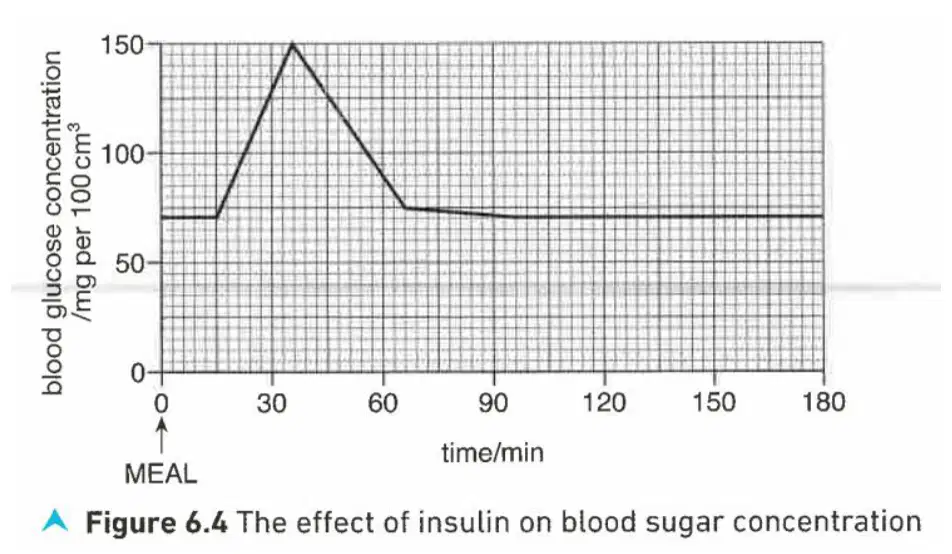
What is the typical blood glucose concentration in mg per 100 cm³ about 30 minutes after eating a meal?
50 mg per 100 cm³
100 mg per 100 cm³
140 mg per 100 cm³
90 mg per 100 cm³
What is a common symptom of diabetes due to high blood glucose levels?
Increased insulin production
Decreased urine output
Glucose in the urine
Reduced thirst
Which type of diabetes is primarily diagnosed in individuals over the age of 40?
Type 1 Diabetes
Type 2 Diabetes
Gestational Diabetes
Type 1.5 Diabetes
What is the primary treatment method for Type 1 Diabetes?
Oral medications
Diet control only
Injection of insulin
Physical exercise only
What could be a serious consequence if blood sugar concentration remains too high for a long period in diabetes?
Hypoglycaemia
Hyperglycaemia
Improved insulin sensitivity
Decreased glucose in urine
How can individuals with Type 1 Diabetes help control their blood glucose levels?
By avoiding all physical activities
By not monitoring their blood sugar
By consuming high sugar diets
By being careful with their diet and exercising
What is a common cause of Type 2 diabetes as it relates to insulin functionality?
Insulin is overproduced by the pancreas.
Insulin production is normal, but body cells do not respond effectively.
Insulin is not produced at all.
Insulin is rapidly destroyed by the body.
Which of the following is NOT a treatment for Type 2 diabetes?
Increasing sugar intake
Medication in the form of tablets and insulin injections
Diet changes to reduce sugar intake
Exercise to achieve weight loss
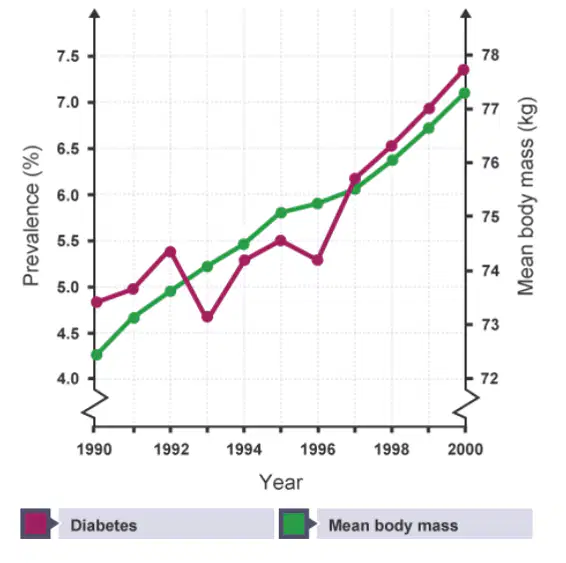
What does the graph in the image indicate about the trend from 1990 to 2000?
A decrease in both diabetes prevalence and mean body mass
An increase in diabetes prevalence and a decrease in mean body mass
An increase in both diabetes prevalence and mean body mass
A decrease in diabetes prevalence and an increase in mean body mass
What are the long-term complications of poorly controlled diabetes?
Eye damage or blindness, heart disease, strokes, kidney damage/failure
Frequent colds, skin infections, muscle pain, fatigue
Increased appetite, weight loss, mood swings, sleep disturbances
Hair loss, brittle nails, joint stiffness, dental issues
Why might people with diabetes consume extra glucose before vigorous exercise?
To prevent hypoglycemia
To increase body fat
To reduce muscle mass
To decrease insulin sensitivity
Which type of diabetes typically develops in childhood?
Type 1
Type 2
Type 3
Gestational
What is a primary cause of Type 1 diabetes?
Autoimmune reaction
Poor diet
Lack of exercise
Viral infection
How is Type 2 diabetes primarily treated?
Insulin injections
Medication and regular exercise
Diet control only
Surgery
What is osmoregulation?
The process of maintaining energy balance in the body.
The ability to control the amount of water in the body.
The regulation of body temperature.
The mechanism of nutrient absorption.
How does the body primarily gain water?
Through cell respiration and urine.
Through drinking and eating.
Through sweating and breathing.
Through osmosis in body cells.
What is the primary way the body loses water?
Through urine and sweat.
Through drinking and eating.
Through cell respiration and faeces.
Through nutrient absorption.
What happens to the body's water balance during vigorous exercise?
The body gains more water through increased drinking.
The body loses more water through sweat and needs to balance by drinking more.
The body stops losing water to conserve energy.
The body's water balance does not change.

According to the table, how much water does the body gain daily from cell respiration?
(a)

What is the total volume of water gained and lost by the body each day as per the table?
(a)
What happens to the body's water concentration during very warm weather or vigorous exercise?
The body loses water and the kidneys produce more concentrated urine.
The body retains more water and the kidneys produce more dilute urine.
The body gains water and the kidneys produce less urine overall.
The body temperature decreases significantly.
According to the information provided, how does the body compensate for water lost through sweat during vigorous activities?
By decreasing water intake.
By increasing water intake.
By stopping sweat production.
By reducing urine production.
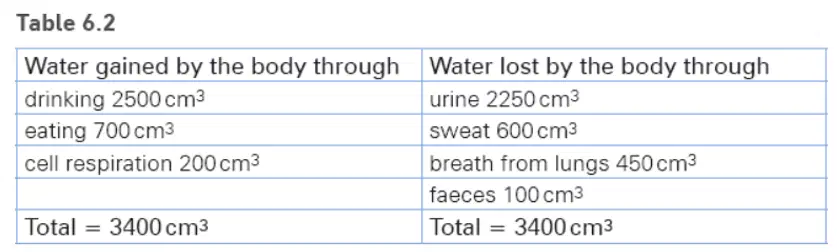
From the data in Table 6.2, how much water does the body gain through eating on a warm summer day?
200 cm³
700 cm³
2250 cm³
600 cm³
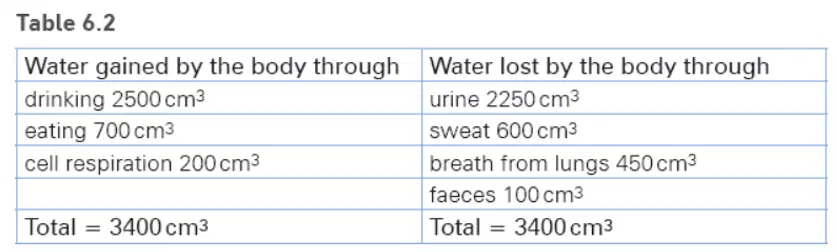
What is the total volume of water lost through urine and sweat as recorded in Table 6.2?
2850 cm³
3400 cm³
2250 cm³
850 cm³
What is the primary function of the kidneys as part of the excretory system?
To produce hormones
To remove wastes from the body
To regulate blood sugar levels
To aid in digestion
Where does the filtration of blood primarily occur within the kidney?
Renal pelvis
Ureter
Cortex
Medulla
What happens to water and other substances in the medulla of the kidney?
They are excreted as urine
They are reabsorbed into the bloodstream
They form kidney stones
They are converted into hormones
After filtration in the kidneys, where do excess water and dissolved substances go next?
Directly to the bladder
Into the renal pelvis and down the ureter
Back into the bloodstream
They are stored in the renal vein
What is the final destination of urine before it leaves the body?
Ureter
Renal pelvis
Bladder
Renal artery
What is the primary role of Anti-Diuretic Hormone (ADH) in the body?
To decrease blood pressure
To control blood sugar levels
To regulate water levels in the blood
To increase heart rate
Where is ADH released from in the body?
The liver
The pancreas
The brain
The heart
What happens when the concentration of water in the blood is low?
Less ADH is released
More ADH is released
ADH release is not affected
ADH is completely stopped
What is the effect of ADH on the urine when the body is low on water?
The urine volume increases and becomes less concentrated
The urine volume decreases and becomes more concentrated
The urine volume and concentration do not change
The urine becomes less acidic
Which organ is the target organ for ADH?
The liver
The kidneys
The stomach
The lungs
What happens to the concentration of ADH when the concentration of water in the blood is high?
ADH concentration increases
ADH concentration decreases
ADH concentration remains the same
ADH is not related to water concentration
What is the effect of decreased ADH release on the urine volume?
Urine volume decreases
Urine volume increases
Urine volume remains the same
Urine becomes more concentrated
How does the body respond to high water concentration in the blood in terms of urine concentration?
Urine becomes more concentrated
Urine concentration remains the same
Urine becomes less concentrated
Urine concentration is not affected by water levels
What is the role of the kidneys when there is too much water in the blood?
Increase water reabsorption
Decrease water reabsorption
Stop filtering blood
Increase blood water level
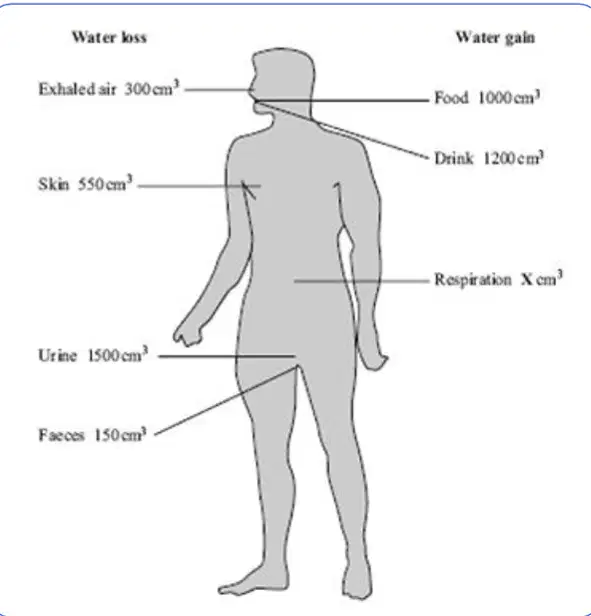
What is the total water gain from food and drink as shown in the diagram?
2200 cm³
1500 cm³
1800 cm³
2000 cm³
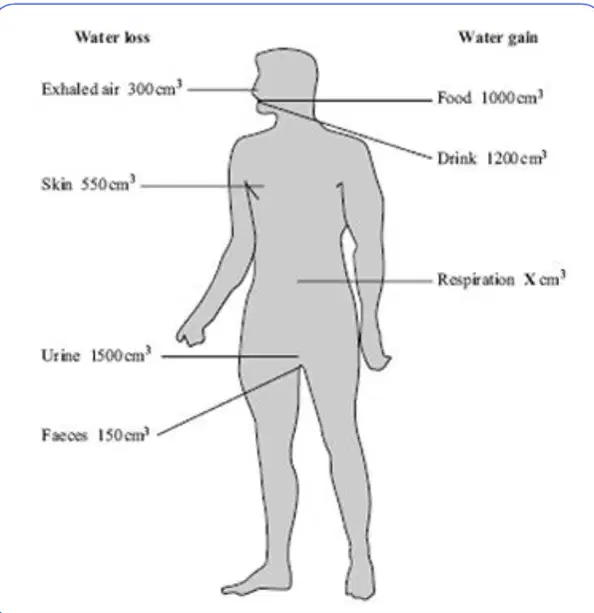
According to the diagram, how much water is lost through the skin?
550 cm³
300 cm³
1500 cm³
150 cm³
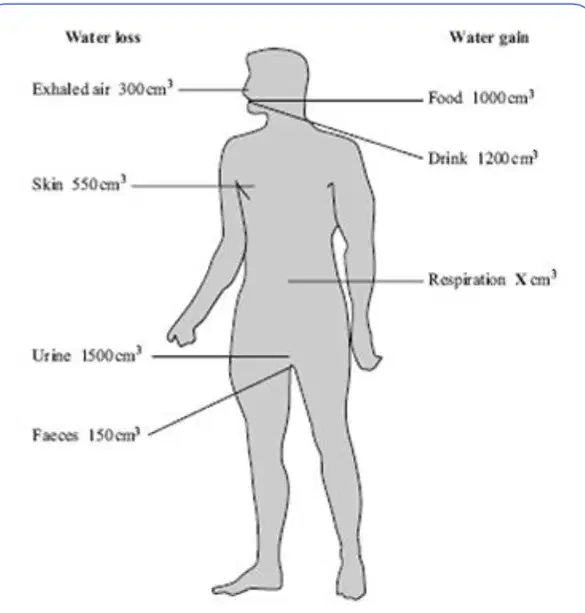
What percentage of the total water loss is due to urine, based on the diagram?
50%
60%
75%
25%
What is phototropism?
Growth of a plant in response to water
Growth of a plant in response to chemical stimuli
Growth of a plant in response to light
Growth of a plant in response to gravity
Which of the following best describes the role of plant hormones?
They deter herbivores from eating the plant
They control and coordinate plant growth and development
They attract pollinators to the plant
They transport nutrients from soil to leaves
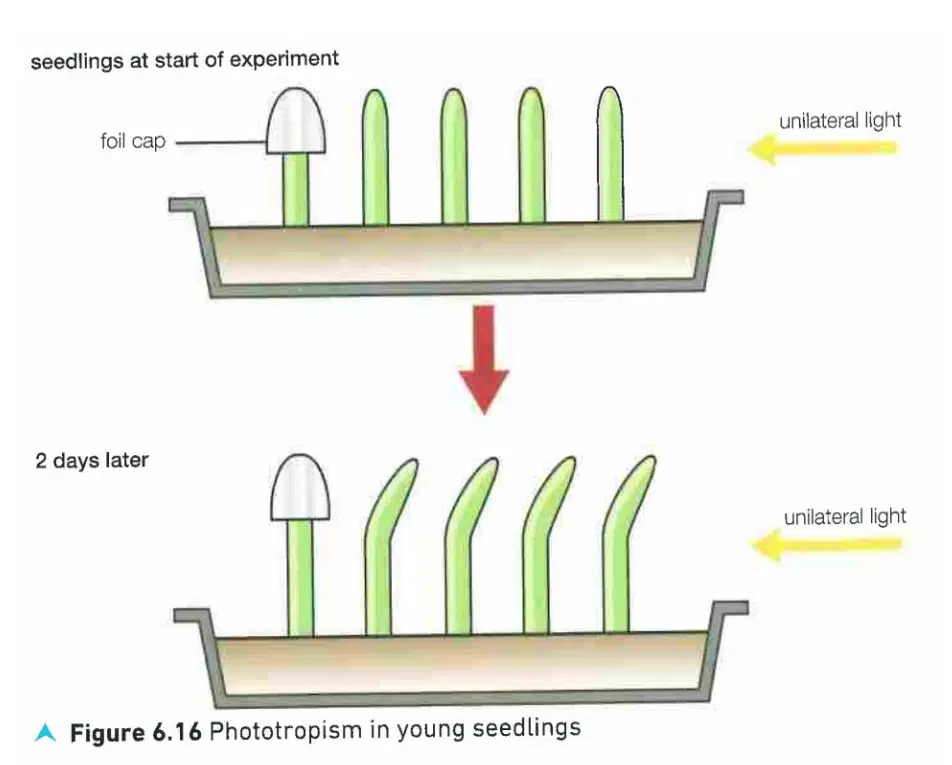
What is the role of auxin in phototropism as demonstrated in the diagram of young seedlings exposed to unilateral light?
Auxin inhibits growth on the side of the stem exposed to light, causing the stem to bend away from the light.
Auxin accumulates on the side of the stem that is not exposed to light, promoting faster growth on that side and causing the stem to bend towards the light.
Auxin equally distributes throughout the stem, causing uniform growth and straight growth.
Auxin degrades in the presence of light, preventing the stem from growing towards the light source.
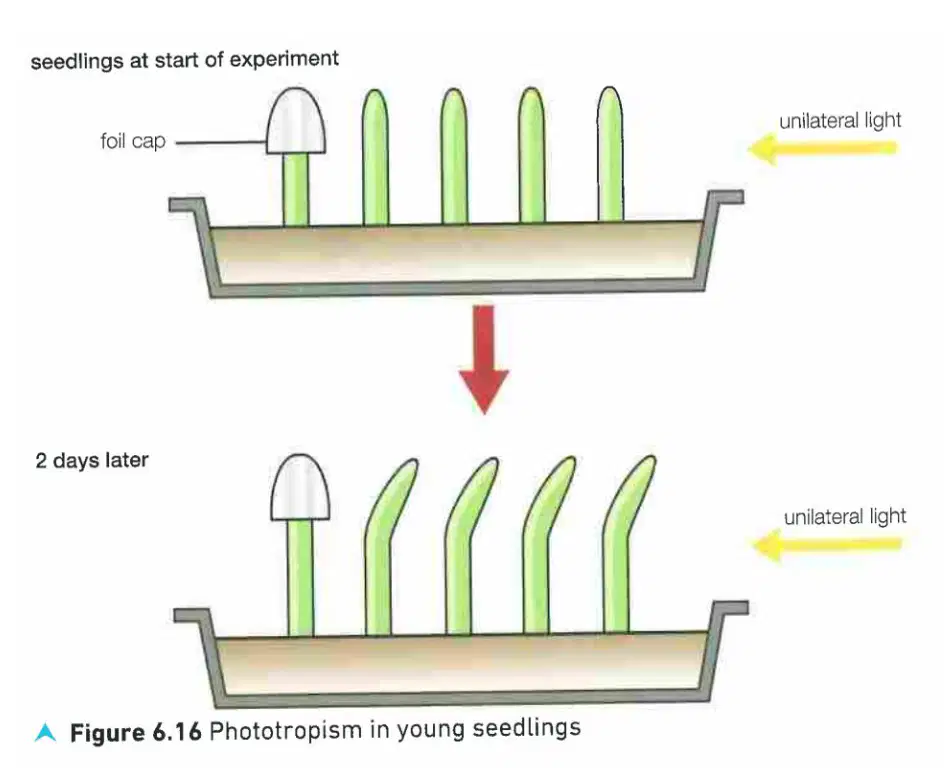
Why does the shoot with a foil cap not exhibit phototropism in the experiment?
The foil cap blocks light, allowing auxin to degrade evenly in the shoot.
The shoot is genetically modified to not respond to light.
The foil cap prevents light from reaching the shoot tip, which is sensitive to light, thus no phototropism occurs.
The unilateral light is not strong enough to induce phototropism.
Where is the hormone auxin produced in a plant shoot?
At the base of the shoot
In the middle of the shoot
At the tip of the shoot
Throughout the entire shoot
What effect does light on one side of a plant shoot have on the distribution of auxin?
It causes auxin to accumulate on the illuminated side
It causes auxin to be evenly distributed
It causes auxin to accumulate on the non-illuminated side
It has no effect on the distribution of auxin
What happens to the cells on the side of the shoot with a higher concentration of auxin?
They divide less frequently
They elongate more
They shrink
They die off
Why does a plant shoot bend towards the light?
Due to shorter cells on the illuminated side
Due to longer cells on the non-illuminated side
Due to equal cell length on both sides
Due to the absence of auxin on both sides
How can plants be kept growing straight in unilateral light?
By increasing the intensity of light
By rotating the plant every few days
By decreasing the exposure to light
By applying artificial auxin to the shaded side
What is the consequence of removing the tip of a plant shoot?
Increased growth due to more light absorption
Decreased growth due to loss of light-sensitive part
No change in growth
Random growth direction

