
 Worksheets
Cell/organelles/microscope review 2
Total questions: 85
Worksheet time: 4hrs 15mins
Every living organism is made up of one or more cells
True
False

Animals cells and plant cells are exactly the same.
True
False
Only ____________ cells have a cell wall instead of a cell membrane.
plant
animal
white blood
living
Which is more complex?
Prokaryotic Cell
Eukaryotic Cell
What is the major difference between a Eukaryotic and Prokaryotic cell?
Eukaryotes have a nucleus.
Prokaryotes have a nucleus
Eukaryotes have a membrane.
Prokaryotes have sugars.
Prokaryotic cells are less complex and have only a few organelles.
True
False

What important material is contained in the nucleus?
Jeans
Digestive enzymes
DNA
Nuclear ladders


protective barrier that encloses all cells
controls the movement of materials into and out of the cell
cell membrane
cell wall
endoplasmic reticulum
golgi body
"Small organs" of the cell that carry out specific functions
Organelles
Organs
Cell Wall
Cell

What is the nucleus?
A part of the cell that tells everything else what to do.
An organ that makes you healthy.
A wall that protects everything in the cell.

Which of the following is most like a chloroplast?
Solar panel
Solar eclipse
Jello salad
Storage tank

Organelles are
small piano-like instruments used to play music
large structures in the body
Tiny structures in cells
Tiny appliances in a doll house

Cytoplasm is important to a cell because it
holds organelles in place.
stores water for the cell to use when needed.
provides structure and protection.
controls the cell's activities.

MAKES and TRANSPORTS proteins
cell membrane
chloroplasts
cytoplasm
endoplasmic reticulum

cell DIGESTION and WASTE removal
endoplasmic reticulum
lysosome
cell membrane
nucleus

STORAGE of food, water, and waste
lysosome
ribosome
cell wall
vacuole
Which 2 organelles are only found in plant cells? (select 2 answers)
nucleus
mitochondria
chloroplast
cytoplasm
cell wall


What cell structure is letter E in the picture?
mitochondrion
chloroplast
lysosome
ribosome

What is the name of the parts labeled #4
Stages
Slide Arms
Objective Lenses
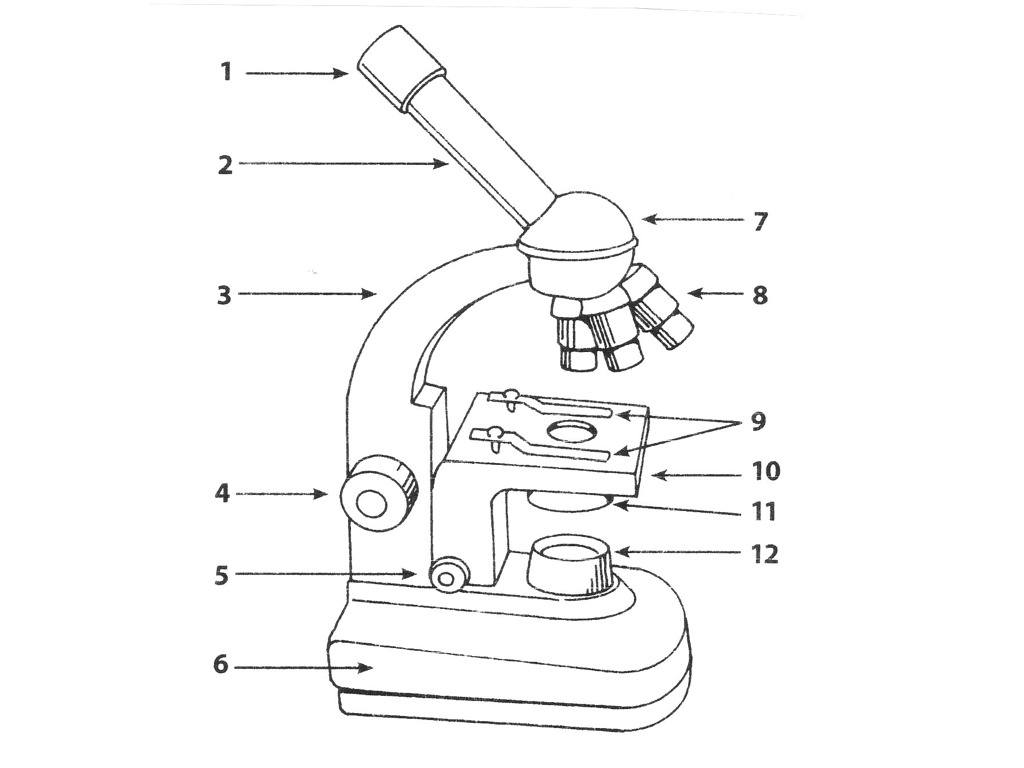
A microscope is an instrument that
Makes far away objects look closer.
Makes small objects appear larger.
Makes large objects appear smaller.
Increases the overall mass of an object.
When examining a specimen on your slide, you should always start with the
lense closest to the arm
medium power objective lens
highest objective lens
lowest power objective lens
You should always carry the microscope by the
arm and base
arm and body tube
arm only
objectives
When would you use the diaphragm?
When you want to move the stage.
When you want to adjust the brightness of the light that enters the microscope.
When you want to put the microscope away.
When you sneeze.

What is the name of the part labeled #4
Objective lenses
Coarse adjustment knob
Aperture
Diaphragm
When examining a specimen on your slide, you should always start with the
lense closest to the arm
medium power objective lens
highest objective lens
lowest power objective lens

If you are using the medium objective lens with a
10x power and the eyepiece with a 10x power,
what is the total magnification of the object?
20 x
10 x
100x
400x
Which organelle is the Command Center or BRAIN for eukaryotic (plant and animal) cells? It contains the DNA for the cell.
Cell wall
Nucleus
Mitochondria
Lysosome
What is the difference between the mitochondria and a chloroplast?
Mitochondria produce oxygen and chloroplasts break down waste products.
There is no difference, they are the same.
Chloroplasts produce food using sunlight, water and carbon dioxide;
Mitochondria break down food and turn it into energy the cell can use.
Mitochondria contain DNA and chloroplasts contain RnB.

What is A?
Golgi body
vacuole
nucleus
mitochondria
What is B?
ER
vacuole
nucleus
mitochondria
What is C?
chloroplast
vacuole
lysosome
mitochondria
What is D?
chloroplast
cytoplasm
ribosome
mitochondria
What is E?
vacuole
cytoplasm
ribosome
nucleus
What is F?
ER
ribosome
nucleus
Golgi apparatus
What is G?
nucleus
lysosome
chloroplast
mitochondria
What is H?
chloroplast
lysosome
nucleus
mitochondria
What is I?
chloroplast
lysosome
nucleus
ribosome
What is J?
cell membrane
lysosome
cell wall
ribosome

What is K?
cell membrane
lysosome
cell wall
ribosome

What is A?
ER
mitochondria
nucleus
chloroplast
What is B?
cytoplasm
mitochondria
nucleus
chloroplast
What is C?
cytoplasm
mitochondria
nucleus
Golgi body
What is D?
cytoplasm
mitochondria
nucleus
Golgi body
What is E?
cell membrane
ER
nucleus
cytoplasm
What is F?
cell membrane
lysosome
nucleus
cytoplasm
What is G?
cell membrane
lysosome
mitochondria
cytoplasm

What part of the microscope is labeled 1?
objective lenses
ocular lens
stage
coarse adjustment knob

What part of the microscope is labeled 2?
Body Tube
base
Light source
Diaphragm

What part of the microscope is labeled 3?
Arm
Stage
Objective Lenses
Nose piece

Which part of the microscope is labeled 4?
Fine adjustment knob
Coarse Adjustment knob
Stage clips
Arm

Which part of the microscope is labeled 5?
Ocular Lens
Objective Lenses
Diaphragm
Light Source

Which part of the microscope is labeled 6?
Stage clips
Stage
Body Tube
Fine Adjustment knob

Which part of the microscope is labeled 7?
Stage clips
Base
Stage
Diaphragm

Which part of the microscope is labeled 8?
Fine adjustment knob
Coarse adjustment knob
light source
objective lenses

Which part of the microscope is labeled 9?
Diaphragm
Light source
base
stage

Which part of the microscope is labeled 10?
Ocular Lens
Fine adjustment knob
base
light source

Which part of the microscope is labeled 11?
Coarse adjustment knob
Fine adjustment knob
base
body tube

Which part of the microscope is labeled 12?
Light Source
Nose piece
Base
Body tube
What does it mean to make the object appear larger than it actually is?
magnification
resolution
What does it mean to make the object become clearer, sharper, or more in focus?
magnification
resolution

Name the part of the microscope
Eyepiece
Stage
Fine focus knob
Objective Lens
Eyepiece = 20X
Objective lens = 20X

Muscle tissue is made of ...
muscle cells
skin tissue
stem cells
A lot of cells of the same kind join together to form-
Tissue
Cells
Organs
Organ systems
Different tissues work together to form
Tissue
Cells
Organs
Organ systems
Identify the correct order.
cells < organs < organs < systems
tissues < cells < organs < systems
cells < tissues < organs < systems
cells < tissues < systems < organs
The cell theory states that_________
cells come from cells
all organisms are made of cells
cells are the basic unit of structure and function for life
all of the above

