
 Worksheets
Quiz Unit 3 Lesson 1 Ecosytem Dynamics
Total questions: 30
Worksheet time: 17mins
What is an Ecosystem?
a system made up of all the living and nonliving things in a given area
a system of only living things in a given area
a system of only nonliving things in a given area.
none of these
Which of the following are nonliving factors?
water, air, algae
air, rocks, algae
sand, air, rocks
sand, plants, air
What is Biodiversity?
What is genetic diversity?
What is Species Diversity?
What is Ecosystem Diversity?
Which of the following statements best describes LOW species diversity?
a state park includes multiple forest, wetlands, and freshwater ecosystems
all of these
a population of frogs has a wide variety of skin colors.
a marsh system is covered by a single species of cattails.
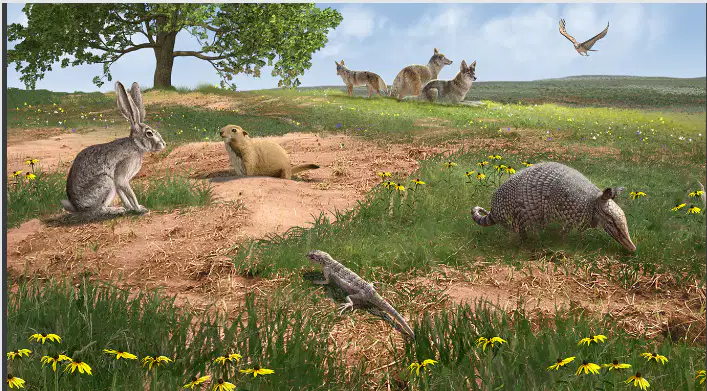
The photo is an example of.....?
ecosystem diversity
dynamics
genetic diversity
species diversity
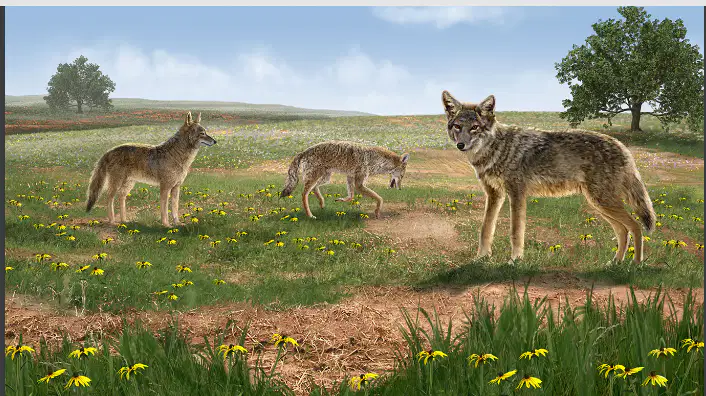
The photo is an example of....?
species diversity
genetic diversity
ecosystem diversity
animal diversity
What is High biodiversity?
An example of genetic diversity.
Population of cats with the same fur lengths
An example of low biodiversity.
none of these
When there is a high number of species in an ecosystem
When there is a low number of species in an ecosystem
Where there is an average number of species in an ecosystem

Predict what would happen if the hawk population decreased.
Select All that apply
The rabbits would start eating the grasshoppers and mice
the grasshoppers and mice would not be affected
The grass would become sparse because there would be more rabbits eating it
the population of lizards, rabbits, and snakes would grow
Which statement best describes a disturbance in an ecosystem?
Which of the following are examples of natural disturbances to an ecosystem?
Select All the Apply.
flooding
oil spills
wildfires
clearing land to build homes
How quickly an ecosystem recovers from a disturbance depends on?
duration of the disturbance
severity of the disturbance

Each color represents a species of insect pollinators. Which individual of species would survive under heavy rainfall conditions?
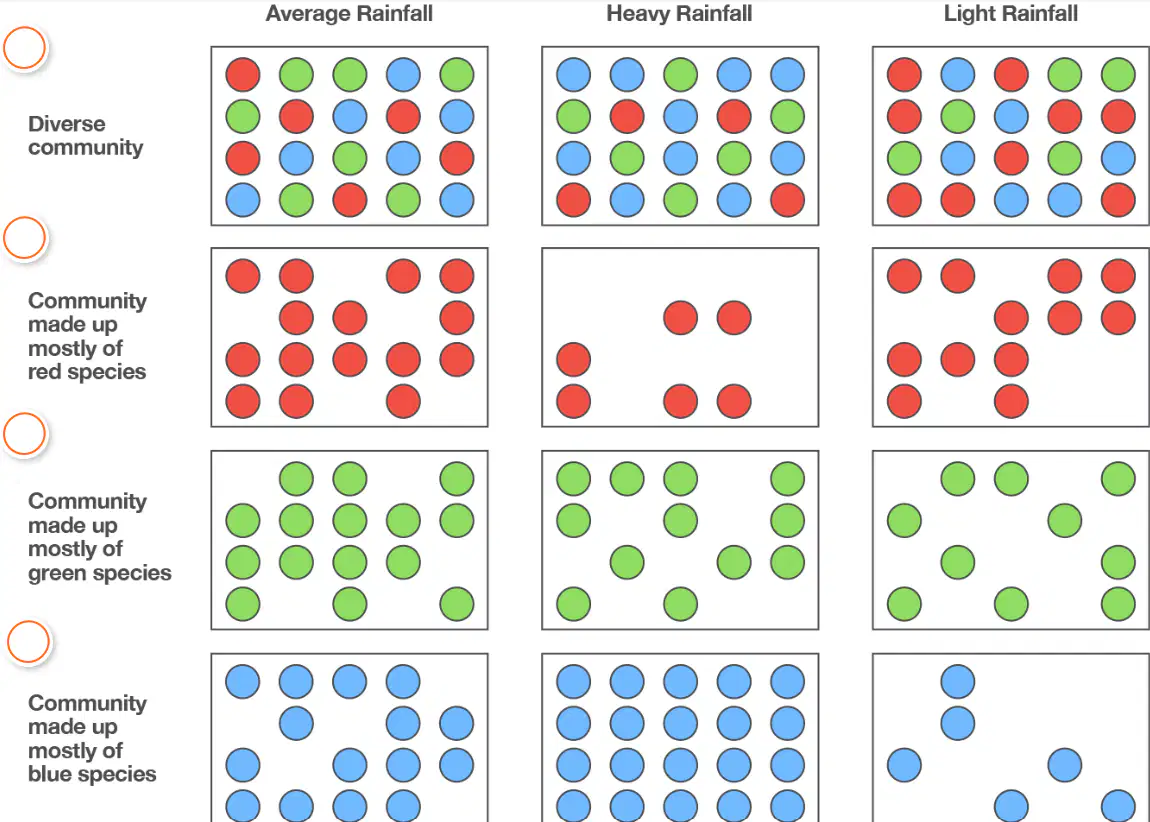
Which community of insect pollinator would survive BEST under light rainfall conditions?
diverse
green
blue
red
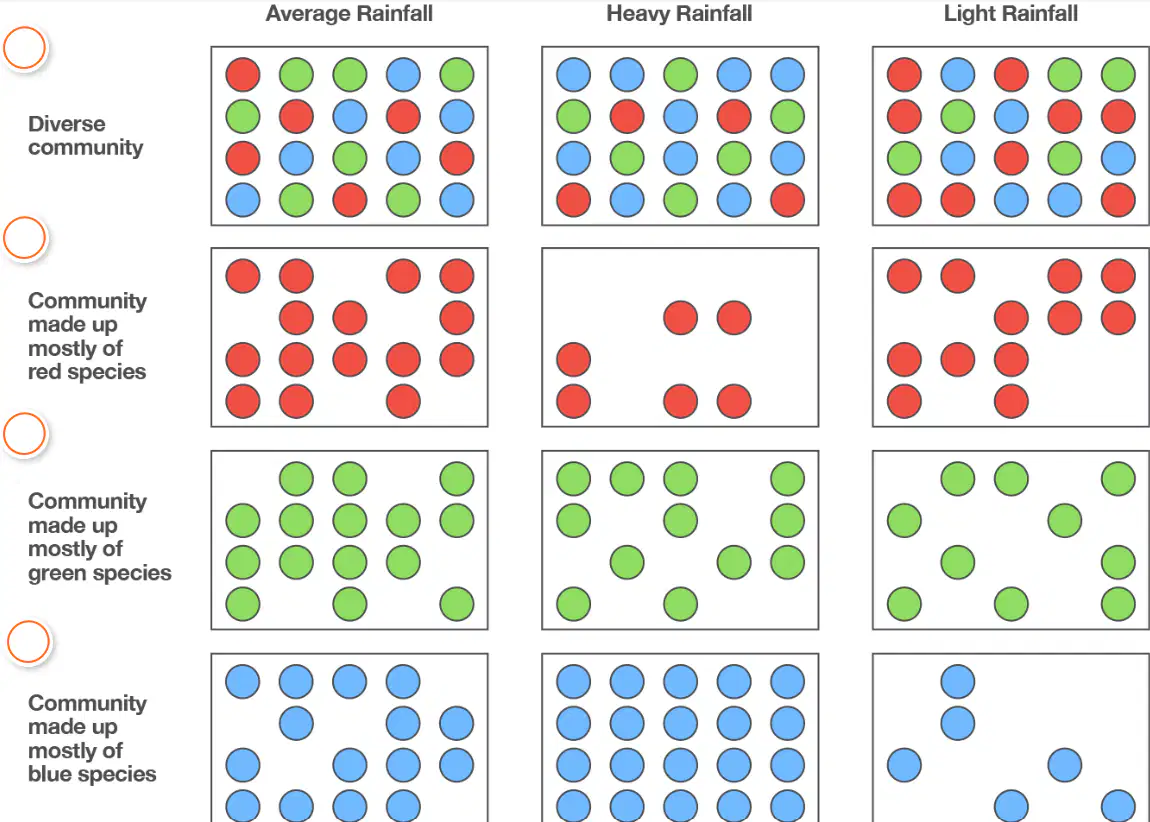
Which community would be able to quickly recover from a disturbance in the ecosystem?
Communities with low biodiversity
Communities with high biodiversity
Which ecosystem processes do humans benefit from?
Select ALL that apply.
decomposition of waste
growth of trees and plants
pollination of crops
making plastic bottles
Which of the following are examples of humans negative impact on biodiversity?
Select ALL the apply.
Habitat destruction
Temperature
Introducing new species
Overharvesting species
What is the first thing YOU can do to help preserve Biodiversity?
Which organisms will you find the most of in an ecosystem?
Consumer
Producer
Decomposer
Which of the following is a way humans cause a disturbance to an ecosystem?
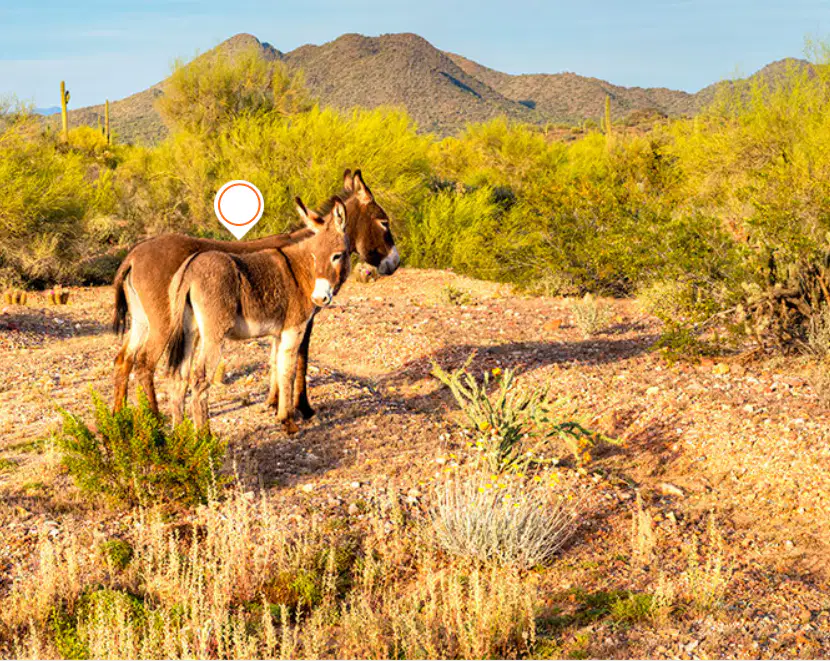
How do these Burros get energy from the sun?
sunbathing
they don't need the sun's energy
drinking water
eating plants
Which organisms will you find the most of in an ecosystem?
Consumer
Producer
Decomposer
What type of Symbiotic relationship is a dog and tick?
none
commensalism
parasitism
mutualism
The angler fish (with the glowing extension from its head) and the bacteria, are an example of which type of Symbiotic Relationship?
none
commensalism
parasitism
mutualism
A system with living and nonliving things in a given area.
abiotic
biotic
ecosystem
genetics

