
 Worksheets
Unit 6 Evolution Review
Total questions: 55
Worksheet time: 59mins
What is Natural Selection?
Reindeer from a rancher in Alaska escape from their pen during an enormous snow storm. After their escape, they mate with wild caribou that are migrating across the land. The offspring of these have traits for short legs and have tame behavior.
Gene Flow
Genetic Drift
Non-Random Mating
Natural Selection
Males of the bighorn sheep species fight one another to show females who is the dominant male and are more likely to mate with females.
Natural Selection
Mutation
Genetic Drift
Non-Random Mating
During a hurricane, a population of beetles almost gets completely wiped out. The only beetles that survived were lucky that they were in their nest at the time of the hurricane and had enough food to survive.
Natural selection
Genetic Drift
Gene Flow
Non-Random Mating
Insects become resistant to pesticides very quickly, sometime in one generation. If an insect is resistant to the chemical, most of the offspring will also be resistant. Considering that insect generations can be a matter of weeks, insects in an area can become immune to a chemical within months.
Mutation
Natural Selection
Genetic Drift
Gene Flow
A chemical spill causes a genetic change in the offspring of ladybugs to have blue dots instead of black dots.
Natural Selection
Genetic Drift
Mutation
Gene Flow
A certain type of plant can produce blue or yellow flowers. During a fire, many yellow flowers are destroyed and now since blue is the dominant trait, the plant reproduces offspring that produce only blue flowers.
Non-Random Mating
Gene Flow
Mutation
Genetic Drift
This is the pattern of natural selection where BOTH of the extreme versions of a trait are more advantageous than the average, so a population evolves in both directions away from the average
Directional Selection
Disruptive Selection
Stabilizing Selection
Radical Selection
This is one of the mechanisms of evolution; it is a continuous process in which organisms with traits that make them better-adapted to their environment are more likely to survive and reproduce than organisms without such adaptations
Directional selection
Microevolution
Gene flow / genetic drift
Natural selection
This is a pattern of natural selection where one extreme form of a trait is more advantageous than the average or the opposite extreme; as a result, this trait in the population tends to evolve towards that one extreme
Directional selection
Disruptive selection
Stabilizing selection
Forward selection
This is the process that ultimately creates new variations and changes in DNA; leads to the creation of new alleles
Mutation
Microevolution
Natural selection
Gene flow / genetic drift
This is a pattern of natural selection in which the average (or intermediate) form of a trait is the most advantageous, and so a population evolves away from the extremes and toward the average
Disruptive selection
Directional selection
Stabilizing selection
Middle selection

This makes an organism more suited to its environment
species
lifespan
adaptation
mutation
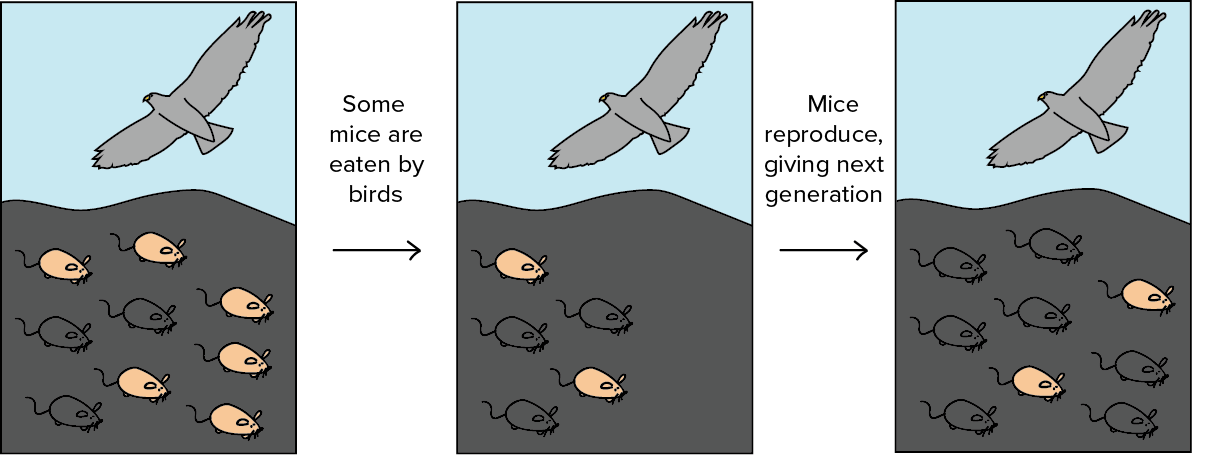
The light mice can reproduce more successfully than the dark mice
The hawks eat more dark mice than light mice because the dark mice taste better
The hawks eat more light mice than dark mice because they can see the light mice more easily
The hawks eat more dark mice than light mice because they can see the dark mice more easily
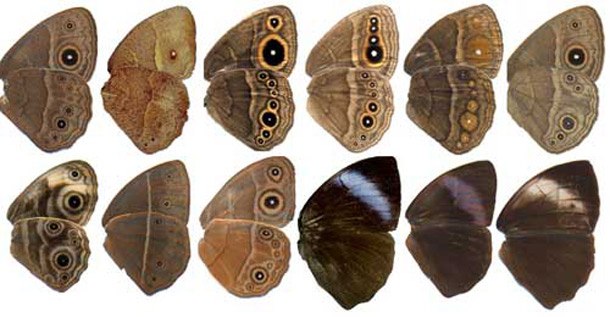
Natural Selection
Variation
Homeostasis
Extinction
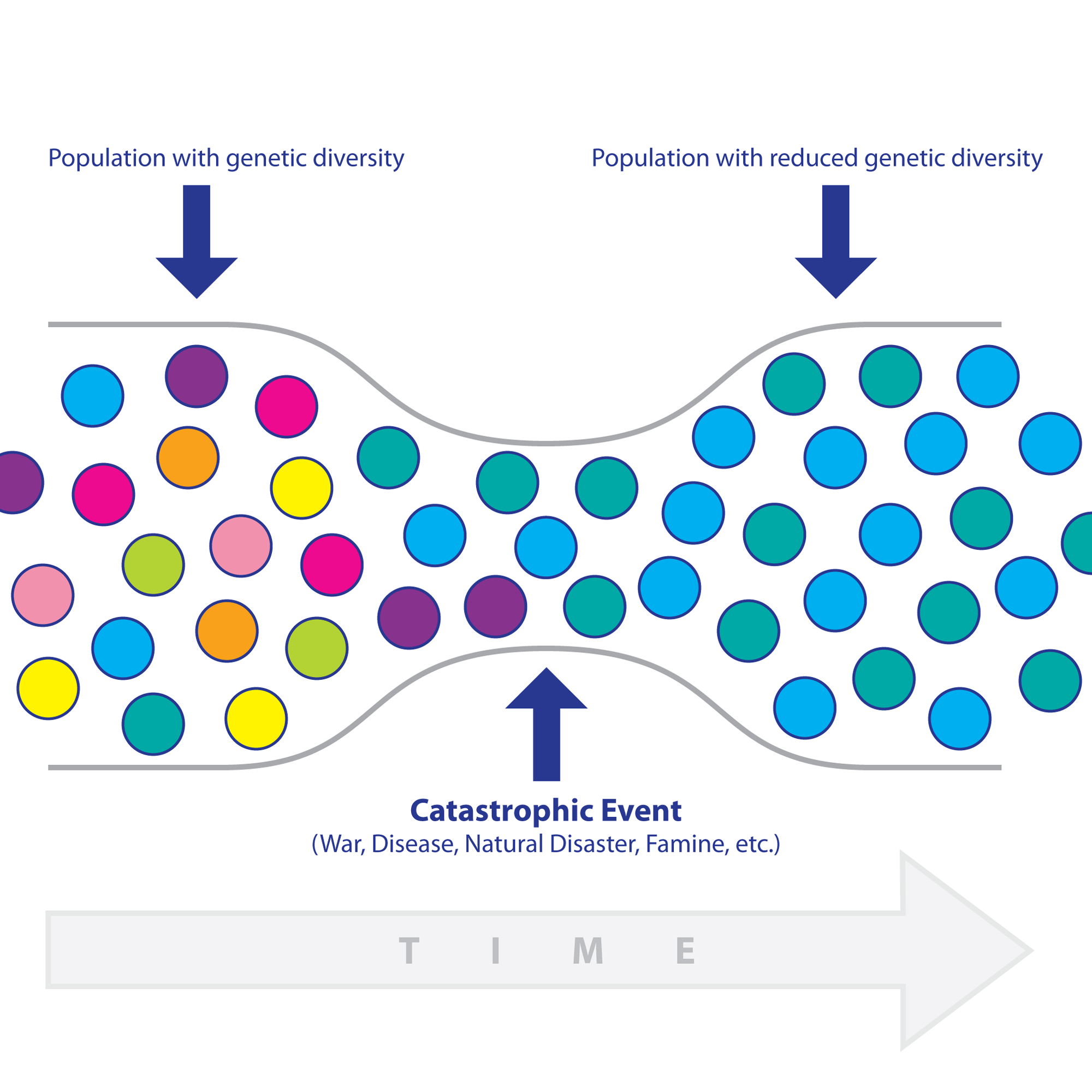
A drastic reduction in the size of a population that can change allele frequencies is called
the bottleneck effect
the founder effect
the gene flow effect
the Thanos effect
The Amish have a higher frequency of polydactyly (extra fingers) in their community than the general population. This is due to the allele for extra fingers being present in the group that started the Amish community.
The difference in allele frequency is due to genetic flow.
The difference in allele frequency is due to the founder effect.
The difference in allele frequency is due to a bottleneck.
The difference in allele frequency is due to speciation.
If you take antibiotics only the resistant bacteria survive and the non-resistant bacteria die. This is an example of...
Resistance
Survival of the fittest
How antibiotics work
Why is it important to finish ALL of an antibiotic, even if you feel better?
If all of the infectious bacteria are not killed, the bacteria may continue to multiply. Some of these bacteria may have a mutation that makes them resistant to the antibiotic. This could cause resistant bacteria to spread.
If all of the antibiotic is not used, the surviving bacteria may learn how to fight off the antibiotic, causing the sickness to get even worse.
If all of the antibiotic is not used, the bacteria may begin ingesting your skin cells, causing a new sickness to arise.
If all of the antibiotic is not used, the surviving bacteria may cooperate with other infectious bacteria, resulting in two separate infections at the same time.
A phenotype that improves an organism’s chance of survival in their environment is considered a(n) ____________.
natural selection
adaption
speciation

Many different groups of organisms have wings, even though they do not share a recent common ancestor. This is because they evolved in environments with similar selective pressures. Wings are an example of a(n) ______________ structure.
vestigial
analogous
homologous
Which best describes the phrase survival of the fittest?
strongest in a population are most successful
fastest in a population are most successful
those that can survive and reproduce are most successful
those that can live the longest are most successful
Match the following pictures with the words they represent

Analogous Structure

Homologous Structure

Artificial selection

Natural selection

Organism

Population

Community

ecosystem

biosphere
Homologous structures and vestigial structures show evidence of
divergent evolution
convergent evolution
both divergent and convergent evolution
analogous structures


The female birds of paradise tend to look for the most colorful, best dancing males to make babies together.
Genetic Drift
Non-random mating
Gene flow
Mutation
Charles Darwin observed that finches of different species on the Galápagos Islands have many similar physical characteristics, this supports the hypothesis that these finches
are twins
acquired traits through use and disuse.
all eat the same type of food.
descended from a common ancestor.
What is speciation?
when a population reaches a balance and change is no longer occuring
when populations move away from each other
when species begin to pass on acquired traits and change their behavior
when two species can no longer interbreed
In a population of ladybugs, black bugs are more successful in escaping predators. Overtime, this gene becomes more popular in the population and the ladybug population loses its red color. This is an example of?
Natural Selection
Mutation
Genetic Drift
Gene Flow

According to the diagram, crocodiles evolved from dinosaurs and birds.
True
False

Humans evolved from chimpanzees
True
False
There was a forest fire that wiped out birch trees randomly and left a few dispersed throughout the forest. The surviving trees evolve overtime changing the gene pool. This is an example of?
genetic drift
gene flow
bottleneck effect
founders effect
genetic flow
The bottleneck effect and founder effect are results of
gene flow
genetic drift
natural selection
non-random mating
mutations
How do populations change due to genetic drift?
A random event occurs that reduces the population, and the new surviving population has a different allele frequency from the original population.
The population undergoes competition with each other for limited resources changing allele frequency from the original population.
The organism/animal with the most favorable trait will be able to produce more offspring than others creating the new population.
organisms within a population undergo symbiotic relationships with each other due to mutations
The goal for all species is to
(a)
similar structures that evolved independently in different organisms due to serving similar purposes
(a)
What is the order of classification? (largest to smallest)
(a)

When unrelated species evolve similar characteristics because they live in similar
environments
Divergent Evolution
Speciation
Convergent Evolution
Punctuated equilibrium


Gigantopithecus were very large primates that lived 500,000 years ago. Since none of these mammals are still today, they are said to be....
Extinct
Threatened
Endangered
Declining


because environmental conditions have to be just right (for formation & to prevent decay)

Why are vestigial structures evidence for evolution?
They are useful in the organism and show natural selection at work.
They are not useful in the organism but they were probably useful in some ancestor of that species.
They show that these organs or behaviors help an organism adapt to new environments
Many different groups of organisms have wings, even though they do not share a recent common ancestor. This is because they evolved in environments with similar selective pressures. Wings are an example of a(n) ______________ structure.
vestigial
analogous
homologous

The pelvic bone of whales is not needed for movement within the water. This is an example of a(n) ______________ structure.
vestigial
analogous
homologous



