
 Worksheets
Ancient India and China Final 2023
Total questions: 87
Worksheet time: 44mins
Name
Class
Date
1.
First Name
4 lines
2.
Last Name
4 lines
3.
Period you were lucky enough to have Social Studies....
a)
2
b)
3
c)
4
d)
7
4.

What are the Vedas?
a)
books that contain Aryan stories and songs
b)
the main languages spoken by the Aryan people
c)
the two most important cities of ancient India
d)
stone columns that marked religious sites
5.
The goal in life for a Hindu is to reach _______________ because you followed your caste and treated others well.
a)
Brahman
b)
Caste
c)
Brahmins
d)
Aryans
6.
One way that Hinduism differs from other major religion is
a)
it has no single founder
b)
believers rely on one sacred book
c)
it is a new religion
d)
it does not have a lot of followers
7.
The ability to focus and think deeply is
a)
caste
b)
ahimsa
c)
missionary
d)
meditate
8.
The lasting peace that Buddhists seek is known as _____________.
a)
Nirvana
b)
Pearl Jam
c)
Ahimsa
d)
None of these bands
9.
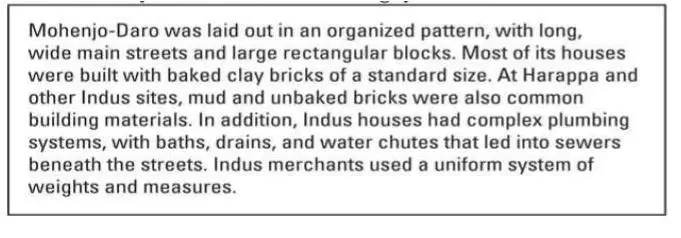
What conclusion can you draw from the reading?
a)
Mohenjo Daro was warlike
b)
They were well planned
c)
They used metal to make homes
d)
The cities were based upon triangles
10.
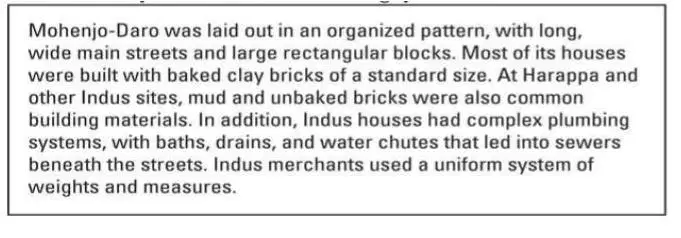
We know these cities were planned well because _________
a)
the streets had traffic lights
b)
there was no plumbing
c)
they were in rectangular blocks
d)
there were no drains or sewers
11.
Before becoming the “Enlightened One,” Gautama was a
a)
priest
b)
prince
c)
farmer
d)
soldier
12.
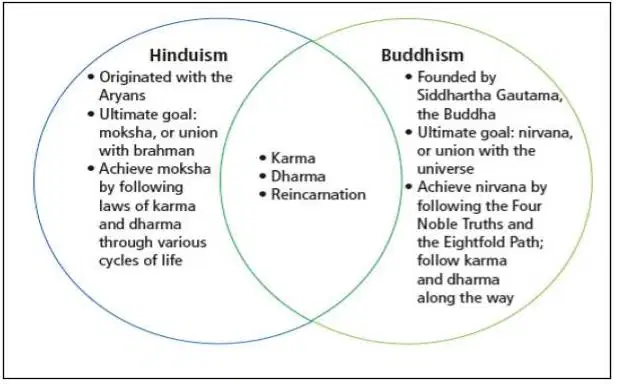
What would be a good title for the graphic?
a)
Religions of Asia
b)
Ancient India's Economy
c)
Hisduism and Taoism in India
d)
The Similarities and Differences of India's Religions
13.
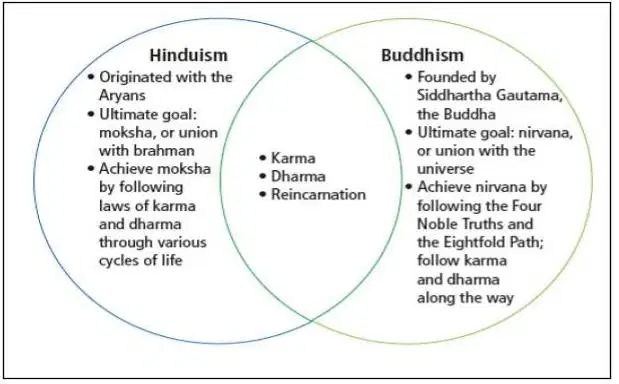
Which religion had the ultimate goal of nirvana?
a)
Hinduism
b)
Buddhism
c)
Both Hinduism and Buddhism
d)
None of these religions
14.
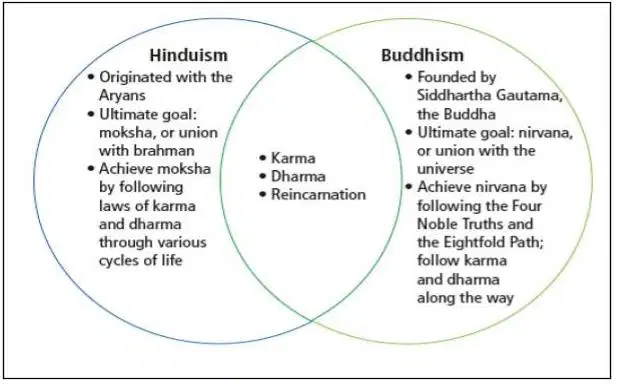
One similarity between the religions was
a)
They both originated with the Aryans
b)
Gautama was the founder
c)
Dharma
d)
None of the above
15.
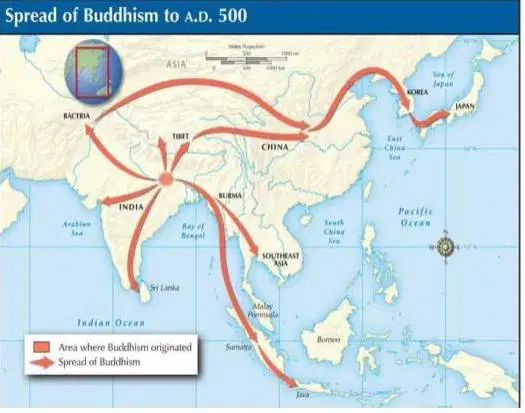
The religion of Buddhism spread
a)
East
b)
North and South
c)
West
d)
All directions
16.

Land that is separated by water and other land areas is known as_________________
a)
monsoon
b)
continent
c)
subcontinent
d)
subsistence continent
17.
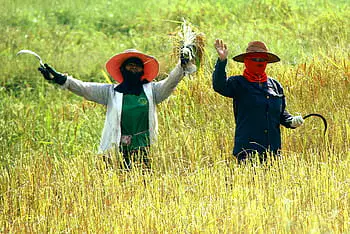
The ability to grow just enough food for yourself and trade with a small group in your village is known as ___________________.
a)
extreme farming
b)
minimal farming
c)
monsoon farming
d)
subsistence farming
18.
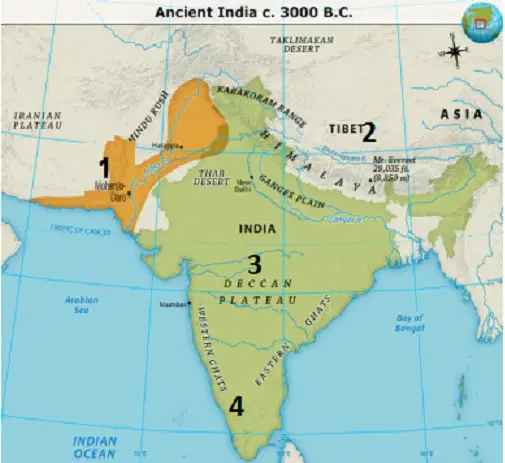
Which number represents the Indus River Valley?
a)
1
b)
2
c)
3
d)
4
19.
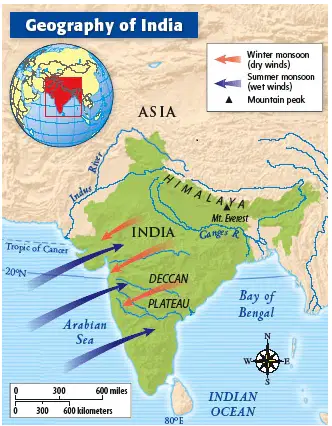
According to the map, where are the summer monsoon (wet winds) blowing?
a)
northeast
b)
southwest
c)
southeast
d)
northwest
20.

How did Zoroastrianism come to the people of India?
a)
It was started by an Indian prophet.
b)
Zoroaster was reincarnated as an Indian citizen.
c)
It was brought to India by the Persians.
d)
It was taught from books called the Vedas.
21.

Where was the city of Mohenjo-Daro built?
a)
on the banks of the Indus River
b)
in the Himalaya Mountains
c)
on the subcontinent of Pangaea
d)
in Mesopotamia
22.

What was probably the key factor in the Aryan conquest of the Indus Valley civilization?
a)
They had superior weaponry.
b)
They cut off the food supply.
c)
They were accomplished diplomats.
d)
They destroyed the canals.
23.
India's first emperor was __________________________.
a)
Asoka
b)
Buddha
c)
Chandragupta
d)
Cyruss II
24.

What is a caste?
a)
social group in which a person is born
b)
something you do with fishing line
c)
the three major gods live here
d)
part of Krishna
25.
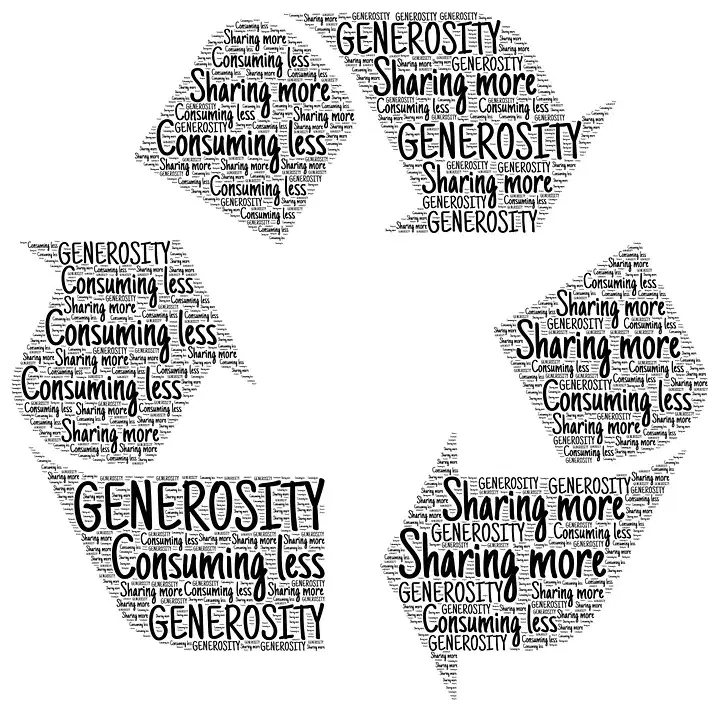
The whole idea of cause and effect is described in Ancient India culture as __________________. (What goes around comes around...)
a)
Dharma
b)
Rig Veda
c)
Karma
d)
Upanishad
26.

Which of the gods was known as the Creator?
a)
Vishnu
b)
Brahma
c)
Shiva
d)
Brahman
27.
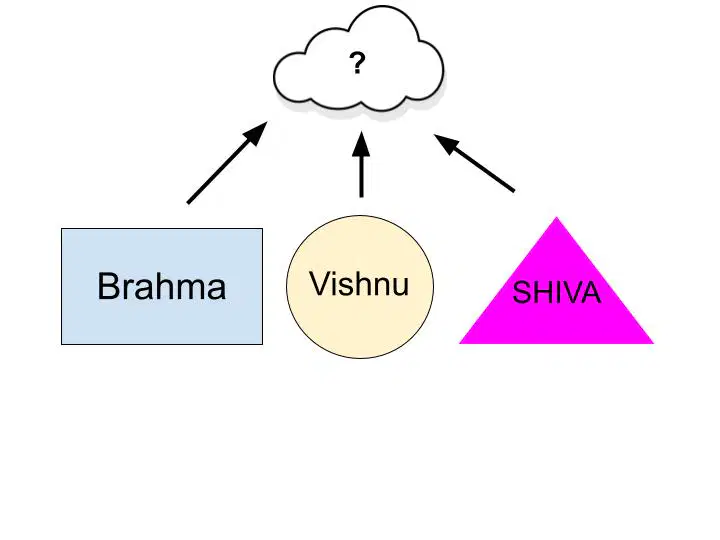
Brahma, Vishnu, and Shiva all made up _______________.
a)
Caste
b)
Brahman
c)
Ganga Mai
d)
Rig Veda
28.
___________________ means to not harm any living thing on purpose, to live in peace and together.
a)
ahimsa
b)
monk
c)
tolerance
d)
stupa
29.
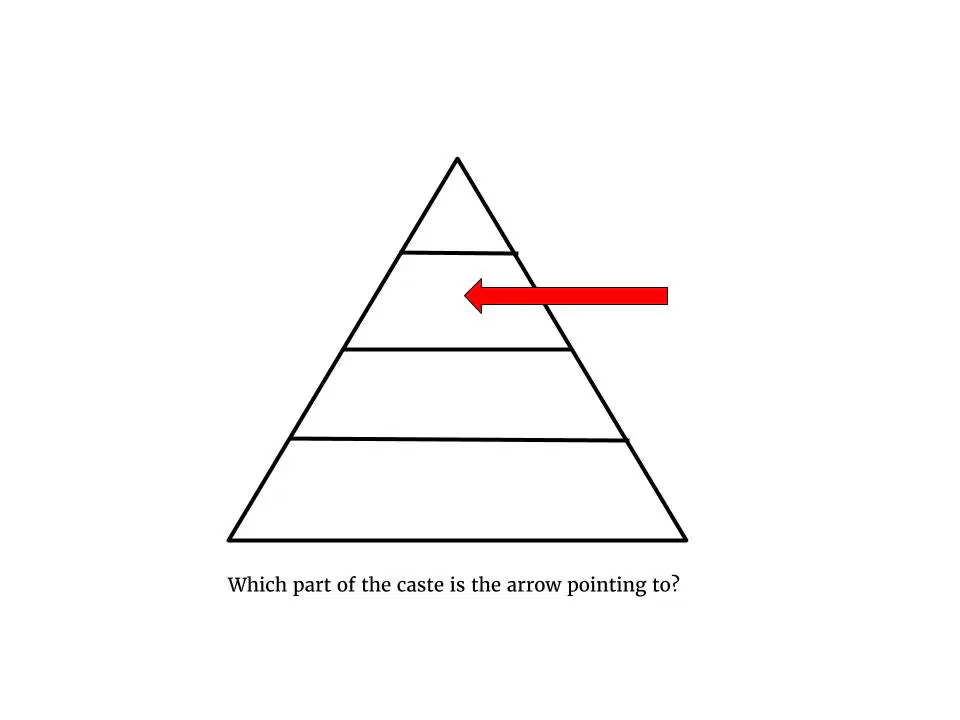
Based upon the picture which one is labeled
a)
Brahmins
b)
Kshatriyas
c)
Vaisyas
d)
Sudras
30.
How did Asoka's rule lead to a prosperous India?
a)
he conquered nearby Greek settlements.
b)
He developed an effective tax system.
c)
He encouraged tolerance of any and all people, destroying the caste system.
d)
He built excellent roads and promoted trade.
31.
According to Gautama, the way to become free from suffering is to follow the ________________.
a)
Highway
b)
Middle Way
c)
Way Less Traveled
d)
The United Way
32.
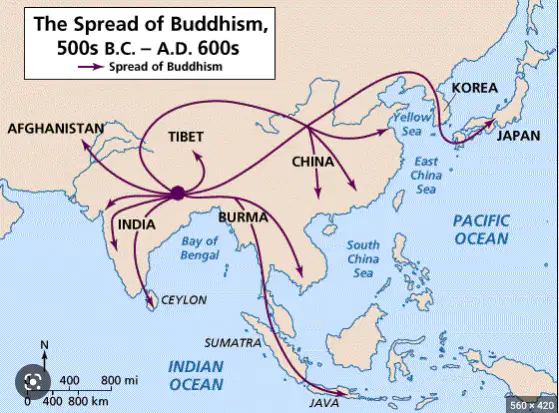
People who travel to other countries to spread their religious beliefs/ideas are known as _______________.
a)
armies
b)
monks
c)
missionaries
d)
navy
33.
What did Asoka do after the war with Kalinga?
a)
He invaded and conquered Magadha.
b)
He began following Buddhist values.
c)
He entered a monastery.
d)
He set up a spy network.
34.
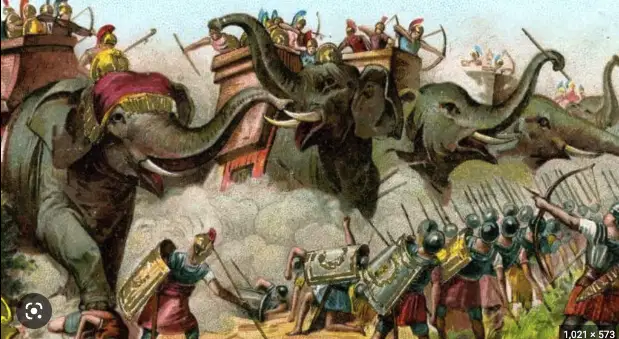
What caused Asoka to change his way of life?
a)
His wife wanted him to change.
b)
The armies of the Buddha were too strong.
c)
His Father made him into a monster.
d)
The sufferings created by the war in Kalinga disturbed Asoka, so he converted to Buddhism.
35.
One way that Hinduism differs from other major religion is
a)
it has no single founder
b)
believers rely on one sacred book
c)
it is a new religion
d)
it does not have a lot of followers
36.
Buddha taught that the cure for suffering was to
a)
worship many gods
b)
exercise and eat healthy foods
c)
give up selfish desires
d)
gain wealth and not share it with anyone
37.
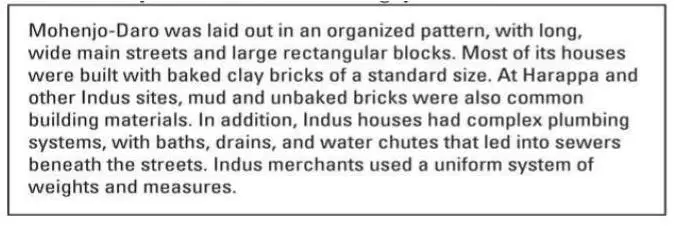
What conclusion can you draw from the reading?
a)
Mohenjo Daro was warlike
b)
They were well planned
c)
They used metal to make homes
d)
The cities were based upon triangles
38.
We know these cities were planned well because _________
a)
the streets had traffic lights
b)
there was no plumbing
c)
they were in rectangular blocks
d)
there were no drains or sewers
39.

What caused the Himalayas ?
a)
aliens
b)
the people built them
c)
the plates colliding
d)
the monsoons
40.
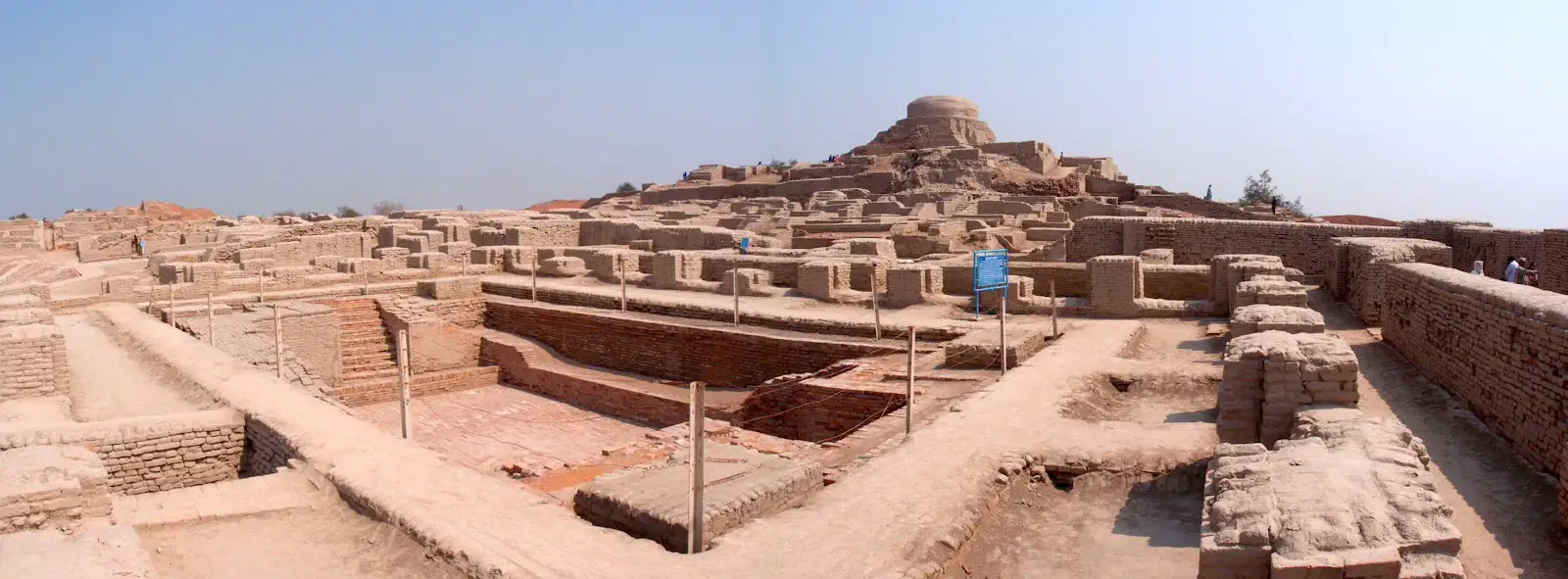
Where was the city of Mohenjo-Daro built?
a)
on the banks of the Indus River
b)
in the Himalaya Mountains
c)
on the subcontinent of Pangaea
d)
in Mesopotamia
41.
Chandragupta believed that a ruler must have complete control, or __________________ power over the people.
a)
supreme
b)
ultimate
c)
absolute
d)
plethora
42.

The process of going from one life to the next is ______________________.
a)
dharma
b)
karma
c)
reincarnation
d)
caste
43.

Hindu religious ideas have developed from ______________________.
a)
only from the Upanishads.
b)
only from the Aryan Vedas.
c)
from one unknown source.
d)
from many sources.
44.
Which of these phrases BEST summarizes Legalism?
a)
Harsh laws are needed to keep order in society.
b)
Moral values are the key to social order.
c)
Citizens are capable of governing themselves.
d)
Educating people leads to a strong society.
45.
What Chinese dynasty came before the Zhou dynasty?
a)
Tang
b)
Shang
c)
Qin
d)
Hang
46.
What was one major achievement of Emperor Wudi?
a)
He founded the Han dynasty.
b)
He expanded China to the north and south.
c)
He united China under a Legalist government.
d)
He built the Great Wall of China.
47.
How did Han government differ from the Qin government?
a)
The Han revived Confucian learning suppressed by the Qin.
b)
The Han imposed harsher laws than the Qin.
c)
The Han created a more centralized government than the Qin.
d)
The Han encouraged trade less than the Qin.
48.
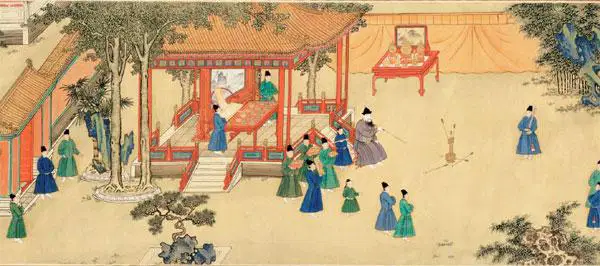
The dynasty was known as the Golden Age of China?
a)
Zhou
b)
Shang
c)
Qin
d)
Han
49.
The first ruler of the Han Dynasty was ____________.
a)
Wudi
b)
Han Solo
c)
Han Huangdi
d)
Han Gaozu
50.
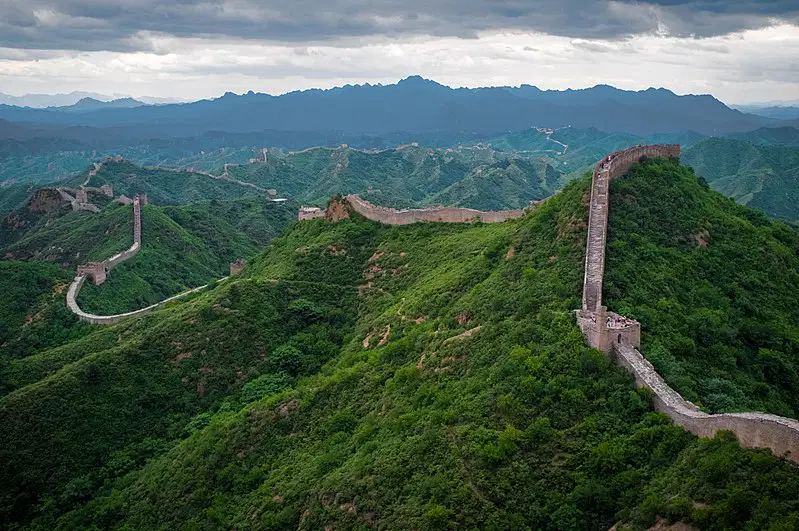
What was built to protect the empire from northern invaders?
a)
terraces
b)
Terra Cotta Army
c)
the Great Wall
d)
levees
51.

The practice of using skills and talents to work in the government.
a)
Scroll Painting
b)
Oracle Bones
c)
Province
d)
Civil Service
52.

How long was the Great Wall?
a)
3,995 feet long
b)
87 miles long
c)
10 kilometers long
d)
3,995 miles long
53.
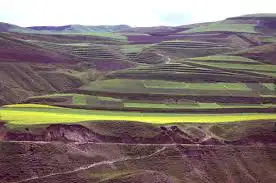
A yellowish brown soil found in China is called ____________.
a)
terraces
b)
loess
c)
silt
d)
levee
54.

The Chinese used as much land possible by farming into the mountains, these are known as __________.
a)
terraces
b)
loess
c)
silt
d)
levee
55.
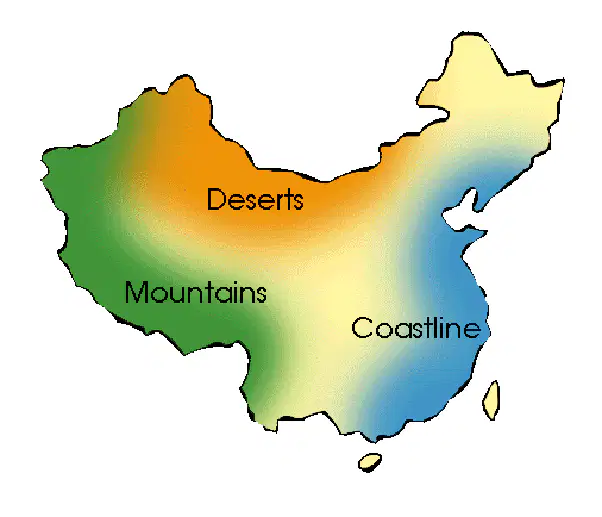
China was cut off from the rest of the world because of __________.
a)
The Great Wall of China
b)
natural barriers
c)
terraces
d)
the Yellow River
56.
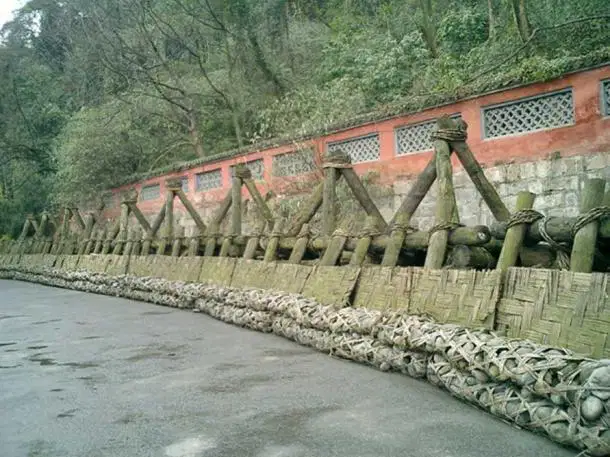
How did the people try to control the river flooding?
a)
building terraces
b)
building levees
c)
they couldn’t control it
d)
they only farmed on mountains
57.
During what dynasty did Confucius live?
a)
Han
b)
Qin
c)
Zhou
d)
Dao
58.
A collection of sayings from Confucius is known as__________.
a)
Analects
b)
Scholars
c)
Mencius
d)
Mandate of Heaven
59.
Confucius believed that people should treat others the way they want to be treated. This is known as the _____________.
a)
Ten Commandments
b)
Golden Rule
c)
Analects
d)
Daoism
60.
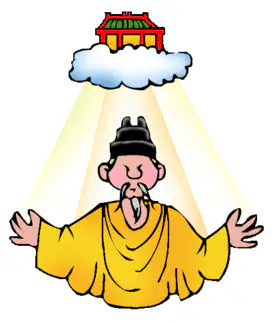
What is the idea that those in power are there because of a divine source?
a)
Mandate of Heaven
b)
Mandate of Dao
c)
Confucianism
d)
The Golden Rule
61.

The idea of turning towards nature and living in harmony while giving up worldly concerns is known as __________.
a)
Confucianism
b)
Daoism
c)
Mandate of Heaven
d)
Analects
62.
Which of the following actions did Shi Huangdi take in order to control Chinese thought?
a)
He outlawed the ideas of Confucius and others.
b)
He built the only library in the empire.
c)
He trained all the scholars himself.
d)
He wrote the philosophy books read by the people.
63.
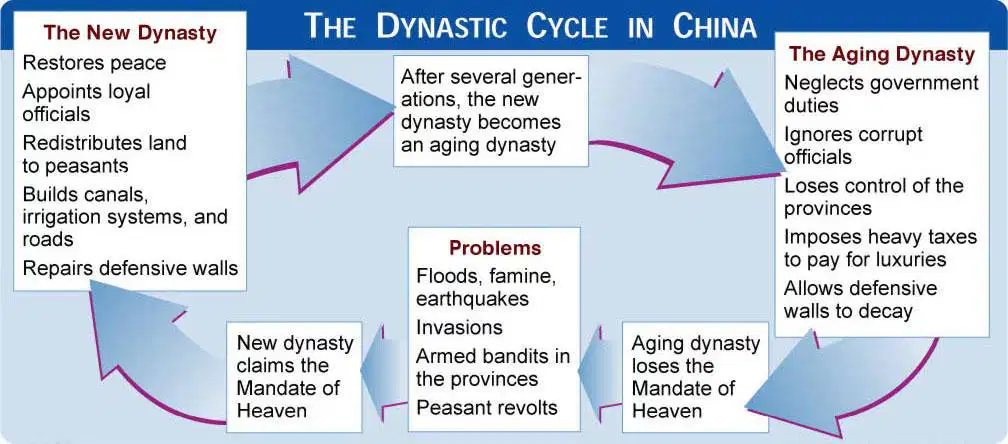
According to the graphic: What are some signs of an aging dynasty?
a)
There is an appointment of new officials
b)
Redistribution land to peasants
c)
Mandate of Heaven
d)
Loses control of provinces
64.
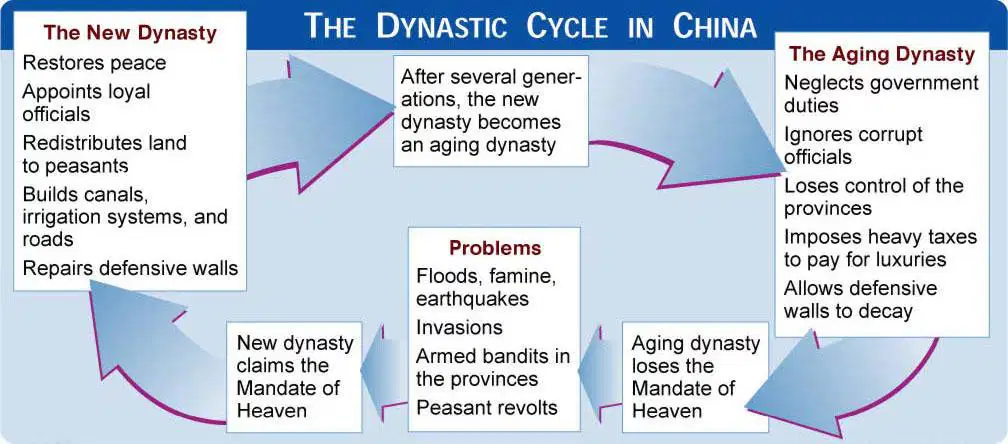
According to the graphic: What were some ways the New Dynasty gains the favor of the people?
a)
Restores peace
b)
Appoints loyal officials
c)
Repairs walls and canals
d)
Everything listed here
65.
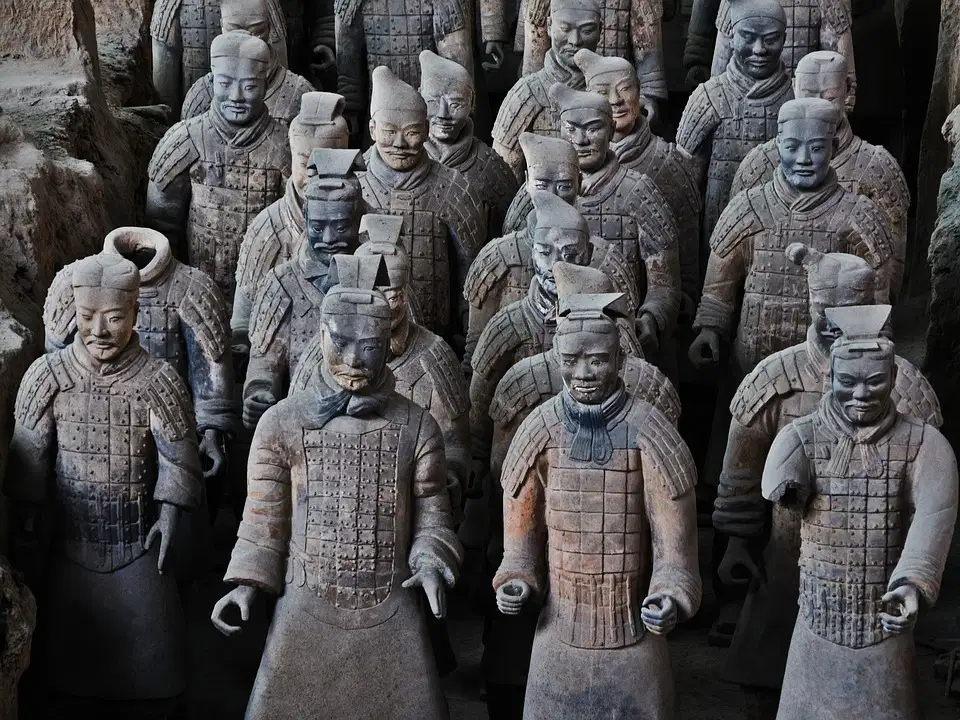
What was the purpose of placing warriors in the emperor's tomb?
a)
The large number of warriors was to show off the emperor's wealth.
b)
The warriors were to guard the emperor in the afterlife.
c)
The emperor offered the warriors as gifts to the gods.
d)
It is Chinese tradition to bury emperors with warrior statues.
66.

The center for early Chinese society was
a)
family
b)
the individual success
c)
the state
d)
the governor
67.
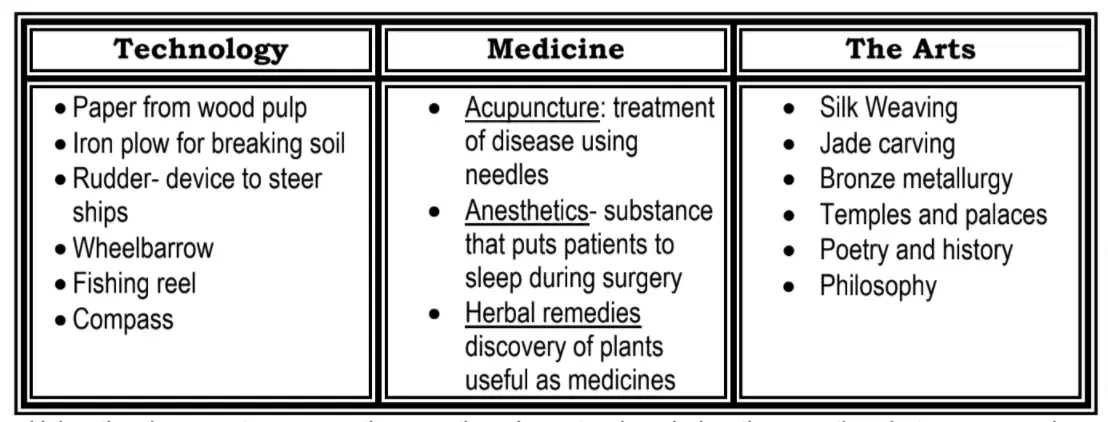
What would be a good GRAPES title for this graphic?
a)
Achievements (A)
b)
Geography (G)
c)
Religion (R)
d)
Politics (P)
e)
Economy (E)
68.

What was the Silk Road?
a)
a mountain pass through the Hindu Kush
b)
a path for ideas from Japan
c)
a road through the silk-weaving province of China
d)
a network of trade routes that crossed Asia
69.
What role did Confucianism play in the civil service?
a)
Only nobles were allowed to apply for the civil service.
b)
Exams were based on the ideas of Confucius.
c)
Civil service exams were open to both men and women.
d)
Only Confucian priests were allowed to enter the civil service. 1
70.
Which of these was NOT invented by the Chinese during the Han Dynasty?
a)
acupuncture
b)
seismometer
c)
paper
d)
gunpowder
71.
The first ruler of the Han Dynasty was ____________.
a)
Wudi
b)
Han Solo
c)
Han Huangdi (Lui Si)
d)
Han Gaozu (Liu Bang)
72.

Who was responsible for building new roads to improve transportation and trade?
a)
Wudi
b)
Shi Huangdi
c)
Lui Bang
d)
Han Gaozu
73.
How was transportation standardized under the Qin?
a)
Roads were the same width.
b)
Carriages were the same height
c)
Everyone paid the same road tax.
d)
Axles of carriages were the same length.
74.
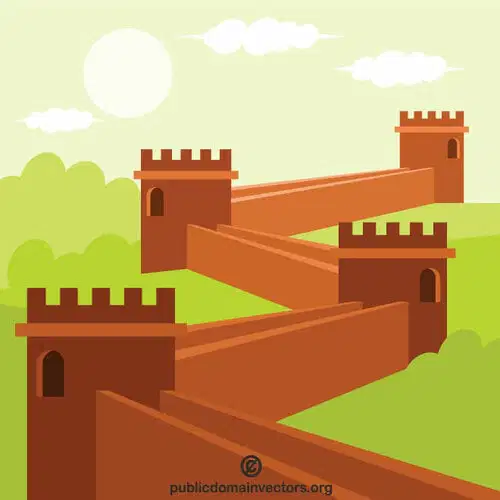
What was the purpose of the Great Wall?
a)
to separate warring states
b)
to keep out nomads to the north
c)
to standardize Chinese roads
d)
to make trade and transportation easier 1
75.
Who was the first emperor of united China?
a)
Shang Yang
b)
Han Feizi
c)
Confucius
d)
Shi Huangdi
76.
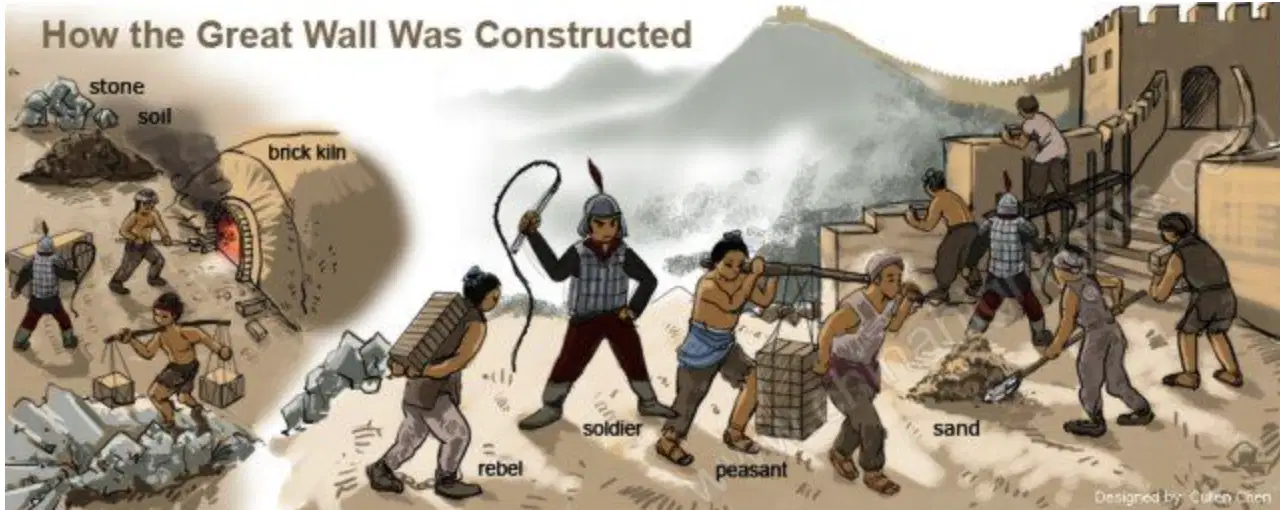
Why did many people sent to work on the Great Wall not return home?
a)
They ran away to other countries.
b)
They died under harsh conditions.
c)
They decided to live near the wall.
d)
They were taken by aliens.
77.

Qin Shi Huangdi helped unify China by creating a(n) ________, or type of money, that everyone had to use.
a)
currency
b)
paper
c)
horses
d)
Buddhism
78.
Which of the following did the Emperor of Qin do to maintain his authority over China?
a)
He created a government that he controlled personally
b)
He divided his territory into 36 districts.
c)
One official in each of the districts was responsible keeping the emperor informed.
d)
all of these are correct
79.
Confucius believed that people should treat others the way they want to be treated. This is known as the _____________.
a)
Ten Commandments
b)
Golden Rule
c)
Analects
d)
Daoism
80.
The idea of turning towards nature and living in harmony while giving up worldly concerns is known as __________.
a)
Confucianism
b)
Daoism
c)
Mandate of Heaven
d)
Analects
81.
Why was China considered a “Land of Contrasts?”
a)
It was white and black
b)
there were different nationalities
c)
there were different climates
d)
It wasn’t considered a land of contrasts
82.
China was cut off from the rest of the world because of __________.
a)
The Great Wall of China
b)
natural barriers
c)
terraces
d)
the Yellow River
83.
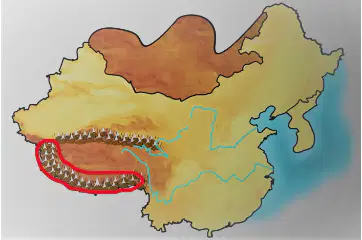
What is the name of the natural barrier circled in red?
a)
Taklimakan Mountains
b)
The Alps
c)
The Himalayan Mountains
d)
Kunlun Mountains
84.
How did the geographic setting of India hurt and improve its development?
4 lines
85.
What were two (2) similarities and one (1) difference between Hinduism and Buddhism? Explain each choice.
4 lines
86.
How does leadership impact the people of Ancient China? Give examples with actual leaders.
4 lines
87.
Why was China considered a Land of Contrasts? Explain.
4 lines
100 %

