
 Worksheets
Electricity Quiz
Total questions: 68
Worksheet time: 1hrs 6mins
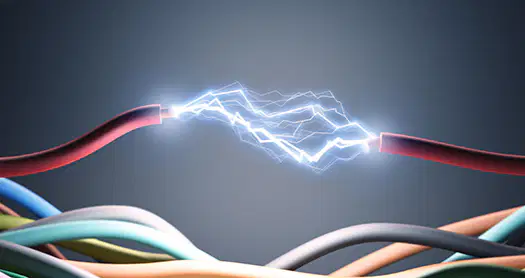
How many Coulombs of charge will flow through a wire if 2 Amperes of current is running for 8 minutes?
120 Coulombs
960 Coulombs
240 Coulombs
60 Coulombs
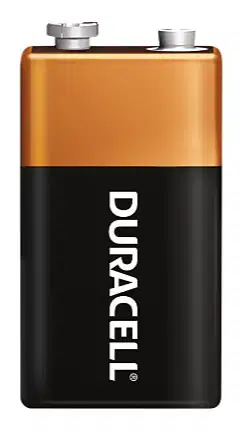
How much energy will a 9 Volt battery give when it pushes 6 Coulombs of electrons through a light bulb?
27 Joules
54 Joules
48 Joules
9 Joules
What is the force experienced by an electron in an electric field of strength 1 N/C?
1.6 x 10^-19 N
3.2 x 10^-19 N
1 N
1.6 x 10^-19 V/m

A lightbulb has a current of 3.0 amperes. How many coulombs of electric charge pass through the lightbulb in 5 seconds?
10 coulombs
15 coulombs
20 coulombs
25 coulombs
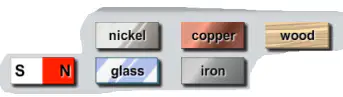
Which of the following materials will be attracted to a magnet?
Nickel, plastic, iron
Nickel, aluminum, iron
Nickel, rubber, iron
Nickel, iron
Nora and Ava are conducting an experiment to see which battery lights up a bulb the brightest. Which of the following batteries lit the bulb most brightly?
9V Transistor Battery
1.5V C battery
1.5V AA battery
6V Lantern battery
Which factor of the battery determines its power output?
Its capacity
Its voltage
Its weight
Its shape
During the science fair, Benjamin and Sophia used which lab instrument to measure the voltage of each battery?
Ammeter
Voltmeter
Ohmmeter
Thermometer
What is the elementary charge of a proton?
1.6 × 10⁻¹⁹ C
2.4 × 10⁻⁴ C
4.2 × 10⁴ C
8.3 C
During a science experiment, Kai and Abigail observed an electric bulb. What part of the bulb glows to produce light?
the glass case of the bulb.
the thin filament.
the thick wires supporting the filament.
gases inside glass case of the bulb.
If a wire carries a current of 3 A, how many coulombs of charge pass through a point in the wire in 2 seconds?
6 C
3 C
1.5 C
9 C
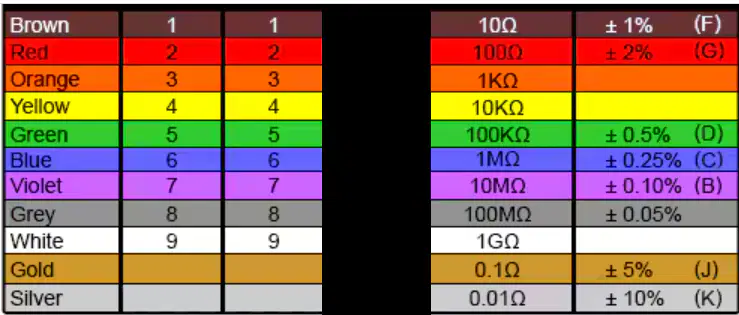
USE YOUR REFERENCE SHEET - What is the resistance of a resistor with the color bands Brown, Green, and Red?
150 Ω
250 Ω
1.5 kΩ
2.5 kΩ

USE YOUR REFERENCE SHEET - What is the resistance of a resistor with the color bands Green, Blue, and Orange?
56 kΩ
5.6 kΩ
560 Ω
56 Ω
In this type of circuit, if one component fails, the current can still flow through other paths.
closed circuit
open circuit
parallel circuit
series circuit
In a series circuit, how many paths are available for the electric current to flow?
One
Two
Three
Four
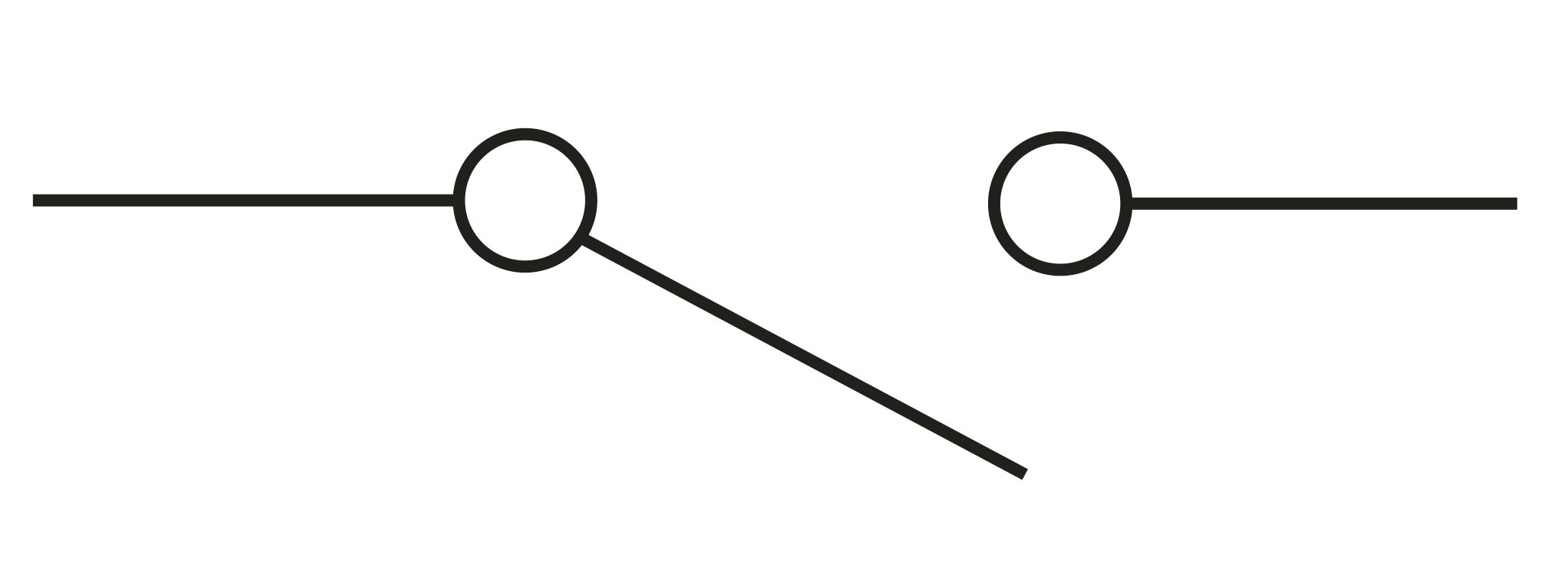
Which components will remain off when the switch is in this position?
All components
No components
Only the components in the same loop as the switch
Only the components in different loops from the switch
Pick which types of wire will give you the more resistance.
Long wire, Thin wire, Hot wire
Long wire, Thick wire, Cold wire
Short wire, Thin wire, Cold wire
Short wire, Thick wire, Hot wire
What is the voltage of a circuit with 4 ohms of resistance and 3 amps of current?
21 V
3/4 V
4/3 V
12 V
What is the resistance of a lightbulb that experiences 9 Volts and 3 amps of current?
9 ohms
1/3 ohms
3 ohms
27 ohms

Emma and Chad are playing two different musical instruments. Indicate which of the two instruments they are playing produces higher pitched note. Be prepared to explain why on the final.
Guitar
Violin

What happens to the pitch of a trombone note when the length of the tube is increased?
The pitch becomes higher
The pitch becomes lower
Which diagram best represents the electric field around a negatively charged conducting sphere?


Choose the RIGHT diagram.


Choose the RIGHT diagram.


Which diagram correctly shows the field lines between two like charges?
A
B
Both
Neither

Based on the arrangement of the electric field lines in the diagram, what are the charges?
both charges are the same
the charges are opposite
they are neutral; no charge
Two negative charges will
attract
repel
do nothing
Opposite charges will
attract
repel
do nothing


Which statement accurately describes the charged particles in Diagram A?
The particles have opposite charges:
Blue: Negative Red: Positive
The particles repel one another.
The particles have like charges:
Blue: Negative Red: Negative
The particles attract one another.
The particles have opposite charges:
Blue: Positive Red: Negative
The particles attract one another.
The particles have like charges:
Blue: Positive Red: Positive
The particles attract one another.
Electrical field lines of a negatively charged object flow _______________.
Inwards
Outwards
Clockwise
Counter-Clockwise
What does the Law of Conservation of Charge state?
like charges repel and opposites attract
positive charge fields point away from a charge; negative points toward
charges cannot be created nor destroyed, only transferred
Magnetic fields are strongest _______.
at both poles
at the north pole
at the south pole
between the poles

An example of a natural magnet is:
Iron
Nickel
Lodestone
Neodymium
What type of magnet is made from a coil of wire wrapped around a piece of metal?
electromagnet
water magnet
iron nickel magnet
What happens if you cut a magnet in half?
The magnet loses its force entirely.
The magnetic field is reduced by half.
You end up with two magnets. Cool!
What happens when a compass is moved near a strong magnet?
it points north
it points toward the magnet
it spins in circles
it doesn't move

Which kind of circuit only has one path for electricity to flow?
Series
Parallel
Series and Parallel

Which kind of circuit has more than one path for electricity to flow?
Series
Parallel
Series and Parallel
If a bulb is not working in a series circuit, what happens to the other bulbs?
none will work
the rest will work
If a bulb is not working in a parallel circuit, what happens to the other bulbs?
none will work
the rest will work

What kind of magnet is this?
Bar
Horseshoe
Ring
A north magnet

A horseshoe magnet will generate a magnetic field similar in shape to that of two ________ poles brought near each other.
like
opposite
positive
negative

The picture is an example of .....
Series Circuit
Parallel Circuit
Alternating Circuit
Active Circuit

The picture is an example of .....
Series Cicuit
Parallel Circuit
Alternating Circuit
Direct Circuit

To find the total resistance in the circuit?
2.0 Ohms
0.50 Ohms
24 Ohms
8.6 Ohms

What is the total resistance of this circuit?
9.6 Ω
40 Ω
0.104 Ω
8 Ω
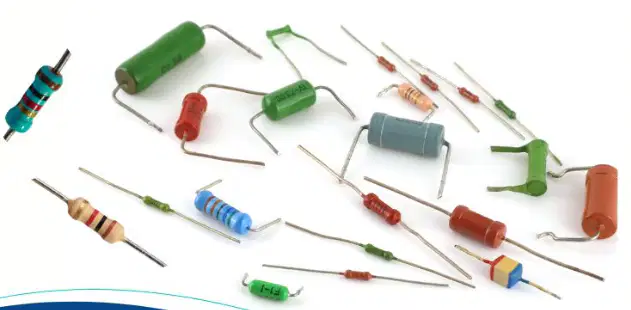
What are these?
a. resistors
b. capacitors
d. switches


What is a closed path for electrons to flow through called?

True or False?
Electricity can flow through an open circuit.
True
False


The highest part of the wave is called the _______________.
Amplitude
Wavelength
Trough
Crest

The bottom part of the wave is called trough.
True
False

In a longitudinal wave, the parts where the coils are close together (A) are called what?
longitudes
rarefactions
compressions
wavelengths


