
 Worksheets
Btech Enterprise Homework
Total questions: 40
Worksheet time: 22mins
A type of market segmentation divides markets into distinct groups based on age, gender, income level, occupation, or education level.
Geographic Segmentation
Psychographic Segmentation
Demographic Segmentation
Behavioral Segmentation
A type of business market to a business that advertises and sells services instead of products.
Business to consumer market
Business to business market
Service market
Professional Services market
A type of business market that advertise and sell their goods or services to other businesses instead of marketing directly to consumers.
Business to consumer market
Business to business market
Service market
Professional Services market
What type of business market involves involves businesses advertising products directly to customers for purchase?
Business to consumer market
Business to business market
Service market
Professional Services market
A type of market segmentation that divide markets into distinct groups based on lifestyle, values, beliefs, interests, or opinion
Behavioral Segmentation
Demographic Segmentation
Psychographic Segmentation
Geographic Segmentation
What is it called when you divide a market into a smaller more similar market?
Marketing
Similar Markets
Market Segmentation
A target market is defined as...
Target practice for archery
A group of people identified as potential buyers
Demographics
Psychographics
The target market is a male, 35-45, with an annual income of $60,000. Which one shows how this target market is described?
Behavioral
Demographics
Geographics
Psychographics
Amelia and Isabella are part of a book club. Members of a target market have similar _______.
wants
needs
interest
wants, needs, & interest

Which of the following demographic groups would most likely be the target market for the mustache trimmer in the image?
Male age 15-17
Female age 20-30
Male age 20-30
Male age 40-60
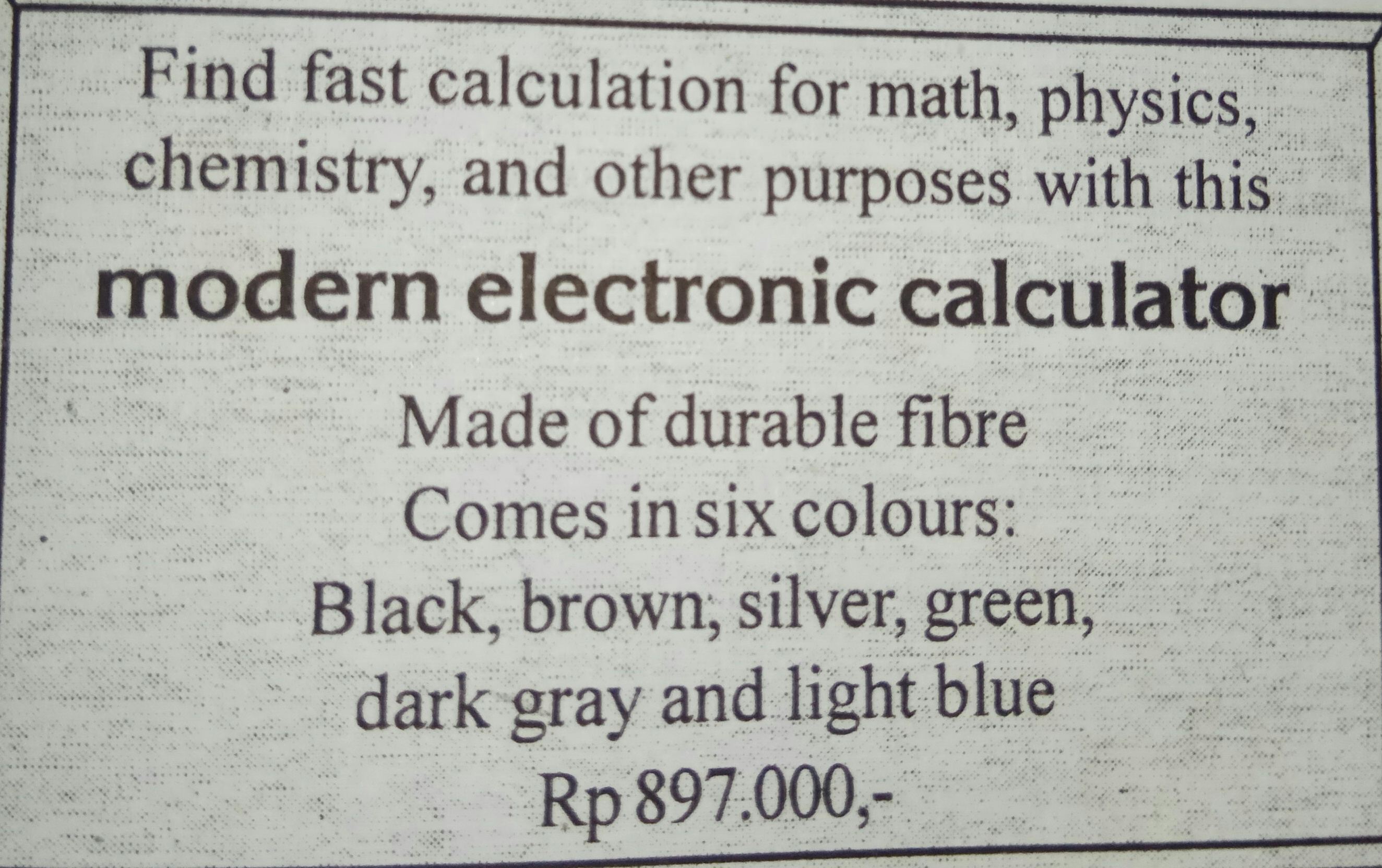
What is being advertised in the text above?
A durable fibre
A colorful calculator
A fast calculation
A modern electronic calculator
Which statement best describes "Price"?
The cost of producing items
The amount customers are charged for items
The profit earned from selling items
What is price skimming?
An initially high price charged to customer which will reduce over time
An initially low price charged to customer which will increase over time
A steady price charged to customer regardless of product age
What is the selling price of an item which costs £5 to make and has a 50% mark up (profit added)?
£7.50
£5.00
£10.00
Which pricing strategy involves setting prices based on the costs for producing, distributing and selling the product plus a fair rate of return for its effort and risk?
Customer Value-Based Pricing
Competition-Based Pricing
Cost-Based Pricing
Dynamic Pricing
Which of the following is NOT a purpose of sales promotions?
To entice people in.
To boost sales figures.
To attract first-time buyers
To clear new stock.
How does a coupon work?
It encourages people to buy again at a later date.
It enters customers into a prize draw.
It rewards regular customers for their loyalty.
Customers get to try something before buying it.
How does a free sample work?
It encourages people to buy again at a later date.
It enters customers into a prize draw.
It rewards regular customers for their loyalty.
Customers get to try something before buying it.
Some enterprises advertise sales promotions all year round, even though their prices rarely change.
True
False
What is digital marketing?
The marketing of products or services through digital methods such as the internet.
The marketing of a digital product such as a mobile device or computer.


Newspapers, TV, radio, magazines, billboards, etc. are examples of...
Advertising
Publicity
Sales Promotion
Personal Selling
Describe how 'discounts' work as a sales promotion technique
To encourage sales, a customer is offered a pen or other item.
Customers collect points with purchases, which can be exchanged for other goods or services.
A customer purchases one product at the normal price and gets another product free.
Money is taken off the original selling price e.g. 10% off

Which one is NOT a stage in the Product life cycle
maturity
decline
growth
sales peak

Which stage of the product life cycle has rapid sales?
introduction
maturity
decline
growth

Which stage of the product life cycle has lots of competitors?
growth
maturity
introduction
decline
In this stage of the product life cycle:
•Declining sales
•Low cost per customer
•Declining profits
•Laggards are targeted
•Declining competition
Product development
Introduction
Growth
Maturity
Decline
During this stage of the product life cycle, a business will research and develop the product. Product testing and trials takes place.
Development
Introduction
Growth
Maturity
Decline
What is meant by the term market segmentation?
A group of consumers at which a service is aimed
A subgroup of people or organisations with common interests or characteristics
A subgroup of people with common characteristics
A part of the market share you own

