
NEW
Font size
 Worksheets
Balance & Stability
Total questions: 25
Worksheet time: 13mins
What is balance in physical education?
The ability to run fast.
The ability to maintain equilibrium of the body while stationary or moving.
The ability to lift heavy weights.
The ability to swim efficiently.

What is stability in the context of physical education?
The ability to run long distances without getting tired
The ability to use body structures in the safest and most efficient way in different sport-related positions
The ability to lift heavy weights
The ability to swim fast
What is the centre of gravity (C of G) of an object?
The point at which all the weight is evenly distributed and about which the object is balanced.
The point at which the object is heaviest.
The point at which the object is lightest.
The point at which the object is moving fastest.
What does it mean when the mass of an object is equally distributed around the centre of gravity?
The weight is equally balanced in all directions.
The object is moving in one direction.
The object is stationary.
The object is rotating.
Where is the center of gravity (C of G) located in an object with a hollow center?
At the bottom of the object
In the center of the hollow
At the top of the object
On the surface of the object
What is an example of a sport where the ball has an uneven distribution of mass to favor a particular side?
Basketball
Soccer
Lawn bowls
Tennis
What does the term "C of G" stand for in the context of the human body?
Centre of Gravity
Centre of Growth
Centre of Genetics
Centre of Glands
Why may the Centre of Gravity (C of G) not be in the middle of the human body?
Because the human body is an irregular and moveable shape
Because the human body is symmetrical
Because the human body is always in motion
Because the human body is perfectly balanced
What does the Centre of Gravity (C of G) in the human body depend on?
The position of the arms and legs relative to the trunk
The weight of the body
The height of the body
The age of the person
How does the flexibility of the human body affect the Centre of Gravity (C of G)?
It allows the C of G to change often
It keeps the C of G constant
It lowers the C of G
It raises the C of G

During repetitive movements such as running, how does the center of gravity (C of G) behave?
It remains constant.
It varies slightly with each bounce and stride.
It moves outside the body.
It only changes during the initial phase.
In activities that require quick rotation, such as a somersault, where might the center of gravity (C of G) need to move?
It remains at the center of the body.
It moves to the feet.
It moves outside of the body.
It moves to the head.
Which of the following is a factor that affects an athlete's stability?
Speed of movement
Height of C of G
Flexibility of joints
Endurance level
Which factor refers to the area that supports the athlete's body?
Height of C of G
Size of the base support
Position of the line of gravity
Flexibility of the joints
Which factor involves the alignment of the body in relation to gravity?
Height of C of G
Size of the base support
Position of the line of gravity
Speed of movement
What is the relationship between the height of the center of gravity (C of G) and the stability of the body?
The higher the C of G, the more stable the body.
The lower the C of G, the more stable the body.
The height of the C of G does not affect stability.
The stability of the body is only affected by weight.
Why is a shorter person generally more stable than a taller one, assuming all other factors are equal?
Because they have a higher center of gravity.
Because they have a lower center of gravity.
Because they weigh less.
Because they have a wider base.
Why do wrestlers get down low during a match?
To increase their speed.
To increase their strength.
To increase their stability.
To increase their flexibility.
What is the line of gravity?
An imaginary line that extends down from the center of gravity to the ground
A real line that extends horizontally from the center of gravity
A line that extends from the head to the feet
A line that extends from the base of support to the ground
Which position is more stable?
A person with their legs together
A person with their legs spread apart
A person standing on one leg
A person in a squat hold
When is the body considered to be most stable?
When the line of gravity is in line with the center of the base of support
When the line of gravity is leaning over the base of support
When the line of gravity is outside the base of support
When the line of gravity is parallel to the base of support
What happens to an individual's stability when they lean over the base of support?
Stability increases
Stability remains the same
Stability reduces
Stability becomes unpredictable
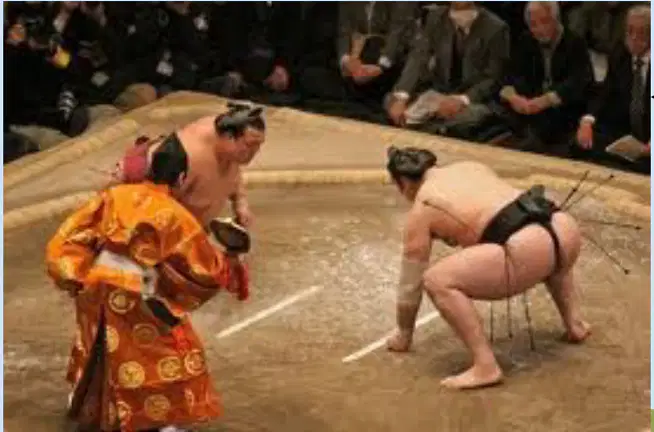
Which of the following factors affects stability the most in the image provided?
Centre of gravity being forward of the body
Position of the line of gravity
The area of the base support
Weight of the body

What factor affecting stability is indicated by the position of the body relative to the ground? Refer to the diagram of the golfer.
Height of centre of gravity
Position of the line of gravity
Size of base of support
Speed of movement
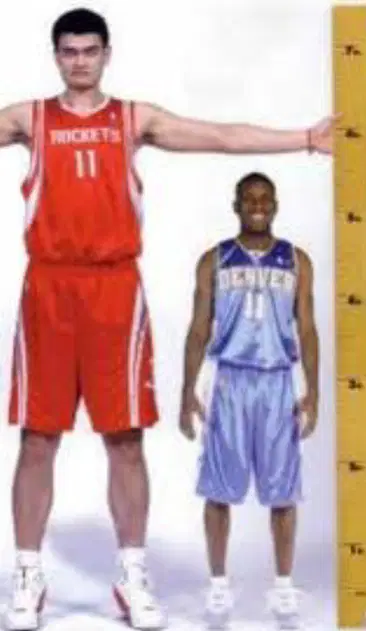
Which factor affecting stability is related to how high or low the centre of mass is in the body?
Height of centre of gravity
Position of the line of gravity
Size of base of support
Flexibility of the body

