
 Worksheets
Atoms, Elements and Compounds and State of matter
Total questions: 123
Worksheet time: 2hrs 51mins

Solid
Liquid
Gas

Solid
Liquid
Gas
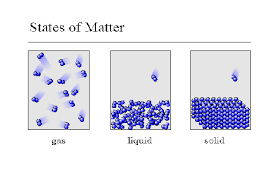
As liquid water heats up, particles escape from the surface, this is called ______________.
boiling
evaporation
melting
freezing

This is an example of particles in a _____.
solid
liquid
gas


Which form of matter has a definite shape and takes up space (has definite volume)?
liquid
solid
gas
clay
Which of the following process is an example of condensation


Which state (s) of matter takes the shape of the container they are place in
liquid and solid
liquid and gas
Gas only
Liquid only

The process represent by the picture is ______________
sublimation
evaporation
condensation
deposition
Fixed shape and Fixed volume
No Fixed shape or volume
Fixed volume but not Fixed shape

In which state of matter are the particles least able to move?
A
B
C

Which of these three states represents a liquid?
A
B
C

Which model represents gas?
A
B
C

An ice cube turning to water is an example of what phase change?
Condensation
Melting
Sublimation
Vaporization
Solid dry ice turning into gaseous carbon dioxide is an example of what phase change?
Condensation
Melting
Sublimation
Recombination
Particles have energy and _________ stop moving
What is Matter?
Everything around us is matter
things that can be seen or touched
matter is nothing everything is a wave
things that can be nor touched or seen
Show answers
Explanation
Previous
Next
Name the 4 types of matter ?
small letters only
(a)
A state of matter that has a definite volume and shape. answer in small letters only.
(a)
A state of matter that doesn't have a definite shape but has a definite volume. answer in small letters only.
(a)
a state of matter that is nothing more than electrocuted gas. answer in small letters only.
(a)
A state of matter that doesn't have a definite shape or volume. answer in small letters only.
(a)
Liquid matter takes the shape of (a) .
Water in its solid form is (a) .
small letters only.
A measure of how much mass is contained in a given unit of volume.
mass
volume
matter
density
The amount of space something takes up
mass
volume
matter
density
What is anything that takes up space and has mass?
mass
volume
matter
density
Which of the following expand or compressed easily?
solid
liquid
gas
plasma
The change of state from gas to a liquid.
Magnetism
Evaporation
Condensation
Temperature
Process in which a liquid ins converted ot a gas.
Magnetism
Evaporation
Condensation
Vaporization
The conversion of a liquid to its vapor below the boiling temperature of the liquid.
Magnetism
Evaporation
Condensation
Vaporization
The measure of average kinetic energy of the particles in matter.
Temperature
Evaporation
Condensation
Vaporization
What process changes a solid to a liquid?
Freezing
Melting
Condensation
Vaporization
Select the correct definition for an atom.
The smallest part of an element that can exist.
A substance made of only one type of atom.
A substance made of more than one type of atom that are chemically bonded together.
A substance made of more than one type of atom that are not chemically bonded together.
Select the correct definition for an element.
The smallest part of an element that can exist.
A substance made of only one type of atom.
A substance made of more than one type of atom that are chemically bonded together.
A substance made of more than one type of atom that are not chemically bonded together.
Select the correct definition for a compound.
The smallest part of an element that can exist.
A substance made of only one type of atom.
A substance made of more than one type of atom that are chemically bonded together.
A substance made of more than one type of atom that are not chemically bonded together.
Elements can be found on the (a) table.
Select the diagram that shows an atom.


Select the diagram that shows an element.
Select the diagram that shows a compound.
Select the elements from this list.
Carbon dioxide
Hydrogen
Nitrogen
Hydrochloric acid
Iron
Select the compounds from this list.
Carbon dioxide
Methane
Nitrogen
Hydrochloric acid
Iron
Select the compounds from this list.
O2
CO2
HCl
CH4
Fe
Select the elements from this list.
O2
CO2
HCl
CH4
Fe
The chemical formula for methane is CH4. How many carbon atoms are in a molecule of methane?
(a)
The chemical formula for carbon dioxide is CO2. How many oxygen atoms are in a molecule of carbon dioxide?
(a)
The chemical formula for water is H2O. How many hydrogen atoms are in a molecule of water?
(a)
The chemical formula for magnesium hydroxide is Mg(OH)2. How many oxygen atoms are in a molecule of magnesium hydroxide?
(a)
The word equation for a reaction is
magnesium + oxygen → magnesium oxide
What are the reactants in this reaction?
Magnesium
Oxygen
Magnesium oxide
oxide
The word equation for a reaction is
sodium hydroxide + hydrochloric acid → sodium chloride + water
What are the products in this reaction?
sodium hydroxide
hydrochloric acid
sodium chloride
water
The symbol equation for a reaction is
2Fe + O2 → 2FeO
What are the products in this reaction?
Fe
O2
FeO
What number is missing to balance the equation?
(a) Cu + O2 → 2CuO
What number is missing to balance the equation?
N2 + (a) H2 → 2NH3
How many elements are in C6H12O6?
1
2
3
6
This is a one or two letter representation of each element that is generally close to the element's name. The first letter of this will ALWAYS be capitalized.
chemical symbol
chemical number
atomic number
atomic mass

Which of the following is a chemical symbol?
H2O
O
NaCl
FeO
Which of the following is a chemical formula?
H2SO4
Si
Hg
C
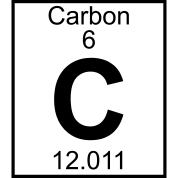
What is the chemical symbol for the element Carbon?
C
Ca
Carb
CO
What is the chemical symbol of the element Hydrogen?
Hy
H
Hydro
Hg
In an atom, what is the number of protons equal to?
The number of electrons
The number of neutrons
The number of nuclei
The number of molecules
Particles in an atom that are neutral and have no charge are
negatrons
protons
neutrons
electrons
Which element exists as a macromolecule ?
Oxygen
Carbon
Sodium
Hydrogen
Which statement is not correct ?
Ammonia is a compound.
Methane is a compound.
Air is a mixture.
Sea water is a compound.
Which of the following is not a mixture ?
Tap water
Petrol
Ethanol
Steel
Which compound contains three elements ?
Aluminium chloride
Iron(III) oxide
Sodium carbonate
Potassium oxide
Which particle contains most electrons ?
O3-
Ne
Na-
Mg3+
Which ions has the most shells that contain electrons ?
N3-
Al3+
Be2+
S2-
Which substance, when molten, conducts electricity ?
bitumen
caesium iodide
diamond
sand
Which of these does not exist as a diatomic molecule ?
Neon
Chlorine
Hydrogen
Oxygen

What is the Greek word from which 'atom' is derived, and what does it mean?
atomos, meaning 'indivisible' or 'uncuttable'
atomus, meaning 'small particle'
atomikos, meaning 'invisible'
atomia, meaning 'basic unit'
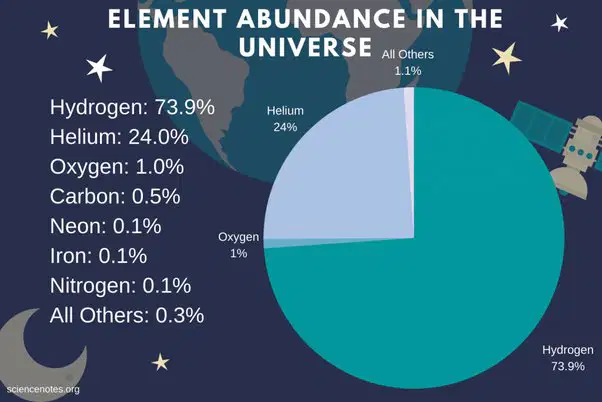
What percentage of all the atoms in the universe come from the two lightest elements?
More than 98%
About 75%
Less than 50%
Approximately 85%
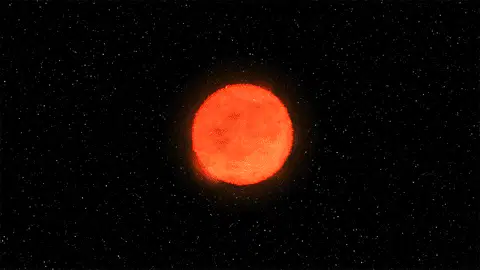
What happens at the end of a large star's lifecycle that contributes to the creation of heavier elements?
It turns into a white dwarf
It collapses into a black hole
It undergoes a massive explosion called a supernova
It forms a new solar system
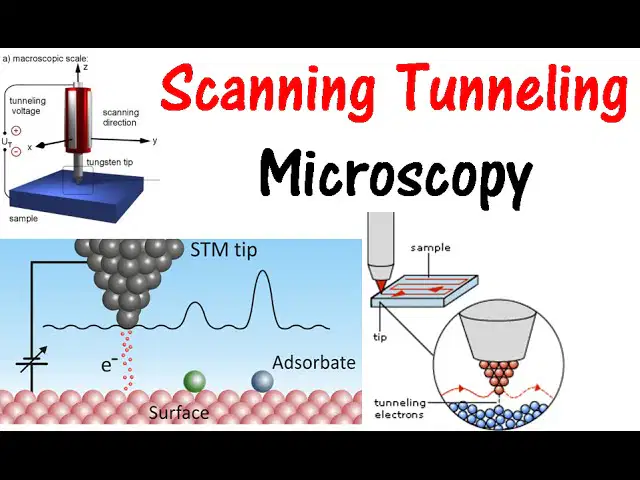
What discovery allowed scientists to view images of different atoms that had previously been unseen?
The invention of the electron microscope
The development of the scanning tunnelling microscope
The creation of the atomic force microscope
The use of high-powered telescopes
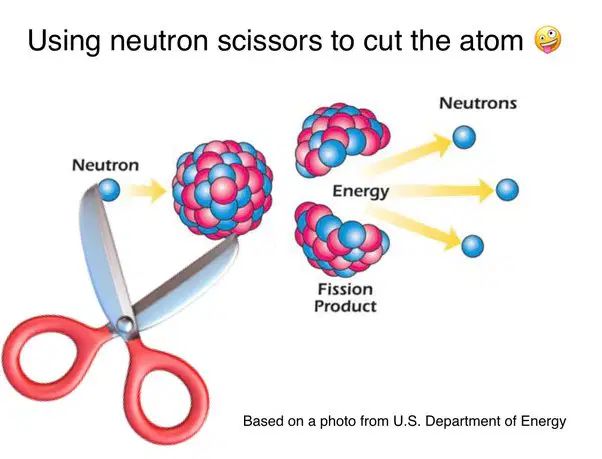
What would happen if you cut an atom of silver in half?
You would have two smaller atoms of silver
You would have one atom of silver and one atom of a different element
You would no longer be in possession of the element silver
The atom would remain unchanged

What are elements considered to be?
Mixtures of substances.
Pure substances.
Compounds.
Chemical reactions.
What is the name of the microscope that allowed scientists to view the first image of an atom?
Electron microscope.
Optical microscope.
Scanning tunnelling microscope.
Atomic force microscope.

Which of the following is true about compounds?
They are made of one element combined in a fixed ratio by weight.
They have the same properties as the elements they are made of.
They are formed when two or more elements combine with one another by chemically bonding.
They are always in the gaseous state.

What is the origin of the symbol 'W' for the element tungsten?
It comes from its Latin name 'wolfram'.
It is derived from the English word 'weight'.
It is an abbreviation of the word 'white'.
It stands for 'western' as it was discovered in the western world.
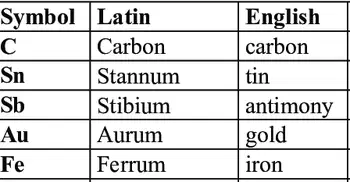
Why do some symbols for chemical elements in the periodic table not match their English name?
Because they are derived from the names of the scientists who discovered them.
Because they are based on the elements' physical properties.
Because they are taken from the elements' Latin or Germanic names.
Because they are arbitrary letters chosen by the discoverer.
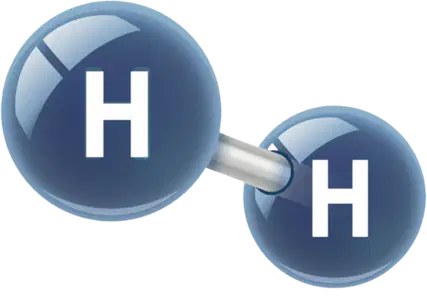
What is the elemental form of hydrogen represented by?
H
H2
H2O
O2
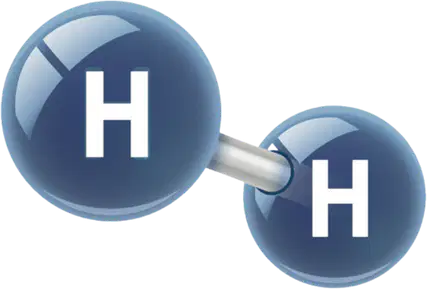
Why is H2 described as a molecule and not a compound?
Because it consists of two different elements.
Because it consists of two atoms of the same element.
Because it can be easily separated into atoms.
Because it is a liquid at room temperature.

What is the formula for a water molecule?
H2
O2
CO2
H2O

Why is water described as both a molecule and a compound?
Because it is made of two hydrogen atoms only.
Because it is made of two oxygen atoms only.
Because it is made of two hydrogen atoms and one oxygen atom.
Because it can exist in three states of matter.

