
 Worksheets
Section 02 DRVNG SFLY Quiz
Total questions: 100
Worksheet time: 50mins
Why is it important to inspect your vehicle regularly?
To save time and money
To avoid getting a ticket
To ensure the vehicle looks clean
To impress other drivers
What should you watch for during a trip to ensure safety?
The color of the vehicle
Gauges for signs of trouble
The cleanliness of the vehicle
The number of passengers
What should be included in an after-trip inspection report?
The number of miles driven
The weather conditions during the trip
Any problems you found with the vehicle
The names of passengers
What is the minimum tread depth required in every major groove on front tires?
2/32 inch
3/32 inch
4/32 inch
5/32 inch
Which of the following is prohibited on the front wheels of a bus?
New tires
Re-grooved, recapped, or retreaded tires
Tires with a tread depth of 4/32 inch
Tires with radial and bias-ply used together
What does rust around wheel nuts indicate?
The nuts are too tight
The nuts are loose
The wheel is damaged
The tire is flat
What should you do after changing a tire?
Drive immediately
Check the tire pressure
Re-check the tightness of the nuts
Replace the wheel
What does missing clamps, spacers, studs, or lugs indicate?
The wheel is balanced
The wheel is safe
The wheel is dangerous
The wheel is new
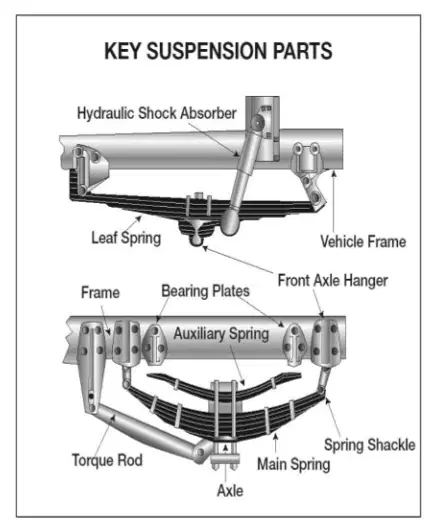
What should you look for in the suspension system to ensure safety?
Rust on the leaf spring
Broken suspension parts
New paint on the frame
Clean hydraulic shock absorber
What is a sign of bad brake drums or shoes?
Shiny surface
Cracked drums
New brake pads
Clean brake fluid
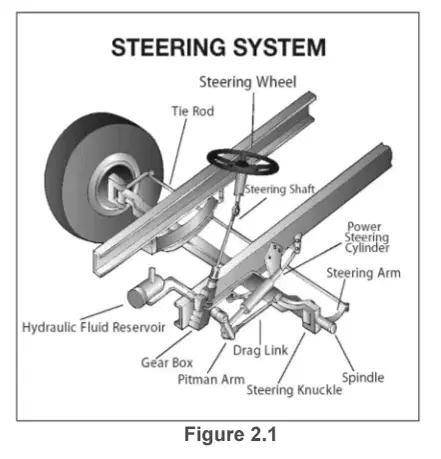
What can make steering hard to steer?
Steering wheel play of more than 10 degrees
New steering wheel
Clean power steering fluid
Tight steering box
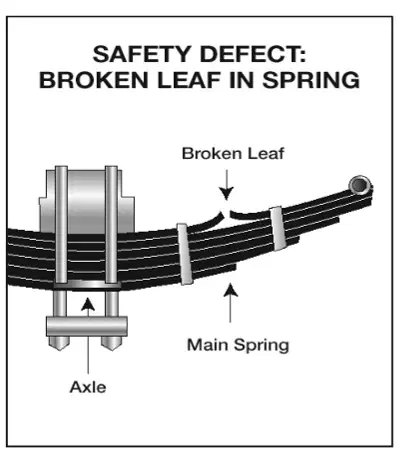
What is the consequence of missing or broken leaves in any leaf spring?
The vehicle will be more stable
The vehicle will be "out of service"
The vehicle will be faster
The vehicle will have better suspension
Which of the following is NOT a sign of a defective air suspension system?
Leaking shock absorbers
Cracked or damaged torque rod
Intact and properly functioning u-bolts
Missing spring hangers
What must be checked to ensure the truck is not overloaded and the cargo is balanced?
The condition of the tires
The presence of emergency equipment
The cargo and its proper securing
The condition of the exhaust system
What is required to pass in order to obtain a CDL?
A written test on vehicle mechanics
A Vehicle inspection test
A driving skills test
A road safety seminar
What should you look for when approaching a vehicle for inspection?
The color of the vehicle
The make and model of the vehicle
Damage or vehicle leaning to one side
The type of fuel used by the vehicle
Which of the following is NOT part of the engine compartment check?
Engine oil level
Coolant level in radiator
Condition of the tires
Power steering fluid level
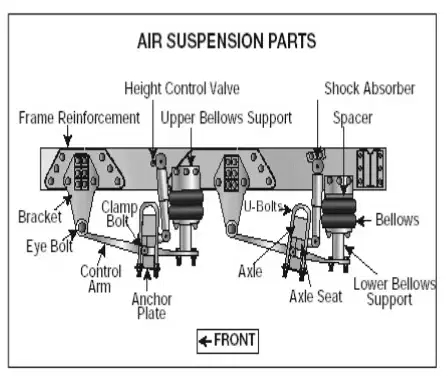
Diagram of Air Suspension Parts
Diagram of the engine compartment
Diagram of the air suspension parts
Diagram of the vehicle's electrical system
Diagram of the cargo area
What should you do if the Anti-lock Braking System (ABS) indicator light stays on?
Continue driving as normal.
Check the ABS system for proper operation.
Ignore the light.
Turn off the engine immediately.
What should the oil pressure gauge show within seconds after the engine is started?
10-20 PSI
20-30 PSI
50-70 PSI
70-90 PSI
What should you check for in the engine compartment before starting the engine?
Properly charged fire extinguisher
Cracked, worn electrical wiring insulation
Clean mirrors and windshield
Properly adjusted seat
What should you do if the oil pressure is low, dropping, or fluctuating?
Continue driving.
Check the oil level at the next stop.
Stop immediately and check the engine.
Ignore the warning.
Which of the following should be checked for looseness, sticking, damage, or improper setting?
Mirrors and windshield
Emergency equipment
Steering wheel, clutch, and brake controls
Tire changing equipment
What should you inspect mirrors and windshield for?
Properly charged fire extinguisher
Cracks, dirt, illegal stickers, or other obstructions
Correct tire pressure
Properly adjusted seat
Which of the following is NOT part of the emergency equipment checklist?
Spare electrical fuses
Three red reflective triangles
Properly charged and rated fire extinguisher
Properly adjusted seat
What should you do to ensure the safety belt is properly functioning?
Check that it is securely mounted, adjusts, latches properly, and is not ripped or frayed.
Check that it is the correct color.
Ensure it matches the seat color.
Make sure it is made of leather.
What should you do after turning off the engine and taking the key with you?
Turn on the radio.
Turn on headlights (low beams) and four-way emergency flashers.
Open the windows.
Check the tire pressure.
During the walk-around inspection, what should you check regarding the windshield wiper arms?
If they are the correct color.
If they are properly secured and have proper spring tension.
If they are made of metal.
If they are clean.
What should you check for on the left front wheel during the walk-around inspection?
If it is clean.
If it is the correct size.
Condition of wheel and rim, missing, bent, broken studs, clamps, lugs, or any signs of misalignment.
If it is properly inflated.
What should you check for in the condition of the front axle?
If it is painted.
If it is clean.
If it is not bent, damaged, or missing parts.
If it is the correct size.
What should you ensure about the fuel tank(s) during the walk-around inspection?
They are painted.
They are securely mounted, not damaged, or leaking.
They are the correct size.
They are clean.
What should be checked regarding the condition of tires on the right rear of a vehicle?
Properly inflated, valve stems and caps OK, no serious cuts, bulges, tread wear, tires not rubbing each other, and nothing stuck between them.
Only properly inflated and valve stems and caps OK.
Only no serious cuts, bulges, tread wear.
Only tires not rubbing each other and nothing stuck between them.
What should be checked regarding the condition of lights and reflectors on the rear of a vehicle?
Rear clearance and identification lights clean, operating, and proper color (red at rear).
Reflectors clean and proper color (red at rear).
Taillights clean, operating, and proper color (red at rear).
All of the above.
What should be checked regarding the condition of the battery(ies) on the left side of a vehicle?
Battery(ies) securely mounted to vehicle, box has secure cover, battery(ies) secured against movement, battery(ies) not broken or leaking.
Battery(ies) securely mounted to vehicle, box has secure cover, battery(ies) secured against movement.
Battery(ies) not broken or leaking.
Battery(ies) securely mounted to vehicle.
What should be checked regarding the condition of the cargo on the right rear of a vehicle?
Cargo secure, properly blocked, braced, tied, chained, etc.
Cargo secure.
Cargo properly blocked, braced.
Cargo properly tied, chained.
What should be checked regarding the condition of the signal lights on the left side of a vehicle?
Left front turn signal light clean, operating and proper color (amber or white on signals facing the front).
Left rear turn signal light and both stop lights clean, operating, and proper color (red, yellow, or amber).
Both of the above.
None of the above.
What is the most important reason for doing a vehicle inspection?
To check the fuel level
To ensure the vehicle is clean
To identify problems that may need fixing
To check the color of the vehicle
What things should you check during a trip?
The radio
The air conditioning
The mirrors, tires, and cargo
The seat covers
Name some key steering system parts.
Mirrors, tires, and cargo
Lights, brakes, and horn
Steering wheel, tie rod, and steering arm
Engine, transmission, and exhaust
Name some suspension system defects.
Broken leaves in leaf spring
Flat tires
Dirty windows
Low fuel
What three kinds of emergency equipment must you have?
First aid kit, spare tire, and fire extinguisher
Fire extinguisher, spare electrical fuses, and warning devices
Flashlight, blanket, and water
Extra oil, windshield washer fluid, and coolant
What is the minimum tread depth for front tires? For other tires?
1/32 inch for front tires, 2/32 inch for other tires
4/32 inch for front tires, 2/32 inch for other tires
2/32 inch for front tires, 1/32 inch for other tires
3/32 inch for front tires, 1/32 inch for other tires
Name some things you should check on the front of your vehicle during the walk around inspection.
The radio and air conditioning
The mirrors, tires, and cargo
The lights, reflectors, and windshield
The seat covers and floor mats
What should wheel bearing seals be checked for?
Cleanliness
Proper inflation
Leaks
Color
How many red reflective triangles should you carry?
One
Two
Three
Four
How do you test hydraulic brakes for leaks?
Pump the brake pedal three times and apply firm pressure for five seconds
Check the brake fluid level
Listen for unusual noises
Check the brake pads
Why put the starter switch key in your pocket during the vehicle inspection?
To prevent losing it
To avoid starting the vehicle accidentally
To keep it clean
To show it to the inspector
What is required for the safe operation of a commercial vehicle?
Accelerating, steering, stopping, and backing safely
Accelerating, steering, and stopping only
Steering, stopping, and parking only
Accelerating, stopping, and parking only
What should you do before you start accelerating in a manual transmission vehicle?
Fully engage the clutch
Partly engage the clutch
Release the parking brake immediately
Press the brake pedal hard
What should you do if you use too much power while accelerating?
The drive wheels may spin
The vehicle will stop immediately
The vehicle will accelerate smoothly
The vehicle will decelerate
How should you hold the steering wheel for safe driving?
With one hand at the top
With both hands on opposite sides
With one hand at the bottom
With both hands at the top
What should you do when stopping a vehicle with a manual transmission?
Push the brake pedal down gradually and push the clutch in when the engine is close to idle
Push the brake pedal down quickly and push the clutch in immediately
Push the brake pedal down gradually and release the clutch immediately
Push the brake pedal down quickly and release the clutch when the engine is close to idle
What is a key safety rule for backing a vehicle?
Start in the proper position
Back as quickly as possible
Avoid using mirrors
Back without turning
Why is it important to use mirrors on both sides while backing?
To check the outside mirrors frequently
To avoid using the rearview mirror
To look at the front of the vehicle
To check the inside of the vehicle
What should you do if you need to back and turn toward the driver's side?
Use the driver's side window to look out
Use the rearview mirror only
Back quickly without looking
Avoid using any mirrors
Why is it important to use a helper when backing?
There are blind spots you can't see
The helper can drive the vehicle
The helper can stop the vehicle
The helper can steer the vehicle
What is the basic method for shifting up in most heavy vehicles with unsynchronized manual transmissions?
Release clutch, push in accelerator, and shift to neutral.
Release accelerator, push in clutch, and shift to neutral at the same time.
Push in clutch, release accelerator, and shift to neutral.
Push in accelerator, release clutch, and shift to neutral.
When should you downshift before starting down a hill?
When you are in a high enough gear.
When you are in a low enough gear, usually lower than the gear required to climb the same hill.
When you are in the same gear required to climb the hill.
When you are in a higher gear than required to climb the hill.
What are the two ways of knowing when to shift up?
Use Engine Speed (rpm) and Use Road Speed (mph).
Use Engine Speed (mph) and Use Road Speed (rpm).
Use Engine Sound and Use Road Sound.
Use Engine Temperature and Use Road Temperature.
What is the basic procedure for shifting down?
Release clutch, push in accelerator, and shift to neutral.
Release accelerator, push in clutch, and shift to neutral at the same time.
Push in clutch, release accelerator, and shift to neutral.
Push in accelerator, release clutch, and shift to neutral.
What is the purpose of "retarders" in some vehicles?
To increase the speed of the vehicle.
To reduce the need for using brakes and reduce brake wear.
To increase the engine power.
To improve fuel efficiency.
Why should you back toward the driver's side?
To have a better view of the rear
To avoid hitting the curb
To make it easier to turn the wheel
To reduce the risk of skidding
If stopped on a hill, how can you start moving without rolling back?
By using the parking brake
By accelerating quickly
By shifting to a lower gear
By using the clutch and accelerator together
When backing, why is it important to use a helper?
To avoid hitting obstacles
To save time
To reduce fuel consumption
To improve vehicle performance
What’s the most important hand signal that you and the helper should agree on?
Stop
Go
Turn left
Turn right
What are the two special conditions where you should downshift?
Before starting down a hill and before entering a curve
Before stopping and before turning
Before accelerating and before changing lanes
Before parking and before reversing
When should you downshift automatic transmissions?
When going downhill
When going uphill
When stopping
When starting
Retarders keep you from skidding when the road is slippery. True or False?
True
False
What are the two ways to know when to shift?
Using engine speed and road speed
Using the clutch and brake
Using the accelerator and brake
Using the steering wheel and mirrors
How far ahead should you look while driving at highway speeds?
12-15 seconds
5-10 seconds
20-25 seconds
10-12 seconds
What should you check before starting any trip to ensure proper mirror adjustment?
That the trailer(s) are straight
That the tires are inflated
That the cargo is secure
That the lights are working
What should you use your mirrors for when carrying open cargo?
To check for loose straps, ropes, or chains
To check the fuel level
To check the engine temperature
To check the speed
When should you check your mirrors before changing lanes?
Only after you have signaled
Only after you start the lane change
Before you change lanes, after you have signaled, and right after you start the lane change
Only after you complete the lane change
What should you do when merging?
Check your mirrors to make sure the gap in traffic is large enough
Signal continuously
Cancel your signal after merging
Only check your blind spot
What is the purpose of using large convex mirrors?
To make objects appear larger than they are
To show a wider area than flat mirrors
To focus on the road ahead
To avoid using turn signals
What is the best way to keep others from trying to pass you when you are about to turn?
Signal early
Signal continuously
Cancel your signal
Use emergency flashers
What should you do if you see a hazard that will require slowing down?
Use your horn
Flash your brake lights
Speed up to avoid the hazard
Change lanes immediately
What should you do to warn drivers behind you when making a tight turn in a large vehicle?
Speed up quickly
Brake early and slow down gradually
Use your horn
Turn on your high beams
What is the recommended action when stopping on the road to unload cargo or passengers?
Stop suddenly
Flash your brake lights
Turn on your high beams
Use your horn
What should you do if you must drive slowly and other drivers are catching up to you?
Speed up
Turn on your emergency flashers
Stop suddenly
Use your horn
Why should you not direct traffic as a driver?
It is illegal
It could cause an accident
It is unnecessary
It is too time-consuming
What should you do to make your vehicle visible when passing another vehicle at night?
Turn on your high beams
Flash your lights from low to high beam and back
Use your horn
Speed up quickly
What should you do to make yourself easier to see when driving at dawn, dusk, in rain, or snow?
Use high beams only
Use low beams and turn on your lights
Use your horn
Speed up quickly
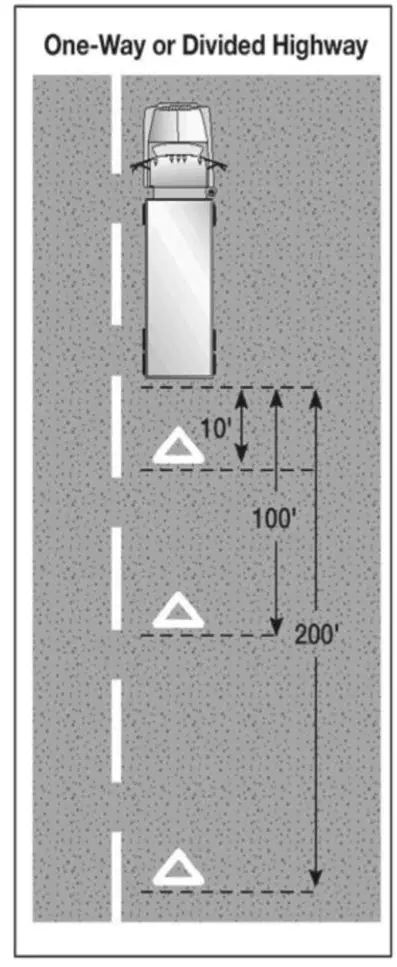
Where should you place warning devices if you must stop on a one-way or divided highway?
5 feet, 50 feet, and 100 feet toward the approaching traffic
10 feet, 100 feet, and 200 feet toward the approaching traffic
15 feet, 150 feet, and 300 feet toward the approaching traffic
20 feet, 200 feet, and 400 feet toward the approaching traffic
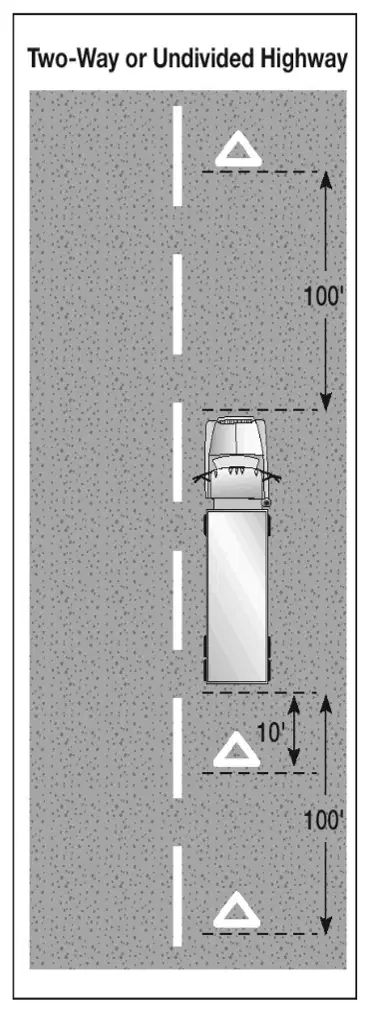
Where should you place warning devices if you stop on a two-lane road carrying traffic in both directions or on an undivided highway?
10 feet behind the vehicle
100 feet behind and ahead of the vehicle
50 feet behind the vehicle
200 feet ahead of the vehicle
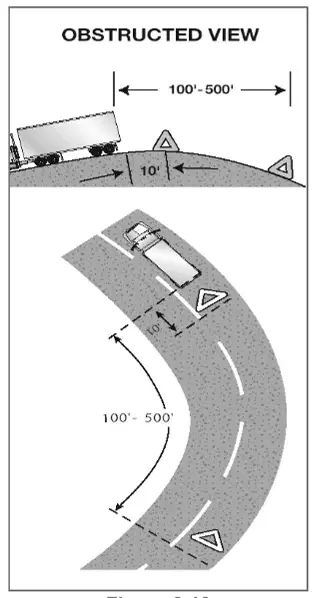
What should you do if your line of sight is obstructed due to a hill or curve?
Move the rear-most triangle to a point back down the road
Move the rear-most triangle to a point closer to the vehicle
Remove all warning devices
Place the warning devices only in front of the vehicle
What is the formula for Total Stopping Distance?
Perception Distance + Reaction Distance
Reaction Distance + Braking Distance
Perception Distance + Reaction Distance + Braking Distance
Perception Distance + Braking Distance
What is the average perception time for an alert driver?
1 second
1 1/4 seconds
1 1/2 seconds
2 seconds
What is the reaction distance at 55 mph?
142 feet
61 feet
216 feet
419 feet
What is the total stopping distance at 55 mph on dry pavement with good brakes?
142 feet
61 feet
216 feet
419 feet
How does vehicle weight affect stopping distance?
Heavier vehicles stop faster
Heavier vehicles stop slower
Vehicle weight has no effect
Lighter vehicles stop slower
What should you do when driving on a slippery surface?
Increase speed
Maintain speed
Reduce speed
Stop immediately
What is black ice?
Ice that is black in color
Ice that is clear and hard to see
Ice that forms only on bridges
Ice that forms only in shaded areas
What is hydroplaning?
When tires lose contact with the road due to water
When tires gain extra traction on wet roads
When the vehicle stops suddenly on wet roads
When the vehicle speeds up on wet roads
How far ahead does the manual say you should look?
5-10 seconds
12-15 seconds
20-25 seconds
30-35 seconds
What are two main things to look for ahead?
Road signs and pedestrians
Traffic lights and speed bumps
Road conditions and traffic
Billboards and advertisements
What should you do if your vehicle starts to hydroplane?
Accelerate quickly
Use the brakes immediately
Push in the clutch and let the wheels turn freely
Turn the steering wheel sharply
What is the main reason drivers exceed speed limits?
To save fuel
To save time
To avoid traffic
To enjoy the drive
What is the most important objective when driving on downgrades?
To maintain a high speed
To save fuel
To select and maintain a safe speed
To overtake other vehicles
What should you do if a speed limit is posted on a downgrade?
Exceed the speed limit
Maintain the posted speed limit
Ignore the speed limit
Drive as fast as possible

