
 Worksheets
AEF 2025 US S2 Finals Review
Total questions: 200
Worksheet time: 4hrs 6mins
Which of the following best characterizes the Gilded Age?
The discovery of goldfields in the West led to an increase in the amount of money issued for circulation.
Industrialists used their connection with corrupt government officials for material gain and political power
In the Deep South a sharp increase in immigration brought a boom in construction and industry
Small, family-owned farms were bought and consolidated to form large agricultural corporations
The primary objective of the Dawes Act was to:
promote cultural assimilation of American Indians
turn American Indian reservations into corporate farmland
end warfare between American Indians and the US military
promote American Indian investment in private industry
What was one reason for the expansion of machine politics in the late 19th century?
The rapid influx of immigrants made it difficult for local government to provide basic services
Federal restrictions prevented voters from influencing government decisions at the local level
The economy was too tightly regulated to allow urban growth
Settlement houses failed to help immigrants adjust to life in the city
The Knights of Labor and the American Federation of Labor developed in response to the:
increased need to protect worker interests
decreased power of political machines
increased demand for skilled workers
decreased profitability of the agricultural sector
Which of the following occurred between 1865 and 1900 as a result of the rapid industrialization of the US?
Social and economic class divisions began to disappear
Concerns about air pollution led to stricter environmental regulations
Union membership increased as workers sought better pay and conditions
Factory owners introduced wage-equity policies for women in the workplace
During the late 19th century, many Irish immigrants were discriminated against for being:
opposed to machine politics
loyal to the UK
conscientious objectors
Roman Catholics
Nineteenth-century nativist organizations advocated:
limiting federal military power through the organization of local militias
conserving natural resources through the creation of national parks
globalizing the economy through participation in free-trade agreements
promoting an ethnically homogeneous society through restrictions on immigration
Which of the following contributed most to increased settlement of the Great Plains?
The availability of buffalo
The discovery of precious metals
A series of federal land grants
A decreased in agricultural production
In response to public concern over issues raised by Upton Sinclair, the federal government expanded its role in:
working with labor unions to increase worker salaries
taking responsibility for the safety of consumers
setting limits on growth of private industry
implementing social welfare programs
Which of the following occurred as a result of the Sherman Antitrust Act?
Workers secured a greater share of company profits
The influence of labor unions on factory owners was reduced
The federal government could dissolve business monopolies
Businesses were required to pay fees to open overseas location
Which application of a new technology can attributed to an invention of Thomas Edison?
Refrigerated railroad cars allowed food to be transported long distances
Light bulbs made it efficient for factory workers to work at night
Diesel engines were used in production of airplanes
Sonar technology was used to track submarines
How did the expansion of railroad transportation most benefit farmers in the US?
By raising the consumer price of agricultural products
By increasing the variety of locally grown crops
By providing farmers with affordable access to distant markets
By encouraging farmers to form the first agricultural cooperatives

What was one factor that helped turn the Great Plains into the Dust Bowl in the 1930s?
Paying farmers to plant native grasses.
Increased demand for tobacco after World War I.
Numerous tornadoes occurring in the region.
Intense drought in the region.

What was the goal of the actions on this timeline?
To ensure deposits into customer savings accounts
To increase government regulation of business
To end speculation in the stock market
To stabilize the national economy

Which statement best explains how bank failures contributed to the Great Depression?
People lost their savings because the government did not insure bank deposits.
Business could not be done when President Franklin Roosevelt declared a bank holiday.
The interest rates on bank loans were too high.
Foreign investors did not invest enough in U.S. banks.

The economic conditions described in this excerpt contributed to —
A global economic depression.
An increase in foreign investments in the U.S. market.
The adoption of the gold standard.
An increase in free market activity.

Which of the following contributed most to the situation described in this excerpt?
The rise of corporate monopolies.
Strict banking regulations and high income tax rates.
The influx of immigrants into urban areas.
High unemployment and widespread home foreclosures.

Which New Deal agency was created to specifically serve this population?
Federal Housing Administration.
Securities and Exchange Commission.
Federal Deposit Insurance Corporation.
Social Security Administration.

How did the creation of the Federal Deposit Insurance Corporation change the nature of banking in the United States?
The government began to guarantee bank deposits.
Depositors could transfer investments without penalties.
Depositors were guaranteed minimum interest rates on savings accounts.
The government required taxpayers to open savings accounts.

Which of the following was a significant effect of New Deal legislation?
Income tax rates fell to historic lows.
The federal government took on new roles.
The regulation of intrastate trade was transferred to the states.
States became the sole enforcers of immigration law.

The goals of these New Deal agencies support the conclusion that the New Deal —
Gave the federal government a larger role in the day-to-day welfare of its citizens.
Forced citizens to participate in federal programs .
Gave preference to state-run agencies over federally run agencies.
Forced the federal government to adopt isolationist foreign policies.

Some of President Franklin D. Roosevelt’s New Deal programs were declared unconstitutional when the Supreme Court held that they —
Required U.S. cooperation with foreign nations .
Prevented equal access to the judicial system.
Granted privileges to religious organizations.
Infringed on powers reserved to the states.

Why were country-and-western performers such as Gene Autry popular with U.S. radio audiences during the 1930s?
Their art related to the struggles of the period.
They shared stories of individuals who became wealthy.
They promoted work programs for rural communities.
Their art brought attention to global human rights issues.

Who is described in the obituary above?
Jacqueline Kennedy
Mamie Eisenhower
Eleanor Roosevelt
Claudia “Lady Bird” Johnson

Which reason correctly replaces the question mark on this list?
Decrease in interest rates.
Failure of banks.
Outsourcing of manufacturing jobs,
Outbreak of a global war.

Which phrase correctly replaces the question mark in this diagram?
Increase in minimum wage.
Growth of immigration.
Increase in unemployment.
Growth in consumer spending.

How does the Federal Deposit Insurance Corporation (FDIC) continue to affect U.S. citizens?
By regulating loans made to investors who buy stocks on margin.
By changing interest rates to prevent people from paying higher prices for goods.
By providing financial assistance to elderly people who are retired.
By protecting the savings of bank customers during an economic crisis.

What was one result of the creation of the Civilian Conservation Corps (CCC) during the 1930s?
State governments took over the responsibility of protecting minority rights.
The federal government was no longer responsible for protecting natural resources.
State governments could no longer control their budgets.
The federal government provided aid to people suffering from unemployment.

Why was the bill in this cartoon important to President Franklin D. Roosevelt?
He wanted to strengthen the congressional power of impeachment.
He wanted to strengthen federal judicial authority over state governments.
He wanted to remove congressional leaders from office.
He wanted to weaken the power of the judicial branch over the executive.

The Roaring Twenties were characterized by —
Internment camps, the rationing of goods, and the first use of an atomic bomb.
Bank failures, the New Deal, and bread lines.
Installment plans, Prohibition, and flappers.
Brinkmanship, McCarthyism, and a policy of containment.

The establishment of speakeasies in the 1920s was an unintended consequence of which federal government action?
The taxation of imported luxury goods.
The deportation of suspected communist sympathizers.
The prohibition of the sale of alcoholic beverages.
The implementation of immigration restrictions.

Which inference about the 1920s is supported by this illustration?
Women confronted discrimination in employment and education.
Women challenged traditional attitudes and social norms.
Reform organizations targeted women’s issues.
Mass media reflected trends popular in rural communities.

What was a primary reason for the demographic shift described in this excerpt?
Increased demand for sharecroppers in the North.
Limited economic opportunities for African Americans in the South.
Increased availability of manufactured goods in the North.
A lack of educational institutions for African Americans in the South.

How did the introduction of these new practices most benefit U.S. business?
By increasing production efficiency.
By preventing shortages of goods.
By increasing protective tariffs.
By decreasing exports.

Which action completes this cause-and-effect diagram?
Banks lower interest rates.
Elected leaders lower tariff rates.
Companies lay off employees.
Labor unions demand higher wages.

How does this excerpt reflect a significant turning point in American history?
It depicts the reaction to victory in the Spanish-American War.
It portrays the changing social norms of the Jazz Age.
It describes the experiences of immigrant workers during the Gilded Age.
It details the industrial progress of the post–World War I era.

Which of the following identifies two effects of the Harlem Renaissance?
A
B
C
D

How did the process shown in this photograph enhance the automobile industry?
By speeding up production of automobiles at lower costs.
By requiring only licensed workers to produce the automobiles.
By ensuring high-quality automobiles for consumers at higher prices.
By developing new designs to test automobile safety standards.

How did these developments in transportation most affect the standard of living in U.S. cities?
By increasing the expenses associated with relocation.
By giving residents more flexibility in employment.
By expanding the options for personal education.
By increasing traffic congestion on city streets.

What was one way the role of women in society changed during the 1920s?
They were granted the right to attend public schools.
They were allowed to own property.
They were allowed increased participation in the political process.
They were granted the right to serve in military combat units.

These lyrics are representative of a movement that culminated in a constitutional amendment during the —
Harlem Renaissance
New Deal
Reconstruction Era
Progressive Era

What was a result of the social problems presented in this 1917 political cartoon?
Government leaders introduced health-care reform laws.
Lobbyists focused attention on the power of corporate monopolies.
Women worked to improve conditions in tenement houses.
Progressives worked to ratify a prohibition amendment.

How did the ideas presented in this address affect the early Civil Rights movement in the United States?
By encouraging African Americans to achieve equality through vocational education.
By directly supporting Marcus Garvey’s Black Star Steamship Line.
By encouraging African Americans to accept Jim Crow laws.
By forming the basis for the National Association for the Advancement of Colored People (NAACP).

What was the most likely topic of discussion between these men?
Limiting the power of major railroad companies.
Creating alternative maritime shipping routes.
Designating additional land as national parks.
Reducing the influence of environmental lobbyists.

What was the primary result of this legislation?
States instituted their own environmental regulations.
Settlement on lands with fragile ecosystems was prohibited.
Monopolies seized control of natural resources.
National parks were created as a way to manage land resources.

What was the most likely result of the publication of images such as this 1906 political cartoon?
The government passed the Sherman Antitrust Act.
Private companies refused to import foreign foods.
The government passed the Pure Food and Drug Act.
Labor unions protested unsafe working conditions.

Which of the following was implemented in 1913 to solve these problems?
Each state held party conventions in order to select senators.
A national referendum was held to standardize the procedures for selecting senators.
Open primaries were used to limit the choices of senators who could be confirmed by state legislatures.
A constitutional amendment was ratified that required senators to be elected directly by popular vote.

The Progressive goal to implement women’s suffrage was accomplished by —
A national referendum.
An executive order.
A Supreme Court decision.
A constitutional amendment.

This model was evident in the United States through the works of —
Frances Willard and her support of the temperance movement.
A. Philip Randolph and his protests during World War II.
Jane Addams and her programs for new immigrants.
Eugene V. Debs and his establishment of the American Railway Union.

What is one way the Progressive Era reform outlined in this diagram has affected U.S. politics?
More women have been elected to Congress.
Citizens have a more direct influence on lawmaking.
Corrupt officials can be removed from office.
Primary elections are prohibited in several states.

What was the purpose of the Pure Food and Drugs Act of 1906?
To protect consumers by regulating the food and drug industry.
To lower the cost of essential foods and drugs for consumers.
To prevent shortages by regulating the supply of food and drugs.
To reduce production costs for food and drug manufacturers.

Which caption best replaces the question mark in this photograph?
Abolish the Poll Tax and the Literacy Test
Demand the Direct Election of Senators
Come in and Learn Why Women Ought to Vote
Lower the Voting Age for Women to Eighteen

Which reason contributed to the trend shown in this table?
The number of factories using assembly lines decreased.
A progressive movement worked to stop the use of child labor.
A political movement worked to lower taxes for businesses.
The number of people joining labor unions decreased.

How did the concerns depicted in this cartoon affect the food industry?
The food industry increased the cost of products in order to pay for chemical additives.
The federal government regulated the food industry in order to protect the health of the public.
The food industry imported more goods from Europe in order to offer customers more choices.
The federal government passed antitrust legislation in order to increase competition in the food industry.

Which U.S. government action is MOST CLOSELY based on this idea?
The federal government passes laws to protect individual liberties.
The Supreme Court votes to approve the appointment of presidential cabinet members.
The Electoral College votes to approve the winner of congressional elections.
The federal government passes laws to regulate businesses.

How were these rights formally obtained?
By granting citizenship to immigrants.
By passing antitrust legislation.
By ratifying constitutional amendments.
By engaging in an international conflict.


An area, usually around a seaport, where a nation had special trading privileges
sphere of influence
open door policy
port rebellion
Great White Fleet

Match the following vocabulary
Iron Curtain
imaginary wall separating Soviet satellite countries from the west
NATO
Based on the concept of collective security which each member pledged to defund
Mao Zedong
Led a communist revolution in China in 1949
Marshall Plan
Massive aid program for war torn European countries
HUAC
Congressional committee questioned actors, directors, writers about Commy sympathies
Match the following Vocabulary words
Deterrent
Designed to limit retaliation from an enemy for fear of nuclear attack
McCarthyism
Congressmen created fears of a communist conspiracy to overthrow the US government
Containment Policy
US would not attempt to overturn communism where it already existed but would not let it spread
Truman Doctrine
US President offered military aid to Greece and Turkey when communist rebels threatened
Warsaw Pact
Soviet Union reacted to creation of Western European alliances by unifying Eastern European sats
Match the following vocabulary word
Venona Papers
released in 1997 which confirmed the identities of several Americans
Korean War
Communist North invaded South, Truman aided South to prevent Communist spread
GI Bill =
Servicemen's Readjustment Act
Helped veterans with low interest home loans and money for college education
Sputnik
1957: The Soviets launched the first man-made satellite.
Berlin Airlift
Stalin ordered a blockade 194, US organized a massive humanitarian relief effort
Match the following vocabulary words
Jonas Salk
Discovered Polio Vaccine
Rosenburgs
Couple charged with selling national secrets to the Soviet Union
Cold War
A confrontation between the free nations of the world (US) and the communists of the world (Soviets)
Eisenhower Doctrine
Continuing the policy of containment he agreed to send aid to any Middle Eastern country
Alger Wars
state department official accused of spying found guilty of perjury by HUAC
Match the following vocabulary words
Interstate Highway Act
Eisenhower's plan to connect the nation through a system of roadways-middle class move to suburbs
Arms Race
Beginning of a competition for weapons superiority after both US & Soviet launch nuclear weapons
38th parallel
agreed-upon border between communists North Korea and Democratic South Korea
Loyalty Review Boards
Federal employees were investigated for suspicious activity
United Nations
International peacekeeping organization designed to promote global justice
Match the following vocabulary words
Cesar Chavez
Organized and fought for migrant farm worker's rights
SCLC
Southern Christian Leadership Conference
Founded in 1957 by southern ministers fighting for equal rights led by MLK Jr
Orval Faubus
Gov. of Arkansas that ordered National Guard soldiers to block the entrance of nine black students
Montgomery Boycott
Led to the Fed. court ruling that segregation on city busses violated the 14th Amendment
Plessy V Ferguson
Court ruling: Separate but equal was legal
Match the following vocabulary
Letter from Birmingham Jail
MLK explained why African Americans could no longer wait for equality
Rosa Parks
refused to give up her seat on a bus
March on Washington
Organized in 1963 to convince Congress to pass Civil Rights Legislation
Thurgood Marshall
Attorney for NAACP argued Brown v Board of Ed case . First African American Supreme Court Justice
Freedom Riders
activists used buses to protest segregation
Match the following vocabulary
Sit-in Movement
4 students sat at a "whites only' lunch counter
24th Amendment
Forbid states from imposing a poll tax in order to vote
Affirmative Action
A federal program designed to actively recruit minorities
SNCC
gave young African Americans a greater voice in the civil rights movement organized sit-ins
MLK jr
led 13 month long boycott of public buses ending bus segregation. Gave "I have a dream" speech
Match the following vocabulary
Bill Graham
White Christian preacher/outspoken opponent of segregation once bailed out MLK jr
Black Panther Movement
Believed African Americans should rely on themselves by controlling own communities and businesses
16th Street Baptist Church
site of bombing which killed 4 African American children and injured many more
Little Rock Nine
name given to the 9 black students that attempted to enroll in an "all white" HS
CORE
Congress of Racial Equality, used peaceful confrontation to effect social change
Match the following vocabulary
Civil Disobedience
Belief that if the government passed unjust laws people should oppose them with protests & boycotts
Sweatt v Painter
court case involving an African American student at UT Law going to school with white classmates
Jim Crow Laws
Southern laws that mandated segregation
Lester Maddox
Gov. of Georgia 1967-1975. Refused to serve black customers even though it was illegal
Civil Rights Movement
1950s-1960s
Addressed unequal treatment of African Americans & other minorities
Match the following vocabulary
Voting Rights Act of 1965
Federal law suspended literacy tests where they were used to prevent African Americans from voting
American Indian Movement
Protested against anti-American Indian bias
Edgewood v Kirby
Required changes in school finance in Texas to increase funding for students in poorer schools
Domino Theory
Fear that if one Southeast Asian country were to fall to communism many others would follow
Equal Pay Act
required companies to pay women the same wages as men for the same work
Match the following vocabulary
Barry Goldwater
Rep. candidate for Pres. in 1968. Helped revive conservatism
Great Society
Pres. Johnson's far-reaching domestic programs aimed at ending poverty, improving healthcare, rebuil
Hernandez v Texas
ruled that Mexican Americans, though not separate race,were still entitled protection under the 14th
Roe v Wade
court ruled that women could end her pregnancy in the first 3 months
Tet Offensive
Vietcong launched a massive attack on South Vietnamese cities on Chinese New Year
Match the following vocabulary
Beat Generation
group of young writers that rebelled against conformity of the 50's & the materialism of the time
Mendez v Westminister
segregation of children of a group was illegal without special state law requiring it
Gulf of Tonkin Resolution
passed by Congress giving Pres. Johnson the authority to do whatever he deemed necessary in SE Asia
26th Amendment
lowered voting age in all states to 18
John F. Kennedy
Democrat, elected President 1960
Match the following vocabulary
Roy Benavidez
awarded the Congressional Medal of Honor in 1981 for heroic actions during Vietnam War
Chicano Mural Movement
Mexican-American artists painted murals in barrios throughout the Southwest
Bay of Pigs Invasion
the failed invasion of Cuba by US-backed rebels and supported by Pres. Kennedy
Delgado v Bastrop
ruled that segregation of Mexican-American children was illegal in Texas
Betty Friedan
wrote "Feminine Mystique" said women were just as capable as men
Match the following vocabulary
Lyndon B. Johnson
President Kennedy's VP, will become Pres. after Kennedy is assassinated
Credibility Gap
the American public began to debt & dispute the facts being revealed by Gov. officials about Vietnam
Vietnamization
Nixon policy of reducing number of American troops in Vietnam & returning control to Vietnamese
Title IX
passed in 1972 which promoted gender equality for girls in school
Silent Majority
Pres. Nixon term used to describe the majority of Americans supported the Viet war
Match the following vocabulary
Feminist Movement
Sought to achieve economic and social equality for women
Cuban Missile Crisis
Pres. Kennedy discovered Soviet made missiles were placed in Cuba
Anti-war Movement
Millions of young people were actively protesting the US involvement in Vietnam
Vietnam War
communists Vietcong begin guerilla warfare in South Vietnam in an attempt to unify North & South
Fall of Saigon
Saigon was overtaken by communists North
Match the following vocabulary
John Glenn
First American astronaut to orbit the earth in 1962
NOW
National Organization of Women became the chief voice of the women's movement
Persian Gulf War
Pres. Bush sent troops into Iraq after the leader Saddam Hussein
Ronald Reagan
elected Pres. in 1980, beginning a resurgence of conservatism
Stagflation
economic problem caused by inflation and stagnate economic growth
Match the following vocabulary
EPA
created to protect the environment by setting air and water pollution standards
Defense
Nixon's policy of relaxing tensions between US and Soviets limiting development of missile systems
Sam Walton
Founder of walmart
OPEC
Organization of Petroleum Exporting Countries, designed to control flow, production, distribution
Jimmy Carter
Pres. in 1976, struggled with economic problems and hostage crisis in Iran
Match the following vocabulary
Richard Nixon
Pres. in 1968, moved nation to a more conservative direction only Pres. to resign (quit) from office
Watergate Scandal
A group of men working for Nixon's re-election campaign caught breaking into Dem. headquarters in DC
Endangered Species Act
Deigned to protect the environment and animal species on the verge of extinction
Camp David Accords
Carter negotiated peace between historic middle eastern enemies, Egypt and Israel
Bill Gates
Co-founder of Microsoft who realized the potential of the personal computer
Match the following vocabulary
Moral Majority
made up of fundamentalist Christians who favored socially conservation agenda
Wisconsin v Yoder
struck down a state law requiring Amish children to attend school past 8th grade freedom of religion
Reaganomics
economic policy of increasing supply/ dropping prices leads to consumer demand & increase employment
Estee Lauder
founder of one of the world's largest cosmetic lines
NAFTA
North American Free Trade Agreement created trade with Mexico and Canada
Match the following vocabulary
Sandra Day O'Connor
first woman appointed to the Supreme Court by Ronal Reagan in 1981
Phyllis Schlafly
Critic of the Women's liberation movement
George H. W. Bush
Reagan' VP elected in 1988
Robert Johnson
First African American Billionaire. Founder of BET
Rust Belt
Areas of Northeast and Midwest with coal and iron
Match the following vocabulary
Peace Through Strength
US would try to roll back communism in the Middle East and Asia
Gerald Ford
appointed VP by Nixon and becomes Pres after Nixon quits
Hilary Clinton
appointed by Pres. Clinton to investigate health care reform
NRA
National Rifle Association
Impeachment
constitutional process of removing an elected official
Match the following vocabulary
Lionel Sosa
founder of the largest Hispanic advertising agency in the US
Reagan Doctrine
increase military spending/research to show US enemies that it would act to stop aggression
Heritage Foundation
Introduced as a program of conservative principals arguing that government was too big
Contract with America
Sought to promote conservative policies and attempted to influence legislators
Star Wars
Strategic Defense Initiative, using lasers to shoot down missiles in order to prevent nuclear attack
Match the following vocabulary
Tinker v Des Moines
ruled that students had the right to wear armbands to school in protest of the Vietnam War
GATT/WTO
General Agreement on Tariffs and Trade formed in 1947 to reduce tariff levels on many goods
Iran Hostage Crisis
1979
Iranian students seized staff at US Embassy in Tehran and held them, hostage, for more than a year
Sun Belt
Southwestern region of US experienced population growth people left the rust belt in search of jobs
Barrack Obama
Former Illinois senator, first African American president in 2008
Match the following vocabulary
War in Iraq
US invasion to topple feared dictator Saddam Hussein and prevent him from giving out bio weapons
Demography
study of the population
Financial Crisis of 2008
Gov. spent 700 billion dollars attempting to stimulate the economy by creating jobs and rebuilding
Time Study Analysis
Information gathered about the production time of a worker and the data used to improve production
George W. Bush
former Texas Governor and son of former President Bush, won the presidential election of 2000
Match the following vocabulary
World Trade Center
Targeted by terrorists on 9/11 because of its importance to the US economic system
Presidential Election of 2008
landmark election for grassroots campaigning and use of social media
September 11, 2001
date that terrorists attacked US by hijacking a plane and flying it into world trade center
Free Enterprise System
allows people to use their own economic resources to produce goods and services for sale to others
Hurricane Katrina
costliest natural disaster in the recorded history of the US
Match the following vocabulary
Sonia Sotomayor
First Hispanic Supreme Court Justice and the third female justice to serve on the court
Multinational Corps
Companies move production to countries with less regulations and cheap labor
Al Gore Jr
Clinton's VP, Dem candidate in 2000 election, lost to Bush
Computer Revolution
growth of technology to carry out logistical and mathematical functions
Genetic Engineering
allows for the alteration of genetics to help find the cure for many diseases
Match the following vocabulary
al-Qaeda
Terrorist organization responsible for the attacks at the WTC
Robotics
is the branch of technology that deals with design, construction, & application of robots etc.
J-I-T Production
"just in time" uses computers to track the exact time which parts are needed in t production process
Osama bin Laden
leader of al-Qaeda later assassinated by US Navy Seals in Pakistan
Pentagon
military headquarters attacked by terrorists on 9/11
Match the following vocabulary
Dept. of Homeland Security
new cabinet level department created to keep the US secure from all threats
USA Patriot Act
allowed law enforcement officials to conduct sweeping searches/surveillance of suspected terrorists
Taliban
group of Islamic Fundamentalists in control of the Afghanistan government
Match the following vocabulary
War on Terror
global war of those nations that harbored terrorists
New Orleans Levees
failed to hold back the storm surges caused by Hurricane Katrina
Illegal Immigration
individuals that land on the shores of the US without officially entering the country
After WWII, most of the power in the world was split between which two countries?
U.S. & Great Britain
China & U.S.
U.S. & Soviet Union
U.S. & Canada
The soviet Union was a ______________country.
communist
capitalist
communal
philosophical
In capitalist countries like the U.S., _________________________of businesses and property powers the economy.
government ownership
unorganized
wealthy ownership
private ownership
The U.S. and the Soviet Union competed for control of the world's politics in a conflict called____________________.
The Atomic Race
The Nuclear War
The Cold War
The Soviet War
What was the name of America's foreign economic recovery strategy?
Molotov Plan
Truman Doctrine
Marshall Plan
Containment Plan
Who was President of the United States at the beginning of the Cold War?
Franklin D. Roosevelt
Josef Stalin
Winston Churchill
Harry Truman


This group made headlines for investigating communist influence in the movie industry in 1947
HUAC
Loyalty Review Board
McCarran Internal Security Act
Cold War
This was the era where people were randomly being accused of being communist with little or not proof; named after the Senator from Wisconsin.
McCarthyism
McCarran Internal Security Act
HUAC
Loyalty Review Board
This was the nickname given to the "unfriendly" witnesses who refused to testify during the HUAC's investigation of the movie industry.
Hollywood Ten
HUAC
McCarthy
Loyalty Review Board
Where did middle-class people move to after World War II?
suburbs
cities
farms
mountains

Who did the GI bill help?
women
African Americans
veterans
farmers
What did the GI Bill do?
provide resources to veterans to go to college and buy a house
allow soldiers to leave the military early
give families of veterans free medical care
allow veterans to get a free car


Joseph McCarthy, HUAC, and a fear of Communism harming the US best describe-
The Red Scare
1950s Economic Prosperity
The Cold War
The Truman Doctrine
What was the name given to an unprecedented population explosion due to soldiers returning home from WWII and settling into family life? It created the largest generation in US History.
Planned Obsolescence
Baby Boom
Conformity
White Flight
What image shows what the "ideal woman" of the 1950s looked like?


Which are effects of Americans buying more cars in the 1950s?
Interstate Highway Act: more highways were built
Car culture: people did everything in their cars (ex. drive in theaters & restaurants)
Small towns along older highways were abandoned.
All of the above

What was a long-term result of the creation of an interstate highway system?
Led to the passage of the GI Bill.
Caused a decline in the automobile industry.
Improved relations with Canada and Mexico.
Supported the growth of American businesses
What event changed the role of the US and led to us declaring war and sending troops into battle?
attack on Pearl Harbor
Lend-Lease Act
Operation Torch
Who transmitted code messages for the allies during WWII?
women
Navajo
African Americans
The Munich Pact incorporated this policy
Isolationism
Neurality
Appeasement
What is Genocide?
prejudice, racism, hatred against Jews
systematic attempt to eliminate an entire race
organized attack on Jewish homes and businesses
This was a military tactic used by the US in the Pacific Theatre
Blitzkreig
Island-hopping
Trench warfare
This was a major reason for dropping the atomic bomb on Japan
promote US Isolationism
destroy Japan's industrial centers and save American lives
Scare Hitler
What was the purpose of rationing?
increase supply of natural resources
cause a shortage of crops
provide supplies to the troops


The term appeasement refers to ---
giving in to an aggressor to avoid war
depending on allies to fight for you
disarming to show your unwillingness to fight
standing up for one's beliefs

Who was the commander of the Pacific during World War II?
Douglas MacArthur
Dwight D. Eisenhower
George Patton
Harry Truman

What was the Allied strategy in the Pacific known as?
island-hopping
island-jumping
appeasement
rationing

Where did the largest land-sea-air invasion in world history take place?
Hiroshima, Japan
Normandy, France
Nagasaki, Japan
Berlin, Germany
Which battle was the turning point of the war in the Pacific?
Battle of Singapore
Battle of the Coral Sea
Battle of Guadalcanal
Battle of Midway
What did allied forces do on D-Day, June 6, 1944 that was a major turning point in WWII?
They sent thousands of troops to Berlin.
They stormed the beaches of Normandy, France.
The fought the Nazi troops in Russia.
They took control of many Japanese islands.
The project code named the Manhattan Project was hiding what?
The U.S. building Nuclear Weapons
Internment Camps built to hold minorities
Secret plant building new airplanes
New submarine technology
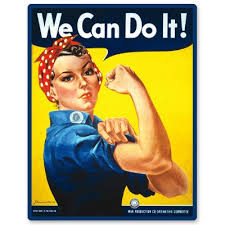
Who is this a image of and what did she a symbol of .....
June the Fighter symbol of women's suffrage
Susan the solider symbol of women working on airplanes
Rosie the Riveter symbol of women working in factories during the war.

What is the intent of this propaganda poster
Hitler is extremely powerful right now and if Americans do not help Britain, Hitler will destroy America.
America would rather stay neutral than make money by selling weapons.
Americans will not go into war unless someone attacks them.

The U.S. Supreme Court ruled that facilities could be separate as long as they were equal, thus establishing the “________________” clause which allowed for legal segregation in the South.
Separate but Equal
Separate but Fair
Equality
Civil Separation

What stopped the 2000 election recount which gave Bush the victory?
The Campaign Recount law passed by Congress
The Supreme Court's decision in Bush v Gore
President Clinton suspending election after November 8th
An FBI investigation showing mass voter fraud

What was the US government's immediate response to the September 11, 2001 attacks
The US declared war on Afghanistan
The War on Terror began and Afghanistan was invaded
The US withdrew forced from bases in the Middle East
A UN coalition invaded Iraq to overthrow Saddam Hussein

What caused the massive damage and flooding of New Orleans during Hurricane Katrina?
The storm's strength broke the levees designed to stop flooding
The city had no flood prevention technology
The government had cut funding for essential infrastructure upgrades
The city had been recently renovated removing flood protection levees

Who was president during 9/11, Hurricane Katrina, and the War on Terror?
Bill Clinton
George W Bush
Barack Obama
George H.W. Bush

Why did the US and UN invade Iraq in 2003?
The Iraqi government was hiding Osama bin Laden
The Iraqi government masterminded 9/11
Saddam Hussein was allegedly hiding weapons of mass destruction
Iraq has just invaded Kuwait for its oil reserves

Which amendment do critics say the PATRIOT Act violates for Americans?
6th Amendment: Right to a fair trial
4th Amendment: Right to privacy
5th Amendment: Right to due process
1st Amendment free speech rights

Which of these events directly lead to the War on Terror?
Operation Dessert Storm
The passage of the US PATRIOT ACT
The September 11 Attacks
The 1996 Oklahoma City bombings
What was one of the effects of September 11th?
The U.S. economy received an immediate boost.
Transportation security became less strict.
The U.S. invaded Afghanistan.
Congress issued a declaration of war against Saudi Arabia

