
 Worksheets
MicroBio
Total questions: 100
Worksheet time: 1hrs 1mins
Viruses can be cultured using the same methods of bacteria and fungi
True
False
Pasture developed a vaccine for what virus ?
Chicken pox
Rabies
measles
TLS
Viruses were discovered by filtering infectious fluid through a filter designed to trap what ?
Bacteria
Algae
Fungi
Membranes within the cell
What word is Latin for Poison ?
Disease
Rabies
Bacteria
Virus
Why were infectious fluids designed to pass through porcelain filters?
to calm the virus
To stimulate the bacterial cell
To trap bacteria
to release bacteria
What did the experiment of the bacteria through the porcelain filters teach us ?
That bacteria was the cause of disease
That disease was caused by something smaller than bacteria
That viruses couldn't fit through the filters
That Viruses are larger than Bacteria
What types of cells can Viruses infect
Only bacterial cells
Only animal cells
Only prokaryotic ones
all of them
How do viruses reproduce
They take over the living cells machinery
They slide in the cell on their own
They can reproduce themselves
They put themselves in our bloodstream first
Are viruses alive ?
yes
no
How large are viruses ?
100-150 nm
300-600nm
20-200 nm
10-100nm
Viruses are not organisms, instead what are they ?
pathogens
diseases
bacteria
Infectious Particles
protein shells are also known as
Capsid
Nuclei
Cell Envelope
Chemical Machinery
Can cells make their own proteins ?
yes
no
How many enzymes do Viruses have ?
200+
none
1-5 depending on the type
only 1
What percentage of the bacterial chromosomes is composed of viral genes ?
20-25%
5-10%
10-20%
30-60%
why are some viruses considered "mimi" viruses ?
because they are mimicking a microbe
because they are larger than they average
They are considered extra small
They are very long and fat
Which of these is a cocci occurring in pairs?
Streptococci
Diplococci
Streptococci
Staphylococci

Based on the diagram above, the flagella arrangement of bacteria cell is known as ___________.
Petritrichous
Monotrichous
Lophotrichous
Amphitrichous
To differentiate between Gram positive and Gram negative bacteria (a) procedure will be used.
A Gram negative cell wall is (a) than a Gram positive one.
Which of the following statement is TRUE regarding Gram positive bacteria?
Cell wall have high lipid content
Lipopolysacharides layer is present
crystal violet stain is retained
Have 2 layers of cytoplasmic membrane.
What is the function of Pilus in prokaryotic?
for swimming movement
Attachment to surface
Transfer of DNA to other cells
Serve as defense mechanism
Lipopolysaccharides also can be known as
Exotoxin
Endotoxin
(a) is ability to produce disease in host organism.
Endotoxin is extremely potent than exotoxin.
True
False
Bacteria endopsore usually occur in Gram positive bacteria.
True
False
A slippery outer covering in some bacteria that protects them from phagocytosis by host cells is
cell wall
capsule
peptidoglycan
Teichoic acid
Pleomorphic is the term used particularly for bacteria having
One shape
Rod
Spiral
Variable shape
The space between the cytoplasmic membrane and the outer membrane is called the periplasm.
True
False
Bacteria are best measured in nanometers?
True
False
Prokaryotic and eukaryotic cells have many differences, but they also share some common features. Which of the following may be found in either type of cell?
Golgi bodies
mitochondria
ribosomes
nucleus
Father of Microbiology is
Louis Pasteur
Lister
Robert Koch
Leeuwenhoek
The main feature of prokaryotic organism is
Absence of locomotion
Absence of nuclear envelope
Absence of nuclear material
Absence of protein synthesis
Hanging drop method for mobility study was given by
Koch
Pasteur
Hooke
Lister
E.coli was first isolated by
Hooke
Pasteur
Koch
Escherich
The bacteria were first observed in the year 1675 by
Carolus Linnaeus
Alexander Fleming
Anton Von Leenuwenhoek
Robert Brown
The study of Fungi is
Algalogy
Mycology
Bacteriology
Phycology
Microorganisms which responsible for producing during rainy season is
Bacillus sp.
Actinomycetes sp.
Saccharomyces sp.
None of the above
Aeromicrobiology refers to
Study of living microbes
study of Algae
Study of living microbes which are suspended in the air
none of the above
The bacterium that is most commonly used in genetic engineering is
E.coli
Klebsiella
Bacillus substilus
Staphylococcus auerus
A book of Micrographia was written by
Leeuwenhoek
Robert Hooke
Fracastaro
Pastuer
Counter stain used in Gram's Staining is
Crystal Violet
Ethanol
Safranin
Malachite green
Gram positive bacteria
E.coli
Lactobacillus sp.
Pseudomonas sp.
All of the these
Gram staining is an example of
Acid fast staining
Simple staining
Negative staining
Differential staining
Scanning Electron Microscopy (SEM) is best used to study
small internal structures
surface morphology
Living, unstained cells
all of these
Transmission Electron Microscopy (TEM) is best used to study
small internal structures
surface morphology
crystalline structure
all of these
Which of the following is not a prokaryote?
Bacteria
Paramecium
Cyanobacteria
Rickettsia
A 40X objective and 10X produce a magnification of
50X
100X
400X
4000X
The first physician to make practical application of the germ theory of disease to surgery was
Joseph Lister
Louis Pastuer
Robert Koch
Edward Jenner
The primary use of Koch postulates is to
Clearly identify and characterize a particular microorganism
Isolate microbes from diseased animals
demonstrate that disease is caused by microorganisms
develop vaccines for specific disease
Mordant used in Gram's Staining is
Crystal Violet
Safranin
Ethanol
Iodine
Lipid contents are more in
Gram negative bacteria
Gram positive bacteria
Both
None of the above
The ability of microscope to distinguish between two objects into two separate objects is called
Resolving power
Numerical aperture
Wavelegth
Distance
Light gathering capacity of a microscope is
Angular aperture
Numerical aperture
Wavelength
All of the above
In electron microscope, what material is used as an objective lens?
Magnetic coils
Superfine glass
Electrons
Aluminium foils
Which one of the following produces images?
Light Microscope
Transmission Electron Microscope
Scanning Electron Microscope
All of the above
Mycology is the study of __________.
fungi
bacteria
algae
protozoa
Pasteur developed vaccine against _____________.
small pox
cow pox
anthrax
measles
Phycology is the study of _____________.
bacteria
viruses
fungi
algae
_______________ coined the term "cell"?
Joseph Lister
Edward Jenner
Louis Pasteur
Robert Hooke
Hooke's microscope developed in 1670s was named ____________
Circa
Leica
Micrographia
Zeiss

The experiment above was conducted by ________________ to disprove spontaneous generation.
Pasteur
Spallanzani
Needham
Redi
_________________ demonstrated that hand washing can prevent the spread of disease.
Jenner
Lister
Semmelweis
Koch
____________ was named Father of chemotherapy after his discovery of salvarsan.
Jenner
Ehrlich
Semmelweis
Lister
______________________ is a process in mining that extracts valuable metals from a low-grade ore with the help of microorganisms.
Bioleaching
Biomineralization
Biotransformation
Biosorption
______________ is the ability of biological materials including microorganisms to accumulate heavy metals from wastewater through metabolically mediated or physico-chemical pathways of uptake.
Biosorption
Bioleaching
Biomineralization
Bioaccumulation

Identify the image of microbiologist
Robert Brown
Pasteur
Kotch
Hesse
I am a unicellular prokaryote with a peptidoglycan cell wall. What am I?
Virus
Bacteria
Archaea
Protist
Known as the Father of Microbiology due to his work with "animacules" found on his own teeth is:
Jonas Salk
Robert Koch
Semmelweiss
Anton Van Leeuwenhoek
who is father of microbiology ?
Louis pasture
Alexender
jenner
Ronaldo
Identify a gram positive bacteria.
E. coli
Salmonella typhi
Staphylococcus aureus
Pseudomonas putida
Ames test is used to identify------
A bacteria
A mutagen
A virus
A disease
Who is considered as the father of Microbiology.
(a)
The main feature of prokaryotic organism is
Absence of locomotion
Absence of nuclear envelope
Absence of nuclear material
Absence of protein synthesis
Hanging drop method for mobility study was given by
Koch
Pasteur
Hooke
Lister
The bacterium that is most commonly used in genetic engineering is
E.coli
Klebsiella
Bacillus substilus
Staphylococcus auerus
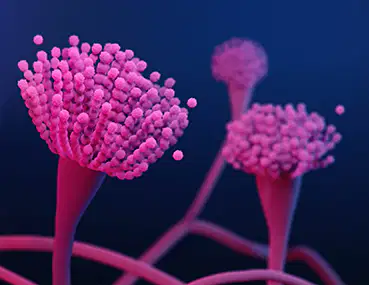
Identify the fungus.
Aspergillus sp.
Penicillium sp.
Rhizopus sp.
Mucor sp.
Dermal infections caused by group of fungi is called:
Dermatomycosis
Influenza
Measles
Mumps
An inflammation of stomach and bowels due to eating or drinking microbial contaminated meal is:
Dermatomycosis
Food poisoning
Foodborne infection
Nosocomial infection
The illness caused by bacterial or other toxins in food is:
Dermatomycosis
Food poisoning
Foodborne infection
Nosocomial infection
Drinkable water is called:
Hard water
Non-potable water
Potable water
Soft water
Microorganisms that can harm us are called:
Normal flora
Non-Pathogenic
Pathogens
Probiotics
Microorganisms benefits us by providing:
Antibiotics
Pathogenes
Spoilage of crops
Spoilage of food
put on gloves
wash your hands
sterilize your workspace
put on gown
What is the goal of aseptic techniques
To prevent contamination from the worker only
To prevent contamination from the environment only
To prevent contamination from the worker and the environment

What is the bunsen burner used for?
Nutrients for bacteria
Sterilizing equipment
Collecting/spreading bacteria
Stopping contamination

Avoid contamination of materials during microbiological activity
Safety shower
Fume chamber
Laminar flow cabinet
Fire extinguisher
What is the instrument that used for sterilizing media and apparatus?


What do you do if you spill a microbial culture?
Tell the instructor
Clean it up before anyone notices
Lick it up
Wipe it up with your shirt
What type of shoes should you wear to lab?
flip flops
socks and sandals
closed toed shoes
no shoes required
take off your gloves
wash your hands
sterilize your workspace
put on gown
One word For Quiz organizor?Type Honestly❤?

