
 Worksheets
Chemistry review
Total questions: 27
Worksheet time: 40mins

What does Chemistry study?
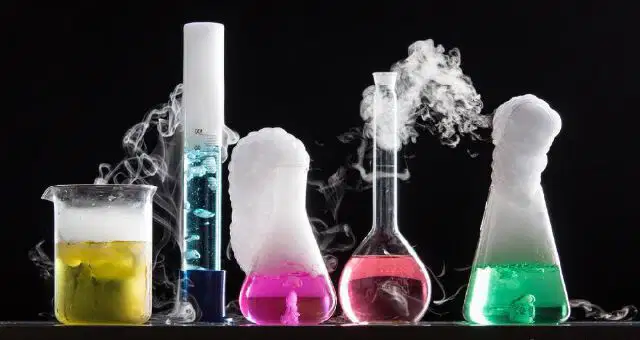
What are chemicals?
Chemicals are harmful substances added to our food and medicines.
Chemicals are artificial substances made by humans.
Chemicals are substances only found in nature.
Which of the following is A CHEMICAL?
Water
Oxygen
Light
Bread
Which of the following does not contain chemicals?
a Laser Beam
Milk
Breakfast cereal
Fruit

A series of steps used by scientists to solve a problem or answer a question.
scientific method
recipe
data collection
metric system

A scientist conducted an experiment to determine how the amount of salt in a body of water affects the number of plants that can live in the water. In this experiment the dependent variable is _______________________________.
the water
the temperature of the water
the number of plants that can live in the water
the amount of salt in the water

A possible explanation to a problem that has not yet been tested.
data
theory
hypothesis
fact
Performing an (a) is the process of testing your hypothesis by manipulating independent variables to assess its effect on the dependent variable.
What of the next could be examples of experiments?
Testing the effect of different fertilizers on plant growth.
Studying the impact of different amounts of exercise on heart rate.
Asking people what is their favorite fast food chain.
Evaluating the effects of the use of bleach on the strenght of fabric.
Trying different shoes to evaluate which one is the most comfortable

What do you have to do if the experiments you did don't support your hypothesis?
Abandon the experiment altogether.
Conclude that the hypothesis is correct.
Ignore the results and proceed with the hypothesis.
Falsify the data so it supports your hypothesis.
The (a) are explanations of an observation that have been validated by repeated experiments that support a hypothesis.
Which digit is in the tenths place in 520.345?
456.007
What place is the 1 in?
1,902.674
hundreds
thousands
thousandths
ones
Write the decimal for six tenths
(a)
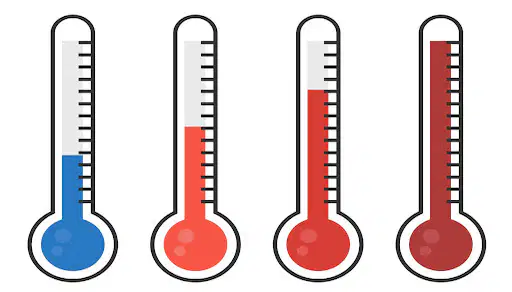
Convert 30°C to F°. Conversion factor: Fº=(1.8 x C°) + 32
860°F
86°F
63.8°F
56°F

Convert 100 C° to K. Conversion factor: K = C° + 273
173 K
373K
273 K
0 K
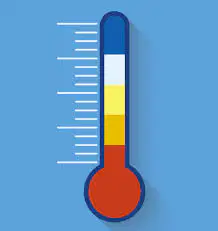
Convert 323 K to C°. Conversion factor: K = C° + 273
50 K
423 K
150 K
100 K

Convert 41F° to C°. Conversion factor: Fº=(1.8 x C°) + 32
105 C°
20 C°
15 C°
5 C°
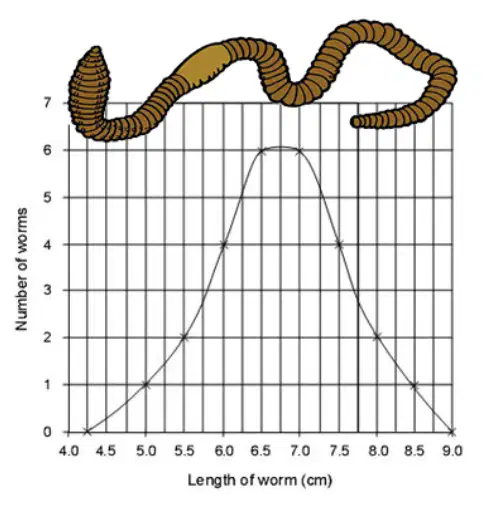
What is shown on the X axis?
The pH scale
The species of worm
The Number of worms
The lenght of the worms
What is shown on the Y axis?
A worm
The species of worm
The Number of worms
The lenght of the worms
How many worms are 8 cm long?
(a)
6x - 12 = 18
-5
5
6
9

