
 Worksheets
*Unit 1 Practice-2025
Total questions: 40
Worksheet time: 3600secs
His Gold Foil experiment revealed that the nucleus is small, dense, and positively charged part of the atom.
Dalton
Thomson
Rutherford
Bohr
In a famous experiment conducted by Ernest Rutherford, positively charged alpha particles were scattered by a thin gold foil. Which of the following is a conclusion that resulted from this experiment?
The nucleus is negatively charged
The atom is a dense solid and is indivisible
The mass is conserved when atoms react chemically
The nucleus is very small, dense and positively charged

What is Oxygen's atomic number?
8
16
15
6
An atom has 10 protons, 15 neutrons and 10 electrons what is its mass number.
20
10
35
25

What does a represent?
Proton
Neutron
Electron
What does b represent?
Proton
Neutron
Electron
What does c represent?
Proton
Neutron
Electron
The atomic mass is the sum of?
Protons+Electrons
Protons+Neutrons
Protons+Neutrons+Electrons
Calculate it using the percent abundance for each isotope
Which is true of a cation (select all that apply)?
A positively charged ion
Formed by gaining protons
Formed by losing electrons
Formed by gaining electrons
Which is true of an anion (select all that apply)?
It is an ion with a positive charge
It has lost electrons
It has gained electrons and has a negative charge
It has lost protons
An ion is:
An atom that has gained or lost electrons
An atom that has gained or lost neutrons
An atom that has gained or lost protons
An atom that is neutrally charged
Why has the atomic theory changed over time?
Theories always change over time.
The feelings of scientists changed over time.
Other scientists interpreted Democritus' evidence differently.
After new experiments, new technology, relevant evidence emerged, scientists reevaluated the theory.
Mass - Atomic Number
What are the three subatomic particles?
Electricity, Protons, and Neutrons
Electrons, Protons, and Neutrons
The Nucleus
Electrons, Quarks, and Protons

Cations are...
Positive
Negative
Neutral

An atom becomes _________ when it gains electrons.
Positive
Negative
Neutral

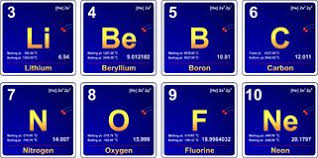
Different elements can have the same number of protons?
True
False


How many electrons are in an S-2 ion?
18
16
32
34
Compared to a bromine atom, the bromine ion Br1- has
more protons
fewer protons
more electrons
fewer electrons
The atomic mass is equal to
the number of protons only
the number of neutrons only
the total number of protons and neutrons
the number of protons, neutrons, and electrons.
How many neutrons does Carbon-13 have?
5
6
7
8
The atomic number is equal to the number of:
Protons
Neutrons
Electrons
In a neutral (no charge) atom, the number of electrons equals:
The number of neutrons
The number of protons
The total mass of the atom
An ion with a positive charge is called a:
Cation
Anion
An ion with a negative charge is called a:
Cation
Anion
An iodine ( I ) ion with a charge of -1 has how many electrons?
52
53
54
60
A copper (Cu) ion has 27 electrons. What is its charge?
-2
-1
+1
+2

How many protons, neutrons, and electrons?
proton = 16, neutron = 8, electron = 10
proton = 8, neutron = 16, electron = 8
proton = 8, neutron = 8, electron = 10
proton = 6, neutron = 2, electron = 6

How many ELECTRONS does copper have if it has the following charge: Cu2+ ?
64
35
27
29
How does a Li1+ differ from a Li0 atom?
Li 1+ cation has MORE electrons
Li 1+ cation has fewer (LESS) electrons
IDK
Which of the following determines the identity of an element?
number of protons
atomic mass
number of neutrons
number of shells
If an atom has a NET POSITIVE CHARGE it will have
More Protons than Electrons
More Electrons than Protons
IDK

