
 Worksheets
Biomolecules structure and functions
Total questions: 54
Worksheet time: 3585secs
Which organic molecule would a long-distance runner most likely choose to eat two hours before a race?
A protein, because it builds muscle mass.
A lipid because it provides long term energy storage.
A carbohydrate because it releases energy quickly.
A protein, because it transports oxygen into the blood stream.
Monosaccharides are the building blocks of which group of biomolecules?
protein
lipid
carbohydrate
nucleic acid
Which biomolecules transport oxygen and other substances and also form part of most organelles?
Lipids
Carbohydrates
Proteins
Nucleic Acids
Your friend is feeling irritable, lightheaded and dizzy. They are also feeling a bit of confusion and brain fog. Which biomolecule would you recommend your friend consume?
Protein
Carbohydrates
Nucleic Acid
Lipid
Which biomolecules contains your genetic information?
Proteins
Lipids
Carbohydrates
Nucleic Acids
Amino Acids are the monomers of __________.
Nucleic Acids
Proteins
Carbohydrates
Lipids
Glycerol and fatty acids are the monomers of _________.
Lipids
Carbohydrates
Proteins
Nucleic Acids
Which biomolecules act as energy storage for the cell and also cushions and insulates organs?
Carbohyrdates
Lipids
Proteins
Nucleic Acids
The monomer of Nucleic Acids is known as _________.
Amino Acid
Fatty Acid
Nucleotide
Saccharide

What type of biomolecule contains carbon, hydrogen, oxygen, and nitrogen?
carbohydrate
lipid
nucleic acid
protein

The following statements are TRUE regarding lipids, EXCEPT:
they store energy for later use
they are insoluble in water
they are composed of carbon, hydrogen, oxygen and phosphorus
they can be found in fats and oils
What biomolecule serves as structural materials in hair, nails and connective tissues?
protein
lipid
carbohydrate
nucleic acid
Just under an orca's skin lies a thick layer of blubber. Blubber helps insulate a whale from heat loss. Based on this information, which biomolecule is blubber primarily made of?
Lipids
Nucleic Acids
Proteins
Carbohydrates
11. People with albinism do not produce the melanin protein. Melanin allows for people to be protected from the sun and thus people with albinism are prone to severe sunburns. Which biomolecule would you infer is responsible for albinism?
Carbohydrate
Protein
Lipid
Nucleic Acid

The sugar in RNA is _____________while the sugar in DNA is ________.
deoxyribose, ribose
ribose, deoxyribose
c. ribose, phosphate
ribose, uracil
Nucleic acids are primarily made out of...
Carbon
Hydrogen
Oxygen
Nitrogen
Phosphorus
A scientist discovers new life on a distant planet. While watching the alien species live on the planet, scientists begin to notice that in order to hunt this species will attack another smaller species and inject them with some sort of liquid. After a short time, the smaller organism develops a sort of necrosis which is when a small portion of the organism's flesh begins to break down. Soon after necrosis begins the smaller organism dies.
What can you infer about the function of the poison?
It decreases fast sources of energy
Proteins are being broken down or reshaped
The coding information in the cell is altered
If removes insulation and long term energy storage
Which biomolecule helps form muscles?
Nucleic Acid
Carbohydrate
Protein
Lipids

Which biomolecule makes up cell membranes?
Protein
Carbohydrate
Lipid
Nucleic acid

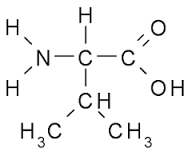
Identify the biomolecule
Carbohydrate
Lipid
Protein
Nucleic Acid
How do animals store complex sugars?
In the form of glycogen
In the form of cellulose
In the form of chitin
None of the above


What is another name for biomolecules
Macromolecules
Living molecules
Biochemicals
Big molecules
Which of the following are the main elements found in biomolecules?
C, H, O, N, P, S
Ca, He, Os, Ni, Pt, Si
C, He, O, Mg, Pd, S
C, H, Os, Ma, Ni, Se
Biomolecules are considered...
Natural polymers
Synthetic polymers
Natural monomers
Synthetic monomers


Many carbohydrates tend to end in......
"ose"
"ase"
"ing"
"ain"

Plant cell walls consist of cellulose, a type of sugar, what is it best classified as.
Carbohydrate
Protein
Nucleic Acid
Lipids


Which of the following tests for starch?
Iodine Solution
Benedict's Solution
Biuret Solution
Ethanol
Which of the following tests for protein?
Iodine Solution
Benedict's Solution
Biuret Solution
Ethanol
When protein is present Biuret turns...
purple
blue-black
orange
blue
When reducing sugar (glucose) is present Benedict's turns...
purple
blue-black
brick-red
green
How do you test for lipids?
By using Ethanol and water
By using Benedicts solution
By using Iodine solution
By using Biuret test

This photo represents a
negative test for glucose
negative test for protein
positive test for starch
positive test for glucose

The test tubes in the photo represent a negative and positive result for
Benedict's with glucose
Biuret with protein
Iodine with starch
Ethanol with fat
DCPIP tests for which food group?
vitamin C
fats
reducing sugars
proteins

