
Font size
 Worksheets
Astronomy Test 1 Review
Total questions: 74
Worksheet time: 1hrs 14mins
Why do we use light years and astronomical units to measure distances in space?
Scientists want to sound smart.
Hubble discovered these units and wanted to use them.
Space is too small to use km, it wouldn't make sense.
Space is too big, vast, enormous to use traditional units, like miles.

The theory that the earth is the center of the universe
heliocentric
geocentric
big bang
big crunch
Which two scientists supported the Big Bang Theory
Lemaitre and Galileo
Galileo and Copernicus
Lemaitre and Hubble
Aristotle and Ptolemy

Name this model of the solar system
Big Bang Theory
The Big Crunch
Heliocentric Theory
Geocentric Theory
What is the name of the galaxy we live in?
The Milky Way
Orion's Arm
The Snickers
Heliocentric

What is the name for this model of our Solar System?
Geocentric
Heliocentric
The Big Bang
The Big Crunch
Which two scientists supported the Geocentric Theory?
Aristotle and Ptolemy
Aristotle and Hubble
Copernicus and Galileo
Galileo and Hubble
What scientists were involved in the heliocentric theory?
Galileo and Ptolemy
Ptolemy and Aristotle
Copernicus and Galileo
Copernicus and Aristotle
What type of Galaxy do we live in?
Spiral
Irregular
Regular
Elliptical
What theory states the universe began from a singularity under high temperature and pressure
The Big Crunch
The Singular Theory
The Big Bang
The Universe Theory
True or false, these are in order from smallest to largest: sun, earth, solar system, galaxy, universe
true
false
What theory states that the sun is the center of the universe?
Geocentric Theory
Heliocentric Theory
Big Bang Theory
Center Theory
Which is the correct order from smallest to largest?
The earth, the sun, the galaxy, the universe
the galaxy, the solar system, the sun, the moon
the universe, the galaxy, the solar system, the sun
the sun the earth, the galaxy, the universe

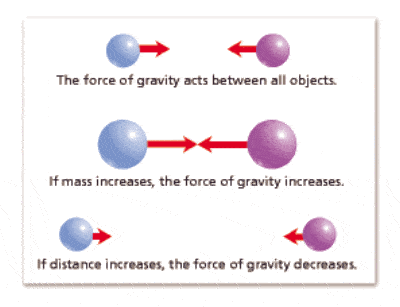
What two things determine the gravity of an object?
mass & weight
mass & distance
density & mass
volume & distance
Inertia refers to _____ (choose all that apply)
the tendency of moving objects to remain in motion
the force which keeps moving objects in motion with a constant velocity
the force that keeps stationary objects at rest
the tendency of stationary objects to remain at rest
Inertia is the tendency of an object to resist a change in its ___________.
temperature
shape
size
motion

The photograph below shows a feature of the universe as seen through a telescope., This feature is best identified as
a galaxy
a star
a planet
a galaxy cluster
Which theory do scientists believe most likely explains the creation of the universe?
Radiation Theory
Butterfly Effect Theory
Big Bang Theory
Red Shift Theory
Over time, scientists have changed their model of our solar system. It has transitioned from
an Earth centered to a Sun centered model
an Sun centered to a Earth centered model
an Sun centered to a Moon centered model
an Moon centered to a Earth centered model
Our solar system is in the Milky Way galaxy. What shape is this galaxy?
rectangular
oval
triangular
spiral
If the four components were ranked from smallest to largest, what would the order be?
solar system, galaxy, planet, universe
universe, galaxy, solar system, planet
planet, solar system, galaxy, universe
planet, galaxy, solar system, universe
Almost everything in the universe orbits around a central object. The planets orbit around the Sun and moons orbit around planets. The force most responsible for these orbits is
inertia
gravity
strong force
electromagnetic
According to the Big Bang Theory, the universe is
depleting
constant
exploding
expanding
Which statement best explains why the planets orbit around the Sun?
The Sun exerts the largest gravitational force due to its mass.
The Sun exerts the smallest gravitational force due to its mass.
The Sun exerts the largest gravitational force due to its location.
The Sun exerts the smallest gravitational force due to its location.
What is the study of the moon, stars, and other objects in space?
Science
Astronomy
Physics
Lunar Studies
A celestial body is __________________________.
A galaxy beyond the Milky Way.
Any asteroid as long as it doesn't hit Earth.
Any planet, asteroid, moon, or star.
Any star found in the constellation Celestor.
A person would weigh more on the Sun than on the Earth because . . .
The Sun has more mass, and therefore more gravity
The Sun has less mass, and therefore more gravity
The Sun has more mass, and therefore less gravity
The Sun has less mass and therefore less gravity

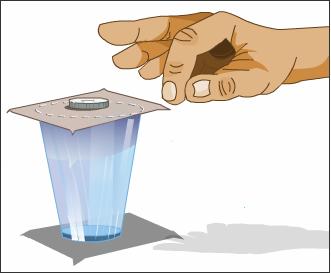
An object's inertia is effected by its mass.
What is the force that keeps a planet in orbit around the Sun?
Friction
Tension
Gravity
weight
Choose all that apply. Which of the following is required for planets to stay in orbit around the Sun?
Gravity
Weight
Friction
Inertia
What prevents planets from being pulled into and crash into the Sun due to its Gravity?
Gravity
Weight
Friction
Inertia
What prevents planets from drifting off into space and keeps it in the planets in our Solar System?
Gravity
Weight
Friction
Inertia
What would happen to Earth if its inertia stopped?
Earth would continue to orbit in our Solar System normally.
Earth would sit motionless and not moving.
Earth would drift off in space because nothing would hold it in the Solar System.
Earth would move toward the Sun and eventually crash into it.
What would happen to Earth if the Sun's gravity dissappeared?
Earth would continue to orbit in our Solar System normally.
Earth would sit motionless and not moving.
Earth would drift off in space because nothing would hold it in the Solar System.
Earth would move toward the Sun and eventually crash into it.
An elongated circle, like an oval. The shape of the Earth's orbital path.
Axis
Orbit
Hemisphere
Ellipse
A(n) _____ is the curved path of an object around a point/object in space.
orbit
rotation
revolution
phase

