
Font size
 Worksheets
Unit 1 Review
Total questions: 70
Worksheet time: 1hrs 3mins
If a laboratory fire erupts, immediately _________.
Run for the fire extinguisher.
Notify your instructor.
Throw water on the fire.
Open the windows.
You are heating a substance in a test tube. Always point the open end of the test tube ________.
Toward yourself.
Toward your lab partner.
Toward another classmate.
Away from all people.
The following footwear is required in the lab ________.
Sandals.
Open-toe shoes.
Closed-toe shoes.
Shoes appropriate for the weather.
True or False:
Return all unused chemicals to their original containers.
True
False
( Fill in the blank) Long hair should be ____________ in the laboratory.
tied back
cut
down
curled
Hot glass looks the same as cold glass.
True
False


After completing an experiment, all wastes should be
taken home
tossed in the trash can
disposed of according to your teacher's directions
left out for someone else to clean

Approved eye protection devices (such as goggles) are worn in the laboratory
to avoid eye strain
to improve your vision
so that you look super cool
any time chemicals, heat or glassware are used

When is it OK to eat or drink at the lab tables?
Always
Only during group work, not during labs
Never
Whenever I'm hungry
The following activity is permitted in the laboratory
chewing gum
eating
drinking
none of the above
Never remove chemicals, specimens, or other equipment from the laboratory.
True
False
in the lab, you should NEVER
taste substances being used
wear your goggles
pull your hair up if its long
wear close-toed shoes

When you finish working with chemicals, biological specimens, etc., always
treat your hands with skin lotion.
wash your hands thoroughly with soap and water.
wipe your hands on a towel.
wipe your hands on your clothes.
You are heating a piece of glass and now want to pick it up. You should
use a rag or paper towels.
pick up the end that looks cooler.
use tongs.
pour cold water on it.
If you are injured in the laboratory, you should first
visit the nurse after class.
see a doctor after school.
notify your science instructor.
apply first aid yourself.
Chipped or cracked glassware is okay to use in the laboratory.
True
False
Which is the best description of an element?
A substance that cannot be broken down into simpler substances
A collection of atoms that have different abilities when joined together
A man-made mineral
A mixture of substances


In an element box, the number at top is the
atomic number
atomic name
atomic mass
atomic symbol
Elements on the Periodic Table are ordered according to their
element name
element symbol
number of atoms
atomic number


The chemical symbol in this element box is
26
Fe
Iron
55.845

"Na" is the element's
Chemical Formula
Compound
Name
Chemical Symbol
What is the name of group number 1?
halogens
noble gases
alkali metals
alkaline earth metals
What is the name of group number 2?
transition metals
halogens
metaloids
alkaline earth metals
where are the metaloids found
far left, vertical
stair step/diagonal
far right horizontal
at the bottom
What group number are the halogens found?
18 (8A)
1
2
17 (7A)
Periodic law states that the elements are arranged according to their atomic ________ so that elements with similar chemical properties are in the same ________ and properties repeat periodically.
numbers, rows
masses, rows
masses, column
numbers, column
A grouping of elements based on similar chemical properties, arranged by columns in the periodic table; also known as a group
family
period
row
isotope
A row on the Periodic Table of Elements
family
period
row
isotope
Metals (select all that apply)
are found on the right side of the periodic table.
are found on the left side of the periodic table.
are good conductors of heat and electricity.
are brittle.
are malleable and ductile.
Nonmetals (select all that apply)
are found on the right side of the periodic table.
are found on the left side of the periodic table.
are good conductors of heat and electricity.
are brittle.
can be solid, liquids, or gases at room temperature.

Which element is found in group 2, period 6?
Oxygen (O)
Barium (Ba)
Selenium (Se)
Carbon (C)
Which halogen is found in period 4?
Krypton (Kr)
Xenon (Xe)
Bromine (Br)
Iodine (I)
Which element has similar chemical properties as sodium but has 7 energy levels?
Francium (Fr)
Cesium (Cs)
Rubidium (Rb)
Potassium (K)
Elements that have the same number of energy levels are said to be in the same ______.
group
period
family
classification
Which element has exactly 10 protons?
Argon
Boron
Neon
Hydrogen
Which of the following elements is not a metal?
Copper
Tin
Sodium
Helium
Which element is not a nonmetal?
Hydrogen
Oxygen
Potassium
Nitrogen
How many neutrons does a Chlorine atom have?
17
18
35
36
What is the correct symbol for Beryllium?
B
Be
Bi
Br
What is the approximate atomic mass of a Silicon atom?
14
28
29
27
Which of the following elements is not a halogen?
Selenium
Chlorine
Bromine
Iodine
Which element is a noble gas?
Tellurium
Xenon
Oxygen
Nitrogen
What is the name of the element in group 2, period 4?
Titanium
Carbon
Calcium
Magnesium
What is the symbol of the element in group 13, period 3?
Al
Ga
Ge
B
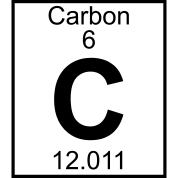
the positively charged subatomic particle contained in the nucleus of an atom
proton
neutron
electron
matter
a subatomic particle, contained in the nucleus of an atom, having the same mass as a proton but no electrical charge
proton
neutron
electron
matter
a negatively charged subatomic particle that orbits the nucleus of an atom
proton
neutron
electron
matter
one or two letters that represent the name of an element
element name
element symbol
atomic number
atomic mass


Which color on the image of the periodic table corresponds with the metalloids.
bright yellow
gold
teal
light blue
The periodic table is mostly comprised of what type of element?
Metals
Nonmetals
Metalloids

Which elements are to the LEFT of the zigzag?
metals
nonmetals
metalloids

Which elements are colored red?
nonmetals
metals
metalloids

