
 Worksheets
Elements and Bonds: Unit #2
Total questions: 45
Worksheet time: 34mins
The vertical (up and down) columns in the Periodic Table are called
groups
towers
periods
atomic numbers
Which group of the periodic table is composed of inert (not reactive) gases?
answer choices
alkali metals
alkaline earth metals
halogens
noble gases
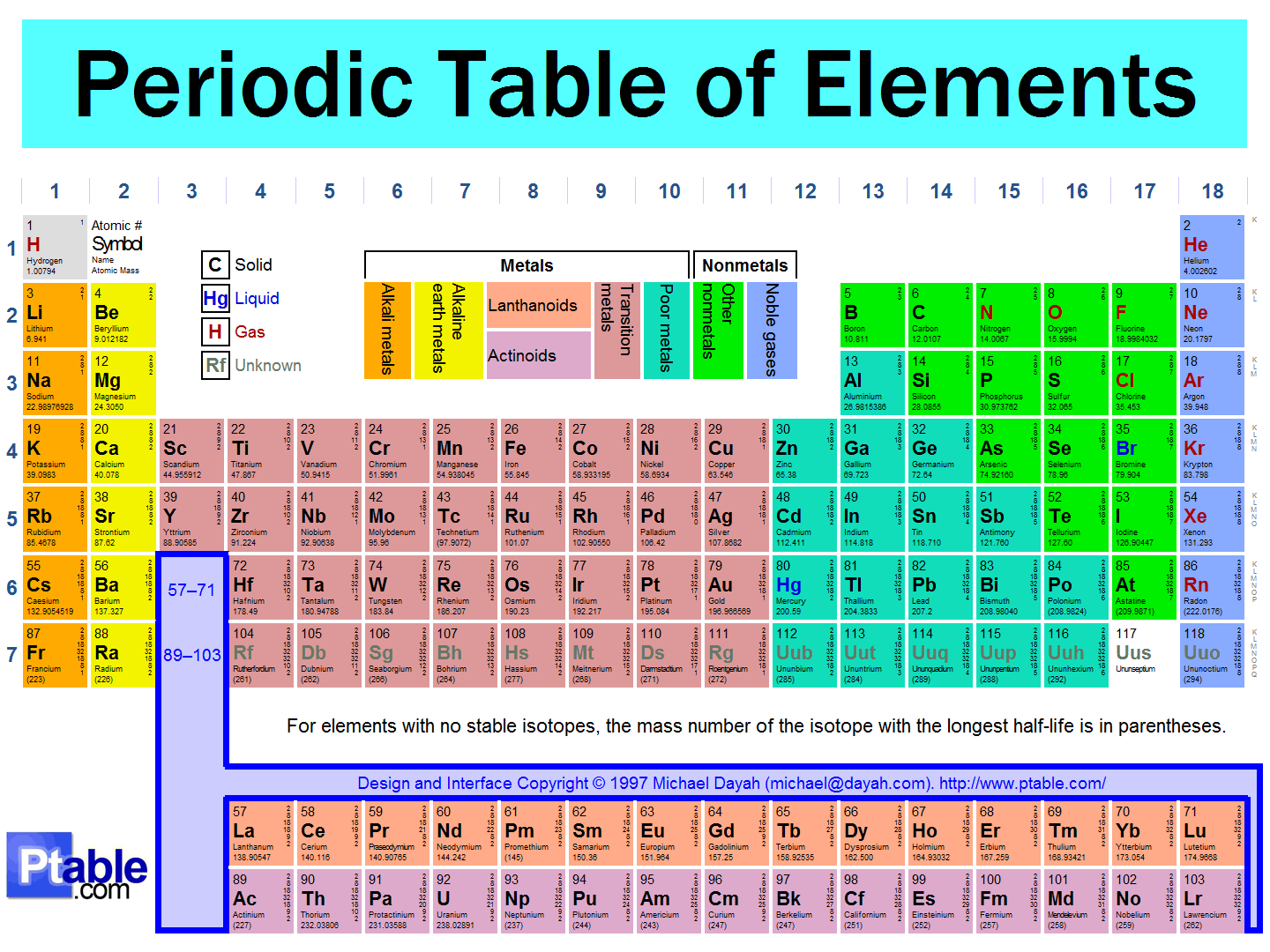
Which group of elements are the most reactive metals?
Group 2
Group 1
Group 13
Group 18
Which classification of elements are shiny, silvery solids and good conductors of heat and electricity?
Transition metals
Metalloids
Nonmetals
Metals
Which classification of elements are gases or dull brittle solids and poor conductors?
Transition metals
Metals
Nonmetals
Metalloids
Which classification of elements are solids, semi-conductors, and have physical properties like metals and chemical properties like nonmetals?
Transition metals
Metalloids
Nonmetals
Metals

______________ refers to the way a metal can be hammered or rolled into thin sheets.
Luster
Malleable
Metalloids
Solid
What is the name of group number 2?
transition metals
halogens
metaloids
alkaline earth metals

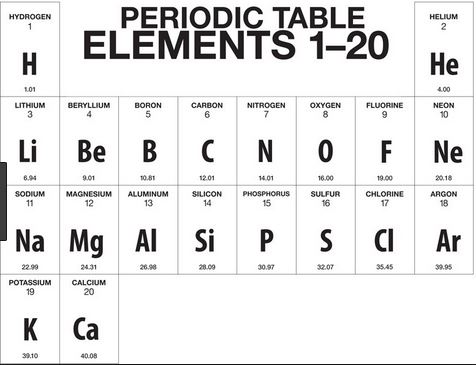
How many valence electrons does Hydrogen have?
1 Valence electron
2 Valence electrons
3 Valence electrons
4 Valence electrons
5 Valence electrons
How many valence electrons does Helium have?
1 Valence electron
2 Valence electrons
3 Valence electrons
4 Valence electrons
5 Valence electrons
How many valence electrons does Nitrogen have?
1 Valence electron
2 Valence electrons
3 Valence electrons
4 Valence electrons
5 Valence electrons
Which of these is correct?


This is a correct dot diagram for neon (Ne)
true
false

This is a correct dot diagram for nitrogen (N)
true
false

This could be the dot diagram of
Mg
Cl
C
O

What element is this?
Nitrogen
Chlorine
Argon
Phosphorous

What is the atomic number of this element?
17
18
35
35.453
Why do all bonds form?
to fill the outermost energy level
so an atom can be unstable
so the number of protons and electrons can equal.
so they can gain neutrons.
Valence electrons are found
outermost energy level
innermost energy level
some where in the electron cloud
How do covalent bonds form?
by sharing electrons between atoms
by donating or receiving electrons
What two types of atoms make a covalent bond?
2 nonmetals
2 metals
1 metal and 1 nonmetal`
When an atom loses an electron, it becomes a
positive ion
negative ion
Ionic bonds are between
metals and nonmetals
2 metals
2 nonmetals
Atoms are most stable when their outer shell is full or complete.
true
false
How are ionic bonds formed?
transfer of electrons
sharing of electrons
Which of the following is NOT an ionic compound:
CaO
BaCl2
NaOH
C2O2
The chemical formula of tetraphosphorus heptaoxide is
F₄O₁₀
P₁₀O₄
PO
P₄O7
What is the name for MgF2 ?
magnesium fluoride (III)
magnesium fluorine
magnesium fluoride
manganese Phosphide
What kind of bond forms between a cation and an anion?
Chemical bond
Ionic bond
Covalent bond
Electron bond
What would be the proper chemical formula for combining Al3+ and Cl-
AlCl
Al3Cl3
Al3Cl
AlCl3
Choose the correct formula below. When barium reacts with Chlorine to produce Barium Chloride an ionic Compound.
BaCl
BCl2
BaCl2
Ba2Cl2
Choose which atoms when bonding will most likely form a covalent compound?
Al and O
Si and O
Ba and F
Ca and Cl

Interpret the type of bond being formed in the diagram
Metallic
Molecular
Ionic
Covalent
Carbon and Oxygen will make a ___________ bond.
ionic
covalent
metallic
MgO
ionic
covalent
metallic
Hydrogen and Chlorine will from a _________ bond
ionic
covalent
metallic
NaCl
ionic
covalent
metallic
What would be the name of ClF?
Chlorine fluoride
Chlorine monofluoride
Monochlorine monofluoride
Monochlorine fluoride
What would be the formula of Aluminum oxide?
AlO
Al3O2
Al2O3
Al3O6
Al6O3

