Wayground logo

Free Printable Worksheets

Font size

S
M
L
XL
Worksheets

Adv Ionic and Covalent Bonding Test Review

Total questions: 43

Worksheet time: 2hrs 40mins

Name
Class
Date
1.

This image shows the bonding between Lithium and Fluorine. What does the red arrow show?

a)

electrons being shared

b)

electrons being transferred to Fluorine

c)

electrons being transferred to Lithium

d)

electrons being destroyed

2.

Which of the following is NOT a step in forming an ionic bond?

a)

One atom shares its electrons with another one

b)

Opposite charged ions form due to the transfer of electrons

c)

One atom gives electrons to another one

d)

Oppositely charged ions attract

3.

What is responsible for bringing cations and anions together?

a)

the size of the ions

b)

the opposite charges are attracted to one another

c)

the similar charges are attracted to one another

d)

depends on what period they're in

4.
Which of the following is the correct Lewis dot structure for the molecule fluorine (F2)?
a)
A
b)
B
c)
C
d)
D
5.
Which of the following is an ionic bond?
a)
H3N
b)
CaCl2
c)
NO2
d)
SCl
6.
In a(an) POLAR bond, one atom pulls on the shared electrons more than the other atom. 
a)
True
b)
False
7.
Low melting point
a)
Ionic Bonds
b)
Covalent Bonds
c)
Both bonds
d)
Neither bond
8.
H2O
a)
Ionic Bond
b)
Covalent Bond
c)
Both bonds
d)
Neither bond
9.
How do covalent bonds form?
a)
Donating & receiving valence e- between atoms.
b)
Opposite slight charges attract each other between compounds.
c)
Scientists are still not sure how they form.
d)
Sharing valence e- between atoms.
10.
What do we call a covalent bond where electrons are shared UNEVENLY or UNEQUALLY?
a)
Ionic
b)
Polar Covalent
c)
Nonpolar Covalent
d)
Van der Waals Force
11.
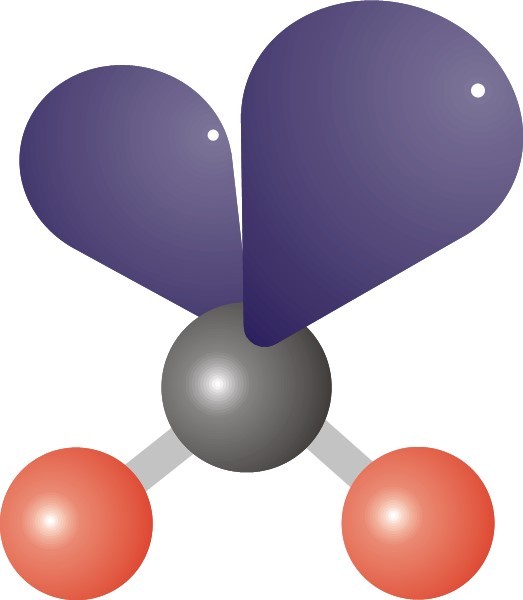
Choose the correct shape for this molecule:
a)
linear
b)
Trigonal pyramidal
c)
Bent
d)
Tetrahedral
12.

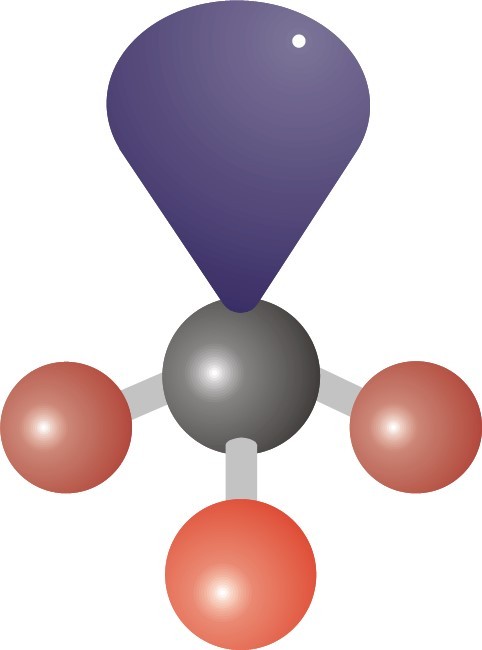
Determine the molecular geometry of the given structure.

a)

Trigonal Pyramidal

b)

Trigonal Bipyramidal

c)

Trigonal Planar

d)

Tetrahedral

13.

The geometry of a molecule with 4 bonded pairs of electrons and 0 lone pairs of electrons, AB4

a)

Tetrahedral

b)

Trigonal Planar

c)

Bent

d)

Trigonal Pyramidal

e)

Linear

14.
*
a)
linear
b)
trigonal planar
c)
trigonal pyramid
d)
bent of angular
15.
*
a)
trigonal pyramid
b)
linear
c)
bent
d)
angular
16.
What is the shape of H2O?
a)
linear
b)
tetrahedral
c)
bent
d)
trigonal pyramidal
17.
According to the octet rule most elements need _______ valence electrons.
a)
2
b)
8
c)
6
d)
18
18.
Who could this be? 
a)
CO2
b)
NH3
c)
H2S
d)
CH4
19.
Who could this be?
a)
H2O
b)
NH3
c)
CO2
d)
CH4
20.

What is the molecular geometry of CO2?

a)

Bent

b)

Trigonal planar

c)

Trigonal pyramidal

d)

Linear

21.

Is this molecule polar or non-polar?

a)

Polar

b)

Non-polar

22.

Is this molecule polar or non-polar?

a)

Polar

b)

Non-polar

23.

Is this molecule polar or non-polar?

a)

Non-polar

b)

Polar

24.

Is this molecule polar or non-polar?

a)

Non-polar

b)

Polar

25.

Is this molecule polar or non-polar?

a)

Polar

b)

Non-polar

26.
In a polar covalent bond, electrons are shared ___________.
a)
equally
b)
unequally
c)
between non-metals with similar electronegativities
d)
between a metal and a non-metal
27.
In this Lewis structure, the symbol above F means...
a)
electrons are being transferred to Fluorine
b)
electrons are less attracted to F than H
c)
electrons are more attracted to F than H
d)
Fluorine has formed a cation
28.
This is an example of a __________ bond.
a)
non-polar covalent
b)
polar covalent
c)
ionic
d)
metallic
29.

Molecules made up of two or more elements are called ____________.

a)

compounds

b)

atoms

c)

identical

d)

ions

30.
A cation is a ____ ion.
a)
negative
b)
positive
c)
neutral
d)
ficticious
31.
A anion will be a ____ ion.
a)
negative
b)
positive
c)
neutral
d)
ficticious
32.
Ionic bonds form between metals and ____.
a)
metalloids
b)
metals
c)
nonmetals
33.

Which symbol correctly shows sulfur when it forms an ion?

a)

b)

c)

d)

34.

Which symbol correctly shows an aluminum ion when it forms a bond?

a)

b)

c)

d)

35.

What is the ion formed from Sulfur?

a)

S+2

b)

S-2

c)

S+6

d)

S-6

36.
what charge will an aluminum ion have?
a)
3+
b)
2+
c)
2-
d)
3-
37.

When an atom loses a valence electron, it becomes a _____________ ion.

a)

positive

b)

negative

c)

neutral

d)

polyatomic

38.
What is the charge of an atom that has gained one electron?
a)
-1
b)
-2
c)
+1
d)
+2
39.

Noah and Harper are discussing the type of bonding that occurs when sodium and chlorine combine to form table salt. What type of bonding does this represent?

a)

Ionic

b)

Covalent

40.
How do the following two elements bond together?
Cr3+  O2-         
a)
CrO
b)
Cr3O2
c)
Cr2O3
d)
CrO3
41.
How do the following two elements bond together?
Na1+  F1-         
a)
NaF
b)
NaF3
c)
Na3F
d)
Na1F2
42.
How do the following two elements bond together?
Al3+  O2-         
a)
AlO
b)
Al2O3
c)
Al3O6
d)
Al3O2
43.
How do the following two elements bond together?
K1+  S2- 
a)
KS
b)
K8S
c)
K6S3
d)
K2S