
Font size
 Worksheets
CELL THEORY AND SPONTANEOUS GENERATION
Total questions: 23
Worksheet time: 4hrs 50mins
Which statement was NOT included in cell theory?
All living things are composed of cells.
Living cells come only from other living cells.
Each cell contains a cell membrane, cytoplasm, nucleus, mitochondria, and endoplasmic reticulum.
Cells are the smallest structure of living things that can perform the functions necessary for life.
This early cell theory scientist looked in a microscope and discovered "animalcules" in the gunk from his teeth and pond water.
Schleiden
Leeowenhoek
Hooke
Virchow
Schwann
Who discovered and named cells while looking at cork?
Captain Hook
Robert Hooke
Matthais Schleiden
Rudolf Virchow
What was Schleiden convinced of?
All plants are made of cells
All animals are made of cells
All cells are prokaryotic
None of the above
Who noted that all animals are made of cells and helped write the first two parts of cell theory?
Rudolf Virchow
Anton van Leeuwenhoek
Theodor Schwann
Robert Hooke
Who discovered that all cells come from other living cells and had research that lead to the last major principle of cell theory?
Matthias Schleiden
Theodore Schwann
Robert Hooke
Rudolf Virchow
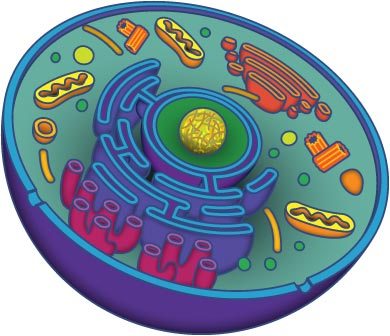
All living things are made up of...
cells
tissues
organ
organ systems
__________ is the theory that living things come from other living things.
biogenensis
spontaneous generation
cell theory
evolution
This scientist attempted to disprove spontaneous generation by putting out to containers of meat. One was covered & the other was not. Only the uncovered meat grew maggots.
Needam
Spallazani
Miller and Urey
Redi
This scientist came up with a method still used today for preserving our food and drink.
Needham
Redi
Pasteur
Spallanzani
This scientists finally disproved spontaneous generation once and for all.
Needham
Miller and Urey
Pasteur
Spallanzani
Pasteur was able to keep the broth her boiled open to air by
using a special S shaped flask
adding a fan to allow better air flow
none of the options listed
both of the options listed

This closed flask will show ______ growth.
no
some
a lot of
Credited for inventing the microscope which paved the way for more discoveries in biology.
Janssens
Hooke
Leeuwenhoek
Brown
Where did Redi conclude maggots come from?
Maggots came from meat
Maggots are spontaneously generated
Maggots come from flies
Maggots come from the air

Whose experiment is show in the picture?
Aristotle's
Francesco Redi's
Louis Pasteur's
Albert Einstein's
Did Redi disprove spontaneous generation?
Yes
No
What was the experimental group in Redi's experiment?
the presence of maggots
the covering
the uncovered jars
the covered jars
In Redi's experiment, what was the dependent variable?
the presence of maggots
the covering
the uncovered jars
the covered jars
Which of the following is not a unicellular organism?
amoeba
bacteria
plant
paramecium

What are the parts of the cell theory? Select all that apply.
The cell is the fundamental unit of structure and function in living things.
All organisms are made up of one or more cells.
Cells arise from other cells through cellular division.
Only Animals have cells.
Plants are the only living things with cells

Robert Hooke
Matthias Schleiden

