
 Worksheets
grade 10 ig first revision
Total questions: 100
Worksheet time: 47mins

A substance that dissolves in a liquid is called the...
Solvent
Solute
Solution
Salient
Which of these statements about the halogens is incorrect?
They are reactive because they easily gain one electron
They form ions with a charge of +1
They include fluorine, chlorine, bromine and iodine
They get less reactive as their atomic number increases
What is the correct formula of silver nitrate?
AgNO3
AgNO2
Ag(NO3)2
Ag2NO3
What is the correct formula of magnesium sulphate?
Mg(SO4)3
MgSO4
MnSO4
Mg(SO4)2
What is the correct formula of calcium hydroxide?
Ca(OH)3
Ca(OH)2
CaOH
Ca2OH
Which of these equations is correctly balanced?
Mg + O2 → 2MgO
2Mg + O2 → MgO
2Mg + O2 → 2MgO
Mg + O2 → MgO
Which of the following terms describes the structure of common salt, quicklime, and copper sulphate?
simple covalent
giant covalent
giant ionic
metallic
Which of the following terms describes the structure of iodine, oxygen, and carbon dioxide?
simple covalent
giant covalent
giant ionic
metallic

Name this molecule.
Methane
Ethane
Propane
Butane
Damp red litmus paper turning blue is a positive test for which gas?
hydrogen
oxygen
carbon dioxide
ammonia
chlorine
Damp red litmus paper turning blue, then bleaching white, is a positive test for which gas?
hydrogen
oxygen
carbon dioxide
ammonia
chlorine
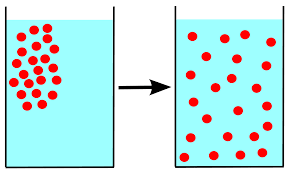
What is diffusion?
when molecules move
when molecules move from a high concentration to a low concentration
no movement
molecules move everywhere
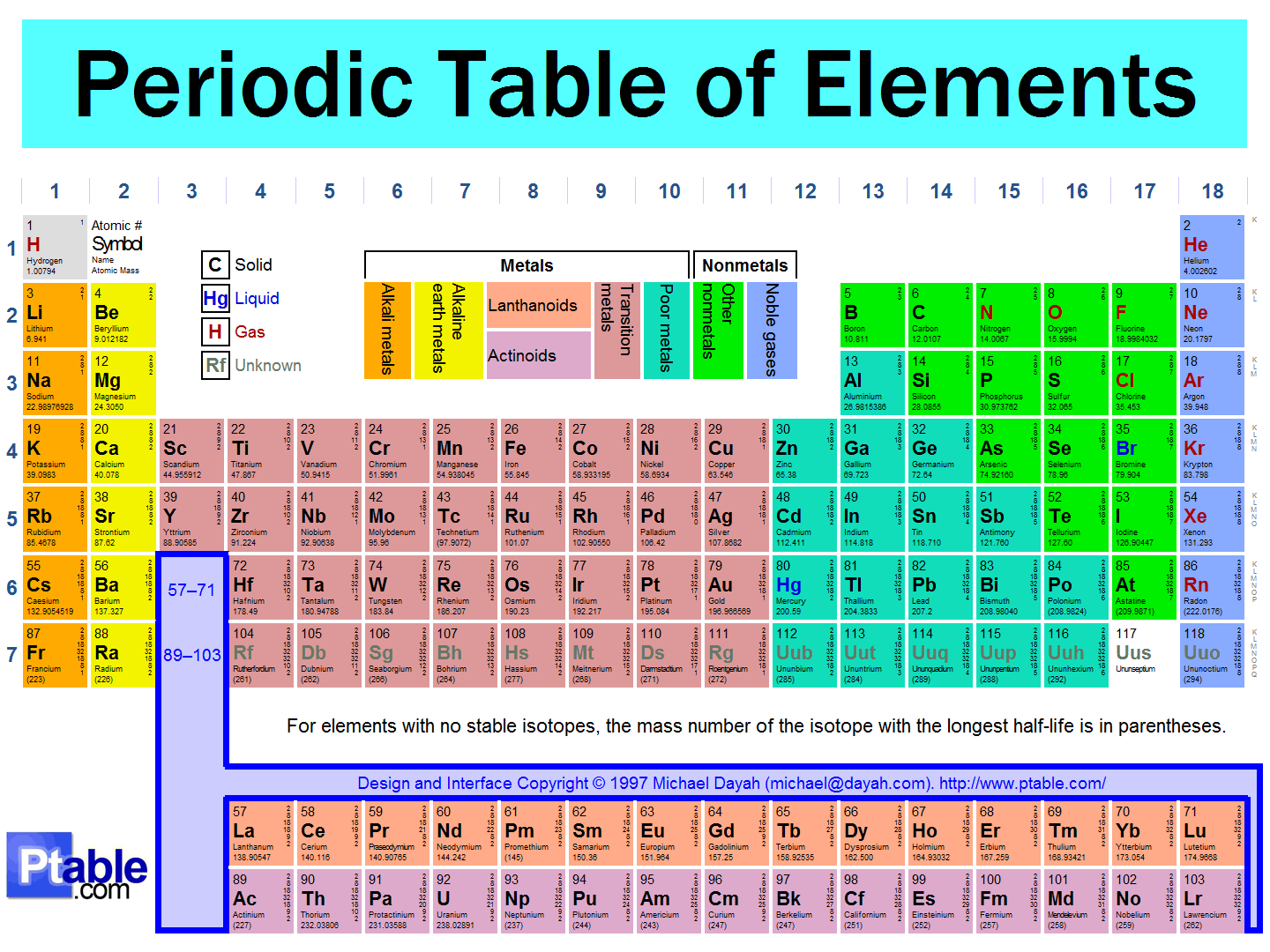


Isotopes are the atoms of the same element with the same number of.............. but different number of............
electrons/neutrons
neutrons/protons
protons/neutrons
electrons/protons
Elements contain only one type of atoms.
True
False
How can you get salt from salty water?
evaporate the water; then crystallisation
condense the water; then crystallisation
Filtration
What separation method could you use to separate water from ink?
filtration
distillation
electrolysis
Mixtures can be separated using chromatography.
True
False

Ink can be separated by a method of -----------------------------------------------
distillation
filtration
chromatography
sedimentation
Nitrogen will ____ electrons to become stable.
gain 1
lose 1
gain 3
lose 3
What is the mass number of magnesium?
2
4
12
24
What happens to the reactivity of the alkali metals as you move down the group?
increases
decreases
Which of the "Halogens" has yellowish green color?
Chlorine
Bromine
Flourine
Iodine
The laboratory test for oxygen is that
it relights a glowing splint
it relights a burning splint
it changes lime water to milky
it makes a glowing splint go out

Has a mass of 1/2000th the mass of a proton.
electron
neutron
nucleus
electron cloud

What are valence electrons?
electrons on the first orbital always
nucleus
the outermost shell
electrons on the outermost orbital

What is the atomic number of this atom?
1
3
4
7

What is the mass number of this atom?
1
3
4
7

How many electrons does it have?
197
79
118
none of the above

What do these isotopes of carbon all have in common?
neutrons & mass number
atomic number and neutrons
atomic number
protons, atomic number, and mass number

The following is a:
Compound
Element
Mixture of elements
Mixture of compounds

Milk contains water, fat, salt and protein.
Milk is an example of ....
an element
a mixture
a compound
What happens to the mass of a liquid into which a soluble solute is added?
The mass decreases
The mass stays the same
The mass increases
It is impossible to tell
Which of these phrases describes the particles in a solid?
The particles are not in a regular arrangement and can move past each other.
The particles are in a regular arrangement and can move past each other.
The particles are far apart and can move randomly.
The particles are in a regular arrangement and can only vibrate around fixed positions.
If you were using filtration, what would you be trying to separate?
A soluble solid from a liquid
A mixture of two solids
An insoluble solid from a liquid
A mixture of two or more liquids
If you were using simple evaporation, what would you be trying to separate?
A soluble solid from a liquid
A mixture of two solids
An insoluble solid from a liquid
A mixture of two or more liquids
If you were using distillation, what would you be trying to separate?
A soluble solid from a liquid
A mixture of two solids
An insoluble solid from a liquid
A mixture of two or more liquids
If you were using chromatography, what would you be trying to separate?
A soluble solid from a liquid
A mixture of two solids
An insoluble solid from a liquid
A mixture of two or more liquids
Which of these statements is true?
A neutron has a mass 1/1840 of a proton
An electron has the same charge as a proton
In any atom, the number of electrons is equal to the number of neutrons
All atoms of a particular element have the same number of protons

What is the electron configuration of the ion that this atom would form?
2,8,2
2,8,1
2,8
2,8,8
75% of naturally occurring chlorine is Cl-35. The remaining chlorine is Cl-37. Which of the below equations shows how to calculate the relative atomic mass of chlorine?
(75x37) + (25x35) / 100 = 35.5
(75x35) + (25x37) / 100 = 35.5
(75x37) + (25x35) / 100 = 35
(75x35) + (25x37) / 100 = 37
Which of these statements about Group 1 metals is incorrect?
They are very reactive because they lose their inner shell electrons
They form ions with a charge of +1
They are very reactive because they lose their outer shell electron
They react with water to form an alkaline solution
Why are the noble gases so unreactive?
They made a group decision not to react
They have a large number of electrons
They don't like to give up electrons
They have a full outer shell of electrons
Which of these statements about the halogens is incorrect?
They are reactive because they easily gain one electron
They form ions with a charge of +1
They include fluorine, chlorine, bromine and iodine
They get less reactive as their atomic number increases
Which of the following substances conduct electricity when solid? (Could be more than one)
diamond
potassium chloride
copper
carbon disulfide
Which of the following substances conduct electricity when liquid? (Could be more than one)
diamond
potassium chloride
copper
carbon disulfide
Which of the following terms describes the structure of sand, graphite and diamond?
simple covalent
giant covalent
giant ionic
metallic
Which of the following terms describes the structure of sodium, steel, and iron?
simple covalent
giant covalent
giant ionic
metallic
Graphite is soft because... (tick all statements that help explain it)
the carbon atoms are linked by very strong covalent bonds
the forces between the layers are weak
the covalent bonds require a lot of energy to be broken
the atoms are arranged in layers that can slide over each other
Graphite has a high melting point because... (tick all statements that help explain it)
the carbon atoms are linked by very strong covalent bonds
the forces between the layers are weak
the covalent bonds require a lot of energy to be broken
the atoms are arranged in layers that can slide over each other
Graphite can conduct electricity because... (tick all statements that help explain it)
the carbon atoms are linked by very strong covalent bonds
the electrons can move along the layers from one atom to the next
the covalent bonds require a lot of energy to be broken
the atoms are arranged in layers that can slide over each other
Which of these are properties of metals? (Tick all that apply)
High densities
High melting and boiling points
Good conductors of heat and electricity
Malleable
In an endothermic reaction, heat is ,,,
given out
taken in
Acid + Carbonate ----->
salt + hydrogen
salt + water + carbon dioxide
salt + water
salt + carbon dioxide
Li3N + 3NH4NO3 --> 3LiNO3 + (NH4)3N
2AgNO3 + Cu --> Cu(NO3)2 + 2Ag
The number 6.022 x 10²³ is called what?
Avocado's Number
Avogadro's Number
Alejandro's Number
Bohr's Number
Which has more molecules?
1 mole H2O
1 mole NaCl
1 mole Al(OH)3
These are all the same
What are the units for molar mass?
g
g/mole
amu
atoms
C6H12(g) → C6H6(g) + 3H2(g); ΔH=+206 kJ mol-1
Which two changes could be used to increase the rate of reaction?

