
 Worksheets
Structure & Properties of Matter
Total questions: 58
Worksheet time: 3hrs 52mins
Students took some ice cubes out of the freezer at 1:00pm. An hour later, they observed how the ice cubes had changed. The change that occurred is best described as
chemical because a liquid formed
physical because it happened over time
physical because no new substance was formed
chemical because heat caused the change

In an element box, the number at top is the
atomic number
atomic name
atomic mass
atomic symbol
The number of neutrons in an atom can be found by
adding the number of neutrons and protons together.
adding the atomic mass and the atomic number.
subtratcting the atomic number from the atomic mass.
subtracting the atomic mass from the atomic number.

___________________ are positively charged particles located in the nucleus of an atom.
Electrons
Neutrons
Protons
Isotopes
Elements on the Periodic Table are ordered according to their
element name
element symbol
number of atoms
atomic number

The elements that touch the zigzag line on the Periodic Table are called
metals
nonmetals
metalloids
gasses
What do atoms of the same periodic group have in common?
They have the same atomic number.
They have the same chemical symbols.
The have similar chemical properties.
They have the same atomic mass.

Protons have a ____________ charge, neutrons have a ____________ charge, and electrons have a ____________ charge.
positive; negative, neutral
positive, neutral, negative
neutral, negative, positive
negative, neutral, positive

The chemical symbol in this element box is
26
Fe
Iron
55.845
The three kinds of elements are
metals, nonmetals, and liquid metals
metals, nonmetals, and metalloids
metals, solids, and liquids
metalloids, asteroids, and nonmetals
All matter is made of
electrons
protons
neutrons
atoms
There are different characteristics for each of the states of matter. Which statement describes a difference between liquids and solids?
Temperature can change a solid to a liquid, but it cannot change a liquid to a solid.
Solids have definite volume and liquids do not have definite volume.
The particles in a solid are much closer together than the particles in a liquid.
Solids take the shape of their containers and liquids maintain their own shapes.
Which of the following is not a physical property of matter?
temperature
mass
volume
burning

How are the particles in a gas formed?
able to fly around freely
loosely packed
tightly packed together

how are the particles in a liquid packed?
tightly packed together
loosely packed together
able to fry around freely.
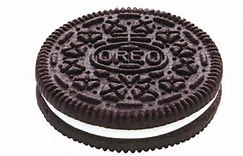
a different way to say Law of Conservation of Matter
Law of Conservation of Volume
Law of Conservation of Energy
Law of Conservation of Mass
Law of Conservation of Environment
fundamental principle that matter cannot be created or destroyed in a closed system
Law of Conservation of Energy
Law of Conservation of Matter
Law of Conservation of Environment
Law of Conservation of Volume
a new material formed in a chemical reaction
coefficient
subscript
reactant
product
a substance that takes part in and undergoes change during a reaction
coefficient
subscript
reactant
product
If reaction starts with 20g of reactants, it will produce ---
a total of 40g of product
a total of 10g of product
a total of 80 g of product
a total of 20g of product
How many of each type of atom are in the formula NH3?
1 nitrogen, 3 hydrogen
3 nitrogen, 3 hydrogen
1 neon, 3 hydrogen
1 nitrogen, 3 helium
What will have more mass when a chemical change is complete: the reactants before the chemical reaction or the product after the reaction is complete?
They both will have the same mass
The product always has more mass than the reactant
The reactant will have more mass than the product
They both will lose mass after the reaction
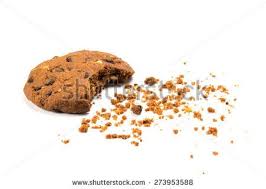
The Law of Conservation of Matter states that the total amount of matter _____ after it undergoes change.
disappears
stays the same
weighs less
explodes

On the periodic table Li, Na, K and Rb are found in the same group because
they have the same number of neutrons
they have similar properties
they have the same number of electrons
they are compounds

Which is an electron?
A
B
C
electrons are not labeled in the diagram

The vertical (up and down) columns in the Periodic Table are called ___.
groups
towers
periods
atomic numbers
In which state of matter do molecules vibrate at a fixed position?
Solids
Liquids
Gases
All of the above
In which state of matter are the molecules furthest apart?
Solids
Liquids
Gases
None of the above
Which state of matter has a definite shape and volume?
Solids
Liquids
Gases
All of the above
Which state of matter has a definite volume but no definite shape?
Solids
Liquids
Gases
None of the Above
Which state of matter has no definite shape or volume
Solids
Liquids
Gases
None of the Above
State the order of the states of matter according to their motion or kinetic energy in descending order. (From highest to lowest)
1._________
2._________
3._________
Solids, liquids, gases
Gases, liquids, solids
Liquids, solids, gases
Solids, gases, liquids
State the arrangement of molecules in a liquid.
Tightly packed together in a regular pattern
Move and slide over each other with no particular pattern
Move around freely in all directions
move freely in no direction with a regular pattern
State the arrangement of molecules in a solid.
Tightly packed together in a regular pattern
Move and slide over each other with no particular pattern
Move around freely in all directions
move freely in no direction with a regular pattern


What is a chemical change?
Forming a new substance
When two or more substances combine to make a greater one
When two or more substances combine to make a new chemical substance
Combing substances
While walking to school you notice that the grass is wet but it didn't rain the night before is from?
freezing point
boiling point
evaporation
condensation
with the exception of water, when the matter gets hotter it
solidifies
contracts
expands
stays the same
When a gas is cooled to make a liquid.
evaporation
condensation
deposition
sublimation
When a liquid turns to a gas.
condensation
precipitation
deposition
vaporization

