
 Worksheets
Unit 1: Matter and Chemical Equations Review 8th Grade Science
Total questions: 73
Worksheet time: 1hrs 14mins

The Law of Conservation of Mass states Matter is NEITHER created nor destroyed.
True
False
The Coefficient (3) in the Chemical Formula, 3H2O, tells you how many _____________ there are.
Atoms of Hydrogen
Atoms of Oxygen
Atoms of Water
Molecules of Water

How many oxygen atoms are in this chemical formula?
6 oxygen atoms
2 oxygen atoms
3 oxygen atoms
4 oxygen atoms

Is this equation balanced or unbalanced?
CH4 + 2O2--> CO2+ 2H2O
balanced
unbalanced
Weaker bases have a pH closer to...
8
14
0
4
Stronger acids have a pH closer to...
7
14
0
9
Bases turn blue litmus paper red.
True
False
_______ are corrosive substances characterized as having a strong smell, a sour taste, and a _______.
Most foods would be considered
bases
acids
neutral
David was conducting a science experiment and found a substance with a pH greater than 7. This substance is a(n) _______.
Base
Acid
Buffer
Water

A mixture that has visually distinguishable components
homogenous mixture
elemental mixture
heterogeneous mixture
compound mixture

A mixture that appears uniform throughout
homogenous mixture
heterogenous mixture
elemental mixture
compound mixture
What 2 types of matter are pure substances?
elements and compounds
elements and mixtures
mixtures and compounds
atoms and elements

Which form of matter is represented by single argon atoms?
Element
Compound
Mixture
Colloid

Which state of matter is represented by the double oxygen atoms?
Element
Compound
Mixture
Solution

Which form of matter is represented in the image?
element
compound
mixture
solution

Which form of matter is represented by the joined carbon and oxygen atoms?
element
compound
mixture
colloid

The atoms of different elements can join together to form
elements
compounds
mixtures

Which type of mixture is represented in this image?
(Think: Are the particles spread out evenly throughout, or are the particles chunked together?)
Compound mixture
Heterogeneous mixture
Homogeneous mixture
Elemental mixture

Which type of mixture is represented in this image?
(Think: Are the particles spread out evenly throughout, or are the particles chunked together?)
Homogeneous mixture
Elemental mixture
Heterogeneous mixture
Compound mixture
Which is an example of a heterogenous mixture?
Lucky Charms cereal
cranberry juice
brass metal
salt dissolved in water
Which is an example of a homogenous mixture?
Lucky Charms cereal
salt dissolved in water
orange juice with LOTS of pulp
trail mix
How many atoms of Carbon are in this equation?
HʒC5O4
3
1
5
4
Identify the Coefficient.
3BeH5Si8
5
3
1
8
C3H5(NO3)3
C = 3, H = 5, N = 3, O = 9
C = 3, H = 5, N = 1, O = 9
C = 9, H = 15, N = 3, O = 9
C = 9, H = 15, N = 1, O = 3
Coefficients in chemical formulas...
Multiply just the first atom
Add to the subscripts at the end of the molecule
Multiply elements without subscripts
Multiply EVERYTHING!
How do you find how many nuetrons are in an atom?
subtract the atomic number by the atomic mass
its the same as the protons
its the atomic mass
add the atomic number and the atomic mass
what part of the atom tells you what element it is?
Protons
nuetrons
electrons
electron cloud
How do you find the amount of valence electrons in an atom?
they are the same as the atomic mass
they are the electrons on the outer shell of an atom
they are on the very first shell of an atom
they are the same as regular electrons
how many groups are there on the periodic table?
10
15
7
18
how many periods are on the periodic table?
6
7
18
10
how can you tell an atoms reactivity?
the valence electrons
protons
neutrons
atomic number
how can you tell the number of energy shells an atom has?
the period number
the group number
the atomic mass
the valence electrons

What is the identity of Element III
Hydrogen
Krypton
Calcium
Argon

What is the identity of Element II
Hydrogen
Magnesium
Calcium
Rubidium

What is the identity of the of Element B atomic model?
Phosphorus
Hydrogen
Nitrogen
Oxygen

How many valence electrons does Selenium (Se) have?
78
6
34
4
What is the TOTAL number of elements/atoms in this Chemical Formula?
C12H24O12
3
24
36
48
Surface tension is the property of water in which...
water molecules at the surface tend to stick together.
water spills easily.
water tends to be see-through.
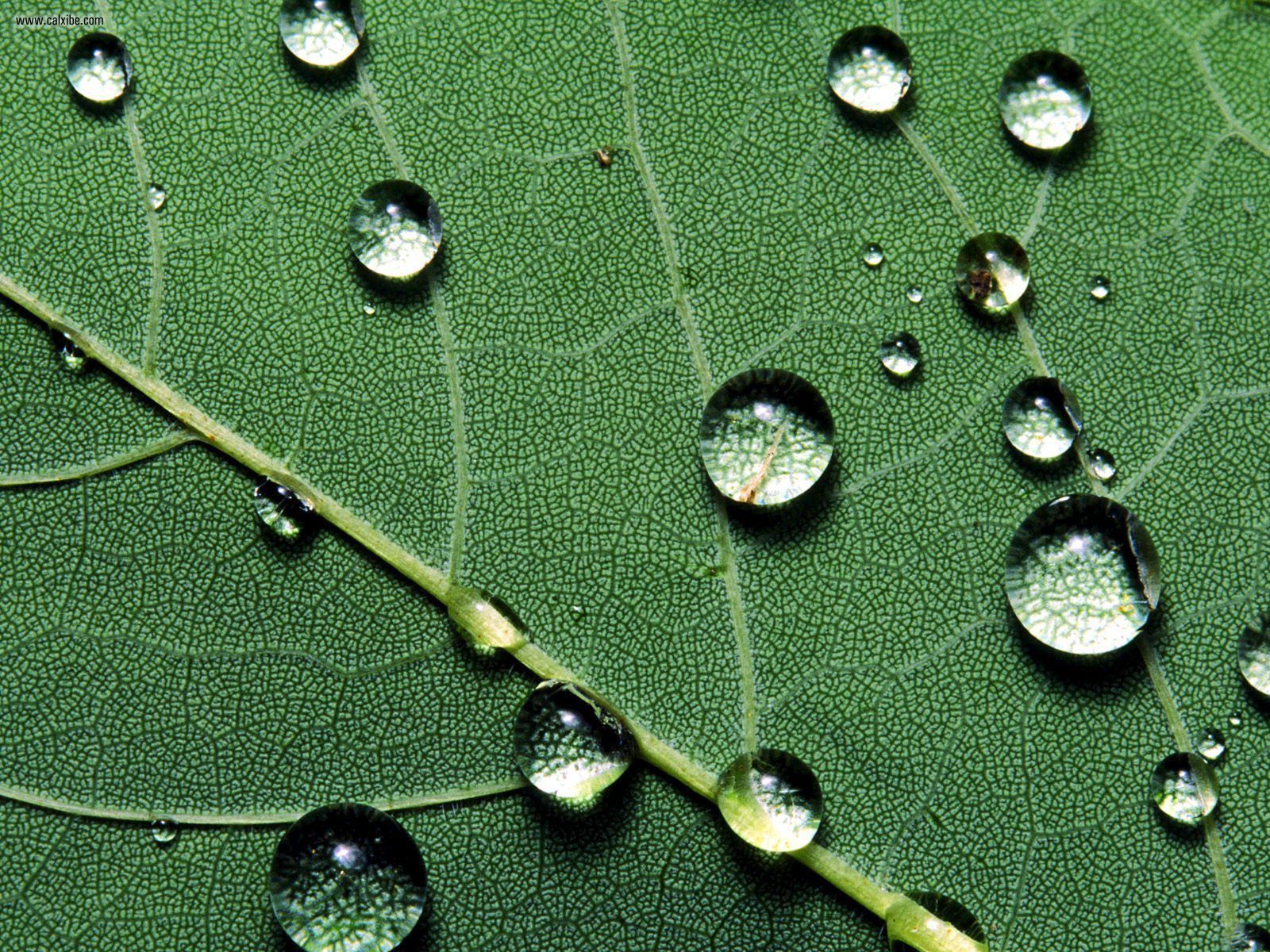
Refer to the picture of water sticking to a leaf; this is occurring because of:
Adhesion
Cohesion
Describe COHESION.
Water molecules attracted to other substances.
Water molecules climbing upwards against the force of gravity.
Water molecules dissolving many substances because of its polarity.
Water molecules attracted to other water molecules.


Water's ability to stick to glass is
adhesion
cohesion
surface tention
capillary action

Refer to the picture; this is occurring because of:
Cohesion
Adhesion
Capillary action
Surface tension
Capillary Action can pull the water _____
Upwards
Downwards
Which property of water allows water to climb up a tree's root system to the leaves?
Cohesion
water's density
Polarity
Capillary Action
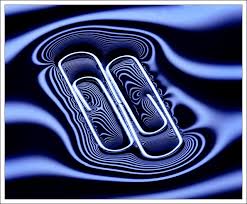
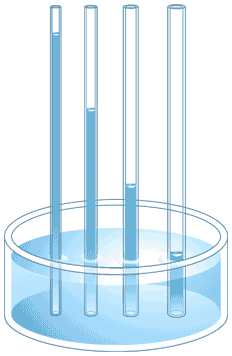
What is the term for water's ability to defy gravity and climb up a tube?
Capillary Action
Specific Heat
Universal Solvent
Magic
Water sticks well to many materials. What term relates to this property of water?
cohesion
adhesion
density
surface tension
A measure of how difficult it is to stretch or break the surface of a liquid
Cohesion
Adhesion
Surface Tension

The pH of pure water is what?
7
8
2
14

A process powered by adhesion that causes water molecules to move upward through a narrow tube such as the stem of a plant is called...
polar molecule
surface tension
capillary action
specific heat

A measure of how difficult it is to stretch or break the surface of a liquid is called...
specific heat
polar molecule
capillary action
surface tension
Water molecules ________ since the slightly positive portion of a water molecule is attracted to the slightly negative portion of the next water molecule.
stick together
spread out
So, the Law of Conservation of Mass would tell us that the mass of all the REACTANTS must __________ the mass of all PRODUCTS in a chemical reaction.
equal
be greater than
be less than

