
 Worksheets
Beginning Photo Final Exam Semester 1 2025
Total questions: 60
Worksheet time: 31mins
What are the three components of the exposure triangle?
A) ISO, White Balance, Shutter Speed
B) ISO, Aperture, Shutter Speed
C) Aperture, Depth of Field, Shutter Speed
D) ISO, Shutter Speed, Focus
What does the aperture control in photography?
The brightness of the flash
The amount of light entering the lens
The sensitivity of the camera to light
The speed at which the photo is taken
A lower f-stop number (aperture) such as f2.8 results in:
Less light entering the camera
A larger depth of field
A smaller aperture opening
A shallow depth of field
Increasing the ISO setting on your camera will:
A) Reduce image noise
B) Make the image sharper
C) Increase the camera's sensitivity to light
D) Change the color balance
A faster shutter speed (e.g., 1/1000) is used to:
What is the effect of a slower shutter speed (e.g., 1/30)?
It increases the depth of field
It allows more light to enter the camera
It freezes fast-moving objects
It decreases the sensitivity to light
Which of the following would produce the most noise in an image?
ISO 100
ISO 400
ISO 1600
ISO 6400
What happens when the ISO is set too high?
The photo appears blurry
The image may become grainy or noisy
The image becomes darker
The focus becomes sharper
To achieve a blurred background effect, which setting would you adjust?
ISO
Shutter speed
Aperture
White balance
Which aperture setting lets in the most light?
A) f/22
B) f/16
C) f/5.6
D) f/2.8
What does ISO 100 typically represent?
Low sensitivity to light
High sensitivity to light
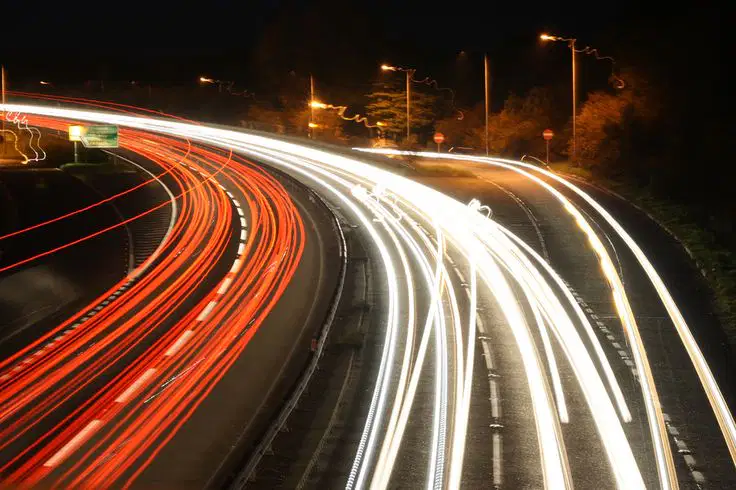
If you want to capture light trails from cars at night, what shutter speed should you use?
1/1000
1/250
1/60
5 seconds

A large aperture (low f-stop) affects depth of field by:
Creating a larger depth of field
Reducing the amount of light
Creating a shallower depth of field
Increasing the ISO
When shooting in bright daylight, which ISO is most appropriate?
ISO 100
ISO 400
ISO 1600
ISO 3200
What happens when you decrease the ISO on your camera but don't adjust the other settings?
A) The image becomes noisier
B) The image becomes darker
C) The shutter speed decreases
D) The aperture closes
If your photo is too dark, which of the following could you do to brighten it?
Increase the ISO
Decrease the ISO
Use a faster shutter speed
Which aperture would you use for a landscape photo to get everything in focus?
A) f/1.8
B) f/2.8
C) f/8
D) f/22
Which combination would most likely create a well-exposed image in low-light conditions?
A) f/2.8, 1/500, ISO 100
B) f/5.6, 1/60, ISO 1600
C) f/8, 1/125, ISO 100
D) f/16, 1/1000, ISO 400
A shutter speed of 1/15 is most likely to:
Freeze action in sports photography
Cause camera shake without stabilization
Be ideal for very bright conditions
Make an image darker
What does increasing the aperture number (e.g., f/11 to f/16) do to the image?
Lets in more light
Makes the image brighter
Decreases the amount of light
Reduces ISO
Which of the following is NOT a factor in determining exposure?
Amount of available light
If you wanted to freeze action at a sporting event, which shutter speed would be best?
1/1000
1/60
1/30
1 second
When photographing in a dark room without a flash, what is the best way to ensure proper exposure?
Increase the aperture number
Use a slower shutter speed
Lower the ISO
Use a faster shutter speed
What controls exposure?
Aperture
Shutter Speed
ISO
All three
If your image is overexposed when taking an image of a fast-moving subject using the widest aperture, what can you do to reduce the exposure?
Change the ISO
Change to a smaller f number
Neither
When describing the hole in the lens, which is the correct term to use?
Shutter speed
f stop
Focal length
What is the drawback of using a high ISO?
Your image will be overexposed
Your image will be underexposed
The image will show digital noise
When should you use a high ISO?
When there is insufficient light to hold the camera steady
When there is too much light
When the shutter speed is too high
The difference between two f numbers is called...
A stop
A step
A shutter speed
Which control changes the volume of light entering the camera?
The shutter
The aperture
The ISO
A camera's sensitivity to light is measured by...
The aperture
The shutter speed
The ISO
Which control changes the duration that light enters the camera?
The shutter
The aperture
The ISO

What settings would you adjust to get this photo? (a) because (b) .

This diagram represents
Shutter Speed
Aperture
ISO

Which of the following does this picture belong to?
Portrait
No Flash
Landscape
Close Up
(aka Macro)

This picture represents which mode?
Manual
Automatic
Program
Custom

This mode is used for which of the following?
bugs
sun
flowers
landscapes

This picture is for what mode?
Action
Portraits
Sports
Runner

This mode allows you to choose depth of field an increases/decreases background details.
Aperture Priority
Aperture View

When is the best time to use this mode?
Day
Night
Which color is most characteristic of a traditional cyanotype print?
Bright red
Emerald green
Sepia brown
Deep blue
What is a paper negative in photography?
A type of ink used for negatives
A photographic print made on paper
A sheet of paper coated with light-sensitive chemicals that produces a negative image
A digital file stored on paper
A Pinhole Camera is:
A camera with a lens
A simple camera without a lens
A digital camera
A camera with a zoom feature
Shutter Speed refers to (a)
What is a Negative Image?
An image with inverted colors
An image with enhanced brightness
An image with reduced contrast
An image with a sepia tone
What step comes first in taking the pinhole photograph?
Open the shutter
Set the camera on a solid surface
Begin timing the photo
Close the shutter.
What is a Photogram?
A photograph made without a camera
A type of camera
A digital image
A film negative
What does Photosensitive mean?
Sensitive to light
Sensitive to sound
Sensitive to touch
Sensitive to temperature
What is a Contact Print?
A print made by placing a negative in contact with paper
A digital print
A print made with a camera
A print made with a scanner
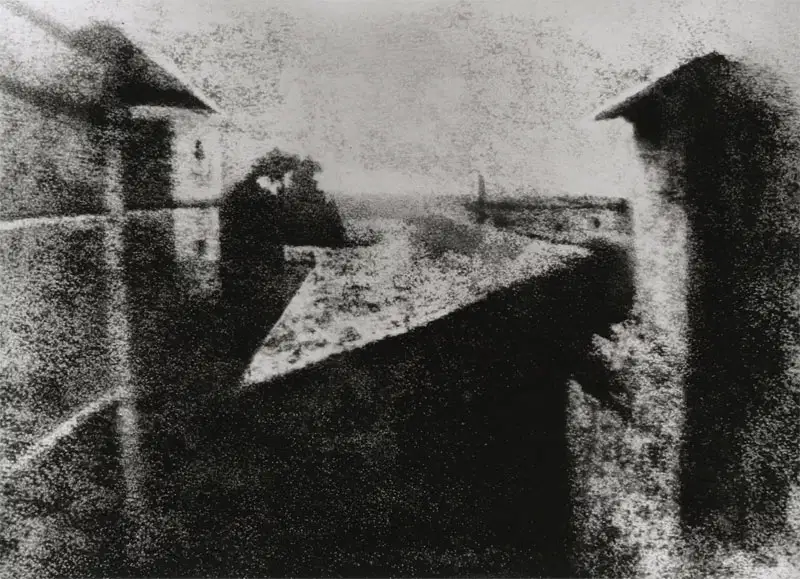
What is the significance of this image?
It was the first photograph ever taken
It's a photograph that shows how poor people were in Europe in the 1800s
It was the first ever digital photograph, created in 1976
It is a cyanotype that faded to black

What is this part of Lightroom Classic called?
filmstrip
library
contact sheet
negative
Which module in Lightroom Classic is primarily used for organizing and sorting your photos?
Develop
Map
Library
Which module in Lightroom Classic is primarily used for editing and adjusting the look of your photos?
Develop
Library
Slideshow
The Crop Tool in Lightroom Classic allows you to:
Blur the background
Change white balance
Cut or resize an image
Add text
The Import button in Lightroom Classic is used to:
Bring photos into Lightroom
Save changes
Export edited photos
Delete files
The Export function in Lightroom Classic does what?
Opens new photos
Saves and outputs edited photos
Deletes duplicate files
Backs up the catalog
Exporting a photo in Lightroom Classic will delete the original version.
True
False
In Lightroom Classic, You can rename and keyword photos in the Library Module.
True
False
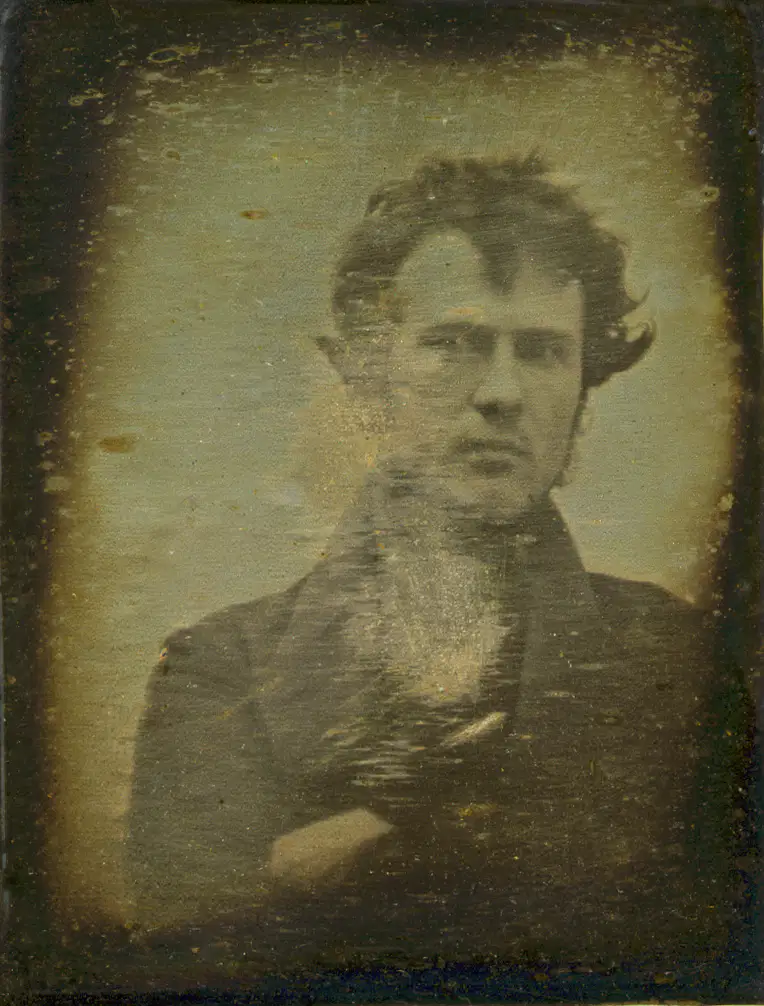
What is the significance of this image?
It was the first self portrait ever recorded by a camera
It was of an unhappy person
it was a cyanotype
it had the most depth of field
What is 33 + 34?
(a)

