
 Worksheets
BIOLOGY QUIZ on Chapter 3 "The Biosphere"
Total questions: 50
Worksheet time: 2hrs 40mins

Which one is a producer in the food chain?
rabbit
fox
plant
snake

What are fungi and bacteria in the food chain?
decomposers
tertiary consumers
producers
primary consumers

How is called when every single member of a species dies and none are left alive?
extinction
endangered
biodiversity
reserve

The series of steps in which a large fish eats a small fish that has eaten algae is a
food web
food chain
pyramid of numbers
pyramid of biomass
Which group of organisms is always found at the base of a food chain or food web?
primary producers
primary consumers
secondary consumers
detrivores
Which of the following is a primary producer?
algae
a lion
a human
an earthworm
The system that contains all living things on Earth.
Biosphere
Atmoshpere
Hydrosphere
Geosphere
The biosphere includes plants and animals that live
on land
on land and in the water
on land, in water, and in the air
in water
Two or more different species interacting and living in an area.
Biodiversity
Habitat
Community
Microhanitat

What animal is on the top of the food chain?


Food webs show you everything an animal eats. Food chains show you one thing.
Which of the following is an abiotic factor?
Grass
Spider
Turtle
Rock
What role do decomposers play in an ecosystem
fossilize dead animals
break down dead organisms and return their nutrients to the nutrient cycles
increase biomass of a trophic level
combine with consumers to create new limiting nutrients
Each of the following is an abiotic factor in the environment EXCEPT
temperature
soil
sunlight
plant life
Which trophic level signifies the top of the food chain?
producer
decomposer
primary consumer
apex predator

Analyze the food web in the image. If all of the grasshoppers were to suddenly die off from a disease, what would be the outcome?
Grass populations would increase
Birds populations would decrease
Grain populations would increase
All of the options are possible outcomes
What is the ultimate source of energy for all ecosystems?
Producers
Consumers
Apex predators
The Sun
Living organisms
Biotic
Abiotic

The process of turning Nitrogen gas into ammonia
Nitrogen Fixation
Ammonification
Denitrification
Nitrification
Energy flows through ecosystems, but each organism only gets about _____ of the energy available in the level below.
10%
20%
50%
90%

Who is the primary consumer?
Sun
Plant
Grasshopper
Spider

Which process allows the energy from the sun to be used by all living organisms?
cellular respiration
photosynthesis
glycolysis
Krebs cycle
They make or produce their own food

Energy Pyramid
How do consumers get energy?
by making their own food.
by drinking water
by sleeping through the winter
by hunting, searching and/or gather their own food

Elephants eat leaves, fruit, nuts and grass. Elephants only eat producers. Elephants do not eat consumers. What type of consumer is an elephant?
An elephant is an herbivore.
An elephant is a carnivore.
An elephant is an omnivore.

__________ is an organism that only eats meat for energy. (What category of organism?)
An omnivore is an organism that only eats meat for energy.
A producer is an organism that only eats meat for energy.
An herbivore is an organism that only eats meat for energy.
A carnivore is an organism that only eats meat for energy.

Squirrels eat fruit, vegetables, nuts, and insects. Squirrels eat producers and consumers. What type of consumer is a squirrel?
A squirrel is an omnivore.
A squirrel is a carnivore.
A squirrel is an herbivore.
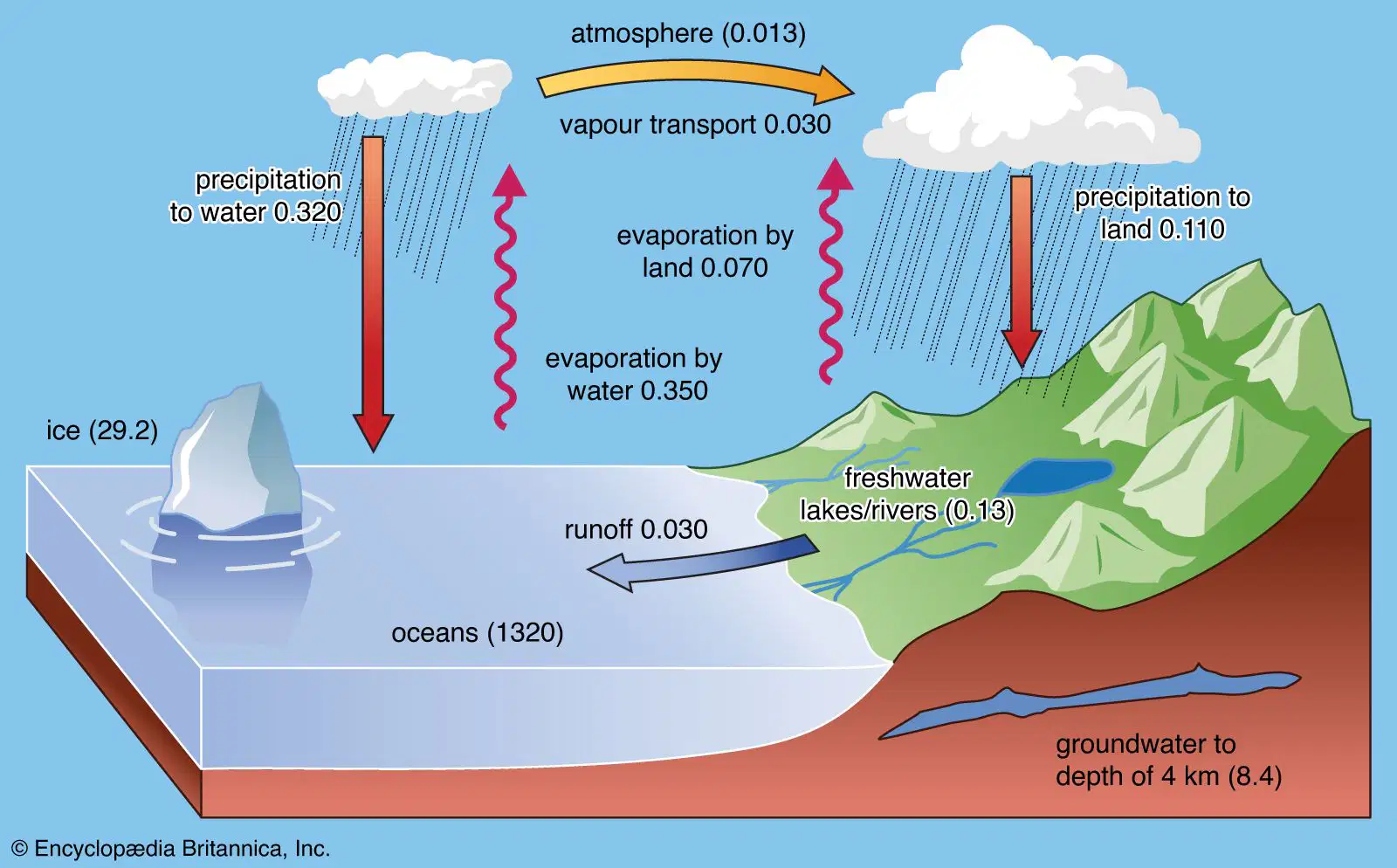
Why is the Water Cycle important to an ecosystem?
Only for weathering.
For your car to get washed by rain every once in a while.
For living things to survive.
So sea levels can increase for boating.
How does burning fossil fuels impact the Carbon Cycle?
Increases CO2 in the atmosphere.
Decreases CO2 in the atmosphere.
Makes it harder for plants to photsynthesize.
It does not impact the Carbon Cycle.
A community of organisms and their abiotic environment.
Environment
Biosphere
Ecosystem
Community
Define "community"
A group of populations of two or more different species in the same region
Individuals of one species that occupies a region
Group of organisms that can reproduce with one another
An area with plants, animals, weather, and landscape
Define "population"
A group of populations of two or more different species in the same region
Individuals of one species that occupies a region
Group of organisms that can reproduce with one another
An area with plants, animals, weather, and landscape
In general, which list places the terms in order of increasing size?
ecosystem, biome, biosphere, community
ecosystem, community, biome, biosphere
biome, ecosystem, community, biosphere
community, ecosystem, biome, biosphere
A single living individual (part of a population)
Biome
Organism
Community
Critter
All of the monkeys, trees, birds, and flowers in an ecosystem is called a....
Community
Biome
Organism
Bioshpere
Sun, water, rocks, soil, wind
Abiotic Factor
Biotic Factor
What is the lowest level/least complex?
Population
Biposphere
Biome
Ecosystem
Animals, plants, bacteria, bugs
Abiotic Factor
Biotic Factor
How do consumers get energy?
by making their own food.
by drinking water
by sleeping through the winter
by hunting, searching and/or gather their own food
Why is the Water Cycle important to an ecosystem?
Only for weathering.
For your car to get washed by rain every once in a while.
For living things to survive.
So sea levels can increase for boating.
How does burning fossil fuels impact the Carbon Cycle?
Increases CO2 in the atmosphere.
Decreases CO2 in the atmosphere.
Makes it harder for plants to photsynthesize.
It does not impact the Carbon Cycle.
Evaporation of water from a plant's leaves
evaporation
transpiration
respiration
dehydration

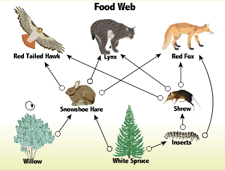
How many trophic levels are in this?
2
3
4
5

What do the arrows represent?
They point to the animal being eaten.
They show positive (green) and negative (red) emotions between the animals.
They represent mutualism between two organisms.
They represent the flow of energy, and they can be read as "is eaten by".

