
 Worksheets
9-20-24 quiz Review
Total questions: 134
Worksheet time: 1hrs 7mins
When metal atoms share their outermost electrons with a nonmetal, the metal and nonmetal become __________.
electrically charged
less chemically stable
more chemically stable
radioactive
Elements in Group 2 of the periodic table are __________.
alkaline earth metals
alkali metals
rare earth metals
transition elements
Which elements in the periodic table are known to have magnetic properties?
alkaline earth metals
alkali metals
iron triad
transition elements
Which of the following is true of all the elements in the actinide series?
Most of a human’s body mass is made up of these.
They are radioactive.
They are used in TV tubes to produce colors.
They have magnetic properties
When a nonmetal bonds with a metal it will form what type of bond?
ionic bond
covalent bond
metallic bond
hydrogen bond
The bond between Ni and Fe is what type of bond?
ionic bond
covalent bond
metallic bond
hydrogen bond
The bond between Mn and Pt is what type of bond?
ionic bond
covalent bond
metallic bond
hydrogen bond
The bond between Eu and Pt is what type of bond?
ionic bond
covalent bond
metallic bond
hydrogen bond
The bond between U and F is what type of bond?
ionic bond
covalent bond
metallic bond
hydrogen bond
The bond between Li and Al is what type of bond?
ionic bond
covalent bond
metallic bond
hydrogen bond
The bond between K and Ni is what type of bond?
ionic bond
covalent bond
metallic bond
hydrogen bond
The bond between Mn and O is what type of bond?
ionic bond
covalent bond
metallic bond
hydrogen bond
The bond between Ti and O is what type of bond?
ionic bond
covalent bond
metallic bond
hydrogen bond
The bond between Rb and Br is what type of bond?
ionic bond
covalent bond
metallic bond
hydrogen bond
The bond between K and Br is what type of bond?
ionic bond
covalent bond
metallic bond
hydrogen bond
The bond between Ca and O is what type of bond?
ionic bond
covalent bond
metallic bond
hydrogen bond
The bond between Cu and Zn is what type of bond?
ionic bond
covalent bond
metallic bond
hydrogen bond
When a metal bonds with a metal it will form what type of bond?
ionic bond
covalent bond
metallic bond
hydrogen bond
In ionic bonding, the metal becomes positively charged and the non-metal becomes negatively charged.
True
False
Table salt also known as NaCl forms a metallic bond.
True
False
In an Ionic bond, the atoms are bonded because:
They share electrons
They swim in the same "sea" of electrons
of the electric force between the ions
They like each other
Lithium, Sodium, and Potassium are classified as what?
Alkali Metals
Alkaline Earth Metals
Non Metals
Halogens
Beryllium, Magnesium, and Calcium are classified as what?
Alkali Metals
Alkaline Earth Metals
Non Metals
Halogens
Alkaline earth metals are more reactive than transition elements.
True
False
Cu, Ag, and Au are chemically stable and can be found unbonded to other elements in nature.
True
False
Only metal to be a liquid at room temperature.
Hg
Ca
Zn
Cu
The inner transition elements are found between what 2 groups?
1&2
2&3
3&4
4&5
All of the lanthanides are radioactive and unstable.
True
False
All of the actinides are radioactive and unstable.
True
False
Which group of elements in the periodic table contains the noble gases?
Group 3
Group 8
Group 13
Group 18
Ninety percent of all the atoms in the universe are _____.
hydrogen
carbon
nitrogen
oxygen
Which group of elements in the periodic table is known as the halogens?
group 15
group 16
group 17
group 18
Which is the most chemically active of all the elements?
Chlorine
Fluorine
Hydrogen
Oxygen
What elements are usually gases or brittle solids at room temperature?
metalloids
metals
nonmetals
transition elements
Most of your body's mass is made up of:
Metals
Nonmetals
Metalloids
Gases
Nonmetals can be found in ___ number of groups:
6
3
7
5
4
True/False: All nonmetals are found to the right of the stair step metalloid line.
True
False
The bond between two nonmetals is known as a:
Covalent bond
Ionic bond
Metallic bond
Hydrogen bond
Which of the following is a Diatomic molecule?
O₂
CO₂
H₂O
HCl
When hydrogen combines with an alkali and alkaline earth metal it forms a
covalent bond
hydride
diatomic molecule
halogen
some hot tubs use bromine instead of chlorine to disinfect the water.
True
False
Inert gases that are not chemically reactive are known as:
Halogens
Noble gases
Group 16
Group 15
The bond between O and Pt is what type of bond?
Ionic Bond
Covalent Bond
Metallic Bond
Hydrogen Bond
The bond between H and O is what type of bond?
Ionic Bond
Covalent Bond
Metallic Bond
Hydrogen Bond
The bond between H and F is what type of bond?
Ionic Bond
Covalent Bond
Metallic Bond
Hydrogen Bond
The bond between O and C is what type of bond?
Ionic Bond
Covalent Bond
Metallic Bond
Hydrogen Bond
The bond between O and Ca is what type of bond?
Ionic Bond
Covalent Bond
Metallic Bond
Hydrogen Bond
The bond between O and Po is what type of bond?
Ionic Bond
Covalent Bond
Metallic Bond
Hydrogen Bond
The bond between S and F is what type of bond?
Ionic Bond
Covalent Bond
Metallic Bond
Hydrogen Bond
The bond between Fe and Ni is what type of bond?
Ionic Bond
Covalent Bond
Metallic Bond
Hydrogen Bond
The bond between H and Na is what type of bond?
Ionic Bond
Covalent Bond
Metallic Bond
Hydrogen Bond
The bond between H and K is what type of bond?
Ionic Bond
Covalent Bond
Metallic Bond
Hydrogen Bond
The bond between P and C is what type of bond?
Ionic Bond
Covalent Bond
Metallic Bond
Hydrogen Bond
The bond between N and H is what type of bond?
Ionic Bond
Covalent Bond
Metallic Bond
Hydrogen Bond
The bond between N and O is what type of bond?
Ionic Bond
Covalent Bond
Metallic Bond
Hydrogen Bond
The bond between N and C is what type of bond?
Ionic Bond
Covalent Bond
Metallic Bond
Hydrogen Bond
The bond between N and Cu is what type of bond?
Ionic Bond
Covalent Bond
Metallic Bond
Hydrogen Bond
The bond between N and Zn is what type of bond?
Ionic Bond
Covalent Bond
Metallic Bond
Hydrogen Bond
The bond between Br and Pt is what type of bond?
Ionic Bond
Covalent Bond
Metallic Bond
Hydrogen Bond
Which of the following have both metallic and nonmetallic properties?
Halogens
Metals
Metalloids
Nonmetals
___ are different molecular structures of the same elements.
Allotropes
Isotopes
Transposed elements
Transuranium elements
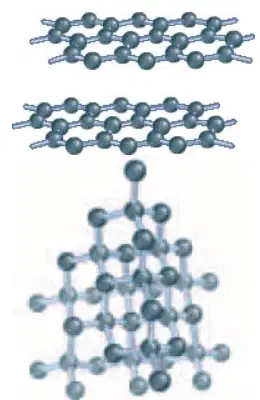
What does this illustration represent ____
bonding of metal atoms
allotropes of carbon
isotopes of carbon
two different elements
Which of the following statements is true about the elements larger than uranium?
They have both radioactive and non-radioactive isotopes.
Some of them are very stable.
They are not obtained from natural sources.
They are responsible for the radioactivity observed in uranium mines.
The main component of semiconductors is ___
aluminum
carbon
tin
silicon
This group contains 1 non metal, 2 metalloids, and 3 metals
Group 13
Group 1
Group 14
Group 15
True or false allotropes are different molecular structures containing multiple elements within
True
False
True/false: Diamond and graphite are both made of pure Nitrogen.
True
False
True/false: Different allotropes are all made of the same element but have different molecular shapes and thus functions.
True
False
Select ALL non-metals that make up Ammonia.
Hydrogen
Carbon
Nitrogen
Oxygen
Sulfur
Select ALL non-metals that make up Nitrate.
Hydrogen
Carbon
Nitrogen
Oxygen
Sulfur
Which of the following elements are considered metalloids?
oxygen, nitrogen, carbon, phosphorus, sulfur, selenium, iodine
helium, neon, argon, krypton, xenon, radon
lithium, sodium, potassium, rubidium, cesium, francium
boron, silicon, germanium, arsenic, antimony, tellurium
Which group of elements in the periodic table contains metalloids?
Group 17
Group 7
Group 1
Group 14
What is the atomic number of boron, a metalloid?
2
12
8
5
Which of the following is a property of metalloids?
Good conductors of electricity.
Highly reactive with other elements.
Insulators of electricity.
Semi-conductors of electricity
Which metalloid is commonly used in computer chips?
silicon
germanium
arsenic
antimony
What metal(s)/metalloid(s) is used with other metals to lower their melting point? Select all that are correct.
Bismuth
Antimony
Boron
Selenium
Arsenic
O2 (breathable oxygen) and Ozone are allotropes of oxygen.
True
False
Synthetic elements usually only last for months but can be made in great quantities.
True
False
What is the atomic number of Tellurium?
52
127
128
76
75
How many neutrons does the average atom of Tellurium have? Round atomic mass to nearest whole number.
52
127
128
76
75
How many protons does the average atom of Tellurium have? Round atomic mass to nearest whole number.
52
127
128
76
75
How many valence electrons does Selenium have?
D) 6
B) 2
E) 5
A) 8
C) 7
How many valence electrons does Helium have?
1
2
3
4
7
How many valence electrons does Neon have?
1
4
2
3
8
What kind of bond does Potassium and Chlorine have?
Hydrogen bond
Covalent Bond
Ionic Bond
Metallic Bond
What kind of bond does Phosphorus and Iodine have?
Hydrogen bond
Covalent Bond
Ionic Bond
Metallic Bond
What kind of bond does Manganese and Tin have?
Hydrogen bond
Covalent Bond
Ionic Bond
Metallic Bond
What kind of bond does Iodine and Fluorine have?
Hydrogen bond
Covalent Bond
Ionic Bond
Metallic Bond
How many valence electrons does Phosphorus have?
5
1
2
3
4
What type of bond is formed between sodium (Na) and chlorine (Cl)?
Covalent bond
Ionic bond
Hydrogen bond
Metallic bond
What type of bond is present between two oxygen atoms (O₂)?
Covalent bond
Ionic bond
Hydrogen bond
Metallic bond
Which type of bond is most likely to form between two nonmetals, such as carbon (C) and hydrogen (H)?
Covalent bond
Ionic bond
Hydrogen bond
Metallic bond
What type of bond is found in potassium bromide (KBr)?
Covalent bond
Ionic bond
Hydrogen bond
Metallic bond
What type of bond exists between atoms in a molecule of nitrogen gas (N₂)?
Covalent bond
Ionic bond
Hydrogen bond
Metallic bond
What type of bond holds the atoms together in copper (Cu) metal?
Covalent bond
Ionic bond
Hydrogen bond
Metallic bond
What type of bond forms between hydrogen (H) and fluorine (F) in hydrogen fluoride (HF)?
Covalent bond
Ionic bond
Hydrogen bond
Metallic bond
The bond between Fe and Ni is what type of bond?
Ionic Bond
Covalent Bond
Metallic Bond
Hydrogen Bond
The bond between P and C is what type of bond?
Ionic Bond
Covalent Bond
Metallic Bond
Hydrogen Bond
The bond between N and Cu is what type of bond?
Ionic Bond
Covalent Bond
Metallic Bond
Hydrogen Bond
How many valence electrons does oxygen (O) have?
6
3
5
4
7
How many valence electrons does a fluorine (F) atom possess?
6
5
4
3
7
How many valence electrons are present in a carbon (C) atom?
4
3
5
6
7
How many valence electrons are in an atom of chlorine (Cl)?
7
3
6
4
5
What is the number of valence electrons in sulfur (S)?
4
5
3
7
6
How many valence electrons does aluminum (Al) have?
6
5
3
7
4
How many valence electrons does nitrogen (N) have?
6
4
7
3
5
How many valence electrons are in a phosphorus (P) atom?
6
5
3
7
4
Which of the following is an allotrope of carbon?
Graphite
Sulfate
Nitride
Water
Which of these is an allotrope of oxygen?
O₂
CO₂
N₂
CH₄
Which of the following elements exists as an allotrope in the form of diamond?
Silicon
Carbon
Sulfur
Phosphorus
Ozone (O₃) is an allotrope of which element?
Nitrogen
Hydrogen
Oxygen
Carbon
Which of the following is a diatomic molecule?
Helium (He)
Argon (Ar)
Hydrogen (H₂)
Neon (Ne)
Which of the following is a diatomic molecule?
Sulfur (S₈)
Phosphorus (P₄)
Nitrogen (N₂)
Carbon (C)
Which element is NOT a diatomic molecule?
Oxygen (O₂)
Fluorine (F₂)
Neon (Ne)
Nitrogen (N₂)
A compound ___ (Mark only one oval):
is a pure element
has the same properties as its parts
is a combination of two or more elements
is composed of only metals

The chemical formula for sucrose is C12H22O11. How many oxygen atoms are there in each molecule of sucrose?
12
22
11
1
Chemical compounds are ____
less stable than their individual elements
more stable than their individual elements
always unstable
always stable
In general, noble gases react with ____
other noble gases
metals
water
nothing
When an atom’s outer energy levels are not filled completely, the atom ___
is very stable
is a noble gas
cannot form a compound
can gain, lose, or share electrons

How many atoms TOTAL are there in this compound AlPO4?
A) 1
B) 4
C) 3
D) 6

How many oxygen atoms are there in this compound AlPO4?
1
4
3
6

How many Phosphorus atoms are there in this compound AlPO4?
1
4
3
6
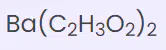
How many barium atoms are there in Ba(C2H3O2)2?
1
2
3
4
6
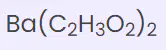
How many Carbon atoms are there in Ba(C2H3O2)2?
1
2
3
4
6
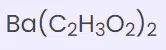
How many Hydrogen atoms are there in Ba(C2H3O2)2?
1
2
3
4
6
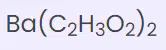
How many Oxygen atoms are there in Ba(C2H3O2)2?
1
2
3
4
6

How many sodium atoms does the compound Na3C6H5O7 have?
3
12
6
5
7

How many carbon atoms does the compound Na3C6H5O7 have?
5
3
12
6
7
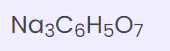
How many hydrogen atoms does the compound Na3C6H5O7 have?
5
3
6
7
12
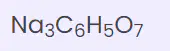
How many Oxygen atoms does this compound have?
6
12
3
7
5

Which element is represented by the electron dot diagram?
Ne
F
O
N
C

Which element is represented by the electron dot diagram?
Ne
F
O
N
C

Which element is represented by the electron dot diagram?
Na
Mg
Al
Si

Which element is represented by the electron dot diagram?
Na
Mg
Al
Si

