
 Worksheets
Chapter 3-4 review Biology
Total questions: 130
Worksheet time: 1hrs 11mins
Which statement best describes electrons?
They are positive subatomic particles and are found in the nucleus.
They are positive subatomic particles and are found surrounding the nucleus.
They are negative subatomic particles and are found in the nucleus.
They are negative subatomic particles and are found surrounding the nucleus.
What is the location of the protons in an atom?
In the energy shells
Around the electron
In the center of the atom
Circling the atom
An atom of carbon-12 and an atom of carbon-14 differ in
Atomic number
Number of electrons
Mass number
Nuclear charge
A neutral atom of any element must contain
an equal number of protons and electrons
an equal numbers of neutrons and protons
more electrons than protons
More protons than neutrons
An atom has an atomic number of 15 and a mass number of 31. How many neutrons are there in the atom?
15
31
16
47
How many protons does Phosphorus-30 have?
30
16
12
15
Isotopes of an element have a different number of...
Protons
Neutrons
Electrons
Mass


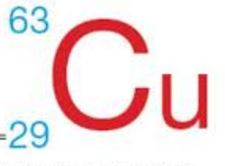


What is at the center of every atom?
An electron
A compound
A molecule
A nucleus

How many neutrons are in Magnesium?
36
12
24
6

How many electrons are in Aluminium?
40
27
13
14
Which of the following elements will form a cation?
Arsenic
Copper
Bromine
Fluorine
Which of the following will form an anion?
Titanium
Iron
Calcium
Sulfur
Which of the following elements will form an anion?
Calcium
Cobalt
Nickel
Iodine
Which of the following will form a cation?
Tellurium
Iodine
Nitrogen
Nickel
A valence electron is what?
The electron in the outer shell of an atom.
The electron in the inner shell of an atom.
The last electron.
The first electron.
If an ion gains an electron, it becomes
Positive
Stable
Atomic
Negative
If an electron is removed, an ion becomes
An atom
Positive
Negative
Neutral
Cations have what type of charge?
Positive
Negative
ALL anions are
Metal
Transitional Metals
Nobel Gases
Non-Metal
Anions and Cations form what type of compound?
Covalent
Ionic
Balled

Nonmetals tend to
gain electrons
lose electrons

This picture represents a:
Element
Compound
Mixture of Elements
Mixture of Compounds
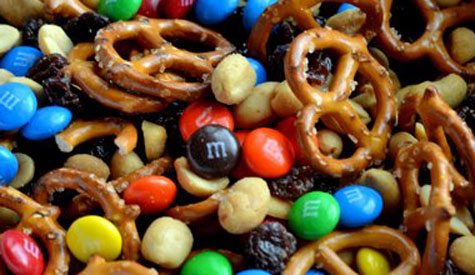
What type of mixture is this?
homogenous mixture
chemical
heterogeneous mixture
solid mixture
A substance with two or more elements that are combined in a fixed proportion is called a:
heterogeneous mixture
compound
element
homogeneous mixture
A substance in which all the atoms are the same type.
heterogeneous mixture
homogeneous mixture
compound
element
A mixture that contains two or more substances blended evenly throughout
heterogeneous mixture
homogeneous mixture
compound
element
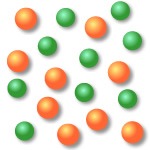
This picture represents which of the following?
element
compound
mixture of elements
mixture of compounds
A mixture that is NOT evenly distributed is called a:
compound
homogeneous mixture
heterogeneous mixture
pure substance
Potential energy depends on the ________ and ________ of the object.
Height (position)
Mass
Speed
Friction

Which point has the most potential energy?
G
F
B
A

At which point of the roller coaster is potential energy the greatest?
W
X
Y
Z
The faster an object moves, the ________ kinetic energy it has.
more
less
What is going up a hill?
Potential Energy
Kinetic Energy
Potential and Kinetic Energy
Fast Energy
What does The Law of Conservation of Energy states?
Energy can be created or destroyed, but only change from one form to another.
Energy can come in or go out.
Energy cannot be created or destroyed, but only change from one form to another.
Energy is only destroyed.
What is standing at the top of a hill?
Potential Energy
Kinetic Energy
Kinetic and Potential Energy
Slow movement

What would you call this apple on the tree?
Kinetic Energy
Potential Energy
Kinetic and Potential Energy
Energy

What type of bond is being depicted by the image?
Metallic bond
Ionic bond
Covalent bond
Hydrogen bond

What type of bond is being formed in the image?
Hydrogen bond
Ionic bond
Polarized bond
Covalent bond
What type(s) of atoms are involved in ionic bonding?
metals only
non- metals only
metals and non- metals
all of the above


Which organelle is the control center of the cell?
Mitochondria
Lysosome
Nucleus
Cytoplasm
What role(s) does the cytoskeleton play in a living cell?
maintaining cell shape
contraction
movement
AOTA
NOTA
What organelle serves as a primary "packaging" area for molecules that will be distributed throughout the cell?
Golgi Apparatus
Ribosome
Smooth ER
Rough ER
Which organelles release chemicals that break down large food particles into smaller ones?
Smooth ER
Lysosomes
Nucleolus
Cytoplasm
What is the function of the cell wall?
To protect and support cell
To perform different functions in the cell
To prevent water from entering the cell
To prevent oxygen from entering the cell
The nucleus of a cell has thin strands of________________________ that contain genetic material
Microtubules
Chromatin
Chromosomes
DNA
A________________is a group of similar cells that work together to perform a specific function.
organ
organism
tissue
organ system
It is the control center of the cell.
Ribosomes
Nucleus
Nucleolus
Mitochondria
It is the one that protects the cell from invaders outside of it.
Plasma Membrane
Endoplasmic Reticulum
Cytoplasm
Mitochondria
It is known as the powerhouse of the cell.
Nucleus
Mitochondria
Cytoplasm
Golgi Body
It is the packing center of the cell.
Vacuoles
Golgi Body
Endoplasmic Reticulum
Nucleolus
It is known as the storage tanks of the cell.
Vacuoles
Golgi Body
Endoplasmic Reticulum
Nucleolus
It contains the DNA.
Cytoplasm
Nucleolus
Endoplasmic Reticulum
Ribosomes
It is known to be the house of cell organelles.
Cytoplasm
Nucleolus
Endoplasmic Reticulum
Ribosomes
It is the site of protein synthesis.
Mitochondria
Nucleolus
Nucleus
Ribosomes
It is known as the transporter of the cell. It also serves as the passageway in the delivery of food.
Cytoplasm
Vacuoles
Plasma Membrane
Endoplasmic Reticulum
It determines the characteristic of the cells.
DNA
Mitochondria
Golgi Body
Endoplasmic Reticulum
Process by which particles tend to move from an area where they are more concentrated to an area where they are less concentrated
Diffusion
Endocytosis
Exocytosis
Active Transport
Process of diffusion in which molecules pass across the membrane through cell membrane channels
Osmosis
Facilitated Diffusion
Active Transport
Endocytosis
Water channel protein in a cell
Osmosis
Diffusion
Homeostasis
Aquaporin
Diffusion of water through a selectively permeable membrane
Osmosis
Active Transport
Exocytosis
Endocytosis
When the concentration of two solutions is the same
Hypertonic
Isotonic
Hypertonic
Osmotic pressure
When comparing two solutions, the solution with the greater concentration of solutes
Hypertonic
Isotonic
Hypotonic
Osmotic Pressure
When comparing two solutions, the solution with the lesser concentration of solutes
Hypertonic
Isotonic
Hypotonic
Osmotic Pressure
Pressure that must be applied to prevent osmotic movement across a selectively permeable membrane
Hypertonic
Isotonic
Hypotonic
Osmotic Pressure
Relatively constant internal physical and chemical conditions that organisms maintain
Hypertonic
Hypotonic
Homeostasis
Osmotic Pressure
Group of similar cells that perform a particular function
Tissue
Organ
Atom
Organ System
Group of similar tissues that work together to perform closely related functions
Organ
Organ System
Atom
Organism
Group of organs that work together to perform a specific function
Tissue
Organism
Atom
Organ System
On or in a cell, a specific protein to whose shape fits that of a specific molecular messenger, such as a hormone
Hypertonic
Homeostasis
Organ
Receptor

What are phagocytes?
cells whose sole job is to ingest and destroy pathogens
the "false feet" that envelop pathogens or foreign material
the capsules that are created when pathogens are ingested by a cell
Active Transport moves from ____ to ____ concentration.
(a)
What is the diffusion of water across a semipermeable membrane?
Facilitated diffusion
Active transport
Simple diffusion
Osmosis
If there is a greater salt concentration out of the cell, which way will water move?
It will move equally into and out of the cell.
Into the cell
Water does not move
Out of the cell.
What is the process of eating?
Phagocytosis
Pinocytosis
Cellular respiration
Photosynthesis

This cell is a(n)
prokaryote
eukaryote
Why do mitochondria and chloroplasts have DNA in them?
They were once prokaryotic cells.
They produce their own DNA through photosynthesis.
They receive the DNA from the nucleus.
They process the DNA of the cell.
Which is NOT a role of the cytoskeleton?
Maintain cell shape
Anchor organelles
Movement of the cell
Movement of molecules within a cell
Aides in Protein Synthesis
Receptor proteins embeded in the cell membrane that transmit signals between the Extracellular Matrix and the cytoplasm are called...
Collagens
Glycoproteins
Integrins
Peripheral Proteins
Cellular Junction in plant cells that allows small molecules in the cytoplasm to be shared between the cells to aide in communication.
Gap Junctions
Tight Junctions
Plasmodesmata
Desmosomes
Cellular Junction in animal cells that allows for cellular communication through flow of cytoplasm between cells.
Gap Junctions
Tight Junctions
Plasmodesmata
Desmosomes
Anchor cells in place by attaching them to one another using intermediate filaments.
Gap Junctions
Tight Junctions
Plasmodesmata
Desmosomes
Place a seal around the cells to prevent leakage.
Gap Junctions
Tight Junctions
Plasmodesmata
Desmosomes

Match the following:
stabilizes and maintains flexibility of cell membrane
Cholesterol
2 layers; allows small & non-polar molecules to pass through the membrane
Phospholipid bilayer
regulates what goes in and out of the cell
Plasma or Cell Membrane
allows large and polar molecules to pass through the membrane
Transport or Channel Proteins
located outside of the membrane; helps with cell communication and cell-to-cell connections
Carbohydrates
Which of the following describes the cell membrane?
controls what enters and exits the cell
protects and provide structure to the cell
provides energy for the cell
transports proteins and lipids throughout the cell
helps the cell to move around

What is the function of the transport and channel proteins of the cell membrane?
allows large molecules to pass through the cell membrane
allows small, non-polar molecules to pass through the cell membrane
identifies the cell and allow for cell-to-cell communication
stabilizes the fluidity of the cell membrane

What is the function of the phospholipid bilayer of the cell membrane?
allows large molecules to pass through the cell membrane
allows small, non-polar molecules to pass through the cell membrane
identifies the cell and allow for cell-to-cell communication
stabilizes the fluidity of the cell membrane

In the diagram, what is letter H-I?
Phospholipid
Phospholipid bilayer
Cholesterol
Carbohydrate
Carrier or transport protein


2.The function accomplished by the light-dependent reactions is ______________.
Energy and electron storage
Sugar production
Carbon fixation
Conversion of sugar
Where does dark reaction or light independent specifically occur?
thylakoid membrane
Stroma of the chloroplast
Grana
nuclear membrane
Where does light dependent specifically occur?
thylakoid membrane of the grana
Stroma of the chloroplast
mitochondria
nuclear membrane

