
 Worksheets
Gr. 9 Chemistry Revision 1
Total questions: 128
Worksheet time: 1hrs 19mins
Click the letter of the correct answer.
1. Which type of matter has the molecules packed closer together?
a. Solid
b. Liquid
c. Gas
d. Plasma
Which of the following best describes matter?
Anything that has volume.
Anything that can be turned into liquid.
Anything that has mass and occupies a space.
Anything that has definite weight.
Which of the following has the weakest force of attraction between the particles?
solid
liquid
gas
vacuum
The attractive force of the particles of gas is _____________.
weak
strong
very strong
intermediate
Which of the following statements BEST describes the particles of a gas?
The particles are not attached and move rapidly in any direction.
All the particles are attached to each other.
The particles are not attached and move slowly.
The particles are arranged in sequence and move rapidly.
Which of the following has the strongest force of attraction between the particles?
plasma
solid
liquid
gas
Which BEST describes the particles of a solid?
vibrate in fixed position
have large spaces in between
have weak attractive force
completely immobile
Which of the following are examples of energy? (select all that apply)
zebra
kinetic
heat
potential
atoms
For a given element, in which state of matter would you expect it to have the greatest amount of POTENTIAL energy?
liquid
solid
gas
A combination of two or more atoms that can be the same or different is called a(n) ___.
molecule
element
isotope
ion
Which molecule has more atoms in it: CO or CO2?
CO
CO2
They have the same number of atoms
How many atoms are in 1 molecule of CH4?
2
3
4
5
How many atoms are in 1 molecule of H2O?
1
3
4
2
What happens to the attractive forces of liquid particles when they are cooled?
start to strengthen
remain the same
start to weaken
start to increase
Which is NOT an example of matter?
chalk
sound
air
water
An ____ is the simplest form of matter that has a characteristic set of properties.
molecule
element
compound
____one or two letters represent element
chemical symbol
chemical equation
chemical formula
Give reason scientists use model to represent atom
because atoms are too large
because atoms are too small
because atoms form molecules
which of the following is element
H2O
N
NaCL
Molecules are hold to gather by
chemical formula
chemical equation
chemical bond
shows you how many element in molecule
chemical equation
chemical formula
chemical bond

what is the name of this model
marble model
molecular model
a strong force of attraction that hold atoms
repulsion force
binding force
_______is the capacity to move, do work, change matter, or produce heat.
chemical bond
binding force
energy
Kinetic energy is the energy that matter has because of its position.
true
false
this energy can be released or absorbed during a chemical process.
chemical energy
kinetic energy
_______of matter is the total kinetic energy of all the particles that make up the matter.
thermal energy
chemical energy
kinetic energy
_______is a portion of the universe that a scientist identifies for study.
system
surrounding
universe
melting point is an example of _________properties
Macroscopic
microscopic
chemical
why sugar is matter but heat is not ?
because heat has mass not volume
because sugar has mass and takes up space but heat has no mass cant occupied the space
because heat has mass and takes up space but sugar has no mass cant occupied the space
Lists the following molecules according to increasing number of atoms that make up its molecule: CH4,NH3,Br2 ,Co2
NH3,CO3,CH4,Br2
CO3,CH4,Br2
Br2,CO2,NH3,CH4
Click the letter of the correct answer.
1. Which type of matter has the molecules packed closer together?
a. Solid
b. Liquid
c. Gas
d. Plasma
Click the letter of the correct answer.
4. Which best describes the particles in a liquid?
a. More freely moving than a gas
b. More freely moving than a solid
c. Less freely moving than a solid
d. Completely unmoving
Click the letter of the correct answer.
9. To describe a solid, you could say:
a. The particles of a solid are not attracted to each other
b. The particles of a solid can move past one another
c. The particles of a solid vibrate but do not move past one another
d. A solid has mass but does not take up space
Which BEST describes the particles of a solid?
completely immobile
vibrate in fixed position
have weak attractive force
have large spaces in between
Which of the following has the strongest force of attraction between the particles?
solid
liquid
gas
plasma
Which of the following states of matter has a definite shape and definite volume.
solid
liquid
gas
plasma
In which state of matter are particles held together by weak forces of attraction and are able to move freely over long distances?
Gas
Liquid
Plasma
Solid
What term describes a solid changing to a liquid?
Deposition
Freezing
Melting
Sublimation
What term describes a liquid changing to a solid?
Deposition
Freezing
Melting
Sublimation
What is the energy stored in the chemical bonds that hold atoms together called?
Kinetic energy
Thermal energy
Potential energy
Chemical potential energy
What happens to a solid when it gains enough energy and reaches its melting point?
It evaporates
It condenses
It sublimates
It melts into a liquid
What is the stored energy in matter due to its position relative to other matter called?
Kinetic energy
Thermal energy
Potential energy
Chemical potential energy
What is the total kinetic energy of all the particles that make up matter called?
Kinetic energy
Thermal energy
Potential energy
Chemical potential energy
What holds two atoms together in a molecule?
Chemical symbols
Chemical formulas
Chemical bonds
Chemical reactions
What is an element?
Particles that are too tiny to see without powerful microscopes
The fundamental building blocks of matter
The smallest representative unit of an element
The simplest form of matter that has a characteristic set of properties
What is matter?
Anything that has mass and occupies space
Particles that are too tiny to see without powerful microscopes
The fundamental building blocks of matter
The simplest form of matter that has a characteristic set of properties
•Matter is made of particles that are too tiny you can see by your eyes
True
false
____one or two letters represent element
chemical equation
chemical formula
chemical symbol
________is formed when two or more atoms combined chemically
atom
molecule
element
Molecules are hold to gather by
chemical equation
chemical formula
chemical bond
_______is the capacity to move, do work, change matter, or produce heat.
binding force
energy
chemical bond
melting point is an example of _________properties
chemical
microscopic
Macroscopic
What is a characteristic that is large enough to see, handle, or measure without magnification called?
Macroscopic property
Microscopic property
Atomic property
Molecular property
What happens to a solid when it gains enough energy and reaches its melting point?
It evaporates
It condenses
It freezes
It melts



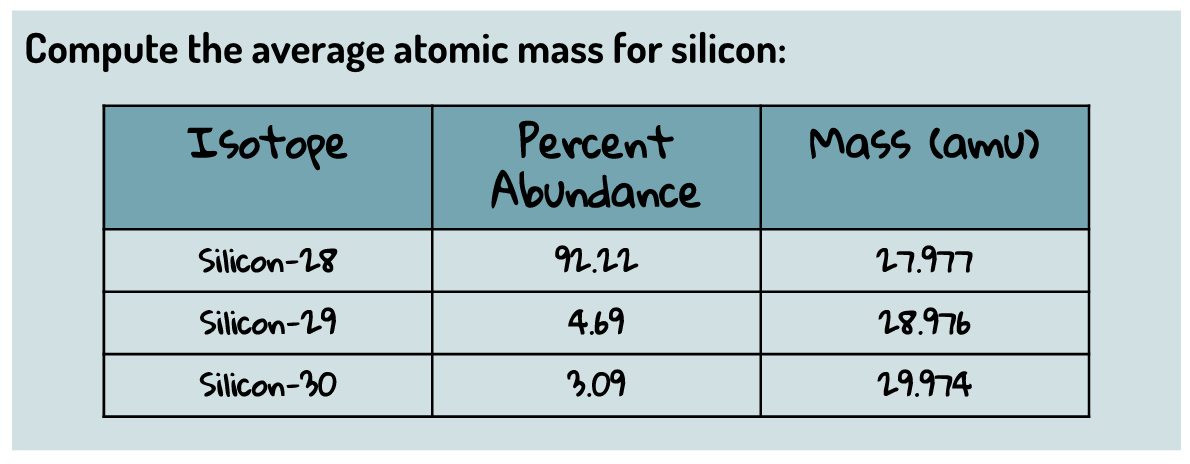
Calculate the average atomic mass of silver.
106.38649amu
111.91896amu
107.8677amu
121

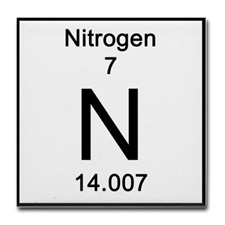
What does the 1.00794 stand for?
mass number
atomic number
average atomic mass
number of protons
If an atom has 12 protons, which of the following must it also have to be considered a neutral atom?
12 neutrons
12 electrons
12 protons
24 protons and neutrons
What charge does an atom have when it GAINS electrons?
Positive
Negative
Neutral
What two particles determine the mass number?
Protons and electrons
Electrons and neutrons
Protons and neutrons
When an atom loses an electron, it becomes a(n) _____________ ion.
positive
negative
neutral
polyatomic

If the mass number of this chlorine atom is 36, how many neutrons does it have?
17
18
19
can't be determined

What is the atomic number of this atom shown in the Bohr model?
11
12
13
can't be determined

What is the mass number of the atom shown in the Bohr model?
11
12
23
Can't be determined
Is this atom an ion? If so what would it's charge be?
Yes, 1-
No it is neutral
Yes, 1+
Can't be determined
Most of the mass of an atom is found in the ______.
nucleus
proton
electron cloud
isotope
An Atoms has 8 protons 9 neutrons and 8 electrons, what is its atomic number
8
9
17
16
An Atoms has 8 protons 9 neutrons and 8 electrons, what is its mass number
8
9
16
17
How many elements are on the periodic table
118
102
108§
120
How are elements arranged on the periodic table
Increasing atomic mass
Decreasing atomic mass
Increasing atomic number
Decreasing atomic number
The mass number of iodine is 126, and it’s in the 53rd place in the periodic table. It has ________________ protons and ______________ neutrons.
126 protons and 53 neutrons
53 protons and 126 neutrons
53 protons and 73 neutrons
73 protons and 53 neutrons


What does the 1.00794 stand for?
Hydrogen
atomic number
atomic mass
atomic explosion
What subatomic particles would you find in the nucleus of an atom?
Protons only
Protons and Neutrons
Neutrons and Electrons
Protons and Electrons


Which number here is the atomic number?
5
10.811
What is the lowest possible energy level that an electron can occupy?
Fundamental state
Ground State
Excited State
Outermost state

Which drawing represents the process by which an emission line is formed? [Emission means that energy is being "emitted" or released by the atom.]
A
B
C
D

The unknown emissions spectra belongs to the element
Hydrogen
Mercury
Neon
Sodium
How many electrons can fit on the 1st energy level (orbital) for any Bohr Model?
2
6
8
10

this model represents _________
ground state
excited state
______is a tool uses prism to separate light into is individual color
microscope
telescope
spectroscopy
In which state does an electron have the least amount of energy?
Bohr model
Orbital
Ground state
Excited state
For an electron to change from ground state to an excited stated it must...
Absorb energy
Release energy
When an electron returns to ground state from an excited state, the atom will (a)
rotate
emit energy
wiggle
absorb energy
In order to go from ground state to an excited state, an electron must
wiggle
emit energy
absorb energy
What subatomic particle is responsible for the spectral lines seen in emission spectra diagrams? (a)
protons
neutrons
electrons
Each element on the periodic table can be identified by its
location on the table.
classification as a solid, liquid or gas.
ability to react to form compounds.
unique spectral "fingerprint."
What is the LOWEST possible energy level that an electron can occupy?
Excited State
Fundamental State
Ground State
Outermost State
When atoms absorb energy, electrons ..............energy level
move to higher
move to lower
stays in the same
Each spectral line corresponds to ................. emitted.
exactly one wavelength
two wavelengths
more than two wavelengths

If an electron moves from n=4 to n=2 it ____
absorbs energy
releases energy

The unknown emissions spectra belongs to the element
Hydrogen
Mercury
Neon
Helium


The unknown emissions spectra belongs to the element
Hydrogen
Mercury
Neon
Sodium


What is the lowest possible energy level that an electron can occupy?
Fundamental state
Ground State
Excited State
Outermost state

