
 Worksheets
Hinduism & Buddhism Test Review (Chapters 2.3, 3.1, & 3.2)
Total questions: 59
Worksheet time: 29mins
In what ways are Buddhism and Hinduism similar? Check all that apply
Hinduism cannot be traced back to one founder with a single set of ideas:
The two items below that are most similar are :
Hinduism and Buddhism differ significantly in their beliefs about:
In a caste system, people can easily move from one social class to another:
The founder of Buddhism was:

Which Indo-European people reached the farthest west?

Describe the movement of the Indo-Europeans in their earliest migrations:
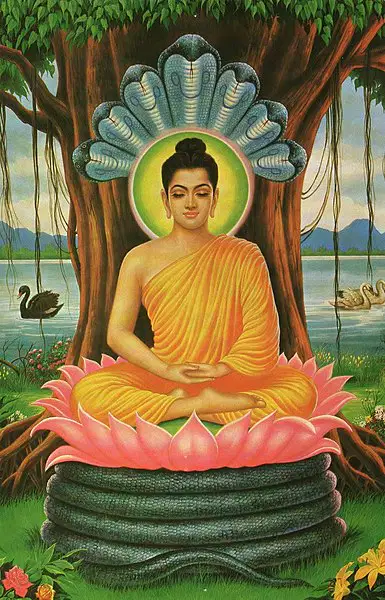
Siddhartha Gautama, the founder of Buddhism, was born into what type of family at the foothills of the Himalaya Mountains in Nepal:

The Eightfold Path is a guide to behavior. Those seeking enlightenment in Buddhism have to master one step at a time.
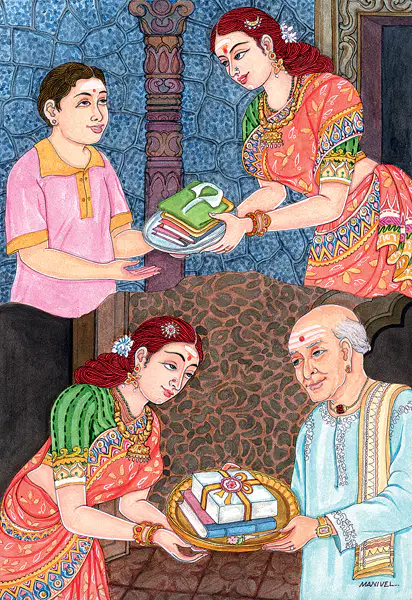
In Hinduism, these are good or bad deeds that follow you from one life to another.
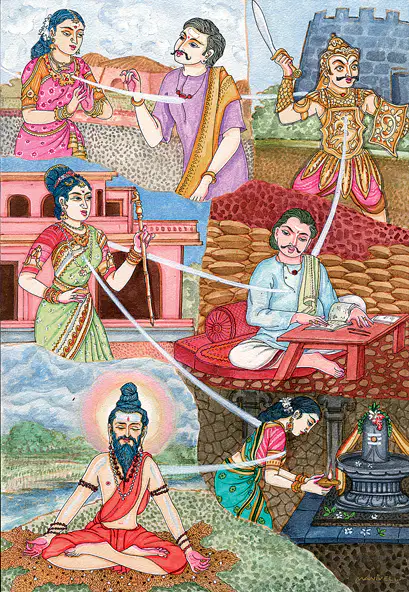
Hinduism, but not Buddhism, believes in reincarnation, or rebirth:
Buddha's word for release from selfishness and pain. A condition of great happiness and a feeling of peace
How did Hinduism influence the social structure in India?
What environmental occurrences are frequent in the Indus River Valley that bring strong winds and flooding?
The Aryan people were an Indo-European group that emerged around 1750 BCE. Into which region did they migrate?
Hinduism is considered a polytheistic religion, that is estimated to have thousands of deities or gods
In Buddhism, when a person achieves liberation from desires and suffering they have reached moksha, a state of perfect understanding of all things and a release from life in this world.
This is the name of the sacred literature of the Aryan people.
Ruins of settlements in the Indus Valley show that the buildings were constructed of oven-baked bricks.
This tells the story of a great battle between two groups of cousins
This is a member of the highest Indian social class and a Hindu Priest:
This is the process by which people or groups of people move from their home area to a new area:

Which Hindu god is fighting the snake demon in this painting?
These Hindu texts are written as dialogues, or discussions, between a student and a teacher
This religion believes that everything in the universe has a soul and should not be harmed:
Jain monks wear gauze masks over their mouths to avoid breathing in and killing an insect accidentally.
What action did Buddha do that caused him to reach enlightenment:
How did Buddhism spread?
Which of the following religions emphasizes non-violence and the belief that all living beings have a soul?
Buddhism
Hinduism
Jainism
Sikhism
What is the primary language in which the ancient Hindu scriptures, the Vedas, were composed?
Sanskrit
Pali
Tamil
Hindi
Which of the following is NOT one of the Four Noble Truths in Buddhism?
The truth of suffering
The truth of the cause of suffering
The truth of the end of suffering
The truth of reincarnation
In Buddhism, what is the term for the ultimate goal of liberation from the cycle of rebirth?
Nirvana
Karma
Dharma
Samsara
Which ancient civilization is known for its advanced urban planning and architecture in the Indus Valley?
Mesopotamia
Egypt
Indus Valley
China
What is the term for the traditional social hierarchy in India that divides people into different groups based on their occupation?
Caste system
Feudal system
Class system
Tribal system
Which of the following is considered the highest caste in the traditional Hindu caste system?
Kshatriya
Vaishya
Brahmin
Shudra
In the caste system, which group is traditionally associated with being warriors and rulers?
Brahmin
Kshatriya
Vaishya
Shudra
What is the primary goal of practicing yoga in Hinduism?
Physical fitness
Spiritual enlightenment
Social status
Wealth accumulation
Which of the following is a sacred river in Hinduism?
Nile
Amazon
Ganges
Yangtze
In Hinduism, which festival is known as the festival of lights?
Holi
Diwali
Eid
Christmas
In Buddhism, which practice is primarily aimed at achieving mindfulness and concentration?
Yoga
Meditation
Chanting
Pilgrimage
Which of the following texts is considered one of the most important scriptures in Hinduism?
Quran
Torah
Bhagavad Gita
Tripitaka
In Buddhism, which of the following is considered a path to achieve enlightenment?
The Eightfold Path
The Five Pillars
The Ten Commandments
The Four Vedas
Which caste in the traditional Hindu caste system is primarily associated with trade and commerce?
Brahmin
Kshatriya
Vaishya
Shudra
What is the term used for the lowest caste in the traditional Hindu caste system, often associated with manual labor?
Brahmin
Kshatriya
Vaishya
Shudra
Which of the following statements is true about the caste system in India?
The caste system allows for easy mobility between castes.
The caste system is based on one's occupation and birth.
The caste system is a modern social structure.
The caste system is not recognized in any religious texts.

What is the purpose of a Hindu temple?
to provide a space for Hindus to express their love of their deities
to house the poor, care for the sick, and feed the hungry
to offer protection to the local population from outside invaders
to serve as the last resting place for Hindus who have died
According to Hindu belief, Brahman
is a supreme power, or divine force.
includes everything in the world, including the human soul.
is constantly creating, destroying, and re-creating the universe.
all of these

Which Hindu festival is taking place in this picture?
Indra
Ravana
Diwali
Vishnu
Today, the most important Hindu deities are Brahma, Vishnu, and
Shiva.
Rama.
Indra.
Ravana.

This Indian man is caring for his soul by performing yoga, which is considered part of a common
atman.
dharma.
karma.
Vedas.
If Hindus live according to their dharma, they
follow the law.
fulfill their obligations.
perform their duties.
all of the above
Why do cows have a special place in Hinduism?
Cows are symbolic of the reverence for life.
The greatest Hindu deity is often depicted as a cow.
Cows represent health, wealth, and happiness.
The only meat that Hindus can eat is beef.

This Hindu woman is fulfilling part of her dharma by praying at the sacred Ganges River. By living according to dharma, she may hope
to become one of the untouchables.
to have her soul reborn into a higher social class.
to live outside the law of karma.
to move between social classes during her lifetime.
According to Hindus, karma is
a collection of sacred Hindu writings, including verses, hymns, and prayers.
the obligations and duties that a person is expected to fulfill.
all of the good and evil that a person had done in past lives.
the supreme power, or divine force, that is greater than all other deities.

These people have come to the Ganges River at the city of Varanasi. Why is this place important to Hindus?
Lawbreakers can be protected from punishment by bathing in the Ganges.
The war which led to Indian independence began at the Ganges River.
One of the most holy places in India is the Ganges River.
The Ganges is the only river in India with clean, drinkable water.
Faithful Hindus still come to the Ganges on holy journeys called
pilgrimages.
samsara.
reincarnation.
purifications.

