wayground logo

Free Printable Worksheets

NEW

Font size

S
M
L
XL
Worksheets

Rocks

Total questions: 55

Worksheet time: 28mins

Name
Class
Date
1.

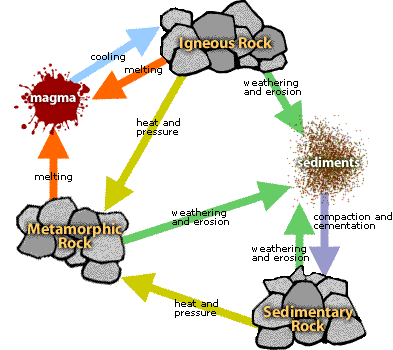
A rock deep within the Earth experiences extreme temperature and pressure. After a long period of time it becomes which rock?

a)

Magma

b)

Igneous

c)

Metamorphic

d)

Sedimentary

2.

What must happen to a metamorphic rock before it becomes a sedimentary rock rock?

a)

It must be broken down into sediment

b)

It must be melted into magma

c)

Its minerals must dissolve in water

d)

It must be exposed to high temperature and pressure

3.

These rocks are often foliated, meaning they have layers.

a)

Sedimantary

b)

Sediment

c)

Metamorphic

d)

Igneous

4.

As a result of cooling quickly, these rocks develop air pockets and are often very lightweight.

a)

Sedimentary

b)

Metamorpic

c)

Intrusive Igneous

d)

Extrusive Igneous

5.
Formed by cooling & solidification of lava
a)
Sedimentary
b)
Metamorphic
c)
Extrusive Igneous
d)
Intrusive Igneous
6.
Formed by cooling & solidification of magma
a)
Sedimentary
b)
Metamorphic
c)
Extrusive Igneous
d)
Intrusive Igneous
7.
Formed by compacting & cementing of sediments
a)
Sedimentary
b)
Metamorphic
c)
Extrusive Igneous
d)
Intrusive Igneous
8.
Formed by weathering & erosion
a)
magma
b)
sediments
c)
sedimentary rock
d)
intrusive igneous
9.
Has large crystals because of slow cooling
a)
sedimentary rock
b)
metamorphic rock
c)
intrusive igneous rock
d)
extrusive igneous rock
10.
Has small or no crystals because of rapid cooling
a)
sedimentary
b)
metamorphic
c)
extrusive igneous
d)
intrusive igneous
11.
Has wavy bands.
a)
sedimentary rock
b)
metamorphic rock
c)
extrusive igneous rock
d)
intrusive igneous rock
12.
Contains fossils. 
a)
sedimentary rocks
b)
metamorphic rocks
c)
extrusive igneous rocks
d)
intrusive igneous rocks
13.

Which of the following describes rocks formed when sediments are buried, compacted, and cemented together?

a)

Clastic

b)

Organic

c)

Foliated

d)

Nonfoliated

14.
An igneous rock containing large crystals is most likely a(n)
a)
Chemical Rock
b)
Foliated Rock
c)
Extrusive Rock
d)
Intrusive Rock
15.

The igneous rock texture that is characterized by two distinctly different crystal sizes (large and small) is called

a)

Aphanitic

b)

Pheneritic

c)

Glassy

d)

Porphyritic

16.
What process is used to form sedimentary rocks?
a)
Lava cools and hardens to form a rock.
b)
Weathering, Erosion, Deposition, Compaction, Cementation
c)
Extreme heat and pressure from inside the Earth turn rocks into new rocks.
d)
Magma trapped under the Earth's surface cools and solidifies.
17.
The process when rocks break into smaller pieces due to exposure to natural elements is called
a)
erosion
b)
weathering
c)
sediments
d)
deposition
18.
What is deposition?
a)
Dropping off sediment
b)
Movement of sediment
c)
Breaking down of sediment 
19.
The process in which sediment are fused or glued together.
a)
compaction
b)
deposition
c)
organic rock
d)
cementation
20.
When sediments are pressed together tightly, this is called ____________.
a)
Compaction
b)
Cementation
c)
Weathering
d)
Erosion
21.
Two ways to describe types of igneous rocks are _____
a)
Extrusive and Intrusive
b)
Foliated and Non-Foliated
c)
Clastic and Biochemical
d)
Black and Gray
22.

What is the most common type of extrusive rock?

a)

basalt

b)

granite

c)

obsidian

d)

pumice

23.
True or False: Once a rock is sedimentary, it cannot become an igneous rock.
a)
True
b)
False
24.
Is Granite high or low in Silica?
a)
high
b)
low
25.

What is the texture of obsidian?

a)

glassy

b)

phaneritic/course

c)

aphanitic/fine

d)

pyroclastic

26.

What is the composition of rocks that have a high silica content?

a)

felsic

b)

intermediate

c)

mafic

27.

What is the composition of rocks that have a low silica content?

a)

felsic

b)

intermediate

c)

mafic

28.
magma or igneous rock that is rich in magnesium and iron: dark in color
a)
Mafic
b)
Felsic
c)
Lava
d)
Marginal
29.
magma or igneous rock that is rich in feldspar and silica: lighter in color
a)
Mafic
b)
Felsic
c)
Basalt
d)
Andesite
30.

Describe the environment of formation for the following igneous rock (grain size 1-10 mm).

a)

above ground

b)

below ground

31.

Describe the environment of formation for the following igneous rock (grain size < 1 mm).

a)

above ground

b)

below ground

32.

____________ refers to the size, shape, and distribution of the crystals or grains that make up the rock

a)

Smoothness

b)

Texture

c)

Color

d)

Hardness

33.

Rocks that have a spongy appearance from the gasses in the lava when the rock formed has a _____________ texture

a)

Porphyritic

b)

Vesicular

c)

Phaneritic

d)

Aphanitic

34.

Lava is

a)

on the surface of the earth

b)

beneath the surface of the earth

c)

on the surface and beneath the earth

35.

What category of igneous rock has mineral crystals that are large enough to identify without a microscope?

a)

glassy

b)

aphanitic

c)

phaneritic

d)

porphyritic

36.

Aphanitic rocks cool

a)

have pyroclastic material and cool quickly deep below Earth's surface

b)

slowly on top of the surface

c)

slowly with a fine-grained texture

d)

quickly on top of the surface

37.

An igneous rock with a phaneritic texture is composed of

a)

fine sediments

b)

visible crystals

c)

non visible crystals

d)

pyroclastic

38.

Pumice floats on water because it

a)

is rich in silica

b)

is full of gas

c)

is full of gas bubble holes

d)

is composed of crystals

39.
The three groups of rocks are classified by
a)
How they form
b)
Color
c)
Grain size
d)
Chemical Composition
40.

Chemical rocks are...

a)

Made from heat

b)

Made when water evaporates and minerals crystallize

c)

Made from dead animals/plants

d)

Made from pieces of other rocks

41.

Bioclastic rocks are...

a)

Made from heat

b)

Made when water evaporates and minerals crystallize

c)

Made from the remains of dead animals/plants

d)

Made from pieces of other rocks

42.

What is an example of an bioclatic rock?

a)

coal

b)

breccia

c)

rock salt

d)

shale

43.

This rock is made of large bits of gravel cemented together. What type of sedimentary rock is it?

a)

Clastic

b)

Chemical

c)

Bioclastic

44.
What sized sediment makes shale?
a)
Sand
b)
Clay
c)
Cobble
45.
Which is bigger?
Boulder or Cobble
a)
Boulder
b)
Cobble
46.
How is sediment classified/grouped?
a)
By color
b)
By hardness
c)
By size
47.
Igneous intrusions cause which type of metamorphism?
a)
contact
b)
regional
48.
What force is associated with contact metamorphism?
a)
heat
b)
pressure
49.
If a metamorphic rock has layers, what is it?
a)
foliated
b)
nonfoliated
50.
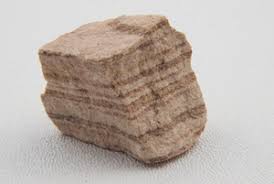
What is this rock?
a)
noliated
b)
nonfoliated
51.
Where does the heat that causes metamorphism come from?
a)
core
b)
mantle and magma
c)
fire
52.
Morph means what?
a)
change
b)
alter
c)
switch
d)
rearrange
53.
What are the two main types of metamorphic rocks and how are they different?
a)
intrusive and extrusive; intrusive rocks are formed inside the earth and extrusive rocks are formed on the surface
b)
foliated and nonfoliated; foliated rocks do not have visible bands/layers and nonfoliated rocks do have visible bands/layers
c)
intrusive and extrusive; intrusive rocks are formed on the earth's surface and extrusive rocks are formed in the Earth
d)
foliated and nonfoliated; foliated rocks have visible bands/layers and nonfoliated rocks do not have visible bands/layers
54.
The difference between regional metamorphism and contact metamorphism is that regional metamorphism is caused by _____ from __________ and contact metamorphism is caused by _________ from _______ intruding into other rock.
a)
heat, tectonic plates, pressure, magma
b)
pressure, tectonic plates, heat, magma
c)
heat, magma, pressure, tectonic plates
d)
pressure, magma, heat, tectonic plates
55.
Which texture best describes the rock above?
a)
porphyritic 
b)
nonfoliated
c)
foliated
d)
clastic