
 Worksheets
Cell Biology Quiz
Total questions: 56
Worksheet time: 31mins
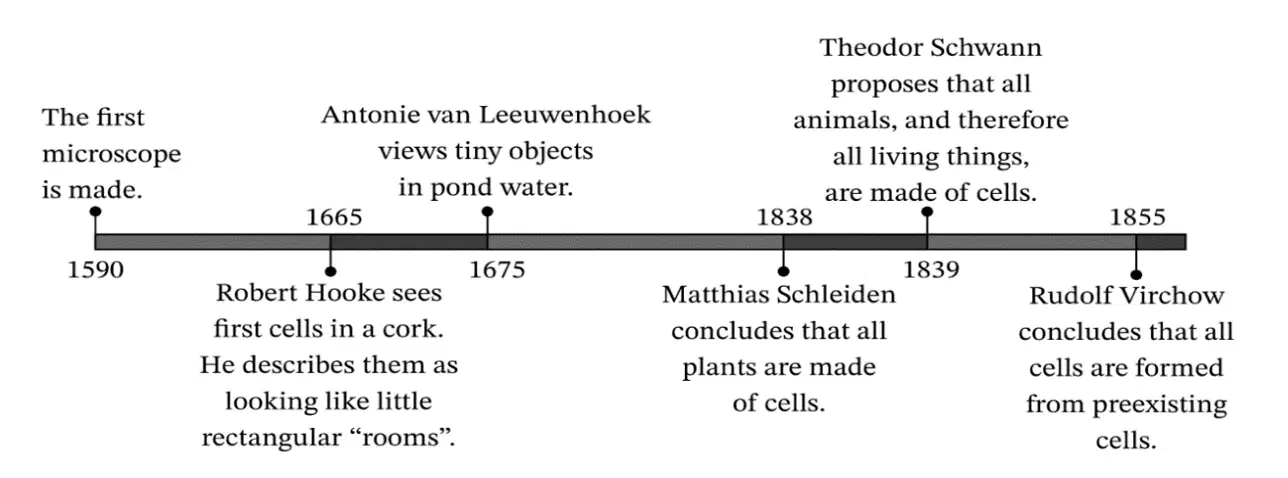
Analyze the timeline below on how the Cell Theory changed and evolved over time. How does the timeline above show how The Cell Theory has changed over time?
Over time scientists argued that no new information is important.
Over time scientists agreed that the Cell Theory does not change.
Over time scientists have always agreed that all living and non-living things are made of cells.
Over time scientists had access to more information and better technology resulting in advanced explanations of the Cell Theory.

Priscilla observes the two types of cells seen under a microscope. Analyze the illustration below. Why would this NOT be considered a scientific experiment?
because it requires the use of an expensive piece of equipment
because there are no controls or variables to test using this protocol
because it involves using just part of the organism instead of the entire thing
because it forces a scientist to record data in visual form instead of numerical form

Erick conducts an experiment and records the number of yeast cells grown in separate petri dishes over three days. His data is recorded in the table seen below. Which part of the cell theory does the data best represent?
A. All living things are made of cells.
B. All cells come from preexisting cells.
C. Cells are the basic unit of living things.
D. Organisms may be unicellular or multicellular.
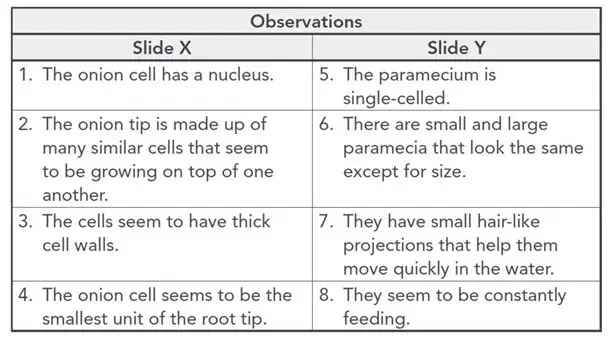
The table below notes observations taken between slide X and slide Y. Which observations support the tenant of the cell theory that states, “all cells come from pre-existing cells”?
Observations 1 and 3
Observations 2 and 6
Observations 4 and 5
Observations 7 and 8
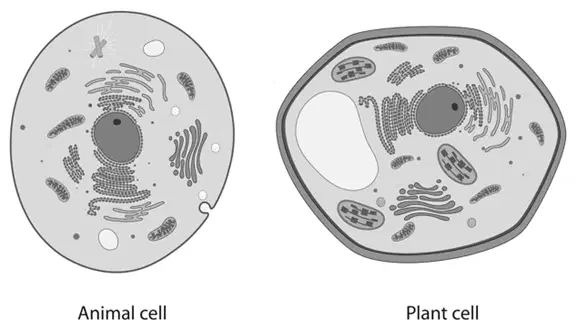
Which of the following best describes the role of the mitochondria in animal and plant cells?
The mitochondria do not make energy, they make new cells.
The mitochondria make energy through respiration for plant cells only.
The mitochondria make energy through respiration for animal cells only.
The mitochondria make energy through respiration for both the plant and animal cells.
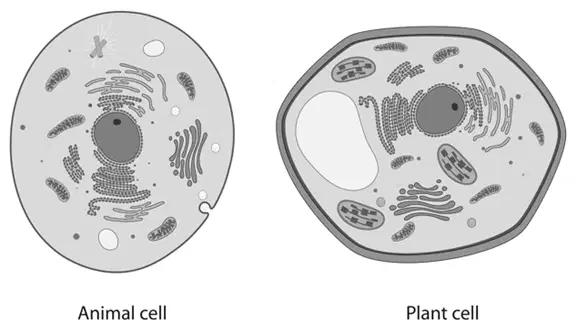
Which cellular organelles in the diagram may be used to differentiate a plant cell from an animal cell?
cell wall and chloroplasts
chloroplasts and mitochondria
mitochondria and large vacuole
large vacuole and cell membrane
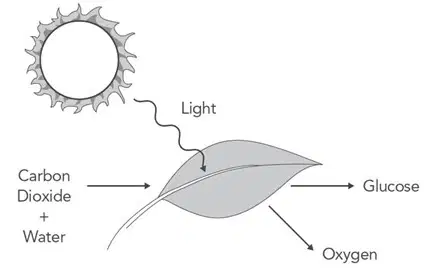
For autotrophs to survive, they must harness the energy from the sun to make their food. In which organelle does this reaction take place and why?
The chloroplast. The light energy from sun gets absorbed and transforms into usable energy for the cell.
The mitochondria. The light energy from the sun gets absorbed and transforms into usable energy for the cell.
The cell wall. All substances, including light, must pass through the wall where it will then become energy for food.
The cell membrane. After passing through the wall, it must also pass-through membrane where it then becomes energy for food.
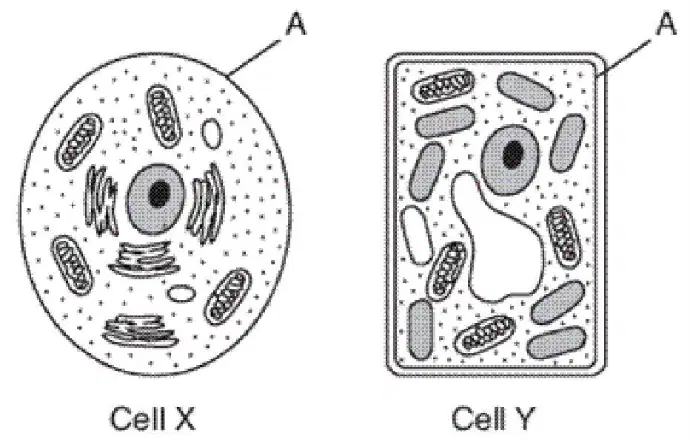
The diagram represents two cells, X and Y. Which statement is correct regarding the structure labelled A below?
It represents the cell wall in both cell X and Y.
It represents structures found on prokaryotic cells only.
It represents the cell wall in cell X and the cell membrane in cell Y.
It represents the cell membrane, regulating how things go in and out of cells.
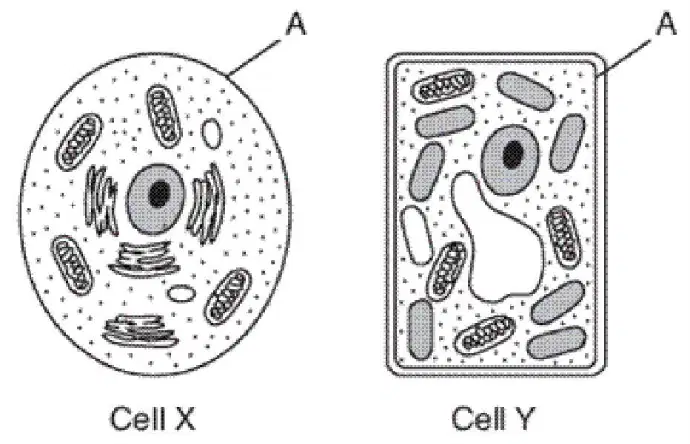
Vacuoles are organelles found in both types of cells. They store water, nutrients, and waste products. What differentiates vacuoles in plant and animal cells?
The vacuole has no differences in plant and animal cells.
The vacuole is larger in a plant cell, and it stores more water.
The vacuole is larger in an animal cell and there can be multiple vacuoles in a plant cell.
In a plant cell there can be multiple vacuoles which is why it takes up more space versus animal cell vacuoles.
During an experiment, India examines prepared slides that her teacher has given her. One of the slides shows a single-celled organism that lives in soil. It has a nucleus and several internal structures. Which domain does the organism most likely belong to?
Archaea
Bacteria
Eukarya
Protista
A science class is studying an organism. Using a microscope, the class observed that the cells have nuclei and chloroplasts. In which Domain would the organism most likely be classified?
Archaea
Bacteria
Eukarya
Plantae
How are members of Domain Eukarya different from members of Domain Archaea and Domain Bacteria?
Members of Domain Eukarya are less complex than the members of Domain Archaea and Domain Bacteria.
Members of Domain Eukarya have cells with membrane-bound organelles, and members of Domain Archaea and Domain Bacteria lack nuclei.
Members of Domain Archaea and Domain Bacteria are multicellular, and members of Domain Eukarya are usually single-celled organisms.
Members of Domain Bacteria and Domain Archaea have structures for making their own food, and members of Domain Eukarya lack these structures.

This cell would be classified as a(n) ________________ cell.
Prokaryotic
Eukaryotic
Both

Eukaryotes include fungi, plants, animals, and....
bacteria
protists
archaebacteria
eubacteria
Bacteria is classified as a what?
Prokaryote
Eukaryote

What’s this word?
Hair brush
Hair tie
Brush hair
Hair cut

What is this word?
Present notes
Gift wrap
Present song
gift music

What is this word?
Little woman
Small Woman
Little girl
Luh guh

What is this word?
Small Baot
Small Bot
Luh Boat
Little Boat

What is this?
Big Cat with a pattern
Bobcat
Leopard
Wild Cat

What is the name of Jasmine's pet tiger?
Abu
Rajah
Duke
Simba

What song do Timon and Pumba teach Simba in "The Lion King"?
Watermelon Sugar
Old Town Road
Hakuna Matata
Shake It Off

Who raised Tarzan?
Wolfs
Cats
Snakes
Gorillas

What is the name of the kingdom in "Frozen"
Arendella
United States
Animal Kingdom
Toon Town

What is the name of the game in Wreck-It Ralph?
Pac-Man
Donkey Kong
Frogger
Fix-It Felix

How many fingers does Mickey Mouse have?
5 fingers and 1 thumb
1 finger and 1 thumb
3 fingers and 1 thumb
4 fingers and 1 thumb

What is the name of the city in "Monsters, Inc."
Los Angeles
San Fransciso
Monstropolis
New York

What is Shrek?
Ogre
Bear
Donkey
Chicken

What is the name of the cowboy in "Toy Story"?
Buzz
Woody
Hudson
Mrs. Tatman
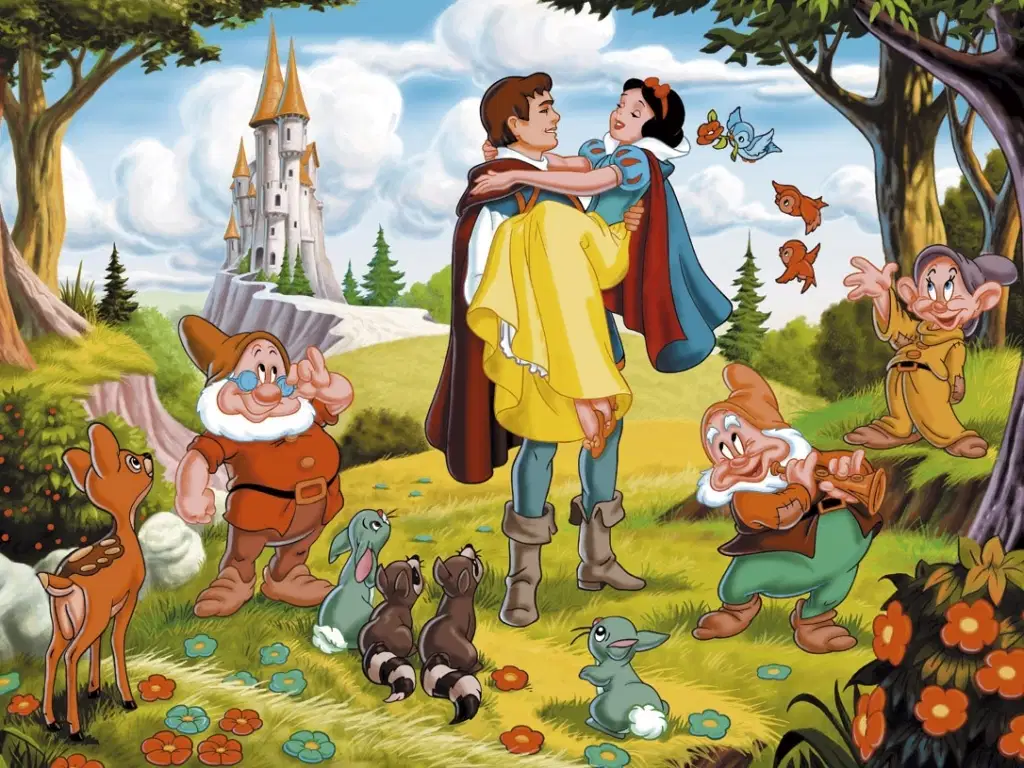
What was the name of the Disney movie?
"Snow White and the Seven Dwarfs"
"Tangled"
"Frozen"
"Cinderella"
What is the function of the cell membrane?
The function of the cell membrane is to provide structural support to the cell.
The function of the cell membrane is to produce energy for the cell.
The function of the cell membrane is to store genetic information in the cell.
The function of the cell membrane is to control the movement of substances in and out of the cell.
What is the main function of the nucleus?
Synthesize proteins
Produce energy for the cell
Regulate cell membrane permeability
Control cell activities and store genetic information.
Which organelle is responsible for energy production in a cell?
ribosome
nucleus
mitochondria
endoplasmic reticulum
Name two safety precautions to follow in a laboratory.
Ignoring safety protocols and not properly disposing of chemicals.
Leaving the laboratory unattended and not following proper storage procedures for chemicals.
Wearing PPE and following proper handling and disposal procedures for chemicals.
Not wearing any protective gear and handling chemicals without caution.
What is the primary role of chloroplasts in plant cells?
To store genetic information
To conduct photosynthesis
To provide structural support
To synthesize proteins
A researcher collects data on different types of cells in the human body. Based on the table below, which statement is most likely the focus of the research?
The average number of nerve cells in the human body.
How increasing fat cells affects muscle cells.
How reducing fat cells affects muscle cells.
The quantity of various cell types in the average human body.
A timeline shows how the Cell Theory has developed over many years. What does this timeline demonstrate about the evolution of the Cell Theory?
Scientists never found new information after the original theory.
The Cell Theory has remained unchanged over time.
Scientists always agreed living and non-living things are made of cells.
Improved technology and information have led to better explanations of the Cell Theory.
A student looks at two cell types under a microscope and draws what they see. Why is this not considered a scientific experiment?
It uses expensive equipment.
There are no controls or variables tested.
Only part of the organism is used.
Data is recorded visually, not numerically.
Mai explains her theory that sea turtles nest on beaches because eggs would sink and drown in the ocean. Jaz says this is not scientific. Why?
Mai and her uncle are not scientists.
Mai’s idea is already a scientific law.
Mai’s idea lacks scientific evidence.
Mai’s idea is a testable guess
Which statement about scientific models is NOT correct?
Models communicate scientific ideas.
Models can be drawings with labels.
Models can be computer simulations.
Models must be exact copies of the original.
Claudia has four note cards about cells. Which cards correctly describe the Cell Theory?
1. All cells come from existing cells
2. The cell is the basic unit of living things
3. All cells contain heredity information
4. All organisms are made of one or more cells
Cards 2 and 3
Cards 1, 2, and 3
Cards 1, 2, and 4
Cards 1, 3, and 4
Markus records yeast cell counts in petri dishes over three days. Which part of the Cell Theory does his data best support?
All living things are made of cells.
All cells come from preexisting cells
Cells are the basic unit of living things.
Organisms may be unicellular or multicellular.
What is the primary role of mitochondria in both plant and animal cells?
They make new cells, not energy.
They produce energy through respiration only in plants.
They produce energy through respiration only in animals.
They produce energy through respiration in both plants and animals.
Which organelles can be used to tell a plant cell apart from an animal cell?
Cell wall and chloroplasts
Chloroplasts and mitochondria
Mitochondria and large vacuole
Large vacuole and cell membrane
What is the function of cytoplasm in plant and animal cells?
Site of photosynthesis and waste removal
Absorbs energy and blocks harmful materials
Supports cell parts and transports chemicals
Controls cell activities and produces energy
How does the cell membrane help maintain homeostasis?
Gives the cell its shape
Directs cell processes like division
Communicates with organelles
Allows waste out and nutrients in
In which organelle does photosynthesis happen, and why?
Chloroplast; it absorbs sunlight and converts it to energy
Mitochondria; it absorbs sunlight and converts it to energy
Cell wall; it lets sunlight pass through to make energy
Cell membrane; it lets sunlight pass through to make energy
What is the difference between vacuoles in plant and animal cells?
No difference between plant and animal vacuoles
Vacuole is larger in plants and stores more water
Vacuole is larger in animals; plants have multiple vacuoles
Plants have multiple vacuoles, so they take more space
Jessica examines a single-celled organism with a nucleus and internal structures. Which domain does it most likely belong to?
Archaea
Bacteria
Eukarya
Protista
Which statement best describes a kingdom in Domain Eukarya?
Protista are single-celled without nuclei
Animalia are multicellular and make their own food
Plantae are multicellular and can move independently
Fungi get energy by decomposing material
A class observes cells with nuclei and chloroplasts. In which Domain is this organism classified?
Archaea
Bacteria
Eukarya
Plantae
How do members of Domain Eukarya differ from Archaea and Bacteria?
Eukarya are less complex than Archaea and Bacteria
Eukarya have membrane-bound organelles; Archaea and Bacteria lack nuclei
Archaea and Bacteria are multicellular; Eukarya are usually single-celled
Archaea and Bacteria make food; Eukarya do not
Ray-finned fish, amphibians, primates, and rodents belong to the same kingdom. Which kingdom and what shared characteristic?
Animal; all are multicellular
Eubacteria; all have eukaryotic cells
Animal; all live in marine environments
Protist; all can move around
Which organelle is present in plant cells but not in animal cells?
Chloroplast
Nucleus
Mitochondria
Ribosome
What is the function of the cell membrane?
To produce energy for the cell
To control what enters and leaves the cell
To store genetic information
To conduct photosynthesis
Which statement best describes prokaryotic cells?
They have a nucleus and membrane-bound organelles.
They lack a nucleus and membrane-bound organelles.
They are always multicellular.
They only exist in plants.

