
 Worksheets
Exam 1 Review - CP100
Total questions: 57
Worksheet time: 55mins
All matter is made of what...
energy
atoms
electrons
compounds
The positive particles of an atom are
electrons
positrons
neutrons
protons
The central region of an atom where its neutrons and protons are is its
nucleus
electron cloud
core
center
Particles in an atom that are neutral and have no charge are
negatrons
electrons
neutrons
protons

What does the 1.00794 stand for?
Hydrogen
atomic number
atomic mass
atomic explosion
In the modern periodic table, elements are arranged by:
atomic mass
atomic number
valence electrons
number of isotopes
An atom with atomic number 6 would have how many protons
6
12
3
cannot be determined
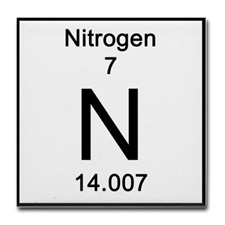
What is the number of protons that the element in this image contain?
14
7
15
18
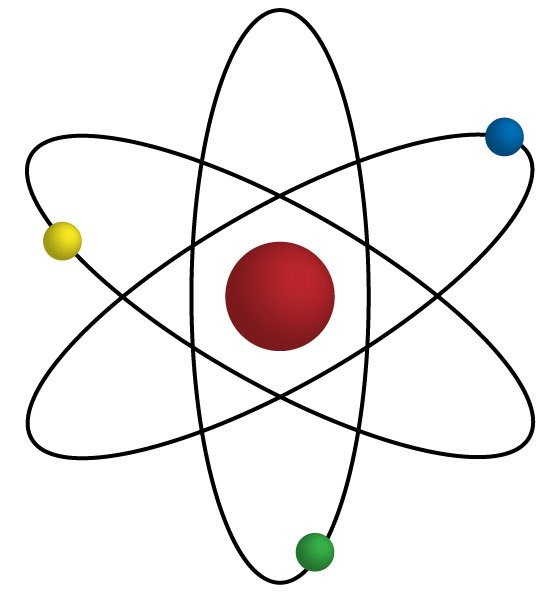

Why is the overall charge of an atom neutral (0)?
They have the same number of protons and neutrons.
They have the same number of protons and electrons.
They have the same number of electrons and neutrons.


Changing the number of protons in an atom will change the atom's _____
color
atomic weight/mass
net charge
identity (name of element)
2 protons
3 neutrons
4 electrons
11 protons
10 neutrons
11 electrons
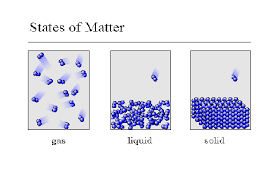
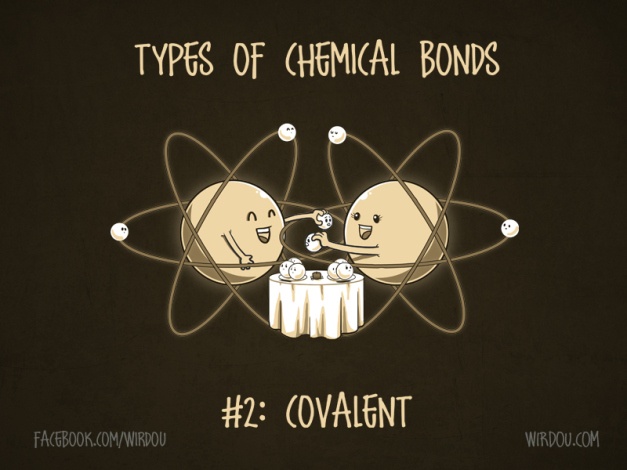
The chemical bond formed when two atoms share electrons is call a(n)
covalent bond
ionic bond
metallic bond
electron bond
An ionic bond is formed when
Valence electrons are shared.
Valence electrons surround the cations.
Valence electrons are transferred between atoms.
Valence electrons are completely transferred between two metals.
Cations are ions with _________ charge.
positive
negative
gains
loses
Is glass breaking a chemical or physical change?
What is the molar mass of Cl2?
17 g/mol
35.5 g/mo;
71.0 g/mol
89 g/mol
What id the molar mass of UF6?
101 g/mol
238 g/mol
257 g/mol
352 g/mol
Calculate the molar mass of KOH.
28 g/mol
56 g/mol
84 g/mol
112 g/mol
This type of mixture has large enough particles that you can see the different types of particles.
Homogeneous
Heterogeneous
Colloid
Solution
A mixture with such small particles that you cannot see the individual particles.
Suspension
Sublimation
Heterogeneous
Homogeneous
Which of the following examples is a Heterogeneous mixture?
Tap Water
Beach Sand
Vanilla Cake Mix
Bottle of Cola
Which of the following examples is a Homogeneous mixture?
Tap Water
Beach Sand
Chocolate chip cookie
Mud water
Fe + O2 -> Fe2O3
2H2 + O2 --> 2H2O
2H2 + O2 --> 2H2O
_Al +_HCl --> _H2 +_AlCl3
_Mg + _Cl2 --> _MgCl2
Four substances were tested for pH, lemon juice (pH 2), baking soda (pH 9), bleach (pH 12), and milk (pH 6). Which of the following correctly lists the substances from most basic to acidic?
lemon juice, milk, baking soda, bleach
bleach, baking soda, milk, lemon juice
milk, lemon juice, baking soda, bleach
baking soda, bleach, lemon juice, milk
Which of these is a property of acidic solutions?
they taste sour
they feel slippery
they are in many cleaning products
they taste bitter
Neutral solutions have a pH of
pH of 2
pH of 0
pH of 7
A neutral solution does not have a pH
Which is NOT a property of a base?
Tastes sour
Slippery
Bitter taste
Turns red litmus to blue
What is radioactivity?
An unstable atom releases energy to become stable
A stable atom gains energy and becomes unstable
When a bomb goes off.
Negatively charged particles are emitted from the nucleus

What type of decay does this symbol represent?
beta decay
alpha decay
fission
fusion
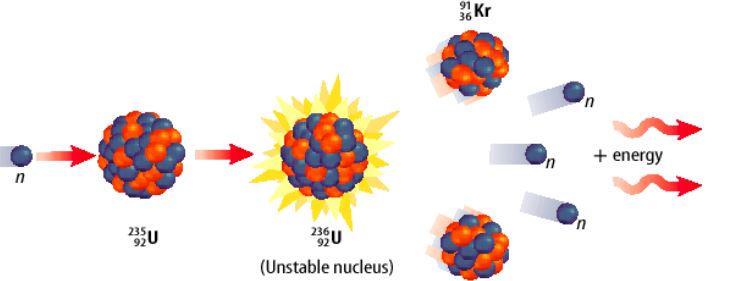
_____is the joining of atomic nuclei
Fusion
chain reaction
Photosynthesis
Fission
Arrange in order of increasing ability to penetrate matter.
Beta, gamma, alpha
Alpha, gamma, beta
Gamma, beta, alpha
Alpha, beta, gamma
emitted helium nucleus
positron
radioactivity
alpha particle
gamma radiation
beta particle
After one ____________ of a radioactive element, half of the original radioactive material remains.
half-life
cycle
decay
Three types of nuclear radiation are _______ radiation, _________radiation, and _____________ radiation.
alpha, beta, and gamma
theta, beta, and kappa
alpha, beta, positron

