
 Worksheets
Unit 2 Test Review
Total questions: 59
Worksheet time: 1hrs 3mins
Which process releases carbon dioxide into the atmosphere?
photosynthesis
cellular respiration
Which process removes carbon dioxide from the atmosphere?
photosynthesis
cellular respiration
Which process releases the energy that is stored in ATP?
photosynthesis
cellular respiration
Which process creates a compound that stores energy?
photosynthesis
cellular respiration
What are the products of photosynthesis?
CO2
H2O
O2
ATP
Glucose
What are the products of cellular respiration?
CO2
H2O
O2
ATP
Glucose

What is this organelle called?
chloroplast
mitochondria
vacuole

What is this organelle called?
chloroplast
mitochondria
vacuole
What type of energy is needed for photosynthesis?
solar
chemical (ATP)
What type of energy is needed for cellular respiration?
solar
chemical (glucose)
What do producers need from consumers?
CO2 to use for photosynthesis
O2 to use for photosynthesis
Glucose to use for photosynthesis
all of the above
Cellular respiration uses CO2 and releases O2, while photosynthesis uses O2 and releases CO2.
True
False
How can enzymes become denatured?
High Temperatures
pH out of optimal range
salinity
all of the above
What is the function of an enzyme?
keep the reaction happening at a normal pace
speed up chemical reactions
increase the amount of substrate
raise the temperature of the system
How do enzymes speed up a reaction
increase the amount of reactants
decrease the energy needed to start a reaction
prevent substrate from being changed to a product
replace reactants in the reaction

In an enzyme reaction what is changed through the process?
the substrate into a product
the enzyme into a product
For an enzyme to catalyze a reaction it must have a similar (a) to that of the substrate.
What do we call it when environmental conditions change the shape of enzyme and it no longer functions?
(a)
When an enzyme becomes denatured it will still be able to catalyze a reaction with the substrate.
True
False
What type of transport is used by the sodium potassium pump to move ions from low to high concentration.
passive
active
Why do certain types of transport need to use ATP?
because they are moving molecules against the gradient
because they are moving molecules down the gradient
Which type of transport requires ATP?
(a)
Which type of transport doesn't require ATP?
(a)

What direction will water move?
into the dialysis tubing
out of the dialysis tubing
in and out of the tubing

What direction will water move?
into the dialysis tubing
out of the dialysis tubing
in and out of the tubing

What direction will water move?
into the dialysis tubing
out of the dialysis tubing
in and out of the tubing
Best way to define osmosis is the movement of (a) across the membrane until concentrations are equal.

What role does the cell membrane and cell wall play in molecular transport in a cell? Select 2 answers.
determines what can go in and out of the cell
make proteins for the cell
maintain shape of the cell
provide energy for the cell

What type of transport is being used in the picture
passive
active

What type of passive transport is represented in the picture?
simple diffusion
facilitated diffusion
osmosis
Select the 3 types of passive transport
Endocytosis
Simple Diffusion
Exocytosis
Osmosis
Facilitated diffusion
This type of transport does not require energy and moves down the concentration gradient from a high concentration to a low concentration.
Active transport
Passive transport
This type of transport requires energy (ATP) and moves against the concentration gradient moving from a low concentration to a high concentration.
Active transport
Passive transport
This is the transfer of water across a membrane from an area of high concentration to an area of low concentration.
Simple diffusion
Facilitated diffusion
Osmosis
Active transport

What type of tonicity is this? What way does the water move?
Hypotonic, the water moves into the cell causing the cell to swell
Isotonic, there is no net movement the cell stays the same
Hypertonic, the water moves out of the cell causing the cell to shrink
In the given scenario, what will happen? An egg with a dissolved shell is placed in pure water for 48 hours.
Water will move in and out of the cell equally, and the cell with neither shrink nor swell.
The egg will gain water and swell.
The egg will lose water and shrink.
An animal cell placed in a hypertonic (salty) solution will
Stay the same
Shrink- get smaller
Swell- get bigger
If a red blood cell is put in distilled water, what will most likely happen to the cell?
Nothing will happen
It will shrivel.
It will burst and then shrivel up
It will swell and burst

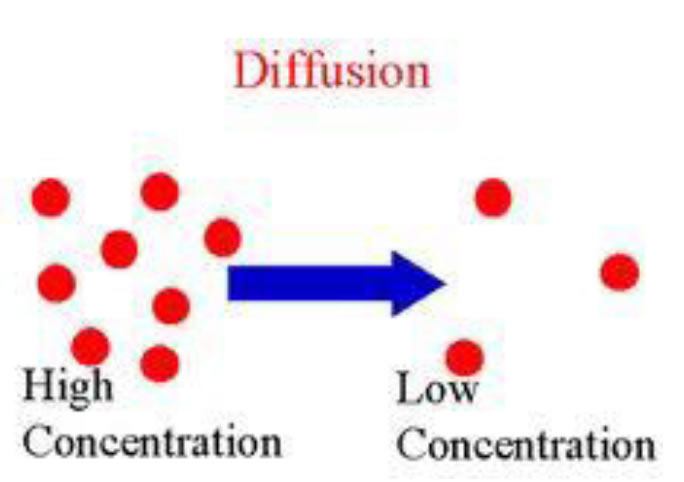

Which type of diffusion is represented?
Facilitated diffusion
Osmosis
Diffusion


This is the equation is for? 6Co2 + 6H2O ----> C6 H12 O6 6O2
photosynthesis
cellular respiration

Plants are ?
Autotrophs
Heterotrophs
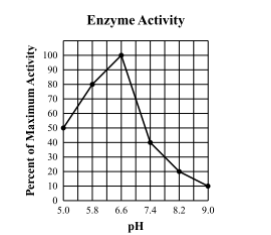

Which enzyme represents the substrate?
A
B
C
D

Which letter represents the enzyme?
A
B
C
D

What is the optimal temperature of this enzyme?
60
40
70
30
Once a new product leaves an enzyme, the enzyme is unchanged and ready for the next substrate. What is this called?
fragile
reusable
specific
catalyst
Where do substrates bind to an enzyme?
calcium channels
active site
receptor molecules
voltage-gated channels
The ____________________ mechanism describes how each substrate must fit into the enzyme.
lock and key
hammer and nail
jigsaw puzzle
seesaw

