
 Worksheets
Matter Unit
Total questions: 40
Worksheet time: 32mins
A pure substances ________ be broken down into simpler matter using physical methods.
sometimes
can
can not
What are two the two types of mixtures?
elements
compounds
heterogenous
homogenous
What are two the two types of pure substances?
elements
compounds
heterogenous mixtures
homogenous mixtures
Compounds are make up of.....
One element
No elements
Multiple types of elements
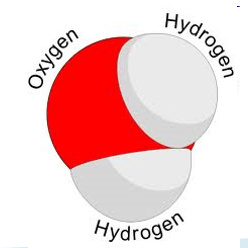
This is a water molecule. It is a ________.
Element
Compound
Heterogenous Mixture
Homogenous Mixture
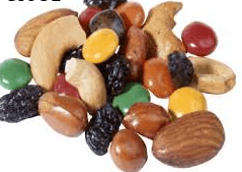
Why kind of mixture is this?
Heterogeneous
Homogenous
Element
Compound
Homogeneous mixtures are also called _______.
Heterogenous mixtures
Solutions
Problem Solvers
Water
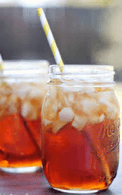
Why kind of mixture is this? (the sugar in the tea)
Heterogeneous
Homogenous
Element
Compound
Which of these is an element?
Salt (NaCl)
Water (H20)
Oxygen (O)
Carbon Dioxide (CO2)
Which of these is a compound?
Aluminium (Al)
Carbon Dioxide (CO2)
Nitrogen (N)
Sand
Physical properties....
change the matter when studied
can be observed and measured without changing the matter being studied
include the ability to burn and rust
are useless unless studied in a lab
Which statement best describes what happens during a chemical change?
Both the identity and the properties of a substance change.
Some properties of a substance change, but its identity remains the same.
The chemical properties of a substance change, but its physical properties remain the same.
The physical properties of a substance change, but its chemical properties remain the same.
When ice melts, it is changing its state of matter. State of matter is a ---
physical property
chemical property
Reactivity, like burning, bubbling, or fizzing, is a ---
Chemical property
Physical property
Digestion is the process of the human body breaking down food for nutrients, which is a ---
Chemical property
Physical property
Color is a _________________.
Chemical property
Physical property
Absence property
Flammability means the ability to _______ and is a _________ property.
melt; chemical
rust; physical
change; physical
burn; chemical
If a substance is ductile, it can be _______________.
very heavy for its size
easily breakable
used to insulate wires
rolled into thin wires
The ability to be hammered into different shapes is __________.
ductility
malleability
density
volume
If a substance has luster, it is ________
shiny/reflective
weak
dull
easily pulled into a wire


mixing baking soda and vinegar
chemical change
physical change
broken glass
physical change
chemical change
Acid in stomach, breaking down food.
physical change
chemical change
The smallest particle of matter that makes up an element and a compound?
Element
Chemical
Atom
Substance
How many elements are there in CuSO4?
1
2
3
4
5

The _____________organizes all the elements and shows their symbols and atomic weights.
Periodic Table of the Elements
Elemental Table of the Periods
Element Table of the Atoms
Periodic Table of the Compounds

This picture represents which of the following?
element
compound

This picture represents which of the following?
element
compound
There are _______ elements on the current periodic table.
92
1,347,016
18
118

