wayground logo

Free Printable Worksheets

Font size

S
M
L
XL
Worksheets

Unit 1 Concept 1 Test Review

Total questions: 146

Worksheet time: 7hrs 22mins

Name
Class
Date
1.
What is a factor that is measured for change in an experiment?
a)
control
b)
constant
c)
independent variable
d)
dependent variable
2.
What is the factor that an experimenter changes on purpose?
a)
Dependent Variable
b)
Independent Variable
c)
Constant
d)
Control
3.
The part of the experiment that does not contain the independent variable. Used for comparison.
a)
Control Group
b)
Experimental Group
c)
Results
d)
Data
4.
What are all the things that are kept the same in an experiment?
a)
controls
b)
data
c)
constants
d)
independent variables
5.
What is the effect of salt water on the average of the height of the 3 tallest blades of grass?
What is the independent variable in the above question?
a)
salt water
b)
height
c)
average
d)
effect
6.
What is an if....then statement that predicts the outcome of an experiment or how the Independent variable effects the dependent variable?
a)
Conclusion
b)
Materials
c)
Hypothesis
d)
Problem
7.

Your teacher has asked you to perform an experiment to see if the shape of objects, alone, affects the motion of objects. Which of the following would be the best experiment to perform?

a)

Apply the same amount of force to a ball, cylinder, cube, and pyramid, each of the same mass.

b)

Apply the same amount of force to balls of different mass

c)

Apply the same amount of force to a ball, cylinder, cube, and pyramid, each of a different mass.

d)


Apply different amounts of force to the same ball.

8.


In a controlled scientific experiment, a scientist...

a)

alters the outcome variable (dependent variable) and observes the effects on the test variable (independent variable).

b)

alters one test variable (independent variable) and observes the effects on other test variables (independent variables).

c)

alters the test variable (independent variable) and observes the effects on the outcome variable (dependent variable).

d)


alters one outcome variable (dependent variable) and observes the effects on other outcome variable (dependent variables).

9.

You have decided to do an experiment to learn if a certain type of cactus will grow better in a dark closet or a sunny window. To begin your experiment, you place one cactus in a dark closet and one cactus in a sunny window. Over the next month, you record data about the cacti and their appearance every day. At the end of the month, you determine that the cactus in the sun is alive but didn’t grow and that the cactus from the dark closet is alive and grew one centimeter. Can you conclude that a dark closet is better for this type of cacti’s growth?

a)

No, you need to repeat an experiment multiple times before accepting a conclusion.

b)

Yes, one cactus can accurately reflect the behavior of all similar cacti.

c)

Yes, when you are a student your results will be accepted on small-scale studies.

d)

No, you need to use one cactus in both conditions.

10.

Maggie loves fresh brownies. Her grandma told her if she placed a piece of bread in the storage container with the brownies, the brownies will stay fresh and moist longer. Maggie decides to test this idea. She bakes a batch of brownies. She places 6 brownies in 6 individual plastic containers. Each brownie is the same size and placed in the same location. She adds a piece of bread to three of the bread containers and leaves the other three alone. Each day for 3 weeks she measures the moistness of the brownies and records the results. What is the independent variable?

a)

moistness of brownies

b)

the bread

c)

the containers

d)

brownies

11.
Convert from meters to cm:  9 meters
a)
900 cm
b)
90 cm
c)
0.9 cm
d)
0.09 cm
12.
Convert 17 m to cm:
a)
0.17 cm
b)
0.017 cm
c)
1,700 cm
d)
170 cm
13.
Convert 300 meters to centimeters:
a)
3000 cm
b)
0.3 cm
c)
30,000 cm
d)
3 cn
14.
Convert 8 kilometers to meters
a)
800 m
b)
80,000 m
c)
8,000 m
d)
.008 m
15.
Convert 5 cm to mm:
a)
5,000mm
b)
0.5 mm
c)
0.05 mm
d)
50 mm
16.
Convert 300 cm to m:
a)
3 m
b)
30 m
c)
0.3 m
d)
0.03 m
17.
1000 grams = _____ kilograms
a)
0.0001
b)
1,000,000
c)
10
d)
1
18.
7,000 g = ____ kg
a)
70
b)
700
c)
7
d)
0.07
19.
490,000 g =____ kg
a)
490
b)
49
c)
4,900
d)
0.49
20.
5,000 mg = ____ g
a)
50
b)
5
c)
500
d)
5,000
21.
Is 20 g greater than, less than, or equal to 2 kg?
a)
greater than
b)
less than
c)
equal to
22.
648 g = ____ mg
a)
6,480
b)
64,800
c)
648,000
d)
64.8
23.
285 kg = ____ g
a)
285,000
b)
285
c)
2,850
d)
28,500
24.
42 L = ___mL
a)
4,200
b)
.0042
c)
4.20
d)
42,000
25.
1 L = _______ mL
a)
1
b)
10
c)
100
d)
1000
26.

7,000 g = ____ kg

a)

70

b)

700

c)

7

d)

0.07

27.
Is 4,000 mg greater than, less than, or equal to 4 g?
a)
greater than
b)
less than
c)
equal to
28.
Is 11 g greater than, less than, or equal to 1,100 mg?
a)
greater than
b)
less than
c)
equal to
29.
1000 m = ___________ km
a)
100
b)
10
c)
1
d)
0.1
30.
3 km = ___________ mm
a)
30
b)
300
c)
3,000
d)
3,000,000
31.

7,000 g = ____ kg

a)

70

b)

700

c)

7

d)

0.07

32.

648 g = ____ mg

a)

6,480

b)

64,800

c)

648,000

d)

64.8

33.

240 cm = ___________ m

a)

2400

b)

24

c)

2.4

d)

0.24

34.

3 km = ___________ mm

a)

30

b)

300

c)

3,000

d)

3,000,000

35.

68 cm = ___________ mm

a)

0.68

b)

6.8

c)

68

d)

680

36.

32.9 km = ___________ cm

a)

32,900

b)

329,000

c)

3,290,000

d)

32,900,000

37.

Using the conversion chart, as the units move to the left, the decimal place moves to the ____________.

a)

Right

b)

Sometimes to the right, sometimes to the left

c)

Left

d)

The decimal place doesn't change between units

38.

What is the basic unit of mass in the metric system?

a)

Liter

b)

Meter

c)

Gram

d)

Kilometer

39.
Which unit is a a measure of volume?
a)
meters
b)
grams
c)
inches
d)
liters
40.
Which unit is the smallest?  
a)
km
b)
mm
c)
m
d)
cm 
41.

Select the largest unit.

a)

kilogram

b)

centigram

c)

decigram

d)

decagram

42.

15 m = _____ mm

a)

15,000

b)

1,500

c)

0.015

d)

150

43.

1000 grams = _____ kilograms

a)

0.0001

b)

1,000,000

c)

10

d)

1

44.

7,000 g = ____ kg

a)

70

b)

700

c)

7

d)

0.07

45.

1 L = _______ mL

a)

1

b)

10

c)

100

d)

1000

46.

Using the conversion chart, as the units move to the right, the decimal place moves to the ____________.

a)

Right

b)

Sometimes to the right, sometimes to the left

c)

Left

d)

The decimal place doesn't change between units

47.

What is the basic unit of length/distance in the metric system?

a)

Liter

b)

Meter

c)

Gram

d)

Kilometer

48.
What are the three base units?
a)
mass,length,grams
b)
meters,length,grams
c)
measuring,liters,games
d)
meters,liters,grams
49.

What unit of measurement is the biggest?

a)

Millimeters

b)

Meters

c)

Kilometers

d)

Centimeters

50.

Which unit of measurement is the smallest?

a)

Millimeters

b)

Kilometers

c)

Centimeters

d)

Meters

51.

648 g = ____ mg

a)

6,480

b)

64,800

c)

648,000

d)

64.8

52.

240 cm = ___________ m

a)

2400

b)

24

c)

2.4

d)

0.24

53.

3 km = ___________ mm

a)

30

b)

300

c)

3,000

d)

3,000,000

54.

68 cm = ___________ mm

a)

0.68

b)

6.8

c)

68

d)

680

55.

32.9 km = ___________ cm

a)

32,900

b)

329,000

c)

3,290,000

d)

32,900,000

56.

What is the basic unit of mass in the metric system?

a)

Liter

b)

Meter

c)

Gram

d)

Kilometer

57.
Which unit is a a measure of volume?
a)
meters
b)
grams
c)
inches
d)
liters
58.
Which unit is the smallest?  
a)
km
b)
mm
c)
m
d)
cm 
59.

Select the largest unit.

a)

kilogram

b)

centigram

c)

decigram

d)

decagram

60.

15 m = _____ mm

a)

15,000

b)

1,500

c)

0.015

d)

150

61.

1000 grams = _____ kilograms

a)

0.0001

b)

1,000,000

c)

10

d)

1

62.

7,000 g = ____ kg

a)

70

b)

700

c)

7

d)

0.07

63.

1 L = _______ mL

a)

1

b)

10

c)

100

d)

1000

64.
40 cm = ______ mm
( 1 cm = 10 mm)
a)
4000
b)
40
c)
400
d)
None of the Above
65.

6 kg = _____ g

a)

6

b)

6000

c)

600

d)

.006

66.
1000 grams = _____ kilograms
a)
0.0001
b)
1,000,000
c)
10
d)
1
67.
Convert 300 cm to m:
(100 cm = 1 m)
a)
3 m
b)
30 m
c)
0.3 m
d)
0.03 m
68.
Convert from meters to cm:  9 meters
a)
900 cm
b)
90 cm
c)
0.9 cm
d)
0.09 cm
69.
Convert 8 kilometers to meters
a)
800 m
b)
80,000 m
c)
8,000 m
d)
.008 m
70.
5,000 mg = ____ g
a)
50
b)
5
c)
500
d)
5,000
71.
Convert 300 cm to m:
a)
3 m
b)
30 m
c)
0.3 m
d)
0.03 m
72.
Convert 0.25 m to mm
a)
25
b)
2.5
c)
250
d)
0.025
73.

Convert 4 km to mm

a)

400 mm

b)

0.004 mm

c)

400,000

d)

4,000,000

74.

Which of the following is the correct abbreviation for Kilogram?

a)

Kg

b)

Hg

c)

Km

d)

Kl

75.

Which of the following is the correct abbreviation for millimeter?

a)

mm

b)

ml

c)

mg

d)

m

76.

Which of the following are using the prefix deka?

a)

dag

b)

dam

c)

dg

d)

dm

77.
Convert from meters to cm:  9 meters
a)
900 cm
b)
90 cm
c)
0.9 cm
d)
0.09 cm
78.
Convert 8 kilometers to meters
a)
800 m
b)
80,000 m
c)
8,000 m
d)
.008 m
79.
Convert 5 cm to mm:
a)
5,000mm
b)
0.5 mm
c)
0.05 mm
d)
50 mm
80.
1000 grams = _____ kilograms
a)
0.0001
b)
1,000,000
c)
10
d)
1
81.

Convert 4 km to mm

a)

400 mm

b)

0.004 mm

c)

400,000

d)

4,000,000

82.
1.4 km = _________ hm 
a)
14
b)
140
c)
1.4
d)
0.014
83.
53 dL= _________ daL
a)
0.053
b)
0.53
c)
5.3
d)
53
84.
500 cm = ________ m
(1 m is 100 cm)
a)
5
b)
50
c)
500
d)
5000
85.

Using the conversion chart, as the units move to the left, the decimal place moves to the ____________.

a)

Right

b)

Sometimes to the right, sometimes to the left

c)

Left

d)

The decimal place doesn't change between units

86.

762 cL = _____ L

a)

7.62

b)

0.762

c)

76.2

d)

7,620

87.
5,000 mg = ____ g
a)
50
b)
5
c)
500
d)
5,000
88.
Convert 0.25 m to mm
a)
25
b)
2.5
c)
250
d)
0.025
89.

1m = ____cm

a)

10

b)

100

c)

1,000

d)

10,000

90.

1L = ____ml

a)

10

b)

100

c)

1,000

d)

10,000

91.

4000g = ____kg

a)

0.4

b)

4

c)

40

d)

400

92.

4.6m = ____mm

a)

4,600

b)

460

c)

46

d)

4.6

93.

7,000,000cm = ____km

a)

7,000

b)

700

c)

70

d)

7

94.

1m = ____cm

a)

10

b)

100

c)

1,000

d)

10,000

95.

1L = ____ml

a)

10

b)

100

c)

1,000

d)

10,000

96.

4000g = ____kg

a)

0.4

b)

4

c)

40

d)

400

97.

4.6m = ____mm

a)

4,600

b)

460

c)

46

d)

4.6

98.

7,000,000cm = ____km

a)

7,000

b)

700

c)

70

d)

7

99.
34.2 mm =_____________ cm
a)
342
b)
3420
c)
0.0342
d)
3.42
100.
1.4 km = _________ hm 
a)
14
b)
140
c)
1.4
d)
0.014
101.
53 dL= _________ daL
a)
0.053
b)
0.53
c)
5.3
d)
53
102.
7,000 milligrams = _____ grams
a)
7
b)
70
c)
700
d)
70,000
103.

2.5 kilgrams = _____ grams

a)

2500 g

b)

250 g

c)

25,000 g

d)

25 g

104.

Which unit would you use to measure the length of a bath tub?

a)

millimeters

b)

centimeters

c)

meters

d)

kilometers

105.

What is the abbreviation for kilogram?

a)

kg

b)

km

c)

kgm

d)

kgr

106.

What is the abbreviation for meter?

a)

me

b)

mt

c)

mm

d)

m

107.

What does the abbreviation g mean ?

a)

meter

b)

liter

c)

gram

d)

millimeter

108.

Which does the abbreviation dg mean?

a)

decigram

b)

centimeter

c)

milligram

d)

gram

109.

What is the abbreviation for Centimeter?

a)

c

b)

cm

c)

mc

d)

°

110.

Which abbreviation represents the metric unit for kilogram?

a)

m

b)

lb

c)

L

d)

kg

111.

Which abbreviation represents Liter?

a)

l

b)

ll

c)

m

d)

t

112.

The mnemonic to help you remember the metric system is...

a)

King Harriet Died by drinking chalky moss

b)

King Henry Died by drinking chocolate milk

c)

Queen Elizabeth died by dunking chilly milkshakes.

113.

What is the abbreviation decimeter

a)

Km

b)

m

c)

d

d)

dm

114.

What is the correct order to use when converting metric units

a)

Klmgcm

b)

Kbdcm

c)

KHDbdcm

d)

mcdbDHK

115.

What are the 3 base units?

a)

gram

b)

meter

c)

liter

d)

Sunshine

116.

The attendance for the basketball game was estimated to be 15,000 people but 12,500 people attended. What was the percent error?

a)

16.67%

b)

20%

c)

2500%

d)

80%

117.

The students measured length during a science experiment, they got 12 cm. But the actual measurement was 14.25 cm. What was the percent error?

a)

15.79%

b)

18.75%

c)

2.25%

d)

18%

118.

The deer population is estimated to be 17,600 in northern Illinois, but an actual count was 21,300. What is the percent error?

a)

21%

b)

17.37%

c)

17.4%

d)

21.02%

119.
During the school fire drill the actual count of students was between 1380 and 1402. What is the most the absolute error could be?
a)
22
b)
-22
c)
2782
d)
22%
120.
Jessie estimates the weight of her cat to be 8 pounds.  The actual weight of the cat was 10 pounds.  Find the percent error.  
a)
15%
b)
20%
c)
25%
d)
30%
121.
Zed went to the store and bought a bag of chips.  He estimated there would be 350 chips in the package, but realized there were only 210 chips in that package.  What was his percent error?
a)
35%
b)
67%
c)
85%
d)
92%
122.
The deer population is estimated to be 17,600 in northern Illinois, but an actual count was 21,300. What is the percent error?
a)
21%
b)
17.37%
c)
17.4%
d)
21.02%
123.
The students measured length during a science experiement, they got 12 cm. But the actual measurement was 14.25 cm. What was the percent error?
a)
15.79%
b)
18.75%
c)
2.25%
d)
18%
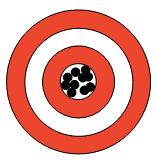
124.
?
a)
High Accuracy & High Precision
b)
High Accuracy & Low Precision
c)
Low Accuracy & High Precision
d)
Low Accuracy & Low Precision
125.
A set of data are all close to each other, and they are close to the actual value.  This set of data can be described as...
a)
accurate
b)
precise
c)
both precise and accurate
126.
Which of the following best describes the motion of the squirrel between 5 s and 8 s? 
a)
The squirrel's speed increased.
b)
The squirrel's speed decreased.
c)
The squirrel's speed did not change.
d)
The squirrel moved backward.
127.
Which of the following statements about the motion of the squirrel is true?
a)
The squirrel moved with the greatest speed between 0 s and 5 s.
b)
The squirrel moved with the greatest speed between 8 s and 10 s.
c)
The squirrel moved with a constant speed between 0 s and 8 s.
d)
The squirrel moved with a constant speed between 5 s and 10 s.
128.
What is the relationship between the independent variable and the dependent variable?
a)
As time increase, distance decreases
b)
As time increases, distance increases
c)
As time decreases, distance decreases
d)
As time decreases, distance increases
129.
What would be the best scale for this data?
Days
      Cm
  1            1.0
  2            3.5
  3            5.0
  4            8.5
a)
count by fives to 10
b)
count by tens to 100
c)
count by ones to 5
d)
count by ones to 10
130.
What is the control for the experiment? 
a)
the thing being tested
b)
the normal situation
c)
what we measure in the end
d)
what we change 
131.
What is a constant? 
a)
the normal situation
b)
the thing we measure in the end
c)
the thing we are testing
d)
the thing we keep the same for every part of the experiment
132.
You can measure ______ with grams.
a)
mass
b)
volume
c)
conductivity
d)
melting point
133.
The measurement system used by scientist around the world.
a)
metric system
b)
customary systerm
c)
calorie system
d)
science system
134.
Mass is the measurement of the amount of
a)
weight
b)
inertia
c)
force
d)
matter
135.
Which units of measurement are used for volume?
a)
grams
b)
centimeters
c)
grams/milliliter
d)
milliliter
136.

Which variable of a graph does the scientist control

a)

Dependent variable

b)

Independent variable

c)

sign variable

d)

respect variable

137.

Which axis does the dependent variable go on?

a)

z

b)

y

c)

x

d)

p

138.

Which of the following is not part of a graph

a)

Best fit line

b)

Title

c)

Scale

d)

All are part of a graph

139.
What is the mean of the data set:
8.9, 9.4, 8.6, 9.1
a)
8.5
b)
8.9
c)
9
d)
9.1
140.

The metric unit of measurement for length is the: 

a)
gram
b)
liter 
c)
meter
d)

tonne

141.
m stands for....
a)
millimeter
b)
meter
c)
centimeter
d)
Liter
142.
Which one is not in the metric system?
a)
Kilometer
b)
Yard
c)
Centimeter
d)
Meter
143.

Horseplay and practical jokes in the lab are

a)

Always against the rules

b)

Okay

c)

Not Dangerous

144.

Which of the following is NOT an acceptable way to determine the identity of a chemical?

a)

Sight

b)

Reading the label

c)

Asking the teacher

d)

Taste

145.

There is a fire extinguisher in the lab

a)

True

b)

False

146.

Which of the following should you always do before leaving the lab?

a)

Read the lab

b)

Ask the teacher what to do

c)

Clean up your materials

d)

Put your goggles on