
 Worksheets
Unit 1.3 Review
Total questions: 51
Worksheet time: 35mins

Termites are tiny insects that can cause severe damage to homes and other structures that consist of wood. Termites are an example of what type of factor?
Biotic
Abiotic

Water is a compound that consists of 2 hydrogen atoms and 1 oxygen atom. Up to 60% of an adult human is made up of water. Water is an example of what type of factor?
Biotic
Abiotic

An arctic blast pushed its way through several of the Northern state in the United State. The temperatures dropped below freezing for several days. Temperature is an example of which type of factor?
Biotic
Abiotic

An angler fish has a fleshy growth on its head that gives off light. This part acts as a lure to help the angler fish catch its prey. An anglerfish is an example of which type of factor?
Biotic
Abiotic

Air is a mixture of colorless gases. The air that makes up the Earth's atmosphere consists primarily of nitrogen and oxygen. Air is an example of which type of factor?
Biotic
Abiotic

The Sun is the source of all energy within an ecosystem. Plants depend on light from the sun in order to perform the process of photosynthesis. Sunlight is an example of what type of factor?
Biotic
Abiotic

All living things or organisms in an ecosystem are
Neither
Biotic Factors
Abiotic Factors

Is a deer an abiotic or biotic factor?
abiotic
biotic

Is a tree considered abiotic or biotic?
Biotic
Abiotic
Neither

Is a rock considered abiotic or biotic?
Abiotic
Biotic
Neither
Is a rose an abiotic or biotic factor?
Abiotic
Biotic
What is the difference between the biotic and abiotic factors?
Biotic factors are living things and abiotic factors are nonliving things.
Biotic factors are nonliving things and abiotic factors are living things.
There is no difference
Which is an example of an abiotic factor in a pond environment?
The water
A frog
A grasshopper
A snake
Which is an example of a biotic factor in the environment?
The climate in the region
Carnivores that consume other animals
Amount of helium gas in the air
Flow of water in a river
Which of the following shows an abiotic factor interacting with a biotic factor in the environment?
Lamprey eels survive by attaching themselves to trout.
Water temperature affects its oxygen level.
Low light intensity affects the growth of forest pine trees.
Gypsy moth caterpillars eat the leaves of apple trees.
Which is an example of a seasonal change to a biotic factor?
Temperatures get cooler in the fall
Hours of sunlight increase in the summer
Birds fly south for the winter
Rainfall increases in the spring
A hollow, sealed glass sphere contains sand, water, air, algae, and tiny brine shrimp. The sphere is a model ecosystem. Which of these is a biotic factor of this ecosystem?
air
algae
sand
water
Which of these is a biotic factor in a river ecosystem?
The types of microogranisms that live in the river water
the amount of soil and other particles carried by the river
the speed at which the river water flows toward the ocean
the amount of rain that flows off the land and into the river.
In many desert ecosystems, days are hot and nights are cold. Water is scarce, so animals seek water wherever possible. The spines of a cactus are actually leaves adapted to conserve water. The cactus plants have also adapted to live in thin, sandy soil. Which of the following is a biotic component of a desert ecosystem?
the thin, sandy soil
the wide temperature range
the scarcity of water
the spiny cactus leaves
Which of the following is a biotic factor in an ocean ecosystem?
the salt content of the water
the temperature of the water
the fish in the water
the oxygen in the water
Primary succession occurs in an area that has:
soil
no soil
some soil
none of these
___ are the first organisms to colonize an area and begin the process of ecological succession.
foundational organisms
introductory organisms
primary organisms
pioneer species
What is an example of an area that is likely to undergo primary succession?
Glaciers melt and leave exposed rock
Plants die from drought and decompose
Land is bulldozed and soil remains
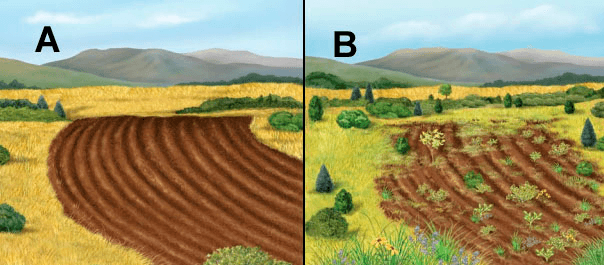
What is the main difference between primary and secondary ecological succession?
Primary begins WITHOUT soil; Secondary begins WITH soil
Primary is the first state and secondary is the second stage
Primary builds plant community; secondary builds animal community
Primary begins WITH soil; Secondary begins WITHOUT soil
What is an example of a disturbance that could bring about secondary succession?
Humans cut down many trees in a small region.
A volcanic eruption covers an area in lava.
What is the term that describes a steady and stable community?
peak community
turf community
climax community
disturbed community
Which is faster: Primary or Secondary Succession?
Primary Succession
Secondary Succession
Both Take The Same Amount of Time
The Final stage of ecological succession is...
Mature Tree Growth
Climax Community
Pioneer Community
Ends in a climax community...
primary succession
secondary succession
both types of succession
Reaches a climax community quicker because soil is already present
primary succession
secondary succession
both types of succession

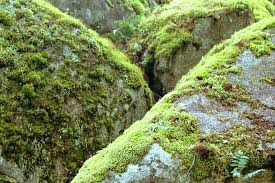
What are examples of pioneer species in primary succession?
Bushes and Shrubs
Oak Trees
Mosses and Lichens
Rose Bushes
Replacement of one type of community by another at a single place over time in a predictable series of change...
symbiosis
succession
competition
cooperation
How does climate change impact the biodiversity of an ecosystem?
Climate change can lead to habitat loss, changes in temperature and precipitation patterns, and increased frequency of extreme weather events, all of which can directly impact the biodiversity of an ecosystem.
Climate change only affects human populations
Biodiversity increases with climate change
Climate change has no impact on biodiversity
How does climate change affect the migration patterns of species?
Climate change has no impact on the migration patterns of species
Migration patterns of species are not influenced by temperature and precipitation changes
Climate change can alter the temperature and precipitation patterns, which can directly impact the habitats and food sources of species, leading to changes in their migration patterns.
Species are not affected by climate change
What are the consequences of climate change on species distribution?
No impact on species distribution
Shifts in species distribution
Decrease in species diversity
Increase in species population
In what ways does climate change influence ecosystem services?
By reducing the impact of invasive species on ecosystem services
By altering temperature and precipitation patterns, leading to changes in species distribution, habitat loss, and disruption of ecological processes.
By promoting the growth of diverse and healthy ecosystems
By increasing the availability of resources for ecosystem services
Describe the impact of climate change on the provision of ecosystem services.
Climate change has no impact on ecosystem services
Climate change can alter the distribution and abundance of species, disrupt ecological processes, and reduce the ability of ecosystems to provide essential services.
Ecosystem services will improve as a result of climate change
Climate change only affects a few species and has no overall impact on ecosystems

The main human activity that releases greenhouse gases is
using public transportation and there by reduce the affects of greenhouse gases.
burning fossil fuels
texting on cellphones
eating meat
The correct order of stages in the primary succession of volcanic island environment is illustrated by
Shrubs-Mosses-Coconut trees-Sea grasses
Volcanic rock- Lichen-Mosses-Sea grasses
Volcanic rock-Shrubs-Coconut trees- Sea grasses
Volcanic rock-Sea grasses-Coconut trees- Shrubs
Climate changes are caused by...
changes in Earth's orbit
amount of solar energy
volcanic eruptions
human activities
Humans are releasing greenhouse gases into the atmosphere faster than they can be removed by natural processes. This has resulted in
global climate change
aliens visiting Earth
more species thriving in their new climates
a decrease in sales of winter coats
Ecosystems consist of interactions between:
a) Only living organisms
b) Only non-living components
c) Only biotic components
d) Both living and non-living components
What can disrupt ecosystems and potentially lead to imbalances?
a) Increased rainfall
b) Nutrient cycling
c) Human activities
d) Symbiotic relationships



