
Font size
 Worksheets
HBio Midterm Practice
Total questions: 116
Worksheet time: 2hrs 55mins
Which organelle controls what goes in and out of the cell?
nucleus
nucleolus
cell membrane
nuclear membrane
This organelle digests dead cell parts and contains enzymes
lysosome
golgi body
smooth ER
Rough ER

What organelle is represented by this image?
rough endoplasmic reticulum
smooth endoplasmic reticulum
ribosome
nucleus
The jelly-like material inside the cell
ribosomes
lysosome
granum
cytoplasm
Which organelle contains DNA and controls the cell?
Cell membrane
nucleus
nucleolus
lysosme

What function does this organelle carry out in the cell?
detoxification
packaging materials for release from the cell
breaking down old cellular components
storing genetic material
Proteins are produced at this organelle.
golgi body
ribosome
cytoskeleton
cilia
This organelle makes useable energy for the cell
chloroplast
mitochondria
ribosome
nucleolus

What is the function of this organelle?
modify and build proteins
break down proteins
make lipids for the membrane
store extra material, like water and food
This organelle produces the microtubules used during cell division.
lysosome
centriole
cytoplasm
ribosome
In _______ cells, the vacuole is large and located in the center of the cell.
plant
animal
both plant and animal
all
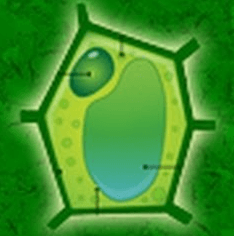
Which of the images below represents a chloroplast?


Ribosomes are produced here
nucleus
nuclear membrane
nucleolus
chromosomes
This structure provides protection to plant cells and is made of cellulose.
chloroplast
cell membrane
cell wall
cytoplasm

Which organelle is this?
Golgi Apparatus
Mitochondria
Nucleus
Chloroplast
Which organelle is only found in animal cells?
cytoplasm
vacuole
centriole
ribosome
This organelle makes lipids for the cell.
Rough ER
Smooth ER
Golgi body
nucleus

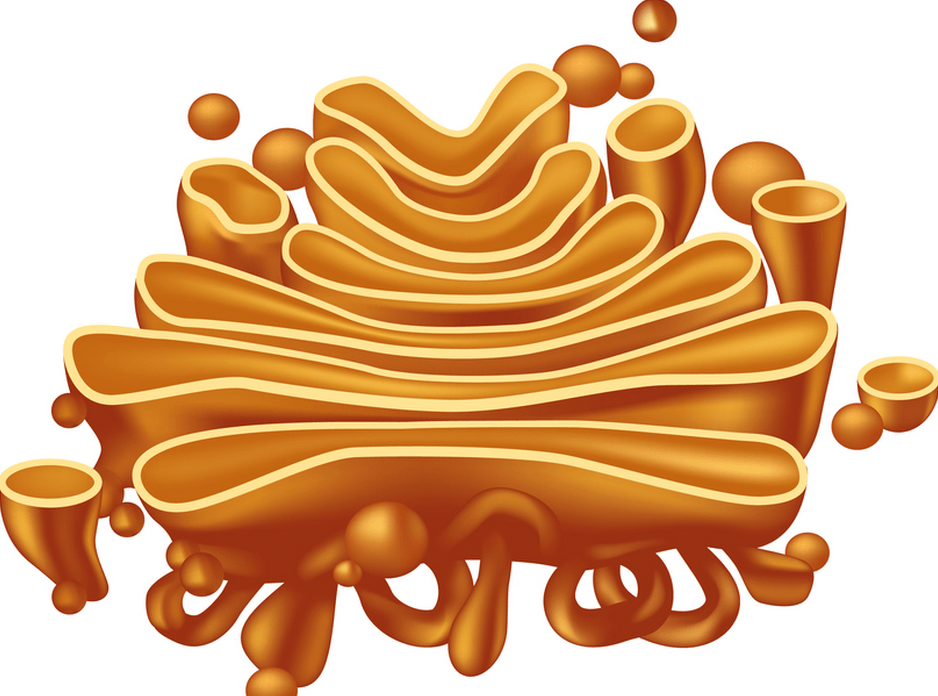
What organelle does this image represent?
Golgi Apparatus
Ribosome
Mitochondria
Chloroplast
Which 2 organelles are involved in the making of a protein?
Ribosome
Lysosome
Rough Endoplasmic Reticulum
Smooth Endoplasmic Reticulum
Which of the following organelles is found only in a plant cell?
mitochondria
chloroplast
centrioles
vacuole

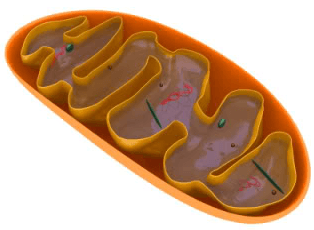
Main producer of ATP in all eukaryotes
chloroplast
mitochondria
lysosome
Smooth Endoplasmic Reticulum
Which of the following describes the function of the nucleolus?
Command Center for the Cell
Produce initial parts of ribosomes
To hold chromosomes
To make DNA
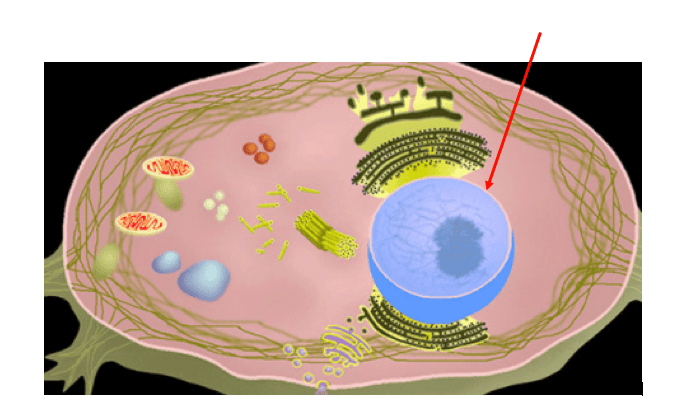
Identify the structure at the end of the arrow.
Mitochondria
Nucleus
Ribosome
Endoplasmic Reticulum
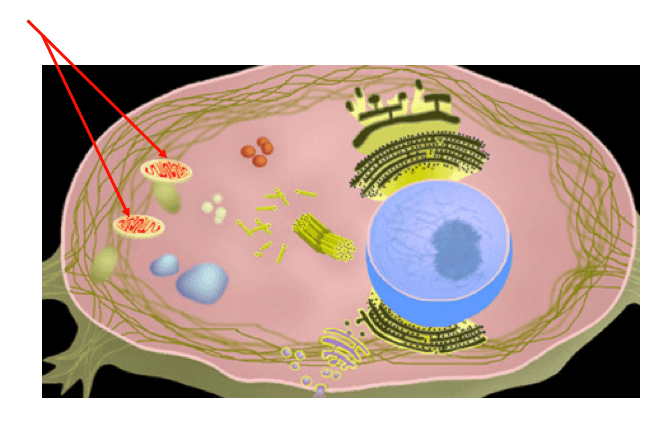
Identify the structures at the bottom of the arrows.
Ribosomes
Golgi Bodies
Mitochondria
Chloroplasts
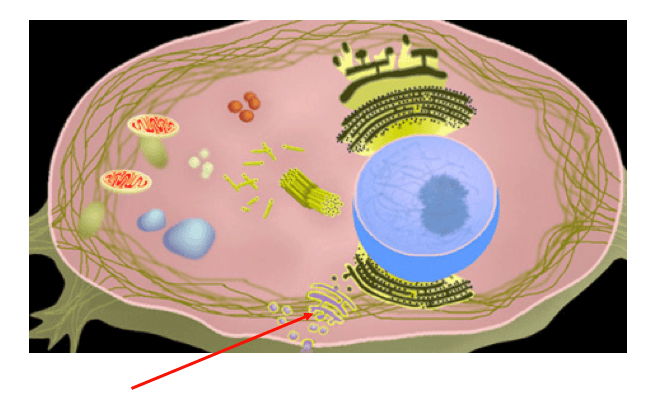
Identify the structure that the arrow is pointing to.
Endoplasmic Reticulum
Golgi Body
Ribosome
Mitochondria
Which is a good example of saturated fat?
a. butter
b. corn oil19
c. olive oil
d. sunflower oil
Which organic molecule gives fast source of energy?
a. carbohydrates
b. lipids
c. nucleic acids
d. proteins
Atom is the basic unit of a chemical element. What are the atoms that make up carbohydrates?
a. C and H
b. C, H and N
c. C, H and O
d. C, H, O and N
Which biomolecules are significant features of the cell membrane?
a. carbohydrate and nucleic acid
b. lipid and nucleic acid
c. nucleic acid and protein
d. protein and lipid
Which biomolecular group carries and passes on the hereditary information of the organism?
a. carbohydrates
b. lipids
c. nucleic acids
d. proteins

View Figure 1 (if not visible)
Which of the structures below shows a protein?


Which of the structures below shows a nucleic acid?
Which of the following is the polymer of carbohydrates?
triglycerides
proteins
nucleotides
polysaccharides
Which of the structures below shows a lipid?
What are the building blocks (or monomers) of lipids?
Nucleotides
Monosaccharides
Amino Acids
Glycerol & fatty acid tails
Which of the structures below shows a carbohydrate?
Polymers are molecules consisting of many _____ or _____ sub units ____ _____
(a)
The creating of Polymers
Dehydration synthesis
Hydrolysis
The breaking of Polymers
Dehydration synthesis
Hydrolysis
Dehydration synthesis is an _____ reaction
endergonic, anabolic
endergonic, catabolic
exergonic, anabolic
exergonic, catabolic
Hydrolysis is an _____ reaction
endergonic, anabolic
endergonic, catabolic
exergonic, anabolic
exergonic, catabolic
Hydrolisis _____ water
produces
requires
Dehydration Synthesis _____ water
produces
requires


A mode of transport that does not require energy
Passive Transport
Facilitated Diffusion
Selectively Permeable
Slightly Permeable

The type of transport that requires the use of transport proteins
Passive Transport
Facilitated Diffusion
Active Transport
Vesicular Transport

The passage of a substance from an area of high concentration to an area of low concentration
Active Transport
Diffusion
Vesicular Transport
Exocytosis

Some cells move large particles out of the cell through the process of:
Protein Synthesis
Endocytosis
Exocytosis
Cytoplasmic Streaming

Transport that occurs directly across the cell membrane
Vesicular Transport
Active Transport
Facilitated Diffusion
Passive Transport

The energy molecule that powers some modes of transport
ADP
ATP
AGP
ABP


If the percentage represents sugar, what direction will water flow?
Into the cell
Out of the cell
Into and out equally (equilibrium)

If the miligrams are referring to the amount of sugar, what direction will water flow?
Into the cell
Out of the cell
Into and out equally (equilibrium)
What are TWO ways you can predict the movement of water?
from a [High] of water to a [Low] of water
towards the [Lower] of solutes
towards the [Higher] of solutes
from a [Low] of water to a [High] of water
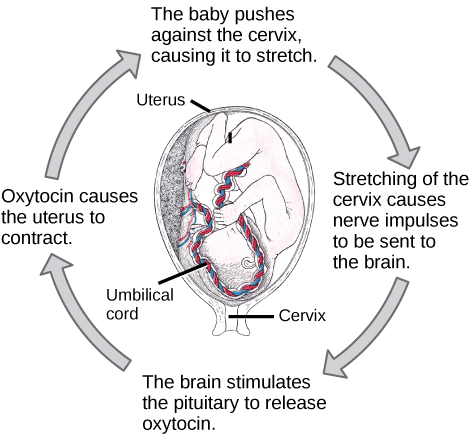
In a positive feedback loop, each action creates a consequence that _____________________ the other action.
decreases
has no effect on
amplifies
In a negative feedback loop, each action creates a consequence that _____________________ the other action.
decreases
has no effect on
amplifies
Cellular respiration is...
the process by which cells obtain energy from glucose
process by which organisms absorb energy from the sun
the process by which cells divide
the process by which cells process carbon dioxide
Which of these is the correct formula for cellular respiration?
oxygen + carbon = energy + glucose
glucose + carbon dioxide = water + oxygen
glucose + oxygen = carbon dioxide + water + energy
carbon dioxide + water + energy = glucose + oxygen
Cellular respiration takes place in the ...
mitochondria
chloroplast
chlorophyll
lungs
How is cellular respiration different from photosynthesis?
Photosynthesis produces ATP, cellular respiration produces sugars
photosynthesis requires oxygen, cellular respiration requires oxygen
photosynthesis produces oxygen, cellular respiration produces carbon dioxide
photosynthesis requires energy from food, cellular respiration requires energy from the sun
Both autotrophs & heterotrophs break down glucose to release _____ energy.
CSI
ATP
HCl
H2O
The products of photosynthesis serve as the reactants in cellular respiration to provide chemical energy.
True
False
What is the one main difference between fermentation & cellular respiration?
Fermentation does not occur in animals, while cellular respiration does
fermentation does not require oxygen, cellular respiration does
fermentation does not release energy, cellular respiration does
fermentation does not depend on the sun, cellular respiration does
Photosynthesis stores energy, while respiration releases energy.
True
False
Photosynthesis releases energy, while respiration stores energy.
True
False
Which of the following is NOT a reactant in photosynthesis?
glucose
water
carbon dioxide
sunlight
In what type of cell does photosynthesis take place?
animal cells
plant cells
plant and animal cells
prokaryotic cells
In what type of cell does cellular respiration take place
only in eukaryotic cells
only in prokaryotic cells
only in animal cells
in all cells
Which of the following correctly lists the PRODUCTS of cellular respiration?
carbon dioxide, water, and glucose
oxygen, water, and glucose
carbon dioxide, water, and energy
oxygen, carbon dioxide, and energy
How does energy transform during photosynthesis?
chemical --> heat
light --> chemical
heat --> chemical
light --> heat
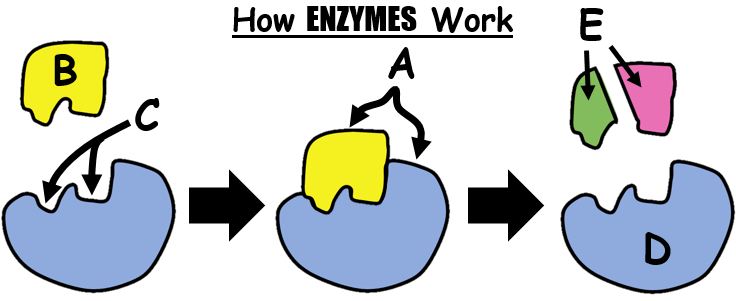
What happens to the reaction rate if an enzyme is denatured or nonfunctional?
No change in the reaction rate
Increase in reaction rate
Decrease in reaction rate
Decrease then increase in reaction rate

Is the graph an example of an endergonic or exergonic reaction?
Exergonic
Endergonic
Neither
Enzymes are an example of
Lipids
Carbohydrate
Protein
Nucleic Acid
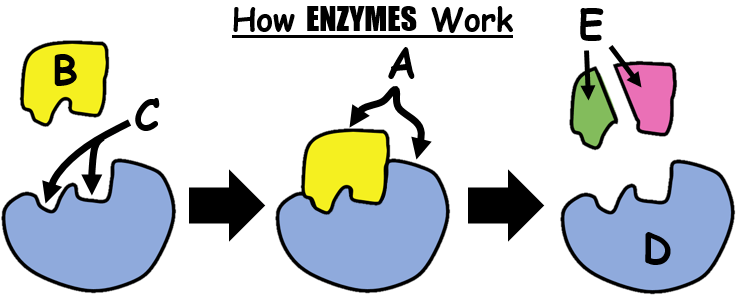
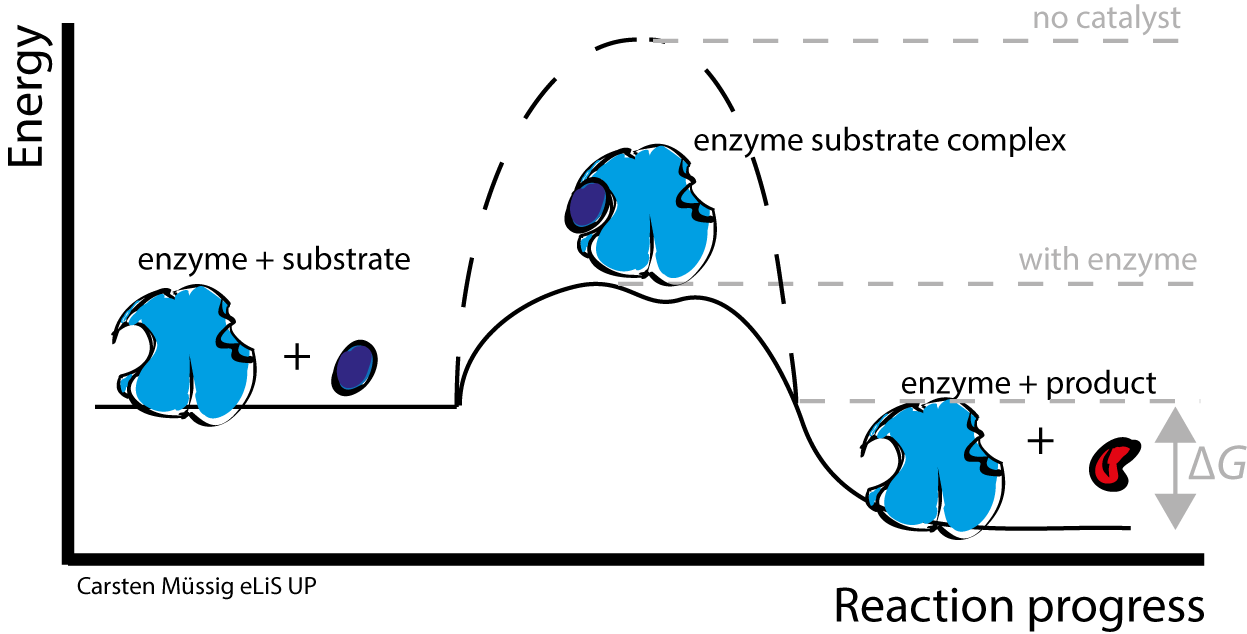
Is the graph an example of an endergonic or exergonic reaction?
Exergonic
Endergonic
Neither

