wayground logo

Free Printable Worksheets

Font size

S
M
L
XL
Worksheets

Chem H Unit 3 Test Review

Total questions: 118

Worksheet time: 3hrs 34mins

Name
Class
Date
1.

Subatomic particles with a negative charge

a)

Electrons

b)

Neutrons

c)

Protons

d)

Quarks

2.
Subatomic particles with a positive charge
a)
neutrons
b)
atomic mass
c)
protons
d)
isotopes
3.
Measure mainly of the nuclear particles: protons + neutrons
a)
Subatomic Particles
b)
Atomic Number
c)
Atomic Mass
d)
Gluons
4.
Value representing the number of protons in an element
a)
Atomic Mass
b)
Mass Number
c)
Valence Electrons
d)
Atomic Number
5.
Subatomic particles that are neutral in charge
a)
Neutrons
b)
Protons
c)
Nucleus 
d)
Electrons
6.
A tiny but very dense, positively charged portion of the atom that holds most of the atomic mass
a)
Electron Shells
b)
Orbitals
c)
Electron Cloud
d)
Nucleus
7.
Arrangement of elements organized by atomic number
a)
Electron Cloud 
b)
Periodic Table 
c)
Electron Configuration
d)
None of these
8.
The only element with no neutrons in its nucleus.
a)
Oxygen
b)
Helium 
c)
Hydrogen
d)
Lithium
9.

The smallest particle of an element.

a)

Element

b)

Molecule

c)

Atom

10.

What is one way Neutrons are different from electrons?

a)

they both are negative

b)

neutrons have no charge, while electrons have a negative charge

c)

Both are in the nucleus( center of atom)

d)

Electrons are inside nucleus and neutrons are outside the nucleus.

11.

What is the atomic number?

a)

35

b)

18

c)

17

d)

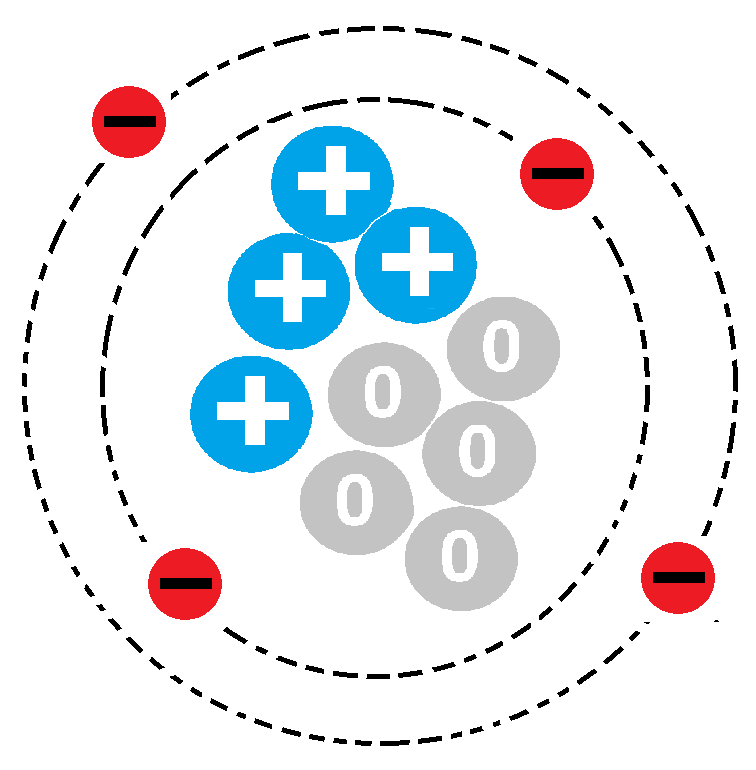
52

12.

How many protons and electrons does this element have?

a)

35

b)

18

c)

17

d)

52

13.

How many neutrons does Chlorine have?

a)

18

b)

17

c)

35

d)

52

14.

What is the atomic mass of Neon?

a)

10

b)

20

c)

30

15.

How many neutrons does calcium have?

a)

20

b)

40

c)

60

d)

0

16.

What is the atomic mass of Arsenic?

a)

33

b)

107

c)

75

17.
What number indicates the nucleus?
a)
1
b)
2
c)
3
d)
4
18.
What number indicates an electron?
a)
1
b)
2
c)
3
d)
4
19.
All matter is made of 
a)
energy 
b)
atoms 
c)
air
d)
chemistry
20.
Referring to the table, what is the relative mass of a proton?
a)
10
b)
1
c)
0.1
d)
0.01
21.

The atomic number identifies the number of __________.

a)

electrons

b)

atoms

c)

protons

d)

neutrons

22.

Subatomic particles that have a negative charge

a)

electrons

b)

protons

c)

quarks

d)

neutrons

23.

How many electrons does sulfur have

a)

16

b)

32

c)

48

d)

12

24.

Subatomic particle that has a positive charge

a)

electron

b)

positron

c)

neutron

d)

proton

25.

The center of an atom is called the ________________.

a)

electron cloud

b)

nucleus

c)

neutrion

d)

nuetron

26.

In what part of an atom can the protons and neutrons be found?

a)

nucleus

b)

neutrine

c)

electron cloud

d)

proton cloud

27.

Which part of the atom moves around the nucleus?

a)

electrons

b)

protons

c)

electrode particles

d)

neutrons

28.
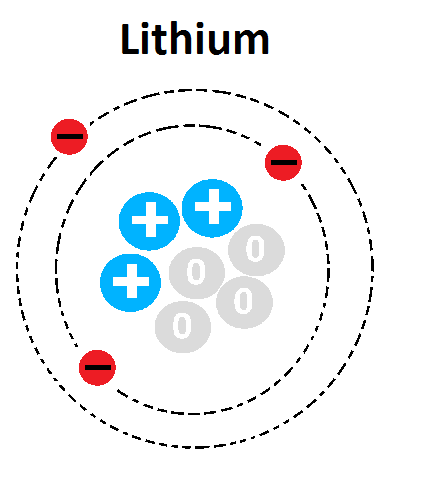
How many neutrons does the isotope of lithium have?
a)
8
b)
3
c)
4
d)
5
29.
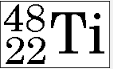
How many protons does this isotope of titanium have?
a)
48
b)
22
c)
26
d)
70
30.
In a correctly written symbol what would be located in the "A" position?
a)
number of neutrons
b)
atomic number
c)
number of electrons 
d)
mass number
31.

How many neutrons does this isotope have? 89 36Kr

a)

53

b)

36

c)

89

d)

125

32.

If X is the symbol for an element, which of the following two symbols represent isotopes of the same element?

a)

7735X and 7733X

b)

8137X and 8135 X

c)

7735X and 8135 X

d)

7735X and 8137X

33.
Four isotopes of lead include lead-204, lead-206, lead-207, and lead-208.  The average atomic mass of lead is 207.2.  Which isotope of lead is likely to be the most abundant.
a)
204
b)
206
c)
207
d)
208
34.
An atom is electrically neutral when
a)
protons and neutrons are the same
b)
protons and electrons are the same
c)
neutrons and electrons are the same
d)
neutrons balance the protons and electrons
35.
If the number of electrons in an atom changes you make a(n) __________________.
a)
ion
b)
isotope
c)
new element
d)
isomer
36.
Ions are: 
a)
atoms with a positive or negative charge
b)
atoms with no charge
c)
atoms with ONLY a positive charge
d)
atoms with ONLY a negative charge
37.

How many electrons are in an atom that has an atomic number of 34, a mass number of 74 and a charge of -2?

a)

34

b)

36

c)

2

d)

40

38.

How many total electrons does O-2 (an oxygen ion) have?

a)

8

b)

10

c)

6

d)

18

39.
How many total electrons does Mg+2 (a magnesium ion) have?
a)
10
b)
12
c)
14
d)
22
40.

Negative ions (anions) form when neutral atoms _________ electrons.

a)

lose

b)

gain

c)

share

41.
Cations are
a)
positive
b)
negative
c)
on the right side of the periodic table.
d)
nonmetals
42.
The mass number of an element that has 18 protons, 18 electrons, and 19 neutrons is _____.
a)
12.5
b)
13
c)
25
d)
37
43.
The atomic number of an element that has 9 protons, 9 electrons, and 10 neutrons is _____.
a)
9
b)
10
c)
19
d)
28
44.
If the number of electrons in an atom changes you make a(n) __________________.
a)
ion
b)
isotope
c)
new element
d)
isomer
45.
How many neutrons does uranium-239 have
a)
92
b)
147
c)
239
d)
331
46.
Which statement about subatomic particles is true?
a)
Protons, neutrons, and electrons all have about the same mass.
b)
Unlike protons or neutrons, electrons have no mass.
c)
Neutrons have no charge and no mass.
d)
An electron has far less mass than either a proton or neutron.
47.
Which of the following is unique for any given element?
a)
the number of neutrons
b)
the charge on the electrons
c)
the number of protons
d)
the mass of a neutron
48.
Which statement is true about oxygen-17 and oxygen-18?
a)
They do not have the same number of protons.
b)
Their atoms have an identical mass.
c)
They are isotopes of oxygen.
d)
The have the same mass number.
49.
The mass number of a single atom  is
a)
the sum of the protons and neutrons in the atom.
b)
twice the number of protons in one atom of the element.
c)
a ratio based on the mass of a carbon-12 atom.
d)
a weighted average of the masses of the element’s isotopes.
50.
The dense center region of an atom
a)
electron cloud
b)
core
c)
nucleus
d)
centrino
51.
An atom has 10 protons and a mass number of 18. It has __ neutrons
a)
10
b)
18
c)
28
d)
8
52.
How many protons are present in phosphorus-31?
a)
15
b)
16
c)
31
d)
46
53.
Two isotopes of carbon are carbon-12 and carbon-14.  These isotopes differ from one another by two protons.
a)
true
b)
false
54.
Changing the number of neutrons in an atom changes its...
a)
element type.
b)
mass.
c)
charge.
d)
atom type.
55.
When there are the same number of protons and electrons in an atom, that atom is a...
a)
positive ion.
b)
negative ion.
c)
unstable isotope.
d)
neutral atom.
56.
What is different             about isotopes of the same element?
a)
# of protons
b)
# of electrons
c)
# of neutrons
57.
What subatomic particles are found in the nucleus of an atom?
a)
neutron and electron.
b)
neutron and proton.
c)
proton and electron. 
58.
Which subatomic particle is found outside of the nucleus?
a)
Electron
b)
Proton
c)
Neutron
d)
Quark
59.
Protons have a ______ charge.
a)
postive
b)
negative
c)
neutral
d)
postive and negative
60.
What is the charge of an atom that has lost one electron?
a)
1-
b)
2-
c)
1+
d)
2+
61.
What is the charge of an atom that has gained one electron?
a)
1-
b)
2-
c)
1+
d)
2+
62.
Which of the following is a negatively charged subatomic particle?
a)
Electron
b)
Proton
c)
Neutron
d)
Quark
63.
Particles in an atom that are neutral and have no charge are ______. 
a)
Negatrons 
b)
Electrons 
c)
Neutrons 
d)
Protons 
64.
Which of the following determines the type of element that an atom makes?
a)
The size of the nucleus.
b)
The number of protons.
c)
How much the atom weighs.
d)
The number of neutrons.
65.
A proton is a _____ charged particle.
a)
Negatively
b)
Positively
66.
An electron is a _____ charged particle.
a)
Positively
b)
Negatively
67.

How many electrons are in 7434Se-2 ?

a)
34
b)
36
c)
2
d)
40
68.
What is an atomic number?
a)
The sum of protons and neutrons in an atom.
b)
The sum of protons and electrons in an atom.
c)
The number of protons in an atom of a specific element.
d)
The number of neutrons in a specific element.
69.

Isotopes are atoms of the same element with different #’s of __________ & therefore different __________.

a)

neutrons ; atomic numbers

b)

protons ; atomic numbers

c)

electrons ; mass numbers

d)

neutrons ; mass number

70.

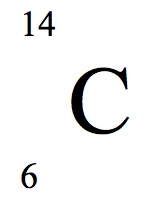
The photo above shows the isotopic notation for which isotope?

a)

Carbon 12

b)

Carbon 13

c)

Carbon 14

d)

Carbon 15

71.
An atom that has become charged by gaining or losing electrons.
a)
Ion
b)
Isotope
c)
Electron
d)
Valence Electron
72.
How many neutrons does the isotope below have?     89 36Kr
a)
53
b)
36
c)
89
d)
125
73.
An atom is electrically neutral when
a)
protons and neutrons are the same
b)
protons and electrons are the same
c)
neutrons and electrons are the same
d)
neutrons balance the protons and electrons
74.

What is the charge on a lithium atom that loses 1 electron?

a)

+1

b)

0

c)

-1

d)

-2

75.
Ions are: 
a)
atoms with a positive or negative charge
b)
atoms with no charge
c)
atoms with ONLY a positive charge
d)
atoms with ONLY a negative charge
76.

What is the mass number of an isotope that has 20 protons, 21 neutrons and 18 electrons?

a)
18
b)
20
c)
21
d)
41
77.

How many electrons does 4120Ca+2 have?

a)

20

b)

18

c)

22

d)

21

78.

How many electrons does 3216S-2

a)

32

b)

14

c)

16

d)

18

79.

Who discover the electron?

a)

Dalton

b)

Rutherford

c)

Thomson

d)

Bohr

80.

What did Rutherford discover in his experiment?

a)

nucleus

b)

electrons

c)

neutrons

d)

protons

81.

Who proposed a model with electrons moving in specific layers, moving around the nucleus like planets?

a)

Dalton

b)

Rutherford

c)

Bohr

d)

Thomson

82.

Subatomic particles with a negative charge

a)

Electrons

b)

Neutrons

c)

Protons

d)

Quarks

83.
Subatomic particles with a positive charge
a)
neutrons
b)
atomic mass
c)
protons
d)
isotopes
84.
Subatomic particles that are neutral in charge
a)
Neutrons
b)
Protons
c)
Nucleus 
d)
Electrons
85.

Where are electrons located in an atom?

a)
Nucleus
b)
Electron Cloud
c)
Within a Proton
d)
Within a Neutron
86.
Atoms of the same element but with different numbers of neutrons.
a)
Ion
b)
Isotope
c)
Mass Number
d)
electron
87.

Carbon has how many protons?

a)

12

b)

6

c)

7

d)

4

88.

What is Oxygen's atomic number?

a)

8

b)

16

c)

15

d)

6

89.

Iodine has ______ electrons

a)

127

b)

53

c)

74

d)

7

90.

How many protons are in Gold

a)

79

b)

197

c)

118

d)

276

91.
How many electrons are in Manganese (Mn) ?
a)
12
b)
25
c)
55
d)
30
92.

What is the atomic number of this atom?

a)

1

b)

3

c)

4

d)

7

93.

An atom has 10 protons, 15 neutrons and 10 electrons what is its mass number.

a)

20

b)

10

c)

35

d)

25

94.

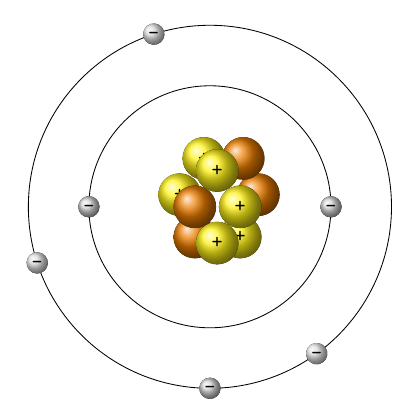
How many electrons does this atom have?

a)

2

b)

4

c)

6

d)

10

95.

How many PROTONS does HYDROGEN (H) have?

a)

1000

b)

10

c)

1

d)

100

96.

How many PROTONS does NEON (Ne) have?

a)

86

b)

10

c)

7

d)

43

97.
What is the atomic number?
a)
the number of protons
b)
the number of protons and neutrons
c)
the number of neutrons
d)
the number of protons and electrons
98.
What is the atomic number of this atom?
a)
4
b)
5
c)
9
d)
none of the above
99.
Who was the first person to study atomic theory?
a)
Dalton
b)
Democritus
c)
Chadwick
d)
Miller
100.
True or False? John Dalton believed that moving electrons exist in electron clouds around the nucleus. 
a)
False
b)
True 
101.
What was the name of J.J Thomsons' model of atomic structure. 
a)
Electron Cloud Model 
b)
Electron Sea Model
c)
Plum Pudding Model 
d)
Bohr Model
102.
Who proposed the idea that electrons are not fixed but constantly move?
a)
Dalton
b)
Bohr
c)
Schrodinger
d)
Chadwick
103.
What was James Chadwicks most notable discovery?
a)
The nucleus contains protons. 
b)
The nucleus contains neutrons.
c)
Electron are not fixed.
d)
Protons are positive.
104.
What does the Bohr model suggest?
a)
Atoms are small, hard, indivisible objects. 
b)
That protons in the nucleus are attracted to electrons in the electron clouds. 
c)
That electrons travel around the nucleus of an atom in orbits or definite paths.
105.
Was John Daltons theory earlier than Niels Bohr?
a)
No
b)
Yes
106.
Who proposed that the atom consists mostly of empty space?
a)
Bohr
b)
Dalton
c)
Rutherford
d)
Chadwick
107.
Which name is incorrect?
a)
Ernest Rutherford
b)
Niels Bohr
c)
James Dolton 
d)
J.J Thomson
108.
Which model suggested that: Atoms mostly consist of positively charged material with negatively charged particles (electrons) located throughout the positive material.
a)
Bohrs Model
b)
Plum Pudding Model 
c)
Democritus Model
d)
Our current model 
109.
Who was the first person to study atomic theory?
a)
Dalton
b)
Democritus
c)
Chadwick
d)
Miller
110.
True or False? John Dalton believed that moving electrons exist in electron clouds around the nucleus. 
a)
False
b)
True 
111.
What was the name of J.J Thomsons' model of atomic structure. 
a)
Electron Cloud Model 
b)
Electron Sea Model
c)
Plum Pudding Model 
d)
Bohr Model
112.
Who proposed the idea that electrons are not fixed but constantly move?
a)
Dalton
b)
Bohr
c)
Schrodinger
d)
Chadwick
113.
What was James Chadwicks most notable discovery?
a)
The nucleus contains protons. 
b)
The nucleus contains neutrons.
c)
Electron are not fixed.
d)
Protons are positive.
114.
What does the Bohr model suggest?
a)
Atoms are small, hard, indivisible objects. 
b)
That protons in the nucleus are attracted to electrons in the electron clouds. 
c)
That electrons travel around the nucleus of an atom in orbits or definite paths.
115.
Was John Daltons theory earlier than Niels Bohr?
a)
No
b)
Yes
116.
Who proposed that the atom consists mostly of empty space?
a)
Bohr
b)
Dalton
c)
Rutherford
d)
Chadwick
117.
Which name is incorrect?
a)
Ernest Rutherford
b)
Niels Bohr
c)
James Dolton 
d)
J.J Thomson
118.
Which model suggested that: Atoms mostly consist of positively charged material with negatively charged particles (electrons) located throughout the positive material.
a)
Bohrs Model
b)
Plum Pudding Model 
c)
Democritus Model
d)
Our current model