wayground logo

Free Printable Worksheets

Font size

S
M
L
XL
Worksheets

untitled

Total questions: 92

Worksheet time: 2hrs 30mins

Name
Class
Date
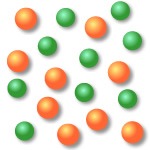
1.
This picture represents: 
a)
Element
b)
Compound
c)
Mixture of Elements
d)
Mixture of Compounds
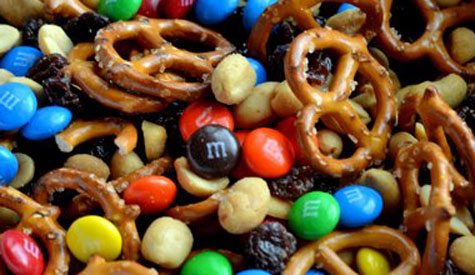
2.
What type of mixture is this?
a)
homogenous mixture
b)
chemical
c)
heterogeneous mixture 
d)
solid mix
3.
A substance with two or more elements that are combined in a fixed proportion
a)
colloid
b)
compound
c)
element
d)
solution
4.
A mixture in which different materials can be identified easily
a)
element
b)
heterogeneous mixture
c)
homogeneous mixture
d)
solution
5.
A mixture that contains two or more substances blended evenly throughout
a)
heterogeneous mixture
b)
homogeneous mixture
c)
suspension
d)
colloid
6.
Which of the following is an element?
a)
Sugar
b)
Salt
c)
Water
d)
Oxygen
7.
This picture represents which of the following?
a)
element
b)
compound
c)
mixture
8.
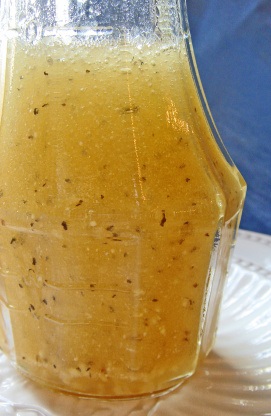
Italian Salad Dressing is a . . .
a)
heterogeneous mixture
b)
homogeneous mixture
c)
Pure Substance
d)
Compound
9.
A mixture that is so evenly mixed you can't see the parts.  Such as Kool-Aid
a)
Homogeneous Mixture
b)
Heterogeneous Mixture
c)
Pure Substance
10.
A combination that can be separated by physical processes is a .....
a)
Pure Substance
b)
Glucose
c)
Element
d)
Mixture
11.
If you change a substance into a new substance...
a)
Partial Change
b)
Physical Change
c)
Chemical Change
d)
Freezing
12.
Changing the phase, size or shape of something....
a)
Chemical change
b)
Physical Change
c)
Suspension
d)
Colloid
13.
Which is NOT a chemical change?
a)
Leaves changing colors in the fall
b)
Iron rusting
c)
Digesting Lunch
d)
Ice Melting
14.
Is burning wood a chemical or physical change?
a)
chemical
b)
physical
15.

What is a well-mixed mixture containing a solvent and at least one solute that has the same properties throughout (Ex. Sugar water)?

a)

Heterogeneous mixture

b)

Colloid

c)

Suspension

d)

Solution

16.

What is a pure substance that cannot be broken down into any other substances by chemical or physical means (Ex. Oxygen)?

a)

Element

b)

Compound

c)

Colloid

d)

Suspension

17.

What is a mixture in which particles can be seen seen and settle out over time (Ex. Muddy water)?

a)

Solution

b)

Suspension

c)

Colloid

d)

Element

18.

What is a mixture containing small, undissolved particles that do not settle out over time (Ex. Fog)?

a)

Solution

b)

Suspension

c)

Colloid

d)

Compound

19.

A base is a compound that makes hydroxide ions (OH-) when dissolved in water.

a)

True

b)

False

20.

Red litmus paper turns blue in the presence of an acid.

a)

True

b)

False

21.

pH is the measure of how strong or weak an acid is.

a)

True

b)

False

22.

Low pH means that there is a high concentration of hydrogen ions.

a)

True

b)

False

23.

Which of the following values is very acidic on the pH scale?

a)

0

b)

6

c)

9

d)

14

24.

Which of the following values is neutral on the pH scale?

a)

0

b)

3

c)

7

d)

14

25.

Lead is an element. What word below describes an element?

a)

pure substance

b)

compound

c)

heterogenous mixture

d)

homogenous mixture

26.

What kind of substance is table salt (NaCl)?

a)

compound

b)

homogenous mixture

c)

heterogenous mixture

d)

pure substance

27.

Elements that are normally in a gas form, that are dull, brittle, and poor conductors

a)

Metals

b)

Nonmetals

c)

Metalloids

d)

Solids

28.

The elements located to the left of the stair-step

a)

Metals

b)

Nonmetals

c)

Metalloids

d)

Gases

29.

Usually solid elements that are good conductors, malleable, ductile, and shiny

a)

Metals

b)

Nonmetals

c)

Metalloids

d)

Semimetals

30.

The elements located along the stair-step

a)

Metals

b)

Nonmetals

c)

Metalloids

31.

Elements that can be lustrous or dull, malleable or brittle, and conductivity varies

a)

Metals

b)

Nonmetals

c)

Metalloids

d)

Noble gases

32.

Which type of element is located to the right of the stair-step?

a)

Metals

b)

Nonmetals

c)

Metalloids

d)

Semimetals

33.

This element is in Group 1, but it is not a metal

a)

Hydrogen

b)

Potassium

c)

Francium

d)

Helium

34.

The majority of the periodic table is made up of

a)

Metals

b)

Nonmetals

c)

Metalloids

d)

Noble gases

35.

This is the term used for a metal that is able to be hammered out or pressed

a)

Malleable

b)

Ductile

c)

Conductive

d)

Shiny

36.

This term is used for a metal that is able to be drawn out into a thin wire

a)

Malleable

b)

Ductile

c)

Conductive

d)

Shiny

37.
What is a conductor?
a)
Heat and electricity move through them easily
b)
able to be drawn into a wire
c)
able to be hammered into different shapes
d)
shiny
38.

How many atoms of Calcium are in this equation?

H3O5CaCl7

a)

3

b)

5

c)

1

d)

7

39.

How many atoms of Carbon are in this equation?


HʒC5O4

a)

3

b)

1

c)

5

d)

4

40.

Identify the Coefficient.

3BeH5Si8

a)

5

b)

3

c)

1

d)

8

41.

Identify the subscripts.

4Fe5K2

a)

4

b)

5

c)

2

d)

1

42.

How many atoms of Iron in the following equation?

2HFe5Cl

a)

1

b)

10

c)

5

d)

20

43.

How many total atoms in the following equation?

3He2Ag5

a)

2

b)

21

c)

24

d)

5

44.

How many Nitrogen atoms are in (NH₄)₂CrO₄?

a)

1

b)

2

c)

8

d)

16

45.

How many Oxygen atoms are in Al₂(SO₄)₃?

a)

4

b)

12

c)

7

d)

24

46.

How many Hydrogen atoms in 3(NH₄)₂CrO₄?

a)

4

b)

2

c)

8

d)

24

47.
How many atoms are there TOTAL in:
H2SO4
a)
6
b)
5
c)
7
d)
3
48.
Which is the correct formula for:
 three hydrogen (H)
one sulfur (S)
four oxygen (O)
a)
H3SO4
b)
HSO4
c)
H4S3O
d)
H2O
49.
A granular substance is added to a liquid. Which of the following would provide evidence to suggest a chemical change has taken place?
a)
The liquid gives off heat.
b)
The granules dissolve completely.
c)
The volume of the liquid increases.
d)
The granules seem to get smaller.
50.
A student mixes two clear liquids together. After a few minutes, a white powdery solid can be seen settling on the bottom of the test tube. Which of the following is a conclusion that the student can draw based on these observations? The two clear liquids –
a)
were pure substances before they were mixed.
b)
are toxic and should be handled with extreme caution.
c)
have gone through a chemical change in which a new substance called a precipitate was produced.
d)
have been stored too long and are no longer good.
51.

Which of the following is an example of a chemical change?

a)

Crushing a can

b)

Dissolving sugar

c)

Melting gold

d)

Frying an egg

52.
Which of the following statements is true regarding physical changes?
a)
For a physical change to occur, a chemical reaction must take place
b)
Physical changes can be undone because no chemical reaction has taken place
c)
During a physical change, atoms are rearranged into new molecules
d)
Physical changes always include molecules in a gaseous state.
53.
Which of the following is an example that includes evidence of a chemical reaction?
a)
A sample of zinc is placed in water and it settles to the bottom
b)
A solid block of ice is heated and it completely melts into a liquid. 
c)
Sugar that is burned gives off an odor and turns brown and then black.
d)
A tomato is placed into a blender and chopped up into smaller pieces.
54.
Pancakes cooking on a griddle
a)
Chemical Change
b)
Physical Change
55.
A tire is inflated with air.
a)
Chemical Change
b)
Physical Change
56.
Matter can not be created nor destroyed: it can only be
a)
Destroyed a little bit
b)
Invisible
c)
Transformed, changed
d)
None of the above
57.
If reaction starts with 20g of reactants it should produce 
a)
a total of 40g of products
b)
a total of 10g of products
c)
a total of 80 g of products
d)
a total of 20g of products
58.
What will weigh more when a chemical change is complete?  The reactants before the chemical reaction, or the product after the reaction is complete?
a)
They both will weigh the same
b)
The product always weighs more than the reactant
c)
The reactant will weigh more than the product
d)
They both will loose mass after the reaction
59.

________ are the starting substances in a chemical equation.

a)

Reactants

b)

Producer

c)

Reaction

d)

Products

60.
In a reaction A + B ----> C,  reactant A has 5g and product  C has 9g. How many grams does reactant B should have? 
a)
4g
b)
5g
c)
9g
d)
14g
61.
If a reaction starts with a total 75g of reactants it should produce 
a)
a total of 40g of products
b)
a total of 75g of products
c)
a total of 180 g of products
d)
None of the above
62.
A chemical reaction is balanced when
a)
both sides have the same elements
b)
Both sides have the same  number of atoms
c)
Same subscripts
d)
Same coefficients
63.
Anything that has mass & takes up space
a)
gravity
b)
force
c)
matter
d)
volume
64.
Smallest unit of an element
a)
compound
b)
atom
c)
molecule
d)
product
65.

Is this equation balanced?

a)

Yes

b)

No

66.

In the equation shown, what are the product(s)?

a)

N2 + H2

b)

NH3

67.

To balance an equation you should:

a)

ONLY change subscripts.

b)

ONLY change coefficients.

c)

Change BOTH subscripts and coefficients.

68.
Is the following equation balanced?
4Fe + 3O2 --> 2Fe2O3
a)
yes
b)
no
69.
Which of the following equations are correctly balanced?
a)
12CO2 +H2O --> C6H12O6 + O2
b)
CO2 + 9H2O --> C6H12O6 + O2
c)
CO2 + H2O --> 3C6H12O6 + O2
d)
6CO2 + 6H2O --> C6H12O6 + 6O2
70.
Balance this equation
_N+ _H--> _NH3
a)
1,2,3
b)
1,3,2
c)
1,1,2
d)
2,1,1
71.
Balance this equation.
_CF+ _Br-- _CBr+ _F2
a)
2,1,2,1
b)
1,2,2,1
c)
1,2,1,2
d)
2,2,2,2
72.
Balance this equation.
_SnO+_H2-->_Sn +_H2O
a)
1,1,2,1
b)
1,2,1,1
c)
1,2,1,2
d)
1,2,2,1
73.
What is an ion?
a)
A Charged Atom
b)
A Large Atom
c)
A Small Atom
d)
A Cute Atom
74.
Ammonia has a pH of 12.  Ammonia is __________.
a)
an acid
b)
a base
c)
an element
d)
a metal
75.
Soap is a weak base.  What is true about the taste of bases?
a)
they taste sour
b)
they taste sweet
c)
they taste bitter
d)
they taste salty
76.
Explain what happens when a strong acid and a strong base are poured into the same container.
a)
they form separate layers
b)
they mix physically but not chemically
c)
they break apart into separate elements
d)
they react chemically to form a salt
77.
When dissolved in water, bases produce:
a)
acids
b)
salts
c)
hydrogen ions
d)
hydroxide ions
78.
Which of these solutions is an acid?
a)
Dish Soap: pH of 12
b)
Tomato Soup: pH of 4
c)
Baking Soda: pH of 9
d)
Drain Cleaner: pH of 14
79.
Which of the following is true about acids and bases?
a)
The lower the pH, the stronger the acid
b)
the higher the pH, the stronger the acid
c)
The lower the pH, the more neutral the acid
d)
The higher the pH, the weaker the base
80.

If I add more water to this setup, what will happen to the pH?

a)

It will increase and get closer to 7

b)

It will decrease and get closert to 0

c)

It will stay the same and not change

81.
Which end of the water molecule has a slightly positive charge?
a)
the oxygen end
b)
the hydrogen end
c)
both ends are slightly positive
d)
neither end is positive
82.
Water is a universal solvent because it...
a)
It can be found anywhere
b)
It freezes when it gets cold
c)
floats when frozen
d)
Dissolves most substances
83.

Capillary Action is key for

a)

Water moving from roots to leaves in plants

b)

Air moving from mouth to lungs

c)

Ice floating on water

d)

Water moving to lower areas

84.
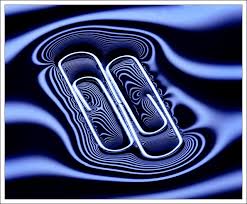
The tightness across the surface of water that enables paper clips to float is ____________.
a)
adhesion
b)
capillary action
c)
surface tension
d)
polarity
85.

Cohesive means ........

a)

the water molecules stick to each other

b)

the water molecules stick to other surfaces

c)

the water molecules are less dense

d)

the water molecules are far apart

86.

Adhesive means ........

a)

the water molecules stick to each other

b)

the water molecules stick to other surfaces

c)

the water molecules are less dense

d)

the water molecules are far apart

87.

Why is water so good at dissolving so many substances?

a)

it is polar

b)

it is less dense as a solid

c)

cohesion

d)

adhesion

88.
Water droplets take a spherical shape (as pictured) because of ____________
a)
adhesion
b)
cohesion
c)
capillary action
d)
solubility
89.
A molecule with electrically charged areas is called a _______________.
a)
magnet
b)
polar molecule
c)
solution
d)
electrical molecule
90.

Which end of the water molecule has a slightly negative charge?

a)
the oxygen end
b)
the hydrogen end
c)
both ends are slightly positive
d)
neither end is positive
91.
What is water's technical name
a)
NaCl
b)
CO2
c)
H2O
d)
H2O2
92.
Attractions between water molecules due to polarity are called:
a)
covalent bonds
b)
ionic bonds
c)
polar bonds
d)
hydrogen bonds