wayground logo

Free Printable Worksheets

Font size

S
M
L
XL
Worksheets

Earth Science Midterm Review

Total questions: 94

Worksheet time: 1hrs 22mins

Name
Class
Date
1.

Which element is most abundant in the Earth's crust? (p.1)

a)

Silicon

b)

Oxygen

c)

Iron

d)

Carbon

2.

Which two elements make up 99% of the hydrosphere? (p.1)

a)

Hydrogen & nitrogen

b)

Nitrogen & oxygen

c)

Iron & hydrogen

d)

Hydrogen & oxygen

3.

Which element makes up the majority of the troposphere? (p.1)

a)

Nitrogen

b)

Hydrogen

c)

Oxygen

d)

Carbon

4.

Use chart on p.1 of ESRT

a)

silicon

b)

lead

c)

nitrogen

d)

hydrogen

5.

What are the coordinates for Rochester, NY? (p.3)

a)

43.15oN, 77.6oW

b)

43.15oN, 77.6oE

c)

77.6oN, 43.15oW

d)

77.6oN, 43.15oE

6.

What landscape region is Mt. Macy found in? (p. 2 & 3)

a)

Tug Hill Plateau

b)

The Catskills

c)

Adirondack Mountains

d)

St. Lawrence Lowlands

7.

Which landscape region includes Binghamton, Elmira & Jamestown? (p.2 & 3)

a)

Erie-Ontario Lowlands

b)

Alleghany Plateau

c)

Tug Hill Plateau

d)

The Catskills

8.

What is the density of the outer core of the Earth? (p.10)

a)

3.0 g/cm3

b)

3.4-5.6 g/cm3

c)

9.9-12.2 g/cm3

d)

12.8-13.1 g/cm3

9.

What is the deepest depth of the asthenosphere? (p.10)

a)

1000 km

b)

2000 km

c)

3000 km

d)

4000 km

10.

What two stars have the same temperature? (p.15)

a)

Rigel & Spica

b)

Sun & Alpha Centauri

c)

Polaris & Betelgeuse

d)

Proxima Centauri & Procyon B

11.

What two stars have the same luminosity? (p.15)

a)

Proxima Centauri & Procyon B

b)

Sun & Polaris

c)

Aldebaran & Pollux

d)

Rigel & Betelgeuse

12.

Large stars have a tendency to die in a supernova. Which one of of the stars below would most likely die in a supernova? (p.15)

a)

Procyon B

b)

Barnard's Star

c)

Rigel

d)

Sun

13.

Which type of planets have higher densities, smaller size and are closer to the Sun? (p.15)

a)

Terrestrial

b)

Jovian

14.

Which type of planets have greater periods of revolution, larger size and farther from the Sun? (p.15)

a)

Terrestrial

b)

Jovian

15.

Which planet has the highest eccentricity? (p.15)

a)

Mars

b)

Neptune

c)

Mercury

d)

Earth

16.

Which object within the solar system has the same period of rotation & revolution? (p.15)

a)

Sun

b)

Moon

c)

Earth

d)

Mars

17.
The red shift of light from distant galaxies provides evidence that these galaxies are
a)
decreasing in size
b)
increasing in size
c)
decreasing in distance from Earth
d)
increasing in distance from Earth
18.
In which sequence are the celestial objects
correctly listed in order from the smallest mass to
the largest mass?
a)
Saturn, solar system, Milky Way, universe
b)
Saturn, universe, Milky Way, solar system
c)
Milky Way, Saturn, solar system, universe
d)
Milky Way, universe, solar system, Saturn
19.
As altitude increases in the troposphere and stratosphere, the air temperature
a)
decreases in the troposphere and increases in the stratosphere
b)
decreases in both the troposphere and stratosphere
c)
increases in the troposphere and decreases in the stratosphere
d)
increases in both the troposphere and stratosphere
20.

Points A through I are locations on the map. Elevations are shown in meters. Which locations have the same elevation?

a)

A and C

b)

B and E

c)

C and I

d)

F and G

21.

Which direction is Maple Stream flowing?

a)

North

b)

South

c)

East

d)

West

22.
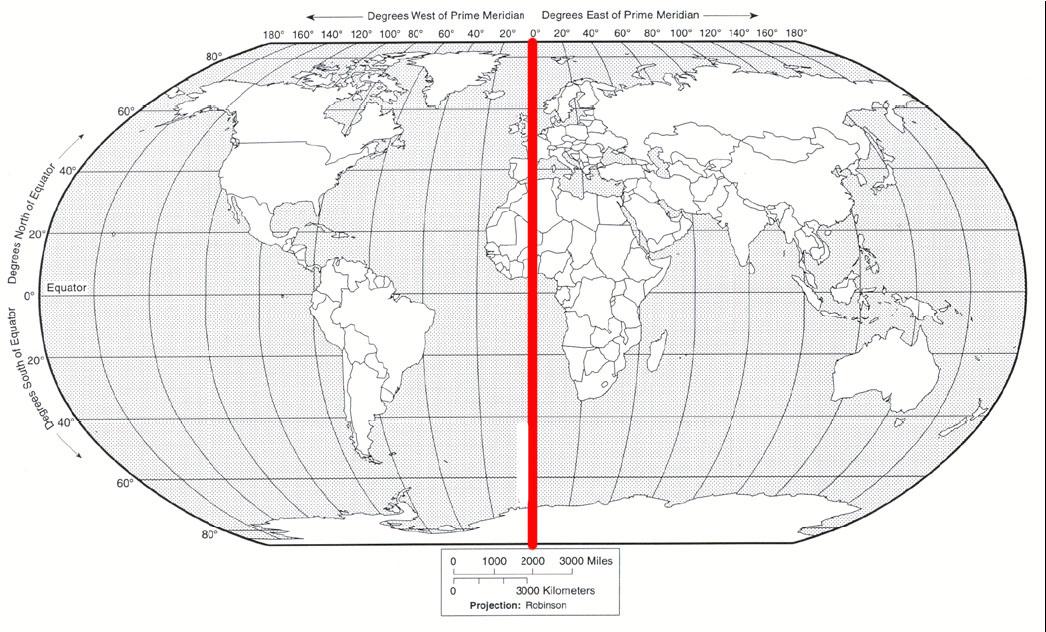
What is the name of the line at zero degrees longitude?
a)
Equator
b)
Prime Meridian
c)
North Pole
d)
South Pole
23.
During which season is the northern hemisphere tilted toward the Sun?
a)
Summer
b)
Fall
c)
Winter
d)
Spring
24.
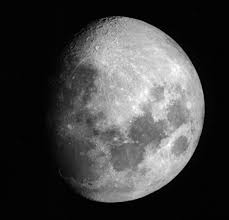
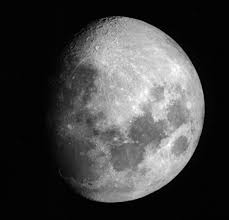
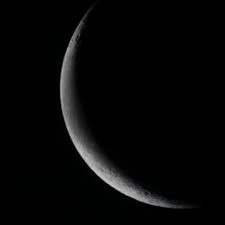
Name the moon phase
a)
waning crescent
b)
waxing crescent
c)
waning gibbous
d)
waxing gibbous
25.
Frank has a paper clip. It has a mass of 9g and a volume of 3cm3. What is its density?
a)
3 g/cm3
b)
1/3 g/cm3
c)
27 g/cm3
d)
39 g/cm3
26.

Which topographic map matches formation C?

a)

1

b)

2

c)

3

d)

4

27.
Locations A and B have the same
a)
latitude and local time
b)
latitude and elevation
c)
longitude and local time
d)
longitude and elevation
28.

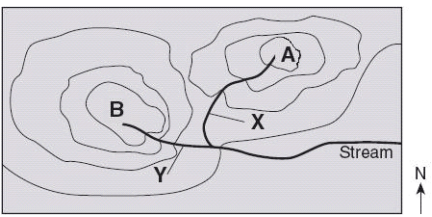
A student placed a floating wooden block in Blue Creek at location Y.  Fifteen minutes later the floating block arrived at location X. What is the stream's rate of flow from Y to X (change in distance/ change in time) - Y and X are 2 miles apart.

a)

.13

b)

3.1

c)

5.5

d)

2.5

29.
Compared to the Elk River, the Birch River can best be described as flowing
a)
faster, and in the same general compass direction
b)
faster, and in the opposite general compass direction
c)
slower, and in the same general compass direction
d)
slower, and in the opposite general compass direction
30.
If it is 12pm in NY, what time is it in California?
a)
9am
b)
10am
c)
2pm
d)
3pm
31.
At which latitude would an observer on Earth find the altitude of Polaris to be 37 degrees?
a)
37 degrees North
b)
37 degrees South
c)
55 degrees North
d)
55 degrees South
32.

How old is the solar system?

a)

4-5 billion years old

b)

4.5 - 4.6 billion years old

c)

5.2 - 5.5 billion years old

d)

6 billion years old

33.

How old is the universe?

a)

13 billion years old

b)

13.4 billion years old

c)

13.8 billion years old

d)

14 billion years old

34.

It proposes how the universe expanded from a tiny, dense, and hot mass to its present size.

a)

Theory of Relativity

b)

Big Bang Theory

c)

Cosmological Theory

d)

Theory of Expansion

35.

The outermost layer of the Earth is called the ________________________.

a)

core

b)

crust

c)

mantle

d)

asthenosphere

36.
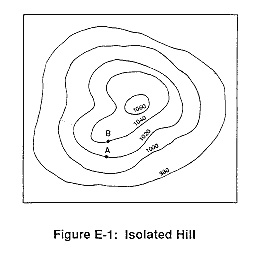
What is the elevation of point B? (Contour interval is 100m)
a)
800 ft
b)
850 ft
c)
900 ft
d)
1000 ft
37.
What feature is formed at B?
a)
river
b)
rift valley
c)
sink hole
d)
mountain
38.
What do contour lines that are farther apart represent?
a)
waterfall
b)
steep area
c)
gentle slope
d)
river
39.
Which imaginary line divides the Earth into the eastern and western hemispheres?
a)
Prime Meridian
b)
Equator
c)
Axis
d)
North Pole
40.
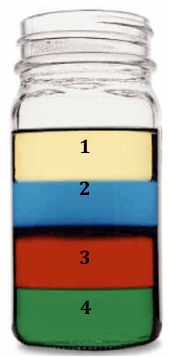
Put the liquids in order from most dense to least dense?
a)
4, 3, 2, 1
b)
1, 2, 3, 4
c)
3, 4, 2, 1, 
d)
4, 3, 1, 2
41.
Why are CFCs (chloroflorocarbons) dangerous to planet Earth?
a)
CFCs destroy the ozone layer which protects Earth from ultraviolet rays.
b)
CFCs protect the earth
42.
In which atmospheric layer do we live?
a)
Meosphere
b)
Troposphere
c)
Exosphere
43.
Which of the following pictures is showing a high tide?
a)
A
b)
B
c)
C
d)
D
44.
What does the Big Bang theory suggest?
a)
The universe was just there
b)
The Milky Way is the only solar system
c)
The universe is continually expanding
d)
The universe started as a point and is moving towards each other
45.
What does the moon orbit around?
a)
Saturn 
b)
Neptune 
c)
Earth 
d)
Sun 
46.
The spinning of the Earth on its axis is
a)
rotation
b)
revolution
c)
precession
d)
nutation
47.
What is a result of and approximate 23.5 degree tilt and revolution of Earth? 
a)
Moons orbit around the Earth
b)
Tides
c)
Seasons
d)
The Earth's rotation around the Sun
48.
The movement of one object around another is
a)
rotation.
b)
revolution.
c)
orbit.
d)
inertia.
49.
What happens when the area in which you live tilts away from the sun?
a)
It is summer.
b)
It is spring.
c)
It is winter.
d)
It is fall.
50.
Which season is taking place in the Northern Hemisphere in Position 3?
a)
Winter
b)
Spring
c)
Summer
d)
Fall
51.
Which season is taking place in the Northern Hemisphere in Position 1?
a)
Winter
b)
Spring
c)
Summer
d)
Fall
52.
This variable in an experiment is the one being changed by the scientist. 
a)
dependent variable
b)
independent variable
c)
data
d)
control group
53.
A state of matter that has a definite volume and shape.
a)
solid
b)
liquid
c)
gas
d)
matter
54.
What is the formula for density?
a)
density = mass x volume
b)
density = mass / volume
c)
density = mass + volume
d)
density = mass - volume
55.
Frank has a paper clip. It has a mass of 9g and a volume of 3cm3. What is its density?
a)
3 g/cm3
b)
1/3 g/cm3
c)
27 g/cm3
d)
39 g/cm3
56.
What are the curved lines on a topographic map called?
a)
contour lines
b)
contour intervals
c)
slope
d)
elevation
57.
If contour lines are close together, then the slope is
a)
gentle
b)
steep
c)
flat
d)
going up and down
58.
Which direction is the stream flowing?
a)
northward
b)
southward
c)
westward
d)
eastward
59.
What is the highest elevation this hill could possibly have? (might not be labeled)
a)
1040
b)
1060
c)
1079
d)
1009
60.
What is the contour interval on this map?
a)
100
b)
10
c)
15
d)
20
61.

Location D has a latitude of ____ and a longitude of ____.

a)

30oN, 90oW

b)

90oN, 30oW

c)

10oN, 40oW

d)

30oN, 90oE

62.

Solid to a liquid is

a)

freezing

b)

boiling

c)

steaming

d)

melting

63.

Liquid to a Gas is

a)

Melting

b)

evaporation

c)

condensation

d)

sublimation

64.

How much space particles take up is called?

a)

Density

b)

Volume

c)

Mass

d)

Weight

65.

To change from one state of matter to another state of matter is called?

a)

phase change

b)

potential change

c)

kinetic change

d)

thermal change

66.

Mass is _______________.

a)

how much matter is in a object

b)

a measurement

c)

how had gravity pulls on an object

d)

how much volume is in an object

67.
Name the moon phase
a)
waning crescent
b)
waxing crescent
c)
waning gibbous
d)
waxing gibbous
68.
Name the moon phase
a)
waning crescent
b)
waxing crescent
c)
waning gibbous
d)
waxing gibbous
69.
Name the moon phase
a)
waning crescent
b)
waxing crescent
c)
waning gibbous
d)
waxing gibbous
70.
What is the difference between a gibbous moon and a crescent moon?
a)
The gibbous shows more than half of the bright side of the moon.
b)
The crescent shows more than half of the bright side of the moon.
c)
The gibbous shows less than half of the bright side of the moon. 
71.
The order of the planets is:
a)
Mars,Venus,Earth,
Mercury,Saturn
Jupiter, Uranus, Neptune
b)
Earth,Venus,Mars
Jupiter, Neptune,
Mercury,Saturn,
Uranus
c)
Mercury,Venus,Earth
Mars,Jupiter,
Saturn,Uranus
Neptune
72.
How long does it take for Earth to complete on full rotation?
a)
365 days
b)
23 hours
c)
24 hours
d)
1 month
73.
What is a difference between spring and neap tides?
a)
Spring tides occur when the earth and sun are IN LINE with the new or full moon. 
b)
Spring tides occur when moon in 3rd or 1st quarter phases
c)
Spring tides are LOWER than neap tides
74.

Which one of these claims can be made based on evidence in the graph?

a)

Red super giants have higher temperatures than main sequence stars.

b)

Blue giants have higher temperatures than white dwarfs.

c)

Blue giants have higher temperatures than red super giants.

d)

Main sequence stars have higher temperatures than white dwarfs.

75.
An ellipse is drawn around two points called
a)
aphelion
b)
perihelion
c)
foci
d)
axis
76.
When a planet orbits the Sun, one of the foci of the elliptical orbit is 
a)
the axis
b)
the perihelion
c)
the center
d)
the Sun
77.
Earth and the other planets closest to the Sun are made mostly of _______
a)
gas
b)
metal
c)
water
d)
rock
78.
What is the smallest terrestrial planet?
a)
Mars
b)
Venus
c)
Mercury 
d)
Earth
79.

Which of the following has the longest wavelength?

a)

microwaves

b)

UV rays

c)

Infrared

d)

Gamma rays

80.

Which of the following has the shortest wavelength?

a)

Infrared

b)

The color Indigo

c)

Infrared

d)

TV

81.

Controlled nuclear chain reaction produces heat, driving steam turbines to produce energy.

a)

Nuclear fusion

b)

convection zone

c)

Corona

d)

Nuclear fission

82.

Which elements are most

abundant in the visible

universe?

a)

Hydrogen and Carbon

b)

Carbon and Helium

c)

Hydrogen and Oxygen

d)

Hydrogen and Helium

83.
Distance measurement used by astronomers for distant objects.
a)
Kilometers
b)
Light Years
c)
Miles
d)
Light Seconds
84.
On a test, you are given the following question: Which NY State landscape region is located at 44⁰ N and 75⁰ W?
Which page of the Earth Science Reference Tables would you use to answer this question?
a)
Page 2
b)
Page 3
c)
Both page 2 and page 3
d)
Page 5
85.

A galaxy is a cluster of billions of stars, and clusters of galaxies form superclusters.

a)

True

b)

False

86.

If on September 23, the noon time sun's altitude is 48 degrees, what would it be on December 21? (hint Earth's tilt is 23.5 degrees)

a)

24.5 degrees

b)

90 degrees

c)

72 degrees

d)

19 degrees

87.

What is the tidal range on November 25?

a)

15 meters

b)

10 meters

c)

5 meters

d)

1 meter

88.

Why don't we see a lunar eclipse once a month?

a)

orbit is inclined 25 ° to Earth's orbit

b)

orbit is inclined 5 ° to Earth's orbit

c)

The moon doesn't rotate

d)

The moon doesn't revolve

89.

The focault pendulum gives us evidence of

a)

Earth's rotation

b)

Earth's revolution

c)

moon's rotation

d)

moon revolution

90.

Which of the lines of latitude listed usually receives the greatest intensity of

insolation on June 21?

a)

15 degrees N

b)

The equator

c)

15 degrees S

d)

90 degrees N

91.

If the tilt of Earth's axis were decreased from 23.5° to 15°,

New York State's winters would become

a)

cooler, and summers would become warmer

b)

warmer, and summers would become warmer

c)

cooler, and summers would become cooler

d)

warmer, and summers would become cooler

92.

At which New York State location would an observer

measure the highest altitude of Polaris?

a)

Massena

b)

Riverhead

c)

Albany

d)

NYC

93.

At noon, when a

vertical stick at the Equator casts no shadow, a vertical

stick 3,500 kilometers away casts a shadow and makes

an angle of 40° with the rays of the Sun as shown.

**Formula= S/C = shadow angle/360 degrees

S = distance between the two cities

C = circumference

a)

10,500

b)

20,200

c)

31,500

d)

8,500

94.

Water is most dense in its liquid phase

a)

True

b)

False