
 Worksheets
World in 1750, Enlightenment, French Rev. and Napoleon Exam
Total questions: 123
Worksheet time: 3hrs 40mins
During the Age of Absolutism, European monarchs looked to
Develop better relations with muslim rulers
Centralize political power in their nations
Encourage the growth of political farms
Increase human rights for citizens
Who was Peter the Great?
This man promoted Westernization campaigns to make his country more European
This man demonstrated absolutism by building the city Versailles as a way of distracting the French nobility
This man didn't believe that the average person was intelligent enough to participate in government, which led him to believe that enlightened monarchy was best
This man thought that humans were naturally greedy and chaotic and would need a large government to control them
Who was Louis XIV?
This man promoted Westernization campaigns to make his country more European
This man demonstrated absolutism by building Versailles as a way of distracting the French nobility
This man believed that humans were naturally good and would not need a large government to rule over them.
This man did not believe that the average person was intelligent enough to participate in government, which led him to believe that an enlightened monarchy was best.

Westernization means …
Traveling West in search of natural resources
To adopt or be influenced by the cultural, economic, or political systems of Europe

This statement is taken from the written work of
John Locke
Niccolò Machiavelli
Adam Smith
Ignatius Loyola
"A DEO REX, A REGE LEX — “the king is from God, and law is from the king.”
This quotation best reflects the concept of
constitutional monarchy
separation of powers
equal representation
divine right rule

The actions described in the passage above demonstrate Peter the Great’s attempts to
Convert Russia to Islam
Improve Russia’s military
Westernize Russia
Model Russian culture after the Ottoman Empire

The actions described in the passage above demonstrate that Louis XIV was
Democratically elected
An absolute monarch
A traditionalist
A supporter of Martin Luther’s
LISTEN TO THE VIDEO!!
What two Kings are the two most well known Absolute Monarchs?
Queen Elizabeth II & King Henry II
King Louis XIV & Peter the Great
Who were the Hugenots, which King Lois XIV persecuted in France?
Frnech Nobles
French Patriarch
French Protestants
French Woman
What is the movement that believed everyone is born with natural rights?
Enlightenment
Evolution
Absolutism
Fundamentalism
John Locke believed in the specific natural rights of
life, liberty, and property
life, fraternity, and peace
peace, land, and bread
blood and iron
According to the Enlightenment, the purpose of government is
to require unquestioning loyalty
to make harsh rules and punishments
to protect the rights of the people
An agreement between the people and their government: people give up some of their personal freedoms, government provides peace order and safety
Scientific Revolution
Social Contract
Enlightenment
Scientific Method
an intellectual and educational movement that emphasized science and reason as guides to help see the world more clearly
Scientific Revolution
Scientific Method
Enlightenment
Social Contract
Informal social gatherings at which writers, artists, philosophers, and others exchanged ideas
Salons
Social Contracts
Enlightened Despots
Group Chats
French philosopher who believed people were naturally good but that society corrupts them
Baron de Montesquieu
Thomas Hobbes
Adam Smith
Jean-Jacques Rousseau
English philosopher who argued that people are born with natural rights (life, liberty, property), influenced U.S. Constitution
Adam Smith
Voltaire
John Locke
Jean-Jacques Rousseau
French philosopher believed government should have separation of powers; power should not be in the hands of one ruler/ruling family
Voltaire
Baron de Montesquieu
Adam Smith
John Locke
Popular French writer who supported justice, liberty, and religious tolerance, often attacking injustice and intolerance in his works
Jean Jacques-Rousseau
Baron de Montesquieu
Voltaire
Thomas Hobbes
The Enlightenment leads to _____ because people began to question governments and the church
Revolutions worldwide
Peace among European nations
Social Equality across many societies
World War


What is the name of this empire?
Songhai
Mughal
Ottoman
Ming
The government leaders of this empire were mostly Muslim, but the people of the empire were mostly Hindu.
Mughal
Ming
Songhai
Ottoman
Constantinople, later renamed Istanbul, was the capital of which empire?
Mughal
Ottoman
Ming
Songhai
Which empire did not fall until 1922 (right after World War I)?
Mughal Empire
Ottoman Empire
Songhai Empire
Tokugawa Shogunate
self-governing non-Muslim (Jewish and Christian) communities within the Ottoman Empire that had the power to regulate their own communities, collect taxes, set up their own schools, and organize their own laws
Millet
Devshirme System
Janissary
Samurai
a Muslim dynasty that ruled parts of modern-day India and Pakistan from 1526 to 1857.
Mughal Empire
Ottoman Empire
Safavid Empire
Austro-Hungarian Empire
A Muslim empire based in Turkey that lasted from the 1300's to 1922.
Ottoman Empire
Tokugawa Shogunate
British Empire
Ming Dynasty
Government that ruled Japan (1600-1868)
Tokugawa Shogunate
Meiji Restoration
Mughal Empire
Ottoman Empire

This map shows the location of which empire?
Ottoman Empire
Mughal Empire
Japan
China

Which region was controlled by the Ottoman Empire in 1683?
Central America
South Asia
East Asia
Middle East

Based on the passage, identify an issue faced by the Ottoman Empire in the 1600s
The empire became too large to govern
Global trade routes shifted
Rulers were responsive to the needs of people living in the empre
Trade increased in the empire

Which of the following events was a reason the Edict of 1635 Ordering the Closing of Japan was issued?
War with China
Trade with Europeans
The Black Death
Korean influence
Which is the Japanese ruling dynasty that strove to isolate it from foreign influences such as Christianity?
Versailles
Mughal Empire
Tokugawa Shogunate
Ottoman Empire
Who was the greatest of the Ottoman leaders, who expanded the empire, and restructured its system of laws?
Louis XIV
Peter the Great
Akbar the Great
Suleiman the Magnificent
Who was Louis XIV?
Great Ottoman leader, expanded the empire, and restructured laws.
The most famous Mughal leader, known for religious tolerance
Russian monarch who used Enlightenment ideas
Known as the Sun King, an absolute monarch of France

Click on the image to read the document, then answer the question.
Based on this passage, one way the castle at Edo and the palace at Versailles are similar is that both
became symbols of power and wealth
developed into monastic centers of learning
were meant to provide protection and prevent attacks
served as monuments to the military
Click on the image to read the document, then answer the question.
Which claim can best be supported by this passage?
The more independent the nobles were the higher their status.
Nobles maintained their authority by remaining isolated.
Rulers controlled their nobles by influencing where they lived.
Spending time in segregated sectors guaranteed nobles the support of their ruler.

The actions in the cartoon were taken as an attempt to
conform to Asian social values
bow to pressures from the Ottoman Empire
modernize the military
Make Russia more like Western Europe
Who was the Mughal emperor with a genius for cultural blending, military conquest, and art? He ruled from 1556 to 1605.
Akbar
Babur
Shah Jahan
Shivaji

One way that Akbar the Great was able to achieve the changes shown on the map was
Changing over to paper currency
Religious Toleration
Control over the monsoons
Using metal battleships
Akbar the Great, Suleiman the Magnificent, and Louis XIV are all rulers associated with
natural rights
filial piety
religious toleration
absolutism
Which heading best completes the partial outline below?
I.__________________________
A. Writings of Thomas Hobbes
B. Divine right theory
C. Centralization of political power
D. Reign of Louis XIV
Beginning of Global Trade
Growth of Democracy in Europe
Rise of Absolutism
Age of Exploration

Which statement can best be supported by the information shown on this map?
The Ottoman Empire included parts of northern Africa.
The Safavid Empire controlled the entire Indian subcontinent.
The Mughal Empire occupied territory adjacent to the Mediterranean Sea.
The Ottoman Empire conquered less territory than either the Safavid or the Mughal Empire.
One similarity in the rule of Peter the Great, Suleiman I, and Louis XIV is that each leader
shared power with a legislature
practiced religious toleration
expanded his territory
decreased the amount of taxes collected
Base your answer to this question on the passage below and on your knowledge of social studies.
"It would be wrong to call the Ottoman Empire a purely Islamic state. It was not. It was a state that claimed some kind of an attachment, some kind of allegiance to Islam, but combined it with other forms of heritage from the Byzantine tradition or from the Turkic tradition that did not really correspond to Islam. So they always had this very, very pragmatic approach to Islam."
— Professor Edhem Eldem, Bogazici University, NPR News, All Things Considered, August 18, 2004
Which statement is best supported by the quotation?
The culture of the Ottoman Empire was influenced only by religion.
The Ottomans adopted Christianity from the Byzantine tradition.
The Ottomans placed their cultural heritage above their religious customs by focusing on ancient Turkish beliefs instead of Islam.
The Ottomans mostly practiced Islam but their culture was influenced by other aspects of their history.
One way that Sulieman the Great and Akbar the Great were different than other absolute monarchs is that they
enlarged their armies
lowered taxes
consolidated their power
allowed for religious toleration
Base your answer to the question on the speakers’ statements below and on your knowledge of social studies.
Speaker A: Although I spread serfdom in my country, I tried to modernize our society by incorporating western technology.
Speaker B: I promoted culture with my support of the arts. Unfortunately, I drained my country’s treasury by building my palace at Versailles and involving my country in costly wars.
Speaker C: I gained much wealth from my overseas empire in the Americas. I waged war against the Protestants and lost.
Speaker D: I inherited the throne and imprisoned my foes without a trial. I dissolved Parliament because I did not want to consult with them when I increased taxes.
Which type of government is most closely associated with all these speakers?
limited monarchy
absolute monarchy
direct democracy
constitutional democracy
The location of the Ottoman Empire had an impact on the
trade between Europe and Asia
conquest of Spain by the Muslims
spread of Buddhism into Southeast Asia
decline in the Atlantic slave trade
Having a 'window to the west' made ___________ very important to Peter the Great.
access to a warm water port
shaving his beard
raising taxes
adopting sharia law
". . . Here a new city shall be wrought [built]. . . .
Shall break a window to the West. . .
Here flags of foreign nations all
By waters new to them will call. . .."
– Alexander Pushkin, The Bronze Horseman
Which Russian ruler's goals are described in the poem?
Ivan the Terrible
Sulieman the Great
Peter the Great
Cardinal Richelieu

What was the large palace occupied by the French monarchy during the 17th and 18th centuries?
Versailles
Sans Souci
White House
Winter Palace
Peter the Great's main reason for visiting the West was to:
gain allies for Russia
gain a warm-water seaport for Russia
learn about Western customs and technology
impress the West with Russian technology
This Russian ruler helped to modernize and "Westernize" Russia.
Tokugawa Ieyasu
Napoleon Bonaparte
Louis XIV
Peter the Great
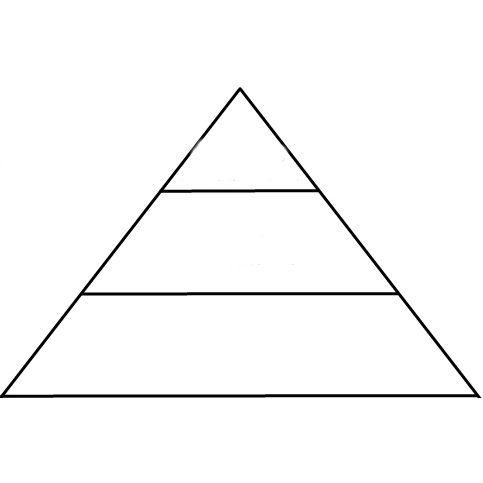
Which of the following would NOT belong to the Third Estate
Peasant Farmer
Lawyer
Merchant
Priest

What role did bread play in the French Revolution
Poor Harvest led to higher bread prices and the poor could not afford to buy bread.
The King put a tax on bread.
The people were angry they were forced to buy stale bread.
The Third Estate did not want to eat bread anymore but were being forced to by the First and Second Estates
Why did the price of bread skyrocket?
Grain scarcity greatly reduced the supply of bread.
The Economy was bad and Bakers had to bump their prices to avoid bankruptcy.
The King demanded it.
Grain scarcity greatly reduced the demand for bread.
In 1789, the King of France called _______ to discuss the financial issues they were experiencing.
Congress of the Estates
Estates General
The Great Meeting
The Convocation of France
The Third Estate broke with the Estates General because __________?
They wanted more votes to represent their 97% of the population.
The king refused to allow peasants into the meeting.
There was not enough room in the palace of Versailles.
None of the above.
The Bastille was ______________.
A symbol of the old system o absolute monarchy and oppression.
A prison in Paris.
A place of horrible punishment and filth.
All of the above are correct.
Which of the following is an accurate description of the tax system in France before the Revolution?
Only the nobles paid taxes.
Only the clergy paid taxes.
The 3rd Estate paid most taxes.
There were no taxes.
The National Assembly was formed by _________.
The First Estate
The Second Estate
The Third Estate
The King
Turning France into a constitutional monarchy was an expression of which of the following Enlightenment values?
The right to a fair trial
Natural rights
The social contract
Equal rights for men and women
Who led the Committee for Public Safety and the Reign of Terror?
King Louis XVI
Napoleon Bonaparte
The First Estate
Maximilien Robespierre
How did Napoleon come to power in France?
He led a coup d'etat and overthrew the French Gov.
He was elected among several candidates after Robespierre's death.
He was chosen by the Pope.
He was chosen by the nobles of France because he was a distant relative of Louis XVI.
A sudden takeover of a government with the threat of/use of force is called _______________.
Guerrilla warfare
Coup d'etat
Regime change
Lycee
Which of the following is an example of the changes Napoleon brought to France, once he was in power?
Public education for boys
More fair and honest tax collection
Freedom of religion
All of the above are correct
When one country tries to block the flow of goods in and out of another city/country, it is called a _________.
Blockade
Guerrilla warfare
Scorched-earth policy
None of the above is correct
Where was Napoleon FINALLY defeated?
Trafalgar
Waterloo
Leipzig
Moscow

What cause of the French Revolution is represented by this image?
Weak leadership of the monarchy
Unequal social class system
Economic crisis
Inspiration from the Enlightenment

What does letter A represent in this image?
1st Estate
2nd Estate
3rd Estate
Estates General

Which event is associated with this image?
Reign of Terror
Meeting of the Estates General
Rise of Napoleon
Storming of the Bastille

What leader is associated with this image?
Napoleon
Robespierre
Louis XIV
Louis XVI
What leader is associated with this image?
Napoleon
Robespierre
Louis XIV
Louis XVI
Which event is associated with this image?
Reign of Terror
Meeting of the Estates General
Rise of Napoleon
Storming of the Bastille
Who came to power in France at the end of the French Revolution?
Napoleon
Louis XIV
Robespierre
Louis XVI

Which leader would have used this machine to execute enemies of the Revolution?
Napoleon
Robespierre
Louis XVI
Metternich
Under the Old Regime in France, the burden of taxation fell mostly on the
monarchy
nobles
clergy
commoners
Belief in the ideas of the Enlightenment and discontent within the Third Estate were causes of the
French Revolution
Counter Reformation
Industrial Revolution
Spanish Reconquista
Which issue was a cause of the French Revolution?
ineffective rule of Napoleon Bonaparte
nationalization of the Church
outrage over the use of the guillotine by the Committee of Public Safety
demand of the Third Estate for more political power
Which of these events related to the French Revolution occurred first?
Napoleon became emperor of France.
The Declaration of the Rights of Man was issued.
Louis XVI called the Estates General into session.
The Committee of Public Safety led the Reign of Terror.
“The French Revolution is most important for having changed subjects to citizens.”
This statement emphasizes the shift from
religious traditions to secular values
divine right rule to people’s participation in government
rural lifestyles to urban lifestyles
private property ownership to government ownership
“. . . Men are born and remain free and equal in rights. Social distinctions may be founded only upon the general good. . . .”
—Declaration of the Rights of Man and of the Citizen, 1789
Which principle of the Enlightenment philosophers is expressed in this quotation from the French Revolution?
natural law
nationalism
free trade
socialism
Maximilien Robespierre and the Jacobins are best known for
instituting the Reign of Terror
protecting the Catholic Church
supporting the reign of King Louis XVI
sending French troops to fight in the American Revolution
Estate is another word for:
Social class
Dinner Date
Unfair Taxes
King's Palace
The French Revolution started with the storming of the:
Bastille
White House
Palace
Guillotine
In 1789, the delegates to the Estates-General Meeting that broke away and declared themselves to be the National Assembly were from which social class?
First Estate.
Second Estate.
Third Estate.
Fourth Estate.
In which way did the ideas of the Enlightenment influence the French Revolution?
Superstition and ignorance were promoted.
The principles of mercantilism were glorified.
The divine right theory of kings was challenged.
Punishments for criminal acts were rooted in vengeance.

Before the French Revolution, why did the representatives of the Third Estate form the National Assembly?
voting in the Estates General was not fair
the king had ordered them to do so
they wanted an end to the Reign of Terror
they demanded that the king be put on trial and executed
Which of the following was NOT a domestic reform under Napoleons imperial rule?
Established public education opportunities
Institutes a period of persecution and execution known as the "Reign of Terror"
Set up a fair and equal tax code that led to a stable economy
Seized power through a coup'etat and issued the Napoleonic code
The great French empire that Napoleon created eventually fell after the unsuccessful invasion of Russia. Why was the invasion considered a great disaster for Napoleon?
There was a massive air attack by the Russians that wiped out most of Napoleons army
Russia's scorched-earth policy and cold winter wiped out most of Napoleons army
The Battle of the Bulge wiped out most of Napoleons army
The newly formed United States allied with Russia to wipe out most of Napoleons army


This person claimed it was possible to build a "republic of virtue" He also lead the Reign of Terror
Napoleon
Louis XVI
Marie Antoinette
Maximilien Robespierre

What was the name of Napoleon's set of rules and regulations?
Napoleon's Way
Declaration of Rights of Man and Citizen
Napoleonic Code
French Code of Ethics
When the Estates General occurred and the Third Estate was locked out of the meeting, what famous event was the result?
The Declaration of the Rights of Man and Citizen
The Tennis Court Oath
The Women's March
The Storming of the Bastille
The guillotine was invented by:
a scientist
a doctor
an astronomer
a blacksmith
Which form of government led France throughout The Terror and The Great Terror?
The Committee of Public Safety
The National Assembly
The Legislative Assembly
The National Convention
From this list, who was not beheaded by the guillotine?
Maximilien Robespierre
Marie Antoinette
Napoleon Bonaparte
Louis XVI
What revolutionary event is celebrated annually in France today?
The Tennis Court Oath
The Gathering of the Estates-General
The Storming of the Bastille
The March on Versailles
Name the government that was overthrown by Napoleon in 1799?
The Directory
The Committee of Elders
The Convention of Safety
The National Convention

