
Font size
 Worksheets
Phases of Matter/ Physical and Chemical Properties Review
Total questions: 53
Worksheet time: 31mins
The phase of matter with a definite volume but no definite shape is a
The phase of matter with a definite volume but no definite shape is a
The phase of matter with a definite shape and definite volume is a
solid
liquid
gas
Gases have ...
a definite shape and definite volume
no definite shape and no definite volume
a definite shape and no definite volume
The phase of matter in which the atoms are moving freely and are very far apart
solid
liquid
gas
What best describes the motion of molecules in a liquid?
flowing past each other
moving freely in all directions
Removing energy (cooling) causes the atoms to
spread apart
move closer together
get larger
get smaller


The water droplets on the outside of this glass of water is showing the following phase change


What phase change is represented by the dry ice in this picture- which changes from a solid to a gas?
evaporation
condensation
sublimation
melting
What phase change occurs due to losing heat energy?
freezing

Three containers with the same amount of the same material are shown below. Which container has the substance with the highest amount of energy?
The container on the left
The middle container
The container on the right
All have an equal amount of energy
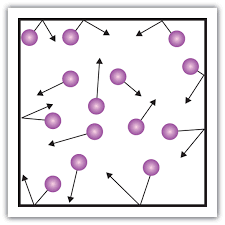
What state of matter?
Solid
Liquid
Gas
What is the phase change of a solid to a liquid?
freezing
melting
boiling
condensation
Change from Liquid to Solid is called ...
fusion
Freezing
sublimation
evaporation
Three containers with the same amount of the same material are shown below. Which container has the substance with the lowest amount of energy?
The container on the left
The middle container
The container on the right
All have an equal amount of energy
Breaking an egg
physical property
physical change
chemical property
chemical change
burning paper
physical property
physical change
chemical property
chemical change
Reactivity with water
physical property
physical change
chemical property
chemical change
Toxicity to living things
physical property
physical change
chemical property
chemical change
Baking cookies
physical property
physical change
chemical property
chemical change
Solubility
physical property
physical change
chemical property
chemical change
Malleability
physical property
physical change
chemical property
chemical change
Dissolving salt in water
physical property
physical change
chemical property
chemical change
Flammability
physical property
physical change
chemical property
chemical change
Density
physical property
physical change
chemical property
chemical change
Reactivity with acid
physical property
physical change
chemical property
chemical change
Digesting food
physical property
physical change
chemical property
chemical change
Boiling water
physical property
physical change
chemical property
chemical change
Freezing lava
physical property
physical change
chemical property
chemical change
Ability to rust
physical property
physical change
chemical property
chemical change
Freezing point
physical property
physical change
chemical property
chemical change
Melting point
physical property
physical change
chemical property
chemical change
condensation point
physical property
physical change
chemical property
chemical change
As a change of state, from solid to liquid, takes place heat _____ and temperature _______.
increases, stays the same
stays the same, stays the same
stays the same, changes
increases, increases
A change of state is a(n) ___________ process
reversible
irreversible
fun
chemical
Which of the below statements are true?
There can be a change in heat without the temperature changing
heat remains constant through a change of state
temperature changes through a change of state
heat and temperature are the same
What is different at the molecular level between a solid and a liquid? There can be more than one answer.
the type of molecule
the strength of the intermolecular forces
the speed of the particles
nothing
Rank the states of matter from slowest to fastest particle speed.
gas, solid, liquid
solid, liquid, gas
gas, liquid solid
solid, gas liquid
When heat is removed from a solid what happens?
The particles move faster
The solid becomes a liquid
The particles move slower
nothing
Describe the movement of solid particles.
no movement
vibrational
fast
flowing
As the speed of the particles decreases, _______
intermolecular forces become stronger
intermolecular forces become weaker
intermolecular forces do not change
energy increases

What is indicated by A?
solid
liquid
gas
melting

At what point(s) is the temperature of the substance not changing
A,B
B,C
D,E
B,D

Where in the diagram is melting occuring?
A
B
C
D

What state of matter is illustrated at point E?
solid
liquid
gas
plasma

Where in the diagram would vaporizing be occurring?
A
B
C
D

As heated is added to the substance does the temperature always increase?
Yes it always increases
No it does not increase during the phase change
It never increases
It always stays the same.

