
 Worksheets
Unit 1 Review
Total questions: 115
Worksheet time: 2hrs 18mins
A new plant species has been found in a garden. Who would study this?
Chemist
Physicist
Astronomer
Botanist
Someone who studies viruses works in the branch of science called
virology
mycology
entomology
biology
A fossil is found. What is the correct type of scientist to study it?
Virologist
Marine biologist
Paleontologist
Botanist
A new insect species has been discovered by a(n)
entomologist
botanist
chemists
mycologist
___ is the study of marine organisms, their behaviors, and their interactions with the environment.
Hydrology
Zoology
Marine Biology
Ecology
The science that studies animals, their behaviors, and their interactions with one another is called ___.
Mycology
Botany
Zoology
Anatomy
It is the study of Earth and focuses on the processes that form and shape Earth's surface.
Biology
Geology
Physics
Chemistry
It is a branch of science that studies all living things.
Biology
Physics
Ecology
Astronomy
The amount of matter inside an object is called ___.
mass
volume
density
pH
The amount of space an object takes up is called ___.
mass
volume
density
weight
A student measured 40mL of water using a graduated cylinder. He then added a rock and noticed that the water level is now at 45mL. What is the volume of this object?
9mL
45mL
5mL
Not enough information

What is the mass on this triple beam?
143 g
40 g
43.0 g
43.5 g

What is the mass on this triple beam?
142.0 g
42 g
102.0 g
140.2 g

What is the mass on this triple beam?
200.0 g
44.0 g
244.0 g
240.4 g

What scientific tool is pictured here?
weight scale
pan balance
digital balance
triple beam balance


time
distance
weight
volume


The curved surface at the top of a column of water is called the ___.
peak

The scientific process is best defined as?
a way to solve a problem
a set of linear steps
a way to build new technology
how to collect data
A problem is always written
as a question
as an "if...then..."
as an "if...then...because"
as an "I think..."
Which of the following is a problem that can be explored using the scientific process?
Does the temperature of water affect the rate at which sugar dissolves?
If tomato plants are given organic fertilizer, then they will produce a higher number of tomatoes compared to plants given synthetic fertilizer.
I think a plant grown with vinegar will be taller.
Baking soda has a smooth texture.
What is a hypothesis?
An educated guess
Qualitative data
Research and evidence
A general explanation of how something works
Identify the hypothesis.
If plants receive more sunlight, then they will grow taller because sunlight is essential for photosynthesis.
Does studying with music improve test scores?
Fertilizer makes tomato plants grow taller.
I observed that fish prefer jazz music over rap music.
To increase the validity of an experiment, a scientist can
revise the hypothesis
collect opinions from other scientists
repeat the experiment many times
repeat the experiment one time
What is a constant?
The factor kept the same
The factor being affected
The factor being measured
The factor being manipulated by the scientist
Scenario: Does the type of water affect the height of a plant?
What should be kept constant in this experiment? Select all that apply.
type of plant
type of water
amount of water
kind of potting soil
starting height of plants
Which of these best describes the control group? Select all that apply.
The group without the factor being tested
The group not being measured
The group used to compare data to
The group with the most constants
A dependent variable is
what is being affected
what is being manipulated
what is staying the same
what is used for comparison
An independent variable is
what is being affected
what is being manipulated
what is staying the same
what is used for comparison
A student wants to test the effects of different types of exercise on heart rate. What is the dependent variable?
When experimenting with the growth of a plant, a scientist uses three identical plants but with two different fertilizers. Which variable is the fertilizer?
dependent
independent
control
constant
Scenario: Does the type of gasoline put in a car affect how fast the car can drive?
What is the independent variable?
type of gas
type of car
speed of car
amount of gas
An experiment is performed on plants to see how different liquids affect plant growth. The dependent variable is the
type of plant
amount of sunlight
type of music
plant growth
An experiment is set up to see how the mass of a ball affects the distance it rolls off a ramp. What is the dependent variable?
distance the ball travels
height of the ramp
mass of the ball
where the experiment took place
Which of the following statements is a testable hypothesis?
Plants grow taller in sunlight than in darkness because light is important to photosynthesis.
Plants grow in sunlight because they need it for photosynthesis.
Plants grow better in sunlight than in darkness because light is important to photosynthesis.
Plants grow more easily in sunlight than in darkness because light is important to photosynthesis.
In an experiment to test the effect of temperature on the solubility of salt in water, what is the independent variable?
amount of salt
temperature of the water
volume of water
time taken for salt to dissolve
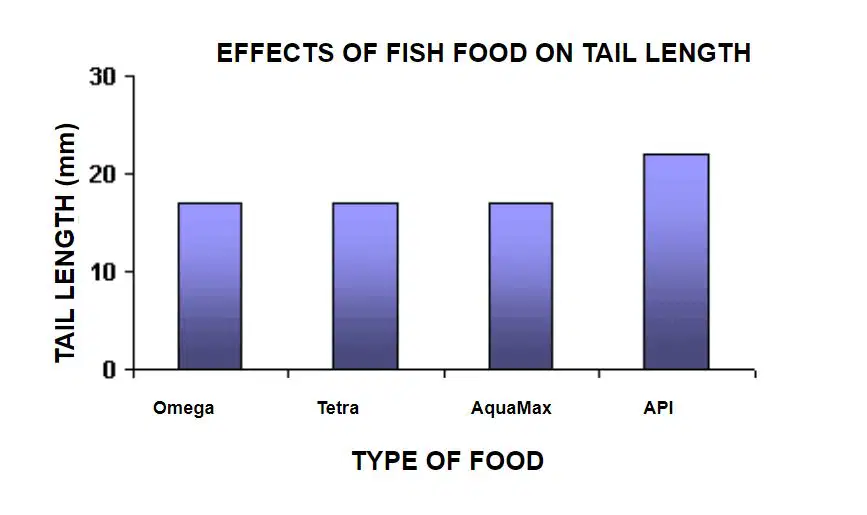
Examine the bar graph. What is the dependent variable in this experiment?
length of tail
type of food
size of tank
mass of fish
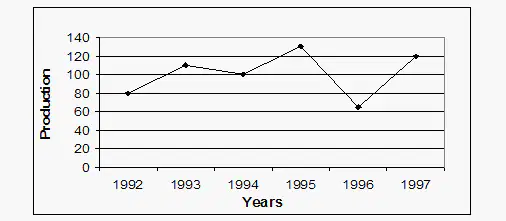
The graph shows the average production of apples per year from 1992-1997. What is the independent variable?
year
number of apples produced
size of apples
amount of trees with apples
A student wants to test which brand of popcorn pops the most kernels. She picked a store brand, Orville Redenbacher, and PopSecret. All three bags started with the same number of kernels. She popped each for 3 minutes in the same microwave, and then counted the number of kernels left over. What is the independent variable?
number of kernels left over
brand of popcorn
number of kernels before popping
length of time cooking
three
four
two
one
Which step of the scientific process provides data, graphs, and charts to process the information gathered during an experiment?
procedure
analysis
conclusion
hypothesis

A student performed an experiment with soil and water. The table shows the kind of soil that was added to each of two cans. After the soil was added, a 5mm opening was made in the bottom of each can. Then a total of 200 milliliters of water was added to each. The water that dripped from each can was collected for one minute. Which of the following is an observation in this experiment?
Sunlight heats water in clay faster than water in sand
The sand was better
Water flows through sand faster than clay
Insects are more active in sand than in clay
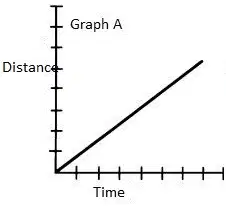
Examine Graph A. What is the independent variable?
distance
time
A new sunscreen has been developed that is supposed to prevent sunburn. 30 people spray one arm with the new formula and spray the other arm with the old formula. After 4 hours, they check for redness. What is the dependent variable?
type of sunscreen
people used
time (4 hours)
amount of redness
A student wants to know if birds prefer to eat in one place over another. He makes three identical feeders and fills each with the same amount of mixed birdseed. He keeps the feeders out for 10 days before measuring how much seed is eaten from each feeder. He puts each of the feeders in a different location.
What is the independent variable?
identical feeders
placement of feeders
amount of seeds eaten
type of birds
A researcher conducted an investigation to see if corn plants would grow taller if they received water at different temperatures. What is the independent variable?
height of plant
type of seeds
water temperatures
amount of water
A study was done to see if different tire treads affect the distance it takes a car to brake.
What is the dependent variable?
tire treads
braking distance
road conditions
type of car
An investigation found that more potatoes were produced on a farm that had more fertilizer in the soil.
What is the dependent variable?
number of potatoes
amount of fertilizer
location of farm
amount of soil
Students measured the temperature of the water at different depths in Lake Erie and found that it varied. What was the independent variable?
time
depth of water
temperature of water
amount of water
A gardener wants to determine the effect of using different amounts of fertilizer on the growth of grass. What is the independent variable?
amount of fertilizer
height of grass
type of grass
amount of water
A students wants to determine if the amount of salt in the water has an effect on the amount breathing rate of a goldfish. What is the independent variable?
how much salt is in the water
temperature of water
health of goldfish
breathing rate of goldish
A farmer wants to determine if using different types of pesticides changes the size of the apples in the orchard. What is the independent variable?
amount of bugs left
size of apples
type of pesticides
number of apples

Does the length of the string on a pendulum change the number of swings it can do in 30 seconds? Identify the dependent variable.
number of swings in 30 seconds
weight of pendulum
length of string
time
Which brand of paper towel will absorb the most liquid? Identify the dependent variable.
amount of liquid absorbed
amount of paper towel used
type of water
What color light is best for growing taller plants? Identify the dependent variable.
type of light
height of plant
amount of light
amount of soil
amount of water
type of salt
A researcher wants to know if the type of soap has an effect on how clean clothes get. What is the independent variable?
type of soap
how long the laundry takes
amount of dirt on clothes
amount of soap used
If I add salt to my aquarium water, then my fish will eat more. This is an example of a(n)
hypothesis
control group
independent variable
problem/question
In an experiment, a group on which a test is performed is a(n) ___ group.
theoretical
control
hypothetical
experimental
In an experiment, a group on which a test is not performed is a(n) ___ group.
theoretical
control
hypothetical
experimental
The purpose of a control group is
to use it for comparison
to use it for making a hypothesis
to use it for identifying materials
it is not needed
The information you record during an experiment is called ___
a conclusion
a hypothesis
an inquiry
Scientists record qualitative and quantitative observations using charts, tables, and graphs. This is what part of the scientific process?
question/problem
hypothesis
data collection
conclusion
Two types of data scientists collect are
hypothetical and theoretical
observed and inferred
You need to collect ___ in your experiment to support or reject your hypothesis.
all of these are correct
materials
theories
data
Along with the quantative data collected during an experiment, scientists can also collect data through ___.
qualitative theories
quantative explanations
qualitative observations
quantative observations
The hypothesis, If protein is added to the diet then the mouse will gain more muscle, was supported. On average, the mice that received a protein diet has 47% more muscle than those who ate their normal diet. What part of the scientific process is this?
data analysis
conclusion
problem/question
procedure
One 100mL graduated cylinder
400mL red cabbage juice
1 pipette
4 test tubes
This is an example of a materials list.
This is an example of a procedure for an experiment.
This is an example of a data table.
This is an example of a hypothesis.
A microscope is a tool that
makes faraway objects look closer
makes small objects appear larger
decreases the size of small objects
increases the size of small objects
base only
objectives and eyepiece
revolving nosepiece
The ___ focuses the image under low and medium power.
revolving nosepiece
The ___ sharpens the image under high power
A light microscope that has more than one lens (ocular and objective) is called a(n)
double microscope
telescopic microscope
The higher the magnification, the
more you see of the specimen
less you see of the specimen
same amount you see of the specimen
eyepiece added to the objective
eyepiece multiplied by the objective
ocular lens minus the objective
ocular lens divided BY objective
Which of the following do you never use when on high power?
fine adjustment knob
diaphragm
coarse adjustment knob
stage clips

Identify the part of the microscope indicated by the arrow.
eye piece
ocular objective
revolving nosepeice
body tube

Identify the part of the microscope indicated by the arrow.
eye piece
arm
revolving nosepeice
body tube
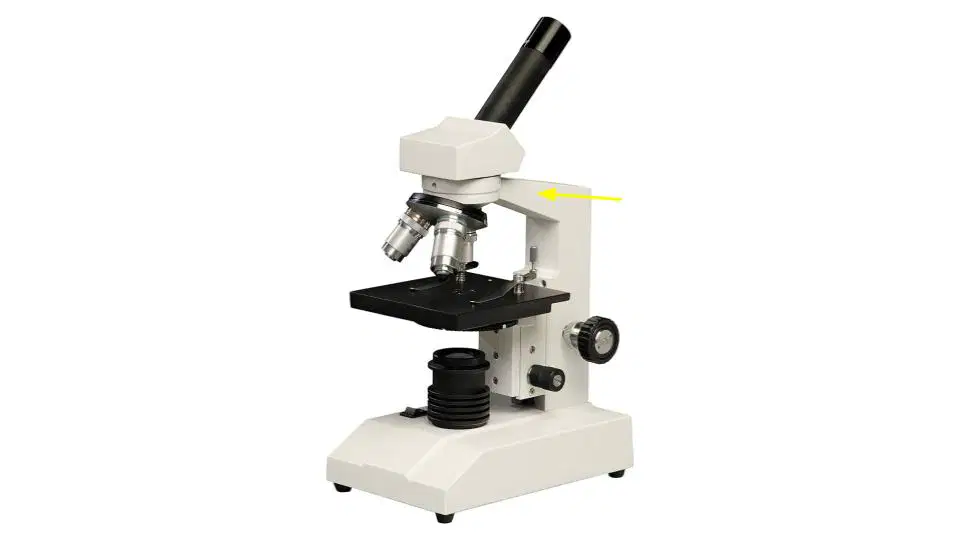
Identify the part of the microscope indicated by the arrow.
eye piece
arm
revolving nosepeice
body tube

Identify the part of the microscope indicated by the arrow.
arm
stage
revolving nosepeice
base

Identify the part of the microscope indicated by the arrow.
fine adjustment knob
coarse adjustment knob
revolving nosepeice
objective lens
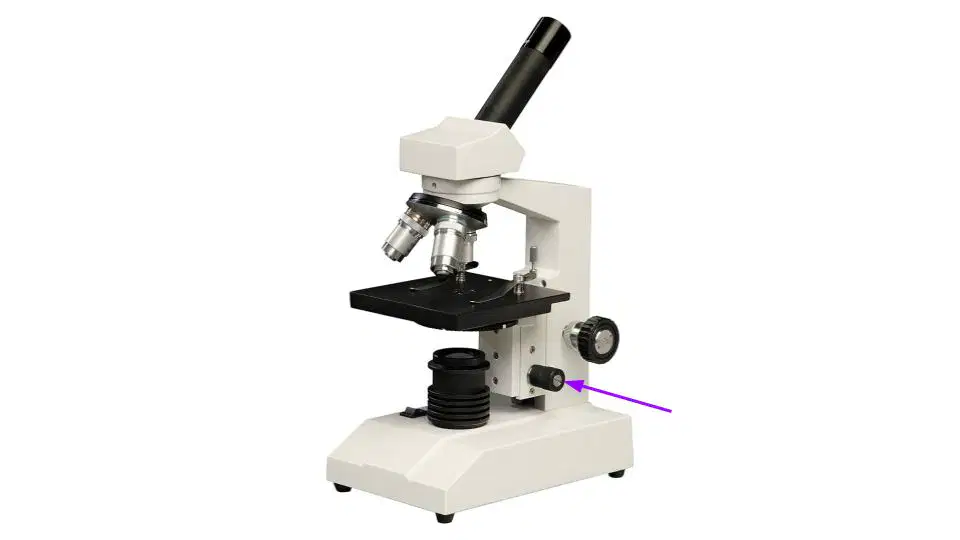
Identify the part of the microscope indicated by the arrow.
fine adjustment knob
coarse adjustment knob
revolving nosepeice
objective lens

Identify the part of the microscope indicated by the arrow.
base
light source
revolving nosepeice
objective lens
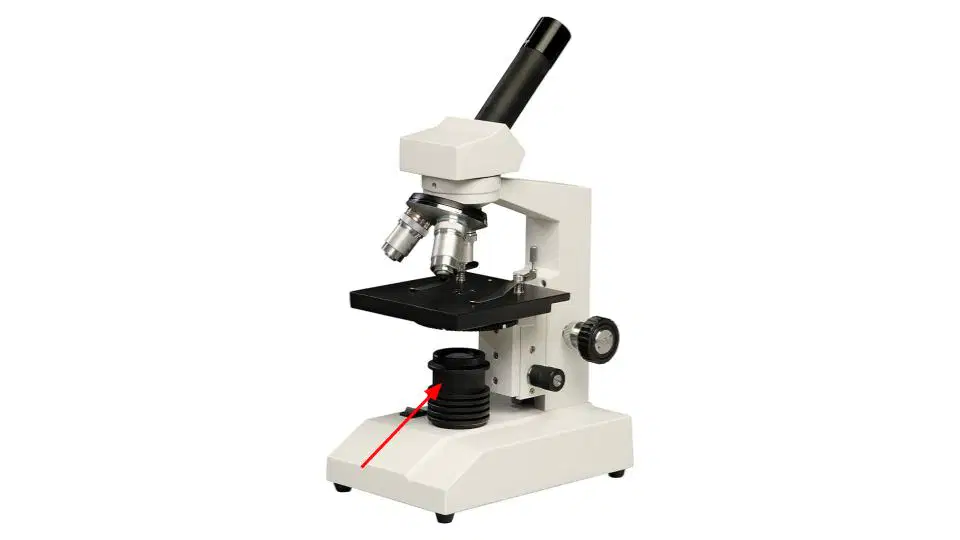
Identify the part of the microscope indicated by the arrow.
base
light source
revolving nosepeice
objective lens
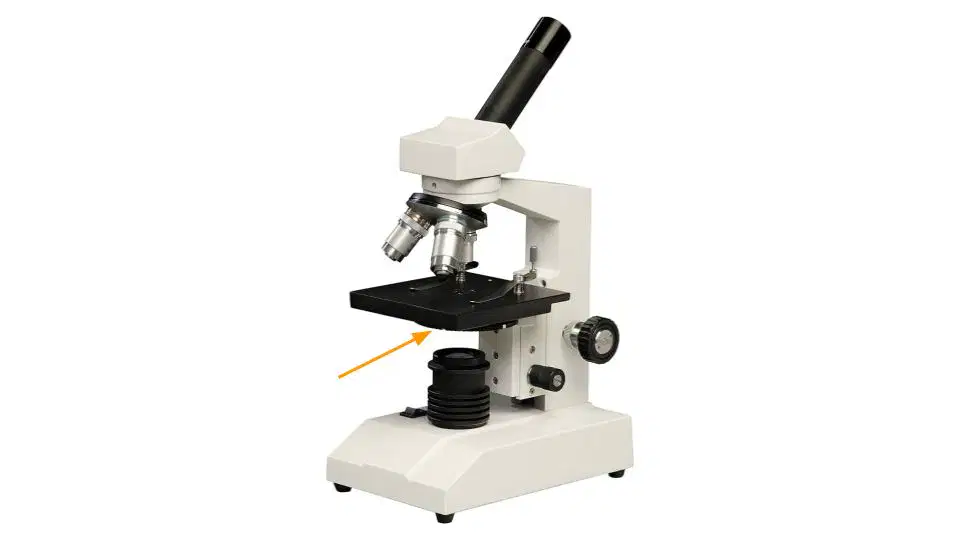
Identify the part of the microscope indicated by the arrow.
diaphragm
light source
revolving nosepeice
objective lens

Identify the part of the microscope indicated by the arrow.
diaphragm
light source
revolving nosepeice
objective lens

Identify the part of the microscope indicated by the arrow.
diaphragm
body tube
revolving nosepeice
objective lens
The ___ is the part you look through to see the magnified specimen. It can magnify, ___.
eye piece; 10x
ocular lens; 4x
objective lenses; 540x
body tube; 20x
The ___ changes the amount of light reaching the specimen.
diaphragm
revolving nosepiece
light source
ocular adjuster
The ___ is located at the base of the microscope and provides illumination for the specimen.
light
revolving nosepiece
objective lens
eye piece
The ___ holds the slide in place and can be moved to adjust the view.
stage clips
stage
diaphragm
revolving nosepiece
The ___ supports the whole microscope and keeps it stable.
base
body tube
diaphragm
revolving nosepiece
The ___ lenses provide a magnification of 4x, 10x, or 40x.
objective
ocular
body tube
The ___ is used to bring the specimen into focus by moving the stage up and down.
coarse adjustment knob
fine adjustment knob
diaphragm
revolving nosepiece
The ___ is the part of the microscope used to select different magnification levels.
revolving nosepiece
diaphragm
body tube
ocular adjuster
The ___ is the part of the microscope used to sharpen the focus.
fine adjustment knob
coarse adjustment knob
revolving nosepiece
diaphragm
When you move the slide on the stage, it moves ___ you.
opposite of
in the same direction as
On high power, you can see ___ of the specimen but in ___ detail.
less; more
more; less
more; more
less; less
When working with living specimen
you should adjust the diaphram to let in less light
you should adjust the diaphram to let in more light
Before you switch powers
you need to focus and center your specimen
you need to adjust the diaphragm
you need to turn the microscope off
you need to balance the amount of light
The ___ is NEVER used on high power.
coarse adjustment knob
fine adjustment knob
diaphragm
light switch
You are having trouble using a microscope. Only part of the field of view is lit. What can be done? Select all that apply.
Check the revolving nosepeice
Check the diaphragm
Check the power sources
Check the slide is in place
What is the primary purpose of a control group in an experiment?
To provide a standard for comparison
To introduce new variables
To ensure the experiment is valid
To manipulate the independent variable
Which of the following is a qualitative observation?
The liquid is blue
The mass is 50 grams
The temperature is 25°C
The volume is 100 mL
What is the role of a hypothesis in scientific research?
To provide a definitive answer
To offer a testable prediction
To summarize the results
To collect data
What are observations made using our five senses called?
qualitative data
quantitative data
What are observations that are measured or counted called?
qualitative data
quantitative data

The flower is 8 cm tall.
qualitative data
quantitative data

The center of the flower is yellow and fuzzy.
qualitative data
quantitative data

The flower has 25 petals.
qualtitative data
quantitative data

The iris smells sweet.
qualitative data
quantitative data

