
NEW
Font size
 Worksheets
Quiz on Kingdom Plantae
Total questions: 37
Worksheet time: 28mins
What are the characteristics of organisms in the Kingdom Plantae?
Unicellular, heterotrophic, prokaryotic
Complex, multicellular, autotrophic, eukaryotic
Simple, unicellular, autotrophic, prokaryotic
Complex, multicellular, heterotrophic, eukaryotic
What process do organisms in the Kingdom Plantae use to make glucose?
Fermentation
Respiration
Photosynthesis
Digestion
Approximately how many years ago did the first plants appear?
470 million years ago
200 million years ago
1 billion years ago
50 million years ago
Which of the following is a characteristic of Kingdom Plantae?
Unicellular organisms
Prokaryotic cells
Multicellular organisms
Lack of cell walls
What type of cells do plants have?
Prokaryotic cells
Eukaryotic cells
Bacterial cells
Viral cells
How do plants primarily produce their own food?
Fermentation
Photosynthesis
Respiration
Digestion
What surrounds the cells of plants?
Cell membrane only
No surrounding structure
Cell wall
Capsule
Plants are considered autotrophic because they:
Consume other organisms
Produce their own food
Depend on other organisms for food
Absorb nutrients from soil only
What is the outermost layer of a plant cell?
Nucleus
Cell wall
Chloroplast
Ribosomes
Which organelle is responsible for photosynthesis in plant cells?
Mitochondrion
Golgi
Chloroplast
Lysosome
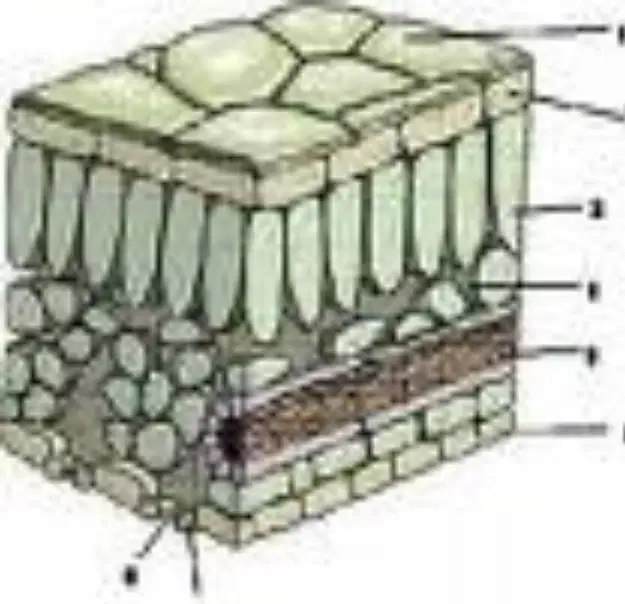
What are the three types of plant tissues?
Vascular Tissue, Dermal Tissue, Ground Tissue
Muscular Tissue, Nervous Tissue, Connective Tissue
Epidermal Tissue, Parenchyma Tissue, Sclerenchyma Tissue
Xylem Tissue, Phloem Tissue, Cambium Tissue
What is created when two or more tissues combine?
A cell
An organ
A molecule
An atom
Which of the following is a plant organ?
Flower
Seed
Stem
Fruit

What are the two main organ systems in plants?
Vascular System and Dermal System
Root System and Shoot System
Leaf System and Stem System
Flower System and Fruit System
Which structure in a plant cell is responsible for photosynthesis?
Mitochondria
Nucleus
Chloroplasts
Golgi apparatus
What is one of the main components of a plant cell that provides structural support?
Plasma membrane
Cell wall
Cytoplasm
Ribosomes

What is the process called in which plants take in sunlight energy, water, and carbon dioxide to produce oxygen and glucose?
Respiration
Photosynthesis
Fermentation
Digestion
Which of the following is a product of photosynthesis?
Carbon Dioxide
Oxygen
Nitrogen
Sulfur
What are the main inputs required for the process of photosynthesis?
Oxygen and Glucose
Water and Carbon Dioxide
Nitrogen and Sulfur
Hydrogen and Methane
What is the role of chlorophyll in photosynthesis?
It stores energy
It absorbs sunlight
It releases oxygen
It breaks down food
Why is photosynthesis important for plants?
It helps them breathe
It provides them with food and energy
It allows them to move
It helps them reproduce
What is the primary function of dermal tissue in plants?
Photosynthesis
Nutrient transport
Protection
Starch storage
Which type of plant tissue is known as the "plumbing system of the plant"?
Dermal tissue
Vascular tissue
Ground tissue
Epidermal tissue
What does ground tissue in plants primarily contain?
Water
Starch
Chlorophyll
Proteins
Which plant tissue is similar to the epidermis in humans?
Ground tissue
Vascular tissue
Dermal tissue
Connective tissue
What are the two main components of vascular tissue in plants?
Xylem and Phloem
Ground Tissue and Dermal Tissue
What is the main function of the root system in plants?
To make materials with energy
To support the plant and absorb nutrients
To move materials up and down the plant
To produce flowers and seeds
Which part of the plant is the shoot system made up of?
Roots
Flowers
Stems and leaves
Seeds
What does the shoot system do with materials?
Absorbs water and nutrients
Makes materials with energy and moves them up and down the plant
What is a characteristic of non-vascular plants?
They have vascular tissue.
They move materials through diffusion and osmosis.
They have flowers and seeds.
They grow in dry environments.
Which of the following is an example of a non-vascular plant?
Fern
Pine tree
Moss
Rose
How do non-vascular plants transport materials?
Through roots and stems
Through vascular tissue
Through diffusion and osmosis
Through flowers and seeds
What is the primary function of vascular tissue in plants?
To produce flowers
To move materials throughout the plant
To absorb sunlight
To protect against herbivores
Vascular plants consist of which types of plants?
Only plants that produce seeds
Only plants that do not produce seeds
Plants that produce seeds and plants that do not produce seeds
Only flowering plants

What type of plants are gymnosperms?
Flowering plants
Plants that do not have flowers
Plants with seeds in fruits
Aquatic plants

What type of plants are angiosperms?
Non-flowering plants
Flowering plants
Plants with cones
Ferns
What are the two main groups of living plants?
Nonvascular and Vascular
Flowering and Non-flowering
Seeds and No seeds
Trees and Shrubs

