
 Worksheets
Formative assessment 2 - Metals
Total questions: 90
Worksheet time: 2hrs 56mins
What is not a property of a metal?
Ductile
Sonorous
Malleable
Low melting point
Metals are sonorous in nature. What is sonorous?
Making into powder
Drawn into wires
Make sound on beating
None of these
Which of the following is considered a physical property of an element?
density
color
conductivity
flammable
What kind of densities do gases have?
high
medium
low

Which metal would be suitable for all of the following uses?
# Making aircraft bodies
# Making food containers
# Making overhead power cables
aluminium
mild steel
gold
pure iron
Have a high melting point
Metals
Non-Metals
Which of these elements are a Non-Metal?
Copper
Gold
Oxygen
Metals are good conductors of heat, true or false?
True
False
Some metals are m (a) , which means the can be hammered into different shapes.
Some metals are d (a) , which means they can be drawn into a wire.
Metals have a high
Volume
Density
Steel is an example of an
Metal
Non-Metal
Alloy
Non-Metals generally have ____ boiling points.
High
Low
Non-metals are insulators, this means electricity ______ flow through them.
can
cannot
Where would you find a list of all of the Metals and Non-metals that scientists have discovered?
(a)
Metals are sonorous in nature. What is sonorous?
Making into powder
Drawn into wires
Make sound on beating
None of these

A type of rock that contains minerals and metals
ore
metal
malleable
gem

What are properties?
They give us an idea of what the object can do.
They describe the object.
They tell us what an object cannot do.

Which words best describe NON-METALS?
ductile, shiny, brittle
malleable, dull, brittle, ductile
brittle, dull, insulators

What does "malleable" mean?
Can be made into a shape.
Brittle
Ductile
Shiny

Are metals good insulators?
No
Yes

According to the YouTube video, what is the structure called where iron ore is extracted?
Oven
Smelter
Furnace

Which of the following are all examples of METALS?
glass, gold, copper, silver
copper, gold, bronze, plastic
wood, iron, aluminium, steel
copper, silver, iron, gold


Metals are found
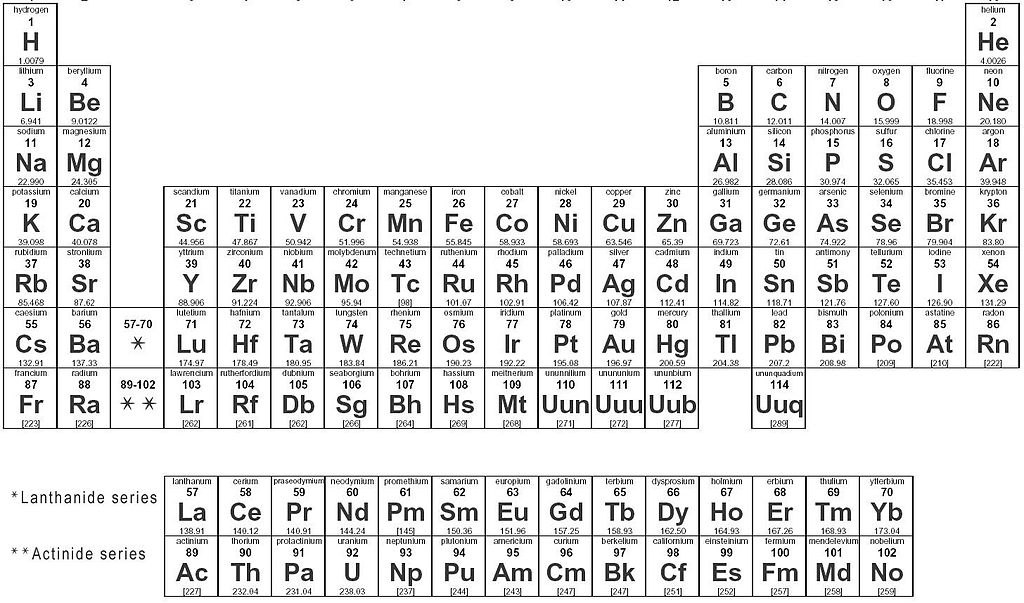
on the left side of the Periodic Table
on the right side of the Periodic Table
along the staircase (zig-zag line) on the Periodic Table

By looking at the element illustrated here, how might you classify it by appearance?
Metal
Non-Metal
Metalloid
Which of the following is the only metal that exist as a liquid at room temperature?
Gold (Au)
Mercury (Hg)
Titanium (Ti)
Argon is a ____________ at room temperature.
Gas
Liquid
Solid

This picture illustrates copper's
brittleness
malleability
ductility
Metals create _________ ions, because they give away (lose) electrons.
positive
negative
neutral
Most metals are solid at room temperature
False
True
The metal which can be cut with knife.
Iron
Silver
Sodium
Magnisium
The metal which is the best conductor of heat.
Iron
Silver
Potassium
Sodium
Which metal is the poor conductor of heat.
Silver
Potassium
Mercury
Iron
The only non-metal which is liquid at room temperature is
(a)
The non-metal which is a very good conductor of electricity.
(a)
Which of the following metals is used for making foil to pack foodstuff?
Aluminium
Mercury
Sodium
Copper
Metals react with oxygen to form:
Basic oxides
Acidic oxides
Neutral oxides
None of these
Sulphur reacts with oxygen to form:
Sulphur nitrate
Sulphur dioxide
Sulphate
Sulphide
The property of metal used for making temple bells is:
(a)
Metals react with water to form ______gas.
Nitrogen
Oxygen
Hydrogen
Ozone
Which of the following statements is incorrect?
Metals have lustre
Metals are malleable
Metals are good conductors of electricity
Metals are poor conductors of heat
The process of depositing a layer of zinc on iron articles is called (a) .
The white powder formed when magnesium ribbon burns in oxygen is (a) .
A __________reactive metal can displace a ________reactive metal from its salt solution.
(a)
A sample of gas was found to burn with a pop. Which of the following could have given this result?
Carbon Dioxide
Hydrogen
Nitrogen
Oxygen
Magnesium oxide dissolves in water to form (a) .
Those minerals from which the metals can be extracted conveniently and profitably are called (a) .
The arrangement of metals in a series in the decreasing order of their reactivity is called (a) .
When iron is exposed to moist air , a brown reddish coating is deposited on its surface. This process is called (a) .
Non-metal used in water purification process
Oxygen
Nitrogen
Chlorine
Iodine
Which nonmetal is very essential for our life is
Iodine
Oxygen
Nitrogen
Chlorine
Non-metal used in purple colour solutions which is applied on wounds as an antiseptic
Iodine
Oxygen
Sulphur
Phosphorus
Red litmus paper turns blue when it is dipped in
Acidic solution
Basic solution
Neutral solution
None of the above

A student tested the conductivity of four elements using an incomplete electrical circuit. When the element is placed in the circuit, the bulb lights up brightly, lights up dimly, or does not light up at all based on the element’s ability to conduct electricity. The table below shows the results of her investigation. Based on the results of the conductivity test, which element is classified as a metal?
(a)
The list which contains only metals is .......
aluminium, copper, nitrogen
iron, oxygen, hydrogen
iron, silver, aluminium
iron, sulphur, copper
Which one of the following Would the following result in a displacement reaction?
Iron with magnesium chloride
magnesium with iron chloride
Iron with Zinc Sulphate
gold with silver nitrate
calcium is more reactive than iron. What will be produced when calcium sulphate and iron are mixed together?
no reaction happens so the reactants stay the same
calcium and iron sulphate
iron sulphate and hydrogen
water and iron sulphate
HIDE ANSWER

Look at part of the reactivity series? Which one of the following statements is correct?
zinc is more reactive than magnesium
copper is the most reactive
tin is more reactive than lead
lead is more reactive than aluminium
In chemistry, a displacement reaction is where
a more reactive metal displaces a less reactive metal from its compound
two reactive metals join together to form an alloy
a less reactive metal displaces a more reactive metal from its compound
a more reactive metal is removed from its compound by a less reactive metal

