
 Worksheets
Bio 111 Exam 2 Review
Total questions: 81
Worksheet time: 1hrs 1mins
What is the function of epithelial cells?
Act as barriers between the external environment, or between organs and fluid-filled cavities
Provide movement by pulling on bones
Provide secretions which help to digest food
Act as the messaging pathway between different areas of the body
What type of connective tissue is found at the ends of bones to reduce friction?
Dense connective tissue
Cartilage
Adipose tissue
Loose connective tissue


According to the picture, where is the basement membrane?
Apical Side
Columnar Cells
Avascular Tissue
Basal Side


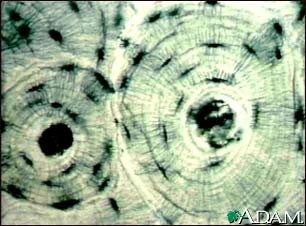
The tissue type shown in the line drawing is ___ tissue
Blood
Reticular
Adipose
Bone
Reticular Connective
What tissue type is blood primarily composed of?
epithelial
connective
muscle
nervous
Groups of cells that are similar in structure and perform a common or related function are called
membranes
tissues
organs
cellular systems
Collagenous and elastic fibers are found extensively in
epithelial
nervous
connective
muscle
During childbirth, a woman's body overproduces a hormone called oxytocin until the baby is born. What kind of feedback loop would this be?
Negative Feedback Loop
Positive Feedback Loop
Neutral Feedback Loop
Linear Feedback Loop
When you are hot, your body sweats to cool you down. This means your temperature went above normal, and your body sweats to counteract that change to bring you back to normal. What kind of feedback loop would this be?
Negative Feedback Loop
Positive Feedback Loop
Neutral Feedback Loop
Linear Feedback Loop
Positive Feedback loops are...
Counteract changes that move above or below set values.
More common.
Regulate body temperature.
Purposeful pushes above normal set values.
Negative Feedback loops are...
Purposeful pushes above normal set values.
Counteract a change to bring it back to normal set values.
Are rare.
Help with childbirth.
Which component of the homeostatic system detects change?
Effector
Control Center
Stimulus
Receptor
A change inside the organism caused by the initiation event is the ...
response
effector
control center
stimulus
What detects that the system is outside of homeostasis and adjustments need to be made?
effector
response
control center
stimulus
The top layer of the skin is the
epidermis
dermis
hypodermis
This layer is composed of connective tissue
epidermis
dermis
hypodermis
This layer is composed of adipose tissue.
epidermis
dermis
hypodermis

The pericardial membrane is an example of:
cutaneous membrane
mucous membrane
serous membrane
synovial membrane

Skin would be classified as:
cutaneous membrane
mucous membrane
serous membrane
synovial membrane
Which of the following is NOT a major function of the integumentary system?
protection
temperature regulation
excretion
water absorption

The small muscles attached to hair follicles in mammals (that can create goosebumps in humans) are called
arrector pili
flexor carpi
latissimus dorsi
sartorius
Sebaceous glands refer to
Sweat glands
Hair glands
Oil glands
Exocrine glands
Melanin gives us the color of
Varying shades of yellow to black
Varying shades of orange
Varying shades of green
Varying shades of purple
The nails are mostly made up of
Sebum
Follicular cells
Hard keratin
Simple squamous cells
What is the largest organ in the human body?
Heart
Lungs
Skin
Intestines
What protects our skin from the sun?
Keratin
Melanin
Sweat
Capillaries
Which cell is found in all layers of the epidermis?
Melanocytes
Keratinocytes
Merkel Discs
Langerhans
Where are sebaceous glands NOT found?
palms and soles of feet
face
they're found everywhere
Sweating and shivering are your body's way of regulating ______________.
Hair growth
Water loss
Temperature
Vitamin D absorption
Where can you find dead skin cells?
Your innermost layer of skin
Your outermost layer of skin
The border between the epidermis and the dermis
The border between the dermis and the hypodermis
Which layer of the skin is composed of connective tissue?
Dermis
Epidermis
Stratum Spinosum
Stratum Basale
The skin helps in the production of which vitamin?
vitamin D
vitamin B
vitamin C
vitamin A
What are the three types of muscle?
Smooth, Hard, Cardiac
Cardiac, Smooth, Skeletal
Skeleton, Heart, Bladder
Which muscle characteristic allows the muscle to return to resting length after contraction?
Contractility
Excitability
Extensibility
Tension
What is the name of the plasma membrane surrounding each muscle fiber?
T Tubule
Sarcolemma
Sarcoplasm
Nucleus
What is the contractile unit of the muscle?
Z disk
Sarcomere
Muscle fiber
Muscle cell
What protein makes up the thick filaments?
Troponin
Tropomyosin
Myosin
Actin
What is the name of the neurotransmitter that is released from the neuron to the sarcolemma?
Acetylcholine
Acetone
ATP
Calcium
Which of these occurs first during a muscle contraction?
The nerve signal reaches the neuromuscular junction
ACh is released and opens Na ion channels
The sarcomere shortens
The myosin binds to the actin
Which of these occurs last during a muscle contraction?
The nerve signal reaches the neuromuscular junction
ACh is released and opens Na ion channels
The sarcomere shortens
The myosin binds to the actin
What is the energy source that is used for all contractions?
Glucose
Creatine
ATP
Oxygen
What is listed from smallest to largest correctly?
Sarcomere, fascicle, muscle fiber
Myofibril, sarcomere, fascicle
Sarcomere, myofibril, muscle fiber
Myofibril, fascicle, sarcomere
Skeletal muscles are responsible for moving
The heart
The skeleton
the pancreas
The brain
Which of the following muscle types are voluntary?
Skeletal
Cardiac
Smooth muscle
During a muscle contraction, cross-bridges from between what two structures?
Actin and myosin fibers
neuron and muscle
mitochondria and actin
Actin in myofibril
sarcomere
thin filament
thick filament
sarcolemma
During muscle fiber contraction: Z lines __________
are unchanged
move farther apart
move closer together
line up with each other
Which type(s) of muscle tissue have striations

synaptic cleft (synapse)
sarcolemma
vesicle
Ca2+ ion
Muscles are attached to bones by _____.
Ligaments
Tendons
Cartilage
Axons
Which of the following best describes the power stoke?
actin's troponin pulls on the myosin filament
myosin filament heads pull on binding sites of the actin filament
myosin filaments pull on the Z lines of the actin filament
The A bands shrink
The enzyme cholinesterase causes acetylcholine to
be secreted from the motor end plate.
form cross bridges.
bind to actin.
decompose.
Which cell organelle provides energy for muscle contraction?
lysosome
nucleus
endoplasmic reticulum
mitochondria
When recruitment occurs, the number of motor units being activated
increases
decreases
Which of the following is also known as a muscle cell?
Muscle
Myofibril
Fascicle
Muscle fiber
This type of muscle tissue is found in the walls of hollow organs such as the stomach and the digestive tract.
Skeletal
Cardiac
Smooth
Muscle fatigue is...
when the muscle is unable to contract
when you are too tired to exercise
when the muscle is contracted more than 30 secondsd
when O2 comes from direct phosphorylation
Which typically requires the most oxygen?
Slow Twitch
Fast Twitch
Which can work for the longest period of time?
Slow Twitch
Fast Twitch
Which would be better for short periods of very hard work?
Slow Twitch
Fast Twitch
Which is considered the "main mover"
Agonist muscle
Antagonist muscle
Smooth muscle
Cardiac muscle
What type of muscle is considered the opposing muscle during a given movement
Agonist muscle
Antagonist muscle
Smooth muscle
Cardiac muscle
__________ motor units are found in muscles that perform precise or fine movements. Examples would be those found in the eyes and fingers.
Small
Large
Mixed
The model of muscle movement is called
Sliding Action Model
Action Potential Model
Sliding Filament Model
Action Contraction Model
The immovable end of a muscle.
motor unit
insertion
origin
action potential
More and more fibers contract as the intensity of the stimulus increases
recruitment
muscle cramp
hypertrophy
atrophy
The movable end of the muscle.
Insertion
Origin
Motor Unit
Action Potential

