
 Worksheets
7th Grade Science Q-1 Review
Total questions: 72
Worksheet time: 1hrs 2mins
What is the primary function of the mitochondria in a cell?
To store genetic information
To produce energy in the form of ATP
To control cell division
To synthesize proteins
Which organelle is responsible for photosynthesis in plant cells?
Nucleus
Mitochondria
Chloroplast
Ribosome
Compare the cell membrane functions in plant and animal cells. Which of the following is true?
Only plant cells have a cell membrane.
Only animal cells have a cell membrane.
Both plant and animal cells have a cell membrane that controls the movement of substances in and out of the cell.
Neither plant nor animal cells have a cell membrane.
Which of the following organelles is found only in plant cells and not in animal cells?
Mitochondria
Chloroplast
Ribosome
Nucleus
What is the role of the cell membrane in maintaining homeostasis?
It produces energy for the cell.
It controls the entry and exit of substances, maintaining a stable internal environment.
It stores nutrients for the cell.
It synthesizes proteins.
Which of the following best describes the function of ribosomes in a cell?
They generate energy for the cell.
They synthesize proteins.
They store waste products.
They control cell division.
How do plant cells differ from animal cells in terms of energy production?
Plant cells use mitochondria only, while animal cells use chloroplasts only.
Plant cells use chloroplasts for photosynthesis and mitochondria for respiration, while animal cells use mitochondria only.
Both plant and animal cells use chloroplasts for energy production.
Both plant and animal cells use mitochondria for photosynthesis.
What is the main function of the nucleus in a cell?
To produce energy
To control cell activities and store genetic information
To synthesize proteins
To transport materials
Which of the following statements about chloroplasts is true?
Chloroplasts are found in both plant and animal cells.
Chloroplasts are responsible for cellular respiration.
Chloroplasts convert sunlight into chemical energy through photosynthesis.
Chloroplasts store genetic information.
Identify the organelle that is responsible for breaking down waste materials and cellular debris.
Lysosome
Golgi apparatus
Endoplasmic reticulum
Vacuole
What is the primary function of the Golgi apparatus in a cell?
To synthesize proteins
To modify, sort, and package proteins and lipids for storage or transport out of the cell
To produce energy in the form of ATP
To store genetic information
Which of the following structures is responsible for maintaining the shape and structure of a plant cell?
Cell membrane
Cell wall
Nucleus
Ribosome
Photosynthesis is a biological process that occurs in autotrophs. Which of the following is produced as a result of photosynthesis?
Water and light
Glucose and chlorophyll
Glucose and oxygen
Carbon dioxide and water
The organic molecule that is the cell's primary form of energy?
Glucose
ATP
ADP
GMP
Where do the reactions of photosynthesis take place in autotrophs?
Chloroplast
Mitochondria
Cell Walls
Cytoplasm
Where does the energy for plants to perform photosynthesis come from?
Breaking down ATP
sunlight
glucose metabolism
None of the Above
What is the chemical equation for photosynthesis? Choose the BEST answer
C6H12O6 + O2 -> CO2 + H2O
CO2 + H2O --> C6H12O6 + O2
6 CO2 + 6 H2O --> C6H12O6 + 6 O2
C6H12O6 + 6 O2 -> 6 CO2 + 6 H2O
What is the pigment responsible for absorbing light energy in chloroplasts during photosynthesis?
None of the Above
Carotenoids
Xenophylls
Chlorophyll
Cellular Respiration involves the chemical breakdown of _____ to form ATP Energy
Fats
Fructose
Glucose
Proteins
Which of the following chemical equations properly demonstrates Cellular Respiration? Choose the BEST answer.
C6H12O6 + O2 --> H2O + CO2
H2O + CO2 -> C6H12O6 + O2
C6H12O6 + 6 O2 -> 6 H2O + 6 CO2
6 H2O + 6 CO2 -> C6H12O6 + 6 O2
Where do the reactions of Aerobic respiration take place? (Krebs Cycle & Electron Transport Chain)
Cytoplasm
Mitochondria
Chloroplasts
Cell Wall
True of False, Plants can perform Cellular Respiration and Photosynthesis
False
True
Photosynthesis is ...
The process in which organisms convert/transfer energy from glucose to ATP.
The process in which organisms exchange carbon dioxide and oxygen in their lungs.
The process of taking a picture.
The process of plants converting/transferring solar energy to chemical energy to make their food.
oxygen and carbon dioxide
light and water
Which process does heterotrophs and autotrophs undergo in order to convert glucose into ATP?
cellular respiration
osmosis
photosynthesis
transcription
In what organelle does cellular respiration take place?
mitochondria
chromosomes
lysosomes
nucleus
Cellular respiration is a chemical reaction that converts chemical energy stored in glucose into which large molecule?
carbohydrate
citric acid
pyruvate
ATP

What is one of the reactants (raw materials) going into cellular respiration?
Energy
Sugar (Glucose)
Carbon dioxide
Water

Which statement about photosynthesis is correct?
Plants get the energy they need for photosynthesis from water.
Plants get the energy they need for photosynthesis from soil.
Plants get the energy they need for photosynthesis from sunlight.
Plants do not require energy to perform photosynthesis.
Which organism(s) go through cellular respiration?
animals only
plants only
both animals and plants
decomposers
What is the main purpose of photosynthesis?
To make food
To create energy
To release oxygen
To absorb sunlight

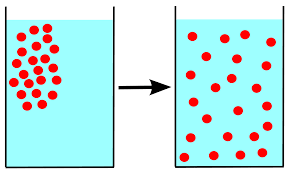
What is diffusion?
when molecules move
when molecules move from a high concentration to a low.
no movement
molecules move everywhere

Osmosis is the movement of _____ across a membrane.
food
energy
oxygen
water

Semi-permeable means
some things can pass through, other things can't
the concentration levels are different
partially permanent
all things can pass through

Considering the four choices below, which two represent diffusion?
- From high to low concentration
- From low to high concentration
- Using cellular energy
- Without using cellular energy
High to low; using cell energy
High to low; without using cell energy
Low to high; using cell energy
Low to high: without using cell energy
The cell membrane is responsible for keeping the cell's internal environment stable. What term describes this?
Homeostasis
Cell theory
Cell transport
Osmosis
Which cell structure is responsible for maintaining homeostasis by allowing materials in and out of the cell?
Nucleus
Ribosomes
Cell Membrane
Cell Wall

The table indicates the percentages of some gases in the atmosphere of Venus. Which gas present in the atmosphere of
Venus is the most abundant gas found in the atmosphere of Earth?
argon
carbon dioxide
helium
nitrogen
Causes & Effects of Human Actions on the Climate
Read each statement and determine if it is a cause or effect of climate change.
Burning Fossil Fuels (coal, oil, & natural gas)
Livestock farming increase
Deforestation- cutting down tress
Ice caps melting and Sea level rising
Increase in global temperatures
Extreme weather (floods, droughts, wildfires)
Trace gases are small amounts of gases in the atmosphere such as water vapor, carbon dioxide, methane, nitrous oxide, and CFCs. When combined, the trace gases only make up 0.1% of Earth's atmosphere.
Which of the following actions would most likely increase the amount of trace gases in the atmosphere?
A shoe manufacturer utilizing fossil fuels to power the factory.
A group of friend traveling in the same car to their destination.
A recycling company cleaning the plastic washed up in the shorelines.
A family planting several oak trees in the backyard.
The pie chart represents the composition of Earth's atmosphere. Fill in the diagram with the appropriate gases for the blue and pink sections.
Nitrogen
Oxygen
Match the following gases to their percentages in the atmosphere.
oxygen
21%
carbon dioxide
0.04%
nitrogen
78%

Two containers were placed in front of a lamp for 10 minutes. Both containers were filled with air. Additional carbon dioxide was added to one container. The final temperatures of both containers are shown.
What does this experiment prove?
Carbon dioxide is a greenhouse gas that traps heat.
Carbon dioxide is not a greenhouse gas that traps heat.
The experiment does not prove anything.
Which of the following human activities would NOT decrease the amount of CO2 emitted into the atmosphere?
Households recycling plastic, glass, and paper products
Cutting trees in a large area to create land for a shopping mall
Installing solar panels on the roof of new homes built around the city
Taking public transportation as a way to commute

The pie chart shows the greenhouse gas emissions in the Tennessee. What do the two highest sources of emissions in Tennessee have in common?
They will reduce the amount of air pollution in their regions.
They will supply cleaner & renewable energy for the state.
They help to lower the amount of human fossil fuel use.
They use the combustion of fossil fuels.
Which student best explains climate change and how humans impact climate change with their actions?
Terrell: Carbon dioxide is a greenhouse gas that is released by animal and humans. This proves that greenhouse gases are not harmful and don't affect the climate.
Brenda: Climate change only happens during the summer months when temperatures reach up to 100ºF. Winters are still cold, so humans impact the climate less in the winter than summer.
Isabella: When the amount of greenhouse gases in the atmosphere increases, they warm the Earth. This change in climate causes ice caps to melt, habitat destruction, and severe weather changes like droughts.
Jeremy: Humans do not have an impact on climate change but plants do. Global warming creates the perfect climate for plants to grow all around the globe. More plants means warmer Earth.

According to the data shown on greenhouse emissions, Which two greenhouse gases are major contributors to greenhouse emissions? Select two.
HCFs
nitrous oxide
methane
carbon dioxide

Using the model, reorder the following gases in Earth's atmosphere from least to greatest.
carbon dioxide
oxygen
nitrogen
The composition of the atmosphere is represented by the model. Identify the gases that would correctly represent the green and purple boxes.
carbon dioxide
oxygen
nitrogen
water vapor

The table shows the volume percentages of four samples of atmospheric gas. Which sample BEST represents the composition of Earth's atmosphere?
1
2
3
4

The table indicates the percentage of some gases in the atmosphere of Mars. What is the major difference between Mars and Earth's atmosphere?
Carbon dioxide is the most abundant gas on Earth but Argon is the most abundant gas on Mars.
Nitrogen is the most abundant gas on Earth while carbon dioxide is the most abundant on Mars.
Methane exists on Mars but cannot be found in Earth's atmosphere.
There are no differences between the two planets' atmospheres.
What is the primary function of mitochondria in a cell?
To store genetic information
To produce energy in the form of ATP
To synthesize proteins
To regulate cell division
Which of the following processes is an example of active transport?
Diffusion
Osmosis
Endocytosis
Facilitated diffusion
What is the role of ribosomes in a cell?
To produce energy
To synthesize proteins
To store nutrients
To transport materials

