
Font size
 Worksheets
LS.2e, LS.3b, LS.3c Organization, Uni/Multi, Diffusion/Osmosis
Total questions: 44
Worksheet time: 3hrs 37mins
How do the particles move in diffusion?
From a region of low concentration to a region of high concentration
From a region of high concentration to a region of low concentration
From a region of low concentration to a region of low concentration
From a region of high concentration to a region of high concentration


Is composed of a single cell
Unicellular
Multicellular
Both


A cell is placed in a solution as shown in the picture. The membrane is permeable to water but impermeable to sucrose.
Which way would you expect water to move?
Into the cell
Out of the cell
Equally in and out of the cell

A cell is placed in a solution as shown in the picture. The membrane is permeable to water but impermeable to sucrose.
Which way would you expect water to move?
Into the cell
Out of the cell
Equally in and out of the cell

If the semipermeable membrane allows the green chemical to pass through it freely, where will the green chemical move?
right to left
left to right
up and down


Equilibrium is when....
there is a large amount of substance on the inside of the cell and a small amount in the outside solution
there is a small amount of substance on the inside of the cell and a large amount in the outside solution
there is an equal amount of substance on either side of the cell membrane
there are no particles on either side of the the cell membrane
If all the 7th grade students were packed in Ms. Johnson's room, when the door opens they will rush out so they're not crowded. What type of transport is that demonstrating?
Active transport
Diffusion
Osmosis
The most complex level of organization of the options below is the...
cell.
tissue.
organ.
organ system.
Choose the correct example of the levels of organization.
Cell: root cell
Tissue: ground tissue
Organ: root
Cell: skeletal
Tissue: bone
Organ: human
Cell: neuron cell
Tissue: Brain & spinal cord
Organ: nerve

The diagram shows molecules moving from an area of higher to lower concentration. What is this a description of?
liquid
gas
Choose the levels of organization in order of increasing complexity:
Cell-Tissue-Organ- Organ System- Organism
Organism- Organ System- Organ- Tissue- Cell
Cell- Tissue- Organ- Organism
Cell- Organ System- Organism
Which systems move a mammals body?
Skeletal
Muscular
Nervous
Endocrine
Which system is involved in getting nutrients from food?
Digestive
Respiratory
Nervous
Skeletal


In what way are both humans and bacteria the same?
(¿En qué se parecen los seres humanos y las bacterias?)
Both are living things.
(Ambos son seres vivos.)
Both are non-living things.
(Ambos son seres no vivos.)
Both are multicellular organisms.
(Ambos son organismos pluricelulares.)
Both are single-celled organisms.
(Ambos son organismos unicelulares.)

Which best describes the main job of most cells in multicellular organisms?
(¿Cuál describe mejor la función principal de la mayoría de las células de los organismos pluricelulares?)
Cells work to keep THEMSELVES alive.
(Las células trabajan para mantenerse vivas.)
Cells work together to keep THE ORGANISM (whole body) alive.
(Las células trabajan juntas para mantener vivo EL ORGANISMO (todo el cuerpo).)
Cells work on their own to release needed materials.
(Las células trabajan por su cuenta para liberar los materiales necesarios.)
Cells work on their own to store unneeded materials.
(Las células trabajan por su cuenta para almacenar materiales innecesarios.)

An alligator is an example of...
(Un caimán es un ejemplo de...)
Unicellular Organism
(Organismo unicelular)
Multicellular Organism
(Organismo multicelular)
Neither
(Tampoco)
Both
(Ambos)

Classify the following examples (pictures) as unicellular or multicellular
(Clasifique los siguientes ejemplos (imágenes) como unicelulares o pluricelulares)
Unicellular
(Unicelular)
Multicellular
(Multicelular)
Both
(Ambos)
Neither
(Tampoco)

Based on this image is the Euglena multicellular or unicellular? *Euglena is microscopic
(Según esta imagen, ¿es la Euglena multicelular o unicelular? *Euglena es microscópica)
Multicellular
(Multicelular)
Unicellular
(Unicelular)
Neither
(Tampoco)
Both
(Ambos)

The most basic unit of life is...
(La unidad más básica de la vida es...)
Cell
(Celda)
Tissue
(Tejido)
Organ
(Órgano)
Organ System
(Sistema de órganos)
Which is an example of a multicellular organism?
(¿Cuál es un ejemplo de organismo pluricelular?)

amoeba
(ameba)

bacteria
(bacterias)

worm
(gusano)

yeast
(levadura)

Molly is reading a book in science class. She reads one sentence that says, “This organism is capable of surviving as a single cell.” Which organism is she most likely reading about?
(Molly está leyendo un libro en clase de ciencias. Lee una frase que dice: "Este organismo es capaz de sobrevivir como una sola célula". ¿Sobre qué organismo es más probable que esté leyendo?)
amoeba
(ameba)
flower
(flor)
mushroom
(setas)
insect
(insecto)

Bacteria is an example of a ________________ organism.
(Las bacterias son un ejemplo de organismo ________________.)
Unicellular
(Unicelular)
Multicellular
(Multicelular)
Bicellular
(Bicelular)
Tricellular
(Tricelular)
How are unicellular organisms different from multicellular organisms?
Unicellular are simple
Multicellular have tissues and organs
Unicellular are complex
Multicellular doesn't have more complex organization above cells.
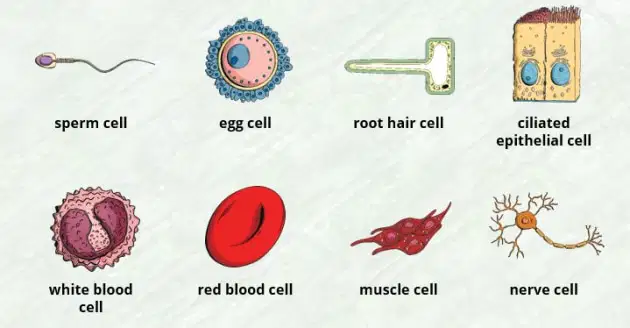
What does "the form of a cell fits the function of a cell" mean?
The shape of the cell allows it to perform a certain job
the shape of the cell is dependent on where the organism lives
the shape of the cell depends on where it is located
the shape of the cell has nothing to do with its job
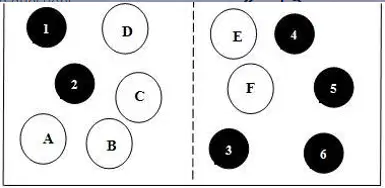
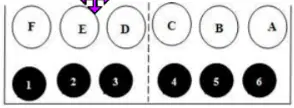
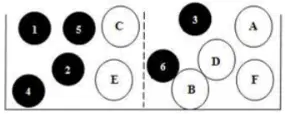
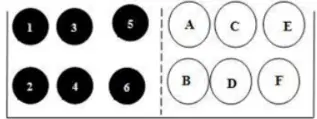
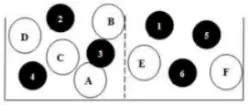
The system shown contains a semi-permeable membrane between two chambers filled with a solution of molecules with letters and numbers. The membrane is permeable only to the molecules with numbers; it is NOT permeable to molecules with letters. Which of the following diagrams shows what the system might look like when it is at equilibrium? (use the image below)
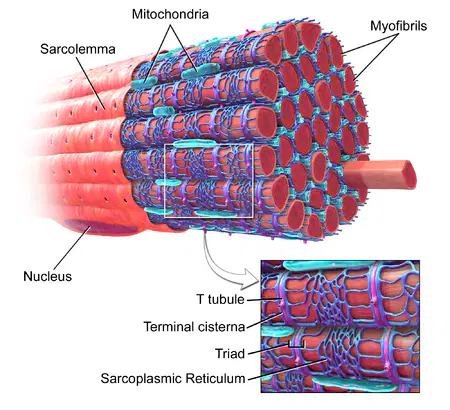
Muscle cells need a lot of energy to contract. Therefore there would be a high number (proportion) of ...
Golgi bodies
Lysosomes
Mitochondria
DNAmsucle cell

The shape of a nerve cell helps it
Get longer or shorter
Pass messages from one cell to the next
Which statement is only true of multicellular organisms?
reproduce quickly
composed of one cell
small
repair damaged cells
Division of labor due to specialized cells
Unicellular
Multicellular

What organ is this that is responsible for absorbing nutrients and moving them into the bloodstream?
stomach
small intestine
large intestine

What organ is this when food is mixed with digestive juices and enzymes and stored.
stomach
large intestine
small intestine

Which of the following answers correctly sequences the pathway food takes from the beginning to end?
mouth, esophagus, stomach, small intestine, large intestine
mouth, esophagus, stomach, large intestine, small intestine
mouth, stomach, esophagus, small intestine, large intestine
mouth, stomach, esophagus, large intestine, small intestine

This is a musclular tube that connects the mouth to the stomach.
esophogus
trachea
Salivary gland

The teeth and tongue break down food physically. This is an example of
mechanical digestion
chemical digestion

