
 Worksheets
Geometry, IMF, and Solutions Review
Total questions: 50
Worksheet time: 55mins

What type of a solution is 60g NaNO3 at 40ºC in 100g H2O?
Saturated
Unsaturated
Supersaturated
What type of a solution is 100g KNO3 at 40ºC in 100g H2O?
Saturated
Unsaturated
Supersaturated
What type of a solution is 260g sugar at 50ºC in 100g H2O?
Saturated
Unsaturated
Supersaturated
What type of a solution is 25g NaCl at 70ºC in 100g H2O?
Saturated
Unsaturated
Supersaturated
What type of a solution is 55g KCl at 70ºC in 100g H2O?
Saturated
Unsaturated
Supersaturated
The substance being dissolved in a solution is the?
solution
solute
solvent
mixture
The substance in which a solute is dissolved is a?
solution
solvent
alloy
mixture
If I dissolve carbon dioxide in water, what is the solvent?
Carbon Dioxide
There is no solvent
Oxygen
Water
If I dissolve salt in water, what is the solvent?
salt
water
salt & water
none of the above
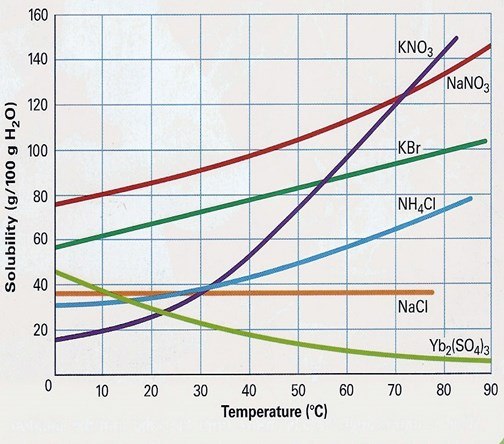
Identify if the following solution would be saturated, unsaturated, or supersaturated: 103 g KBr at 70'C.
Unsaturated
Saturated
Supersaturated
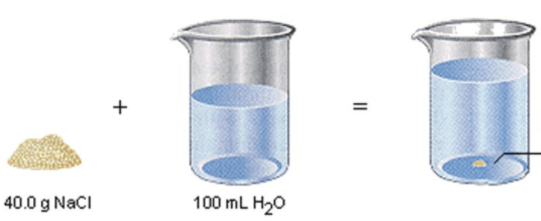
After solute is added and the solution is stirred, some solute still remains undissolved. The solution is __________.
Unsaturated
Saturated
Supersaturated
What type of a solution is 180g sugar at 0ºC in 100g H2O?
Saturated
Unsaturated
Supersaturated
Which substance would have the weakest intermolecular forces of attraction?
CH4
NaCl
H2O
MgF2

Intermolecular forces for: NH3
Dispersion Force
Dipole dipole
Hydrogen bonding

Hydrocarbons such as the one pictured will have which type of intermolecular forces?
Dispersion
dipole
hydrogen bonds
Strongest intermolecular force present in HF.
dipole dipole
dispersion
H-bond
ionic
Strongest intermolecular force present in I2, Br2, and Cl2.
dipole dipole
H-bond
dispersion
metallic
Strongest intermolecular force in H2S?
dipole dipole
dispersion
H-bond
ionic
Strongest intermolecular force present in HCl?
dipole dipole
dispersion
H-bond
ionic
Which of the following will have the lowest melting point?


Predict the IMF
London Dispersion
Dipole-dipole
Hydrogen Bond


What is the correct shape of CHCl3?
Bent
Trigonal pyramidal
Tetrahedral
Trigonal planar


What geometry will this molecular structure have? H2S
bent
tetrahedral
linear
trigonal pyramidal

Bent (120o)
Bent (109o)

What is the molecular geometry for the Lewis Structure pictured above?
Trigonal Planar
Trigonal Pyramidal
Tetrahedral
linear
Bent (109o)

What is the molecular geometry of HF?
tetrahedral
trigonal planar
linear
bent (120o)
bent (109o)

Bent (120o)
Bent (109o)
What word describes when water is attracted to other substances?
Cohesion
Adhesion
Capillary action
Surface tension
When water molecules stick easily to other water molecules, this is called what?
Cohesion
Adhesion
Solution
Polar molecule
The tightness across the surface of water that enables insects to walk on it is
Adhesion
Capillary action
Surface tension
Polarity
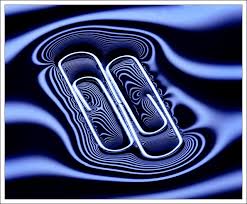
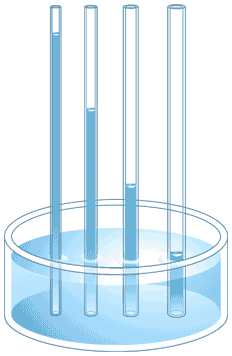
What is the term for water's ability to defy gravity and climb up a tube?
Capillary Action
Specific Heat
Universal Solvent
Magic

Type of intermolecular force present in HF.
dipole dipole
London dispersion
H-bond
ionic
Which of the following would have the strongest IMF's between molecules of itself?
Cl2
HCl
What is the weakest IMF?
Ionic bonding
Dipole-dipole
London Dispersion
Hydrogen Bonding
dipole dipole
H-bond
London dispersion forces
metallic
Cohesion is when the ________ molecules sticks together
same
different
Adhesion is when the ________ molecules sticks together
same
different
Which of the following is a POLAR COMPOUND?



