wayground logo

Free Printable Worksheets

Font size

S
M
L
XL
Worksheets

Gr 7 Cumulative 2024-25 Extra Credit

Total questions: 63

Worksheet time: 1hrs 10mins

Name
Class
Date
1.

When the sun sets in alignment with the streets that run east to west on Manhattan's street grid, it is referred to as ___________.

a)

ManhattanSun

b)

Manhattanhenge

c)

Manhattanset

d)

Manhattanbright

2.

Which roadway is said to have the best view of Manhattanhenge?

a)

W 29th Street

b)

Park Ave

c)

34th Street

d)

7th Ave

3.

At which time of the year does Manhattanhenge take place?

a)

May/June

b)

Oct/Dec

c)

Feb/Mar

d)

Aug/Sept

4.
The law of universal gravitation states that ...
a)
every object in the universe repels every other object.
b)
every object in the universe attracts every other object.
c)
magnetic objects in the universe attracts every other object.
d)
every object on Earth attracts every object on the moon.
5.
Rotation is the ...
a)
spinning of Earth on the North Pole.
b)
spinning of Earth on its axis.
c)
revolution of Earth on its top.
d)
pausing of Earth on its axis.
6.
Revolution is the movement of ...
a)
one object spinning on its axis.
b)
one object in between another object.
c)
one object around another object.
d)
one object moving another object.
7.
_______ brings gas and dust particles of a nebula closer together.
a)
Magnetism
b)
Gravity
c)
Wind
d)
Tides
8.
A major reason why the International Space Station is in space is to experiment on how a ...
a)
human can live without air.
b)
human can survive in space.
c)
human can die in space.
d)
human can survive in water.
9.
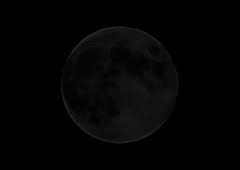
Name the moon phase
a)
First Quarter
b)
Last Quarter
c)
New Moon
d)
Full Moon
10.
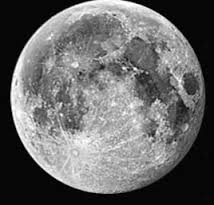
Name the moon phase
a)
First Quarter
b)
Last Quarter
c)
New Moon
d)
Full Moon
11.
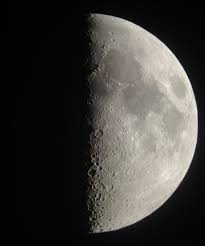
Name the moon phase
a)
First Quarter
b)
Last Quarter
c)
New Moon
d)
Full Moon
12.
Name the moon phase
a)
waning crescent
b)
waxing crescent
c)
waning gibbous
d)
waxing gibbous
13.
The cycle of the moon lasts about a _.
a)
day
b)
year
c)
week
d)
month
14.
For a solar eclipse to occur, what has to happen?
a)
The sun must be directly between Earth and the moon.
b)
The moon must be directly between Earth and the Sun.
15.
During a solar eclipse...
a)
The sun is blocked
b)
The Earth is blocked
16.
Solar eclipses occur during which Moon phase?
a)
New Moon
b)
Waning Crescent
c)
Waxing Crescent
d)
Waning Gibbous
17.

Is this alignment for a solar or lunar eclipse?

a)

Solar

b)

Lunar

18.

Is this alignment for a solar or a lunar eclipse?

a)

Solar

b)

Lunar

19.

Which moon phase do lunar eclipses occur?

a)

Full Moon

b)

Waxing Gibbous

c)

New Moon

d)

First Quarter

20.

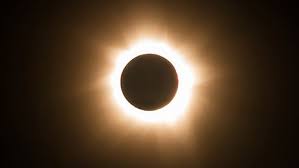
What type of eclipse is this an example of?

a)

lunar eclipse

b)

solar eclipses

21.
2. What type of eclipse is in the diagram below?
a)
A. Lunar Eclipse
b)
B. Partial Eclipse
c)
C. Solar Eclipse
d)
D. Total Eclipse
22.
1. What type of eclipse is in the diagram below?
a)
A. Lunar Eclipse
b)
B. Partial Eclipse
c)
C. Solar Eclipse
d)
D. Total Eclipse
23.

Which substance is Earth's atmophere mostly made of?

a)

Oxygen

b)

Nitrogen

c)

Argon

d)

Carbon Dioxide

24.

What color is the Sun when viewed from the International Space Station?

a)

yellow

b)

red

c)

white

d)

orange

25.

At which time of the day does the sky usually look reddish orange?

a)

noon

b)

sunrise/sunset

c)

midnight

d)

afternoon

26.

The _____ is the line where the earth and the sky seem to meet.

a)

horizon

b)

phenomenon

c)

energy

d)

adapt

27.

What is the smallest planet?

a)

Venus

b)

Pluto

c)

Jupiter

d)

Mercury

28.

What is the hottest planet?

a)

Venus

b)

Mercury

c)

Earth

d)

Jupiter

29.

Which planet's surface is more than 70% water?

a)

Mercury

b)

Venus

c)

Earth

d)

Jupiter

30.

After Mars, the distance between the planets ______.

a)

increases

b)

decreases

31.

Which term describes the composition of the outer planets?

a)

rocky

b)

solid

c)

water

d)

gaseous

32.

Which terms describe the composition of the inner planets?

a)

rocky

b)

gaseous

c)

water

d)

solid

33.

Which group of planets are colder?

a)

inner

b)

outer

34.

Which group of planets are denser?

a)

inner

b)

outer

35.

Which group of planets are smaller?

a)

inner

b)

outer

36.

A __________ is a transparent object with refracting surfaces that separate white light into a spectrum of colors.

a)

rainbow

b)

prism

c)

cloud

37.

When a beam of white light is passed through a prism it splits into it's component colors. This is called

a)

Converging Of Light

b)

Refraction Of Light

c)

Dispersion Of Light

d)

Reflection Of Light

38.

Where can we observe the natural phenomenon of Dispersion Of Light?

a)

Rainbow

b)

Prism

c)

Glass

d)

Microscope

39.

Dispersion Of Light is caused by -------------

a)

Change Of Speed of Light

b)

Change of Speed of Water

c)

Change Of Speed of Wind

d)

Change Of Speed of Electric Current

40.

When is light refracted?

a)

When light travels in a straight line

b)

When light is bounced

c)

When light travels in two different mediums

d)

When light cannot pass through an opaque object

41.
The attractive force between all objects in the universe
a)
Force
b)
Gravity
c)
Weight
d)
Inertia
42.
The path a planet follows as it moves around the sun
a)
Orbit/Revolution
b)
Rotation
c)
Axis
d)
Revolution
43.
Two factors that affect the force of gravity between two objects are
a)
weight and mass
b)
mass and speed
c)
mass and distance
d)
weight and speed
44.
The force of gravity would _______ if the sun got bigger
a)
Incresase
b)
Decrease
c)
Stay the same
45.
Which picture shows what would happen if the force of gravity between the sun and earth were turned off?
a)
a
b)
b
c)
c
d)
d
e)
e
46.
Gravity pulls everything toward
a)
The ground
b)
the moon
c)
The center of a mass
d)
the sun
47.
Any object with mass has gravity
a)
True
b)
False
c)
It depends
48.

A measure of the amount of matter in an object:

a)

volume

b)

weight

c)

density

d)

mass

49.
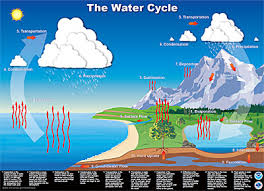
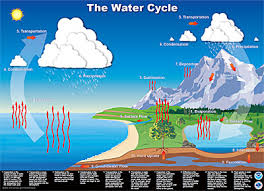
Which is the opposite of condensation?
a)
runoff
b)
evaporation
c)
precipitation
d)
transpiration
50.
What is it called when plants give off water vapor as a waste product?
a)
condensation
b)
evaporation
c)
sublimation
d)
transpiration
51.

Water in its gas form is called ____________________,

a)

water vapor

b)

precipitation

c)

ice

d)

air

52.
During which stage do clouds form?
a)
condensation
b)
evaporation
c)
precipitation
53.
Which stages does liquid water from the ocean turn into water vapor?
a)
condensation
b)
evaporation
c)
precipitation
d)
run off
54.
What is A?
a)
Evaporation
b)
Condensation
c)
Precipitation
d)
Runoff
55.
What is B?
a)
Evaporation
b)
Condensation
c)
Precipitation
d)
Runoff
56.
What is C?
a)
Evaporation
b)
Condensation
c)
Precipitation
d)
Runoff
57.

Gravity causes ___________________ to occur.

a)

condensation

b)

precipitation

c)

evaporation

d)

none of the above

58.

This provides the power to keep the water cycle running.

a)

The Sun

b)

The Earth

c)

The wind

d)

living things

59.

Rain and snow are two different forms of precipitation that fall on Earth's surface. Which factor is responsible for there being different forms of precipitation?

a)

Evaporation

b)

Run-off

c)

Temperature

d)

Transpiration

60.
Condensation is when...
a)
A liquid turns to gas.
b)
A gas turns to liquid.
c)
A liquid turns to ice.
d)
All of the answers.
61.
Evaporation is...
a)
When water changes from a solid to a liquid.
b)
When water changes from a gas to a liquid.
c)
When water changes from a liquid to a gas.
d)
None of the answers.
62.
What changes water from one state to another.
a)
An airplane.
b)
Gravity
c)
A change in temperature.
d)
None of the answers.
63.
What do we call it when water evaporates, condenses, then precipitates to the earth and then repeats?
a)
A Bicycle.
b)
The Life Cycle of a butterfly.
c)
The Water Cycle.
d)
All of the answers.